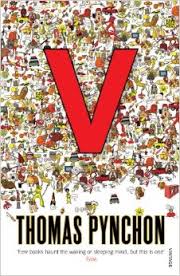
 I can’t really explain what made me pick up ‘V.’ by Thomas Pynchon from the library shelf three weeks ago. It’s likely to have been a combination of recently seeing a trailer for the film adaptation of ‘Inherent Vice’ and coming across an old article in The Guardian by Ian Rankin about Pynchon as well as the weird and wonderful cover design of this Vintage Books edition. Moreover, although I’ve read a lot of enjoyable and thought-provoking books in the past few months, it’s been a while since I’ve read something that has properly challenged me. Continue reading
Tag Archives: Book Review
V. by Thomas Pynchon
Filed under Books
Being Mortal by Atul Gawande
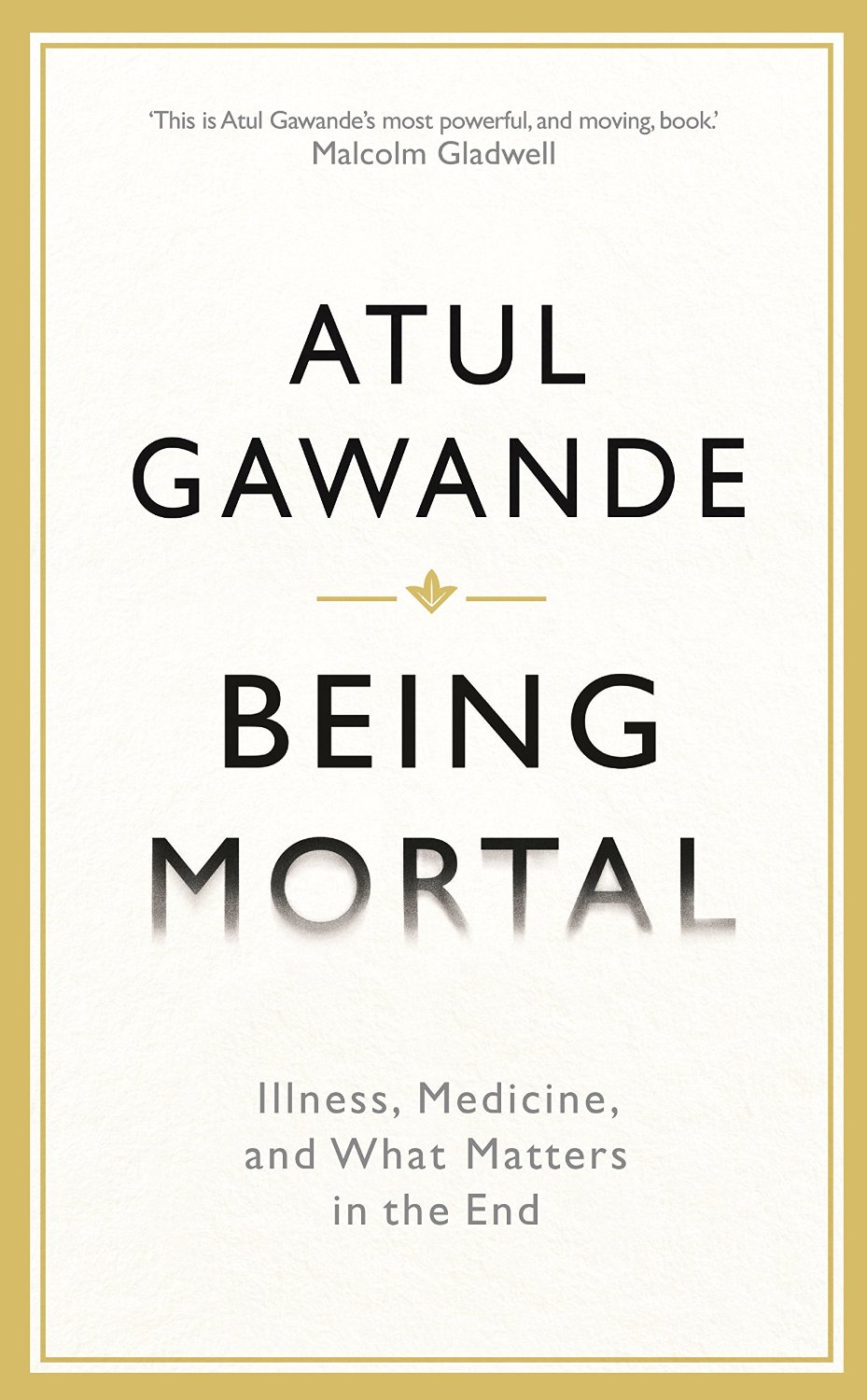 Having greatly enjoyed ‘Do No Harm: Stories of Life, Death and Brain Surgery’ by Henry Marsh late last year, I wanted to read ‘Being Mortal: Illness, Medicine, and What Matters in the End’ by Atul Gawande, a book which formed the basis of the Reith lectures entitled ‘The Future of Medicine’ on BBC Radio 4 last year. Gawande is a writer and practicing surgeon based in Massachusetts who has published three other books about medicine. In ‘Being Mortal’, he tackles the wider issue of mortality addressing the process of aging, dying and death, without focusing on a specific area of healthcare or even his own career. Continue reading
Filed under Books
A Dark-Adapted Eye by Barbara Vine
 ‘A Dark-Adapted Eye’ by Barbara Vine opens with the death of Vera Hillyard, one of the last women to be hanged for murder in Britain in the late 1940s. The story is told from the point of view of Vera’s niece, Faith, who was in her early teens during the Second World War when the main events and crime in question take place. Some thirty years later, Faith is approached by a journalist called Daniel Stewart who is researching the case for a book he is writing and she slowly unravels her version of events as well as a number of family secrets.
Filed under Books
Four Novellas I’ve Read Recently
Long novels like ‘The Goldfinch‘ by Donna Tartt and ‘The Luminaries‘ by Eleanor Catton received lots of attention last year. But let’s not forget that conciseness in fiction is just as important and effective as the achievements of sprawling epics.
I’ve used the term novella quite loosely here to mean books which are longer than a typical short story but less than two hundred pages or fifty thousand words. Here are four short reviews of short works of fiction I’ve read recently which prove that less can be more:
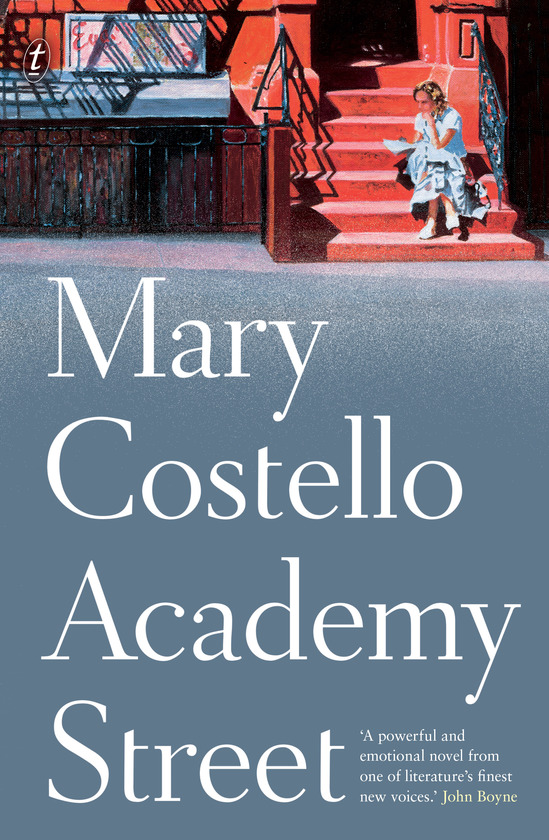
1. Academy Street by Mary Costello
This is an excellent book which tells the story of Tess Lohan, a shy young woman who emigrates from Ireland to the United States in the 1960s. It has drawn comparisons to ‘Brooklyn’ by Colm Tóibín due to the similar setting, understated writing and introverted main character. The book spans Tess’s life from childhood to old age in less than 180 pages – it could have been twice as long with more detail about other aspects of her life, yet the devastating impact of the ending was so much more powerful due to its brevity without ever feeling rushed.
Filed under Books
Rush Hour by Iain Gately
 From the perils of crush loading on the Tokyo metro to road rage in the United States, ‘Rush Hour: How 500 million commuters survive the daily journey to work’ by Iain Gately examines the past, present and future of travelling to and from work. Commuting is an activity which takes up a significant part of everyday life for people across the world. This book outlines how it has developed and, in an era of advanced communication methods, why we still do it. Continue reading
Filed under Books
This Boy by Alan Johnson
 ‘This Boy’ is Alan Johnson’s memoir of his childhood growing up in poverty in North Kensington during the 1950s and early 1960s. His womanising father Steve was mostly absent and his mother Lily struggled to provide a better life for her children whilst suffering from a chronic heart condition. After she died at the age of forty-two when Johnson was thirteen, his sixteen-year-old sister Linda fought for them to stay together in their own council flat despite their young age. Continue reading
Filed under Books
Rubbernecker by Belinda Bauer
 I consider myself to be a pretty fast reader but it is rare even for me to race through a whole book in one Sunday as I did with ‘Rubbernecker’ by Belinda Bauer which won the Theakstons Old Peculier Crime Writing Festival’s Novel of the Year award in 2014. The story begins with an account of how Sam Galen ended up in a coma following a car accident and his experiences in a high-dependency neurological ward in the care of Tracy Evans, a selfish nurse attempting to charm the wealthy husband of one of the other patients. Meanwhile, Patrick Fort, an anatomy student at Cardiff University, discovers that the body he is dissecting didn’t expire from the causes officially stated on the death certificate. Gradually, these different plot lines become more closely entwined with each other. Continue reading
Filed under Books
The Girl on the Train by Paula Hawkins
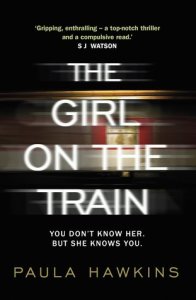 Hyped as this year’s ‘Gone Girl‘, ‘The Girl on the Train’ by Paula Hawkins tells the story of Rachel Watson, who takes the same commuter train every day to London. The train always stops at a red signal where she observes a seemingly perfect couple who she names Jess and Jason in their house which is coincidentally a few doors down from where she used to live with her ex-husband, Tom. Except one day, Rachel sees something shocking from the train and becomes more closely entwined with their lives when “Jess” suddenly disappears.
Filed under Books
One Summer: America, 1927 by Bill Bryson
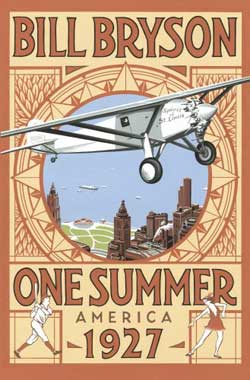 Happy new year to you all! I have been continuing my recent spell of non-fiction reading over the Christmas holidays with Bill Bryson’s latest book ‘One Summer: America, 1927’, whose title is about as self-explanatory as it gets. As you might expect, it is indeed about the people and events which dominated the summer of 1927 in the United States of America. While it isn’t perhaps the most recognisably significant year in modern history in the same way that 1945 and 1989 are etched in the collective memory as turning points in the twentieth century, Bryson shows that this particular summer was a very important one in the social and economic history of the United States.
Filed under Books
The 2014 End of Year Book Survey
 I do this survey every year so here it is again….
1. Best book you read in 2014? (You can break it down by genre if you want) The Goldfinch by Donna Tartt was a great start to the year and The Book of Strange New Things by Michel Faber was another highlight. For non-fiction, H is for Hawk by Helen Macdonald really stood out for its original blend of memoir, biography and nature writing.
2. Book you were excited about and thought you were going to love more but didn’t? As with The Rehearsal, the overly complex structure of The Luminaries by Eleanor Catton prevented me from enjoying it as much as I had hoped.
3. Most surprising (in a good way!) book of 2014? It’s a very intense read but The Woman Upstairs by Claire Messud was a pleasant surprise as I didn’t really get on with The Last Life at all last year. Continue reading
Filed under Books
Do No Harm: Stories of Life, Death and Brain Surgery by Henry Marsh
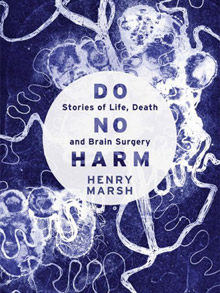 Now approaching retirement after working as a senior consultant at St George’s Hospital in London since 1987, ‘Do No Harm: Stories of Life, Death and Brain Surgery’ is Henry Marsh’s reflection on a long and distinguished career in neurosurgeon. Yet the first sentence of the opening chapter is rather disconcerting to say the least, especially coming from one of the most experienced neurosurgeons in the UK: “I often have to cut into the brain and it is something I hate doing.” Having encountered a significant number of highs and lows throughout his career, it is soon clear this isn’t something Marsh has ever taken for granted. Continue reading
Filed under Books
9 Books I Read in 2014 But Didn’t Review
I review the majority of the books I read. However, mostly due to lack of time, I don’t blog about all of them. Here are my thoughts about nine other books I read in 2014 but didn’t review earlier in the year.

Filed under Books
Station Eleven by Emily St. John Mandel
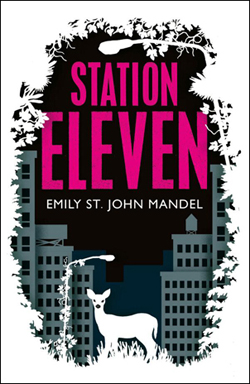 ‘Station Eleven’ by Emily St. John Mandel is a post-apocalyptic novel which opens with the sudden death of Arthur Leander, a Hollywood actor starring in a theatre production of ‘King Lear’. He collapses on stage and succumbs to the Georgia Flu, a pandemic which virtually wipes out the human race in a matter of days. The survivors form the Travelling Symphony, a troupe of actors and musicians moving across territories performing classical theatre and concerts, including Kirsten, a child actress who was with Arthur when he died. Continue reading
Filed under Books
H is for Hawk by Helen Macdonald
 As a commuter in London, I automatically assume that strangers who are trying to talk to me or distract me are probably attempting to pickpocket me. However, for the first time ever on my way home from work recently, I was briefly stopped by a stranger at a train station who commented on the book I was reading. He noticed I was holding a copy of ‘H is for Hawk’ by Helen Macdonald and just said “Great book! Really great book!” At the time, I was just over half way through it and had already arrived at this conclusion. I quickly said “Yes, I’m really enjoying it!” before we went our separate ways. Continue reading
Filed under Books
Bloomsbury Book Club: Grantchester Christmas Special with James Runcie and Daisy Coulam
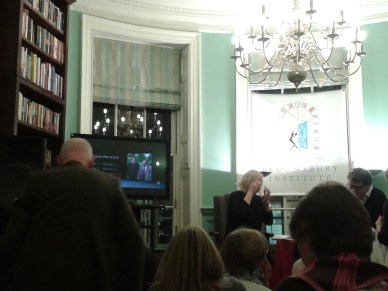
Bloomsbury Book Club Grantchester Christmas Special
On Wednesday night, I attended the Bloomsbury Institute Book Club Grantchester Christmas Special event at Bedford Square in central London with author James Runcie and scriptwriter Daisy Coulam discussing how the first book in the Grantchester Mysteries series, ‘Sidney Chambers and the Shadow of Death’ was dramatised for television by ITV. Continue reading
Filed under Books
Everything I Never Told You by Celeste Ng
 Set in small town Ohio in 1977, ‘Everything I Never Told You’ by Celeste Ng tells the story of sixteen year old Lydia Lee who is found dead at the bottom of a nearby lake in a suspected suicide. Her Chinese-American father James and her Caucasian mother Marilyn are completely distraught as are her older brother Nathan and her younger sister Hannah. However, one of them may know more than they are letting on about what really happened to Lydia before she died. Continue reading
Filed under Books
Decoded by Mai Jia
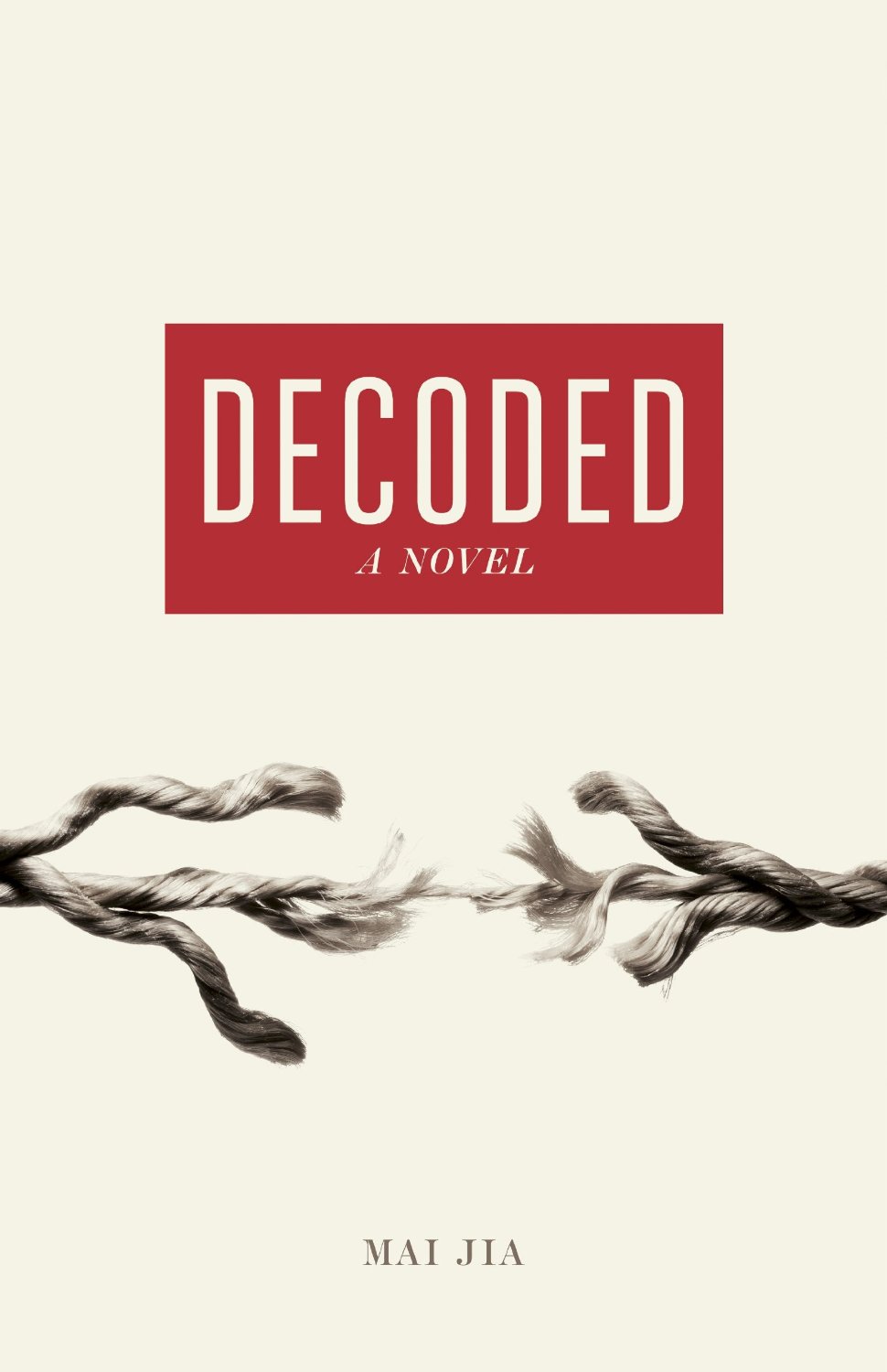 There is a wide range of Japanese fiction available in English thanks to the popularity of authors such as Haruki Murakami, Shuichi Yoshida, Hiromi Kawakami and many more. However, contemporary Chinese fiction translated into English is somewhat less prominent, so I was pretty surprised to come across a brand new copy of ‘Decoded’ by Mai Jia in a National Trust secondhand bookshop recently. Continue reading
Filed under Books
Oryx and Crake by Margaret Atwood
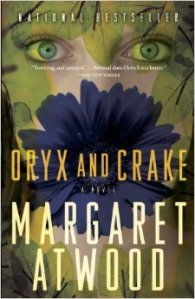 As I read and enjoyed ‘The Handmaid’s Tale’, ‘The Blind Assassin’ and ‘Cat’s Eye’ before I started writing this blog, I thought it was high time I read more of Margaret Atwood’s work. ‘Oryx and Crake’ is the first book in Atwood’s critically acclaimed dystopian MaddAddam trilogy of novels and tells the story of Snowman – also known as Jimmy – who is believed to be the only human survivor left in a post-apocalyptic world along with genetically modified creatures called Crakers. As Snowman makes a journey back to the place where the destruction occurred which wiped out the human population, we learn through flashbacks how the world came to be almost destroyed and what happened to his friend Crake and the mysterious Oryx. Continue reading
Filed under Books
A Heartbreaking Work of Staggering Genius by Dave Eggers
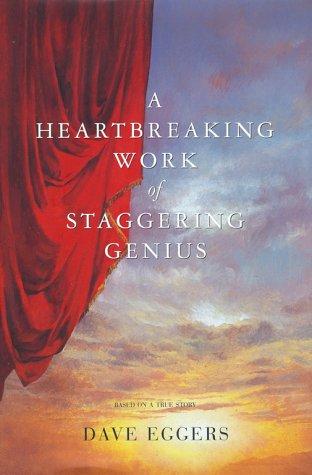 I enjoyed ‘The Circle‘ by Dave Eggers earlier this year but it has to be said that the core message about the evils of the Internet was pretty overdone. However, what Eggers lacks in subtlety, he makes up for in irony and it’s therefore unsurprising that he gave his memoir the title ‘A Heartbreaking Work of Staggering Genius’. First published in 2000, this was Eggers’ first book which is a loose account of his life following the deaths of his parents from cancer in the early 1990s within six weeks of each other. At the age of twenty-one, Eggers found himself to be the unofficial guardian of his eight-year-old brother Christopher known as Toph. They moved from the suburbs of Chicago to California where Eggers later co-founded the satirical magazine ‘Might’. Continue reading
Filed under Books
The Assassination of Margaret Thatcher by Hilary Mantel
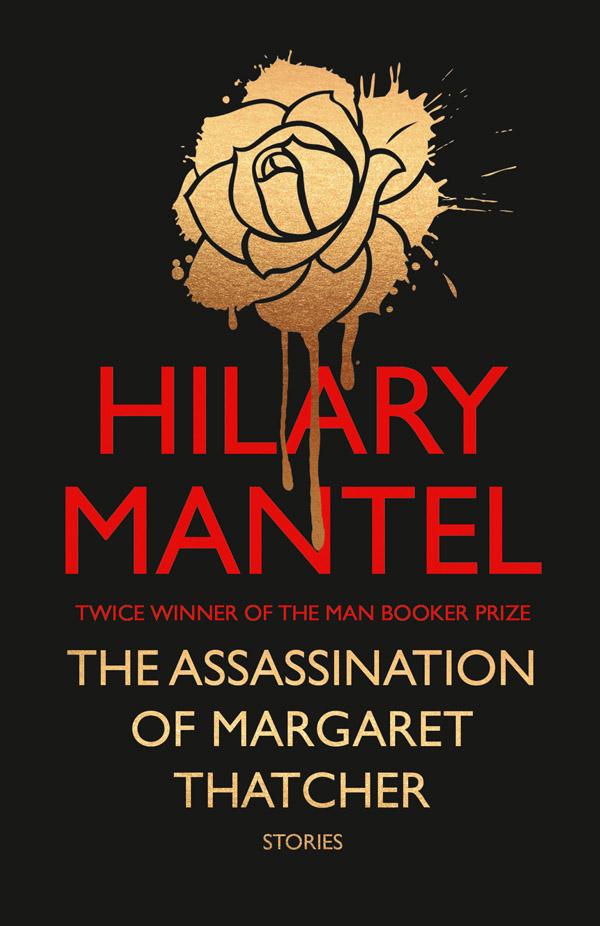 Following the Man Booker Prize-winning ‘Wolf Hall‘ and ‘Bring Up the Bodies‘, the final part of Mantel’s acclaimed trilogy about the life of Thomas Cromwell, ‘The Mirror and the Light’ isn’t due to be published until the end of next year at the very earliest. Presumably brought out to keep Mantel’s fans satisfied in the meantime, ‘The Assassination of Margaret Thatcher’ is a collection of ten short stories, her second collection after ‘Learning to Talk’ was published in 2003. Having read three of Mantel’s novels and her memoir, I was keen to see how her shorter works of fiction compared.
Continue reading
Filed under Books



 A Little Blog of Books
You must be logged in to post a comment.