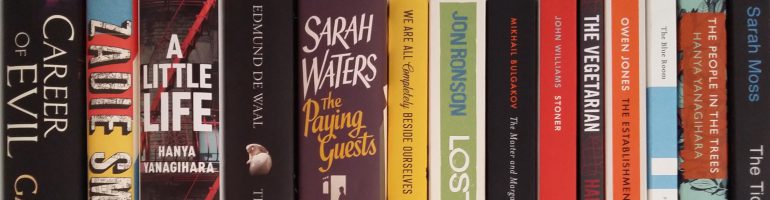
 I first read The Handmaid’s Tale by Margaret Atwood about 10 years ago and recently reread it followed by the long-awaited sequel The Testaments. Atwood’s dystopian classic first published in 1985 depicts the Republic of Gilead, a totalitarian and patriarchal state created after the downfall of the United States some time in the 21st century. It is narrated by Offred, a handmaid who is forced to produce children for Commander Waterford and his wife Serena Joy.
As a reread, ‘The Handmaid’s Tale’ was fresher in my mind than it would have been thanks to the recent television series which is a very faithful adaptation of the novel. I particularly admire Atwood’s skill at detailed world-building in relatively spare prose. Even though there isn’t a huge amount of description of what Offred’s surroundings look like or even much explanation about the creation of Gilead initially, Atwood paints a vivid and shocking portrait of this dystopian world, gradually building towards a dramatic conclusion. Continue reading

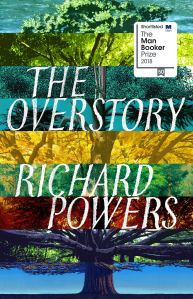 Shortlisted for the Man Booker Prize in 2018 and winner of the Pulitzer Prize for Fiction, ‘The Overstory’ by Richard Powers brings together nine stories in which the characters grow to realise the extent of the ecological crisis, particularly where trees are concerned. It is difficult to elaborate further on the plot in which the structural concept is, according to the blurb, based around “concentric rings of interlocking fable” which sees the various strands gradually become interlinked. The diverse cast of characters includes a war veteran, a biologist, a childless married couple and a college student who has a near-death experience. The first part ‘Roots’ reads more like a collection of short stories in which trees feature in one way or another. However, links between the characters start to emerge in the second part ‘Trunk’ and the narrative finally starts to read more like a novel.
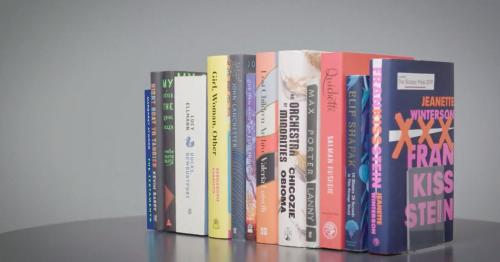 The Booker Prize 2019 longlist was announced on Wednesday. The 13 titles are:


 The winner of this year’s Man Booker Prize was announced last month. While ‘The Overstory’ by Richard Powers and ‘Washington Black’ by Esi Edugyan appeared to be the favourites to win among bloggers I follow, ‘Milkman’ by Anna Burns triumphed in the end. I’m undecided about whether or not to read it. There has been a lot of focus on the experimental prose style and the question of its “readability” with its unnamed characters and paragraphs without breaks. However, when chair of the judges Kwame Anthony Appiah said “I spend my time reading articles in the Journal of Philosophy so by my standards this is not too hard”, I wasn’t sure he really succeeded in selling it to a wider audience. On the other hand, it should be noted that the actual sales figures since Burns’ win tell a different story and it will be interesting to see how it is critically received in the long term. Do let me know what you think of ‘Milkman’
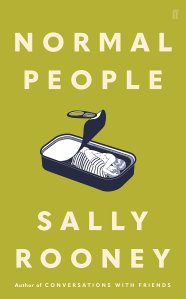 ‘Normal People’ by Sally Rooney tells the story of teenagers Marianne Sheridan and Connell Waldron who go to school together in the small rural town of Carricklea in the west of Ireland and later move to Dublin to study at Trinity College in the early 2010s. Marianne is a loner from a well-off family while Connell is popular at school and their romance is kept secret from their classmates. However, Marianne finds friends easily among their privileged contemporaries at university whereas Connell feels alienated, and this sudden reversal in their social status complicates their relationship.
 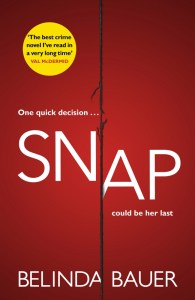 The opening chapter of ‘Snap’ by Belinda Bauer presents a chilling premise based on the unsolved murder of Marie Wilks. On a hot day in the summer of 1998, eleven-year-old Jack Bright is left in a broken-down car by the side of a motorway with his two younger sisters, Joy and Merry, while their pregnant mother, Eileen, goes in search of a telephone for help. However, she never returns and her body is eventually found stabbed to death.
 The Man Booker Prize longlist will be announced on Tuesday 24th July and the annual guessing game of “posh bingo” commences once again. When considering which books could make the cut, I
 The Man Booker Prize is celebrating its 50th anniversary this year with a “best of the best”
 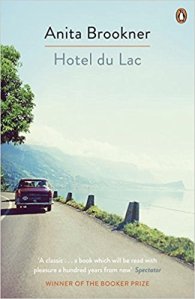 I haven’t read many of the early winners of the Booker Prize but ‘Hotel du Lac’ by Anita Brookner is one I have been meaning to read ahead of the
 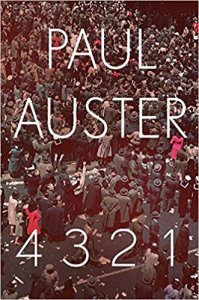 Shortlisted for the Man Booker Prize last year, ‘4 3 2 1’ by Paul Auster consists of four different versions of the life of Archibald Issac Ferguson, born in Newark, New Jersey in 1947 (the same year as Auster). Descended from Russian-Jewish immigrants, Archie is the only child of Rose and Stanley Ferguson and during his early childhood, random events change the path of his life splitting into four different trajectories – in one version his parents divorce, in another they stay together, in another Stanley dies, and so on. The parallel structure means that each of the seven parts is rewound three times before moving on to the next stage in Archie’s life covering his early childhood through to his coming-of-age in the late 1960s.
  2018 marks the 50th anniversary of the Man Booker Prize and the organisers have launched a one-off prize to celebrate the best of the winning novels to date.
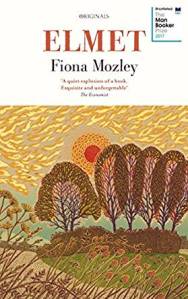 Last year’s Man Booker Prize longlist was largely dominated by established authors apart from the surprise inclusion of PhD student Fiona Mozley with her debut novel ‘Elmet’ which made the shortlist but lost out to
 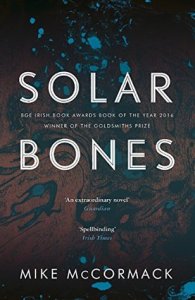 ‘Solar Bones’ by Mike McCormack won the Goldsmiths Prize last year and has been longlisted for the Man Booker Prize this year after it was picked up by the UK-based publisher Canongate. It tells the story of Marcus Conway, a middle-aged civil engineer living in a small town on the west coast of Ireland who is sitting at his kitchen table on All Souls Day reflecting on his life with his wife Mairead and their children Agnes and Darragh.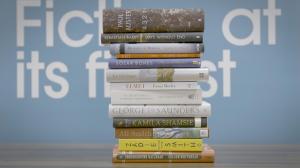
 I only started blogging about my predictions for literary award longlists relatively recently. Three of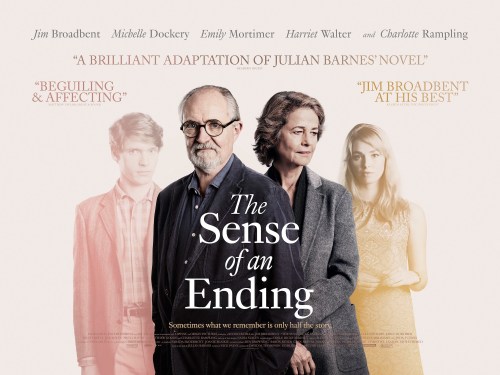
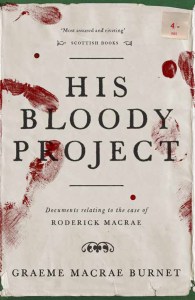 Shortlisted for this year’s Man Booker Prize, ‘His Bloody Project’ by Graeme Macrae Burnet tells the story of seventeen-year-old Roderick Macrae, accused of committing three brutal murders in a remote village in the Scottish Highlands in 1869. Presented as a series of documents “discovered” by the author whilst researching his family history, the first half of the book consists of Roddy’s written statement in which he confesses to the crimes and gives his version of events leading up to the murders followed by an account of the trial and verdict. The identity of one of the victims is revealed at the beginning to be local constable Lachlan Mackenzie while the other two remain a mystery until the event itself occurs.



 A Little Blog of Books
You must be logged in to post a comment.