
I don’t usually read many books about music in such a short space of time, but I have read some good non-fiction titles on the subject so far this year, which largely conclude that working in the music industry is not very good for your health.
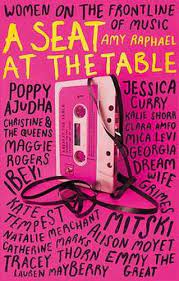 A Seat at the Table: Women on the Frontline of Music by Amy Raphael is a collection of 18 interviews with women who work in the music industry. The interviews were conducted in 2018-19 mostly with singers and songwriters across different genres while composer Jessica Curry, producer Catherine Marks and DJ Clara Amfo all reflect on similar issues with sexism and racism within the industry. In some ways, Alison Moyet and Tracey Thorn’s experiences finding fame in the 1970s and 1980s are a world away from those of the musicians who are starting out today who face the pressures of social media, #MeToo and dwindling album sales due to the rise of streaming, yet there are also some frustrating similarities such as not being taken as seriously as their male counterparts. Raphael has clearly put a lot of thought into the range of interviewees in this collection and it would be interesting to compare this alongside her 1995 companion book ‘Never Mind the Bollocks: Women Rewrite Rock’ which includes interviews with the like of Debbie Harry, Courtney Love and Bjork. Continue reading

 ‘Daisy Jones & The Six’ by Taylor Jenkins Reid charts the rise to fame of a fictional 1970s rock group based in California and the making of their seminal album ‘Aurora’. Billy Dunne formed The Six with his brother Graham and fellow band members, Eddie, Warren, Karen and Pete. Following the success of a collaboration with Daisy Jones,
 Winner of the Orange Prize for Fiction in 2002, ‘Bel Canto’ by Ann Patchett is set during a birthday party for Japanese businessman Katsumi Hosokawa held in his honour at the vice-president’s mansion in an unnamed South American country. While entertainment is provided by renowned American opera singer Roxane Coss, the property is suddenly stormed by terrorists who had originally planned to kidnap the president. However, in his absence, they end up holding dozens of guests under house arrest for several months.
  ‘The Noise of Time’ by Julian Barnes is a fictional account of the life of Dmitri Shostakovich, one of the most famous Russian composers of the twentieth century. The novel focuses on three key points in his life at twelve-year intervals. In the first part, Shostakovich is waiting by a lift shaft expecting the secret police to take him away and interrogate him at The Big House during the height of the purges in 1936. In the second part, he travels to the United States to deliver a speech on behalf of the Soviet Union in 1948. In the final part set in 1960, he is asked to become a party member under Khrushchev.
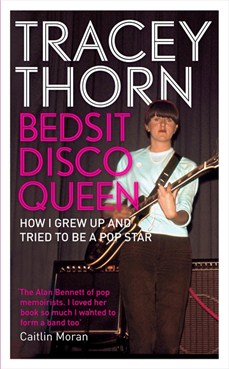
 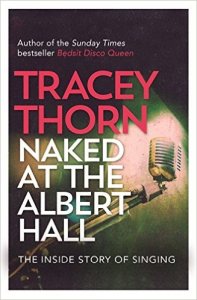 A couple of years ago, I really enjoyed reading Tracey Thorn’s memoir




 A Little Blog of Books
You must be logged in to post a comment.