 Medical memoirs such as This Is Going To Hurt by Adam Kay have vividly illustrated the highs and lows of working in the National Health Service and the importance of funding it properly. The Secret Barrister, an anonymous junior barrister practicing in London, now lifts the lid on the realities of the English and Welsh criminal justice system in ‘Stories of the Law and How It’s Broken’. Continue reading
Tag Archives: Non fiction
Brainstorm by Suzanne O’Sullivan and Also Human by Caroline Elton
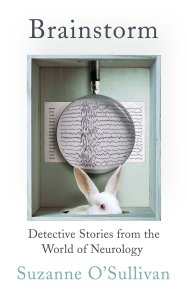 I enjoyed reading It’s All In Your Head by Suzanne O’Sullivan a couple of years ago, a collection of case studies about patients with psychosomatic illness in which medically unexplained physical symptoms are found to be caused by emotional stress. O’Sullivan is a consultant neurologist and her latest book ‘Brainstorm: Detective Stories from the World of Neurology’ focuses on the vast array of symptoms and types of seizures which can present in patients suspected of having epilepsy. Rather than the fits that many associate with the condition, some seizures manifest themselves in unexpected and dangerous ways which are not easy to explain to strangers. For example, August is a bright young woman who bolts and runs when she has a seizure with no awareness of her surroundings, often into the path of traffic. Others experience them in the form of bizarre auras, such as Donal, a school janitor who learns that he might be at risk of losing his job due to cuts, starts experiencing hallucinations of cartoon dwarves. Continue reading
Filed under Books
Three Non-Fiction Books About Books
I have been reading more non-fiction than ever recently, moving away from the science and medical themed books I covered for the Wellcome Book Prize shortlist to memoirs about all things literary, specifically writing, libraries and children’s literature. Here are three titles I recommend to bookworms everywhere:
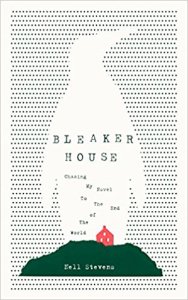 Bleaker House: Chasing My Novel to the End of the World by Nell Stevens is an account of her attempt to write a novel by living in the Falkland Islands for three months using funding from her Global Fellowship at the end of her creative writing course at Boston University. After arriving in Stanley where many of the 2,500 residents are based, she lived in self-imposed isolation on the uninhabited Bleaker Island for several weeks, believing that a total lack of distraction would be beneficial for her levels of creativity and productivity. For her stint on Bleaker Island, she had to pack all of her food supplies, restricting herself to just over 1,000 calories a day living mostly on instant porridge and Ferrero Rocher with just a copy of the film ‘Eat Pray Love’ on her laptop for company. Despite the unusual setting, Stevens’ experience of writing procrastination will resonate with anyone who has ever had an essay deadline to meet, even if her expectations and lack of preparation for some aspects of her trip are a tad infuriating in places. Extracts of her fiction are interspersed throughout and while these chapters are variable in quality and pad out what would otherwise be a very slim book, I think they are worth reading to get a sense of her creative output at the time. Overall, this is an interesting and often very funny account of a unique travel experience which proved to be inspiring for Stevens in the end, even if it wasn’t quite in the way she had initially bargained for. Continue reading
Filed under Books
Rathbones Folio Prize: Q&A with Richard Lloyd Parry
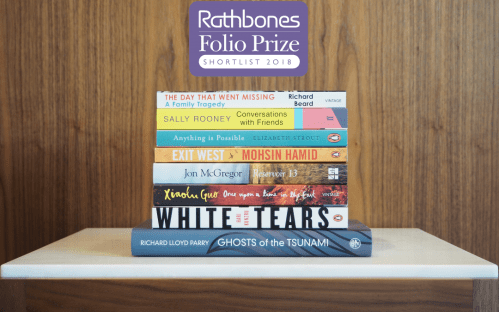
Today I’m very pleased to host a Q&A with Richard Lloyd Parry who has been shortlisted for the Rathbones Folio Prize for his brilliant book Ghosts of the Tsunami – one of the best books I read in 2017. It is a narrative non-fiction account about the aftermath of the tsunami which devastated the east coast of Japan on 11th March 2011 and how it impacted a small community where many people lost their lives. I’m very pleased that this riveting book has recently been shortlisted for the Rathbones Folio Prize – a relatively new literary award in which 60 fiction and non-fiction books are nominated by members of the Folio Academy and then whittled down to a shortlist of eight. This year’s list also includes two novels I have read and enjoyed very much: Conversations with Friends by Sally Rooney and Reservoir 13 by Jon McGregor.
Q&A with Richard Lloyd Parry
1. At what age did you know you wanted to become a writer?
Eighteen. I thought that wanted to direct plays, but brief experience at university made me realise how dependent theatre is on the temperamental peculiarities of other people. I prefer to work alone, or in a small team. Continue reading
Comments Off on Rathbones Folio Prize: Q&A with Richard Lloyd Parry
Filed under Books
The Butchering Art by Lindsey Fitzharris
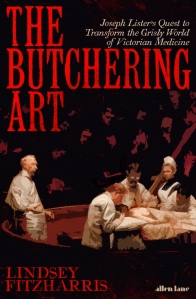 My final Wellcome Book Prize shortlist post is also part of the final day of the blog tour showcasing each book before the winner is announced tomorrow. ‘The Butchering Art: Joseph Lister’s Quest to Transform the Grisly World of Victorian Medicine’ by Lindsey Fitzharris is one of the titles I was particularly interested in reading when the longlist was announced in February. Although Lister is the main biographical subject of the book, ‘The Butchering Art’ also works as a more general narrative non-fiction account of the history of surgery in the mid 19th century. Continue reading
Filed under Books
With the End in Mind by Kathryn Mannix
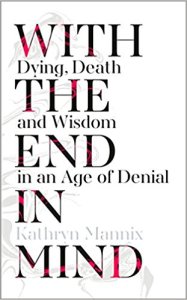 ‘With the End in Mind: Dying, Death and Wisdom in an Age of Denial’ by Dr Kathryn Mannix is a collection of anonymised patient case studies (or “stories” as Mannix calls them) drawn from her thirty years of experience as a palliative care clinician and consultant. It has been shortlisted for this year’s Wellcome Book Prize which I am shadowing with fellow book bloggers Rebecca, Laura, Annabel and Paul and is notably similar to one of the previous winners It’s All In Your Head by Suzanne O’Sullivan in that it seeks to demystify one of the most misunderstood aspects of medicine. In this case, it is death – the event that we will all one day meet (unless the transhumanists Mark O’Connell wrote about in To Be a Machine have their way…).
Continue reading
Filed under Books
Mayhem by Sigrid Rausing
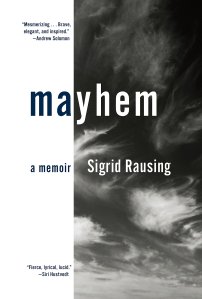 Shortlisted for the Wellcome Book Prize, ‘Mayhem’ is Sigrid Rausing’s family memoir about drug addiction. Her younger brother and heir to the Tetra Pak fortune, Hans Kristian, met American businesswoman, Eva Kemeny, when they were in rehab together in the late 1980s. They later married and became well-known philanthropists based in London. However, they relapsed and in 2007, Sigrid was granted custody of Hans and Eva’s four children. In July 2012, Hans was stopped by the police after driving erratically through London and was found with drugs in his possession. When the police searched his Belgravia mansion, they discovered Eva’s remains hidden under a mattress. She had been dead for approximately two months. Continue reading
Filed under Books
To Be a Machine by Mark O’Connell
Over the next few weeks, I will be shadowing the Wellcome Book Prize shortlist with fellow book bloggers Rebecca, Laura, Annabel and Paul. The £30,000 prize is awarded to a book about any aspect of health, medicine or illness and this year’s six shortlisted titles are: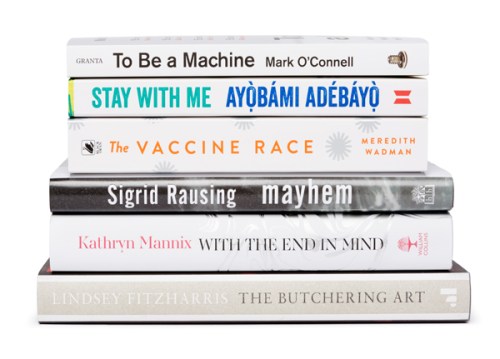
I read and reviewed the only fiction title Stay With Me last year which leaves the five non-fiction titles to read over the next few weeks. First up is ‘To Be a Machine: Adventures Among Cyborgs, Utopians, Hackers, and the Futurists Solving the Modest Problem of Death’ by Mark O’Connell which was also shortlisted for the Baillie Gifford Prize for Non-Fiction last year. While most of the books on the Wellcome Book Prize shortlist deal with illness, ‘To Be a Machine’ is more about what it is to be human or “post-human” in which O’Connell, a freelance journalist, explores the transhumanist movement which is “predicated on the conviction that we can and should use technology to control the future evolution of our species” (p.2) and advocates “nothing less than a total emancipation from biology itself” (p.6). In other words, transhumanists want to eliminate ageing as a cause of death. Continue reading
Filed under Books
Fire and Fury: An Evening with Michael Wolff and Armando Iannucci
 It’s almost impossible to avoid hearing about Donald Trump’s latest exploits via rolling news headlines every day, but until now, I hadn’t read any books detailing the whole sorry saga of the Trump administration to date. However, ‘Fire and Fury: Inside the Trump White House’ is very much the book of the moment and seeing its author Michael Wolff in conversation with Armando Iannucci (creator of some of the best TV political satires including ‘The Thick of It’ and ‘Veep’) at the Friends House near Euston in London on Friday night was simply too good an opportunity to miss. Continue reading
Filed under Books
The Wellcome Book Prize Longlist 2018
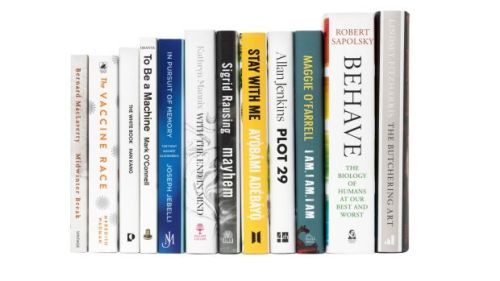 This year’s Wellcome Book Prize longlist has been announced today. The twelve books are:
Stay With Me by Ayọ̀bámi Adébáyọ̀
The Butchering Art: Joseph Lister’s Quest to Transform the Grisly World of Victorian Medicine by Lindsey Fitzharris
In Pursuit of Memory: The Fight Against Alzheimer’s by Joseph Jebelli
Plot 29: A Memoir by Allan Jenkins
The White Book by Han Kang (translated by Deborah Smith)
With the End in Mind: Dying, Death and Wisdom in an Age of Denial by Kathryn Mannix
Midwinter Break by Bernard MacLaverty
To Be a Machine: Adventures Among Cyborgs, Utopians, Hackers, and the Futurists Solving the Modest Problem of Death by Mark O’Connell
I Am, I Am, I Am: Seventeen Brushes With Death by Maggie O’Farrell
Mayhem: A Memoir by Sigrid Rausing
Behave: The Biology of Humans at Our Best and Worst by Robert Sapolsky
The Vaccine Race: How Scientists Used Human Cells to Combat Killer Viruses by Meredith Wadman Continue reading
Filed under Books
Feel Free by Zadie Smith
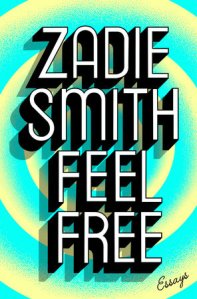 ‘Feel Free’ is a new collection of over thirty essays, reviews and interviews by Zadie Smith divided into five sections. The first and last of these, ‘In the World’ and ‘Feel Free’, cover current events and some autobiographical “life writing”, while ‘In the Audience’, ‘In the Gallery’ and ‘On the Bookshelf’ concern her musings on film, art and writing respectively.
Covering a vast array of topics, the collection opens with an impassioned defence of libraries (“the only thing left on the high street that doesn’t want either your soul or your wallet”) while a new security fence constructed around her daughter’s primary school is the springboard for a nuanced and insightful piece on Brexit. As to be expected, some of the more in-depth reviews may only be of real interest for those who already know about the subject matter. I am familiar with some of the films and authors discussed here (‘The Social Network’, ‘Get Out’ and Karl Ove Knausgaard are all featured), but it has to be said that the more academic essays about art were less appealing to me and I skimmed most of these. As well as subject matter, the essays were originally written for very different audiences across different publications and while many pieces first appeared in the New York Review of Books and Harper’s magazine, some were delivered as lectures. Continue reading
Filed under Books
Three Non-Fiction Books About Medicine
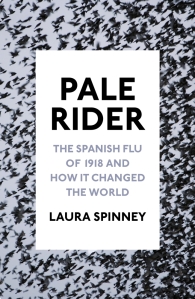 Pale Rider: The Spanish Flu of 1918 and How It Changed The World by Laura Spinney probably isn’t what most people consider to be cosy festive reading over Christmas but it is somewhat seasonal. Much of what has been written about the Spanish flu tends to focus on the impact it had on Western countries in the aftermath of the First World War but Spinney’s book is a refreshingly global account of how the virus reached all corners of the earth from Alaska to Rio de Janeiro to Samoa to China. Estimates remain vague but the Spanish flu is believed to have killed at least 50 million people worldwide, possibly as many as 100 million, and its rapid spread is likely to have been partly exacerbated by soldiers returning home at the end of the First World War. Continue reading
Filed under Books
My Most Anticipated Books of 2018
Happy new year! Without further ado, here is a selection of 20 upcoming titles I will be looking out for in 2018 (publication dates where known apply to the UK):
 Among non-fiction titles, 21 Lessons for the 21st Century by Yuval Noah Harari will be out in August as the historian turns his attention to issues in the present day following the success of Sapiens and Homo Deus. I have a particular interest in non-fiction concerning healthcare and medicine and two books I will be looking out for are Shapeshifters: On Medicine and Human Change by Gavin Francis and Brainstorm: Detective Stories from the World of Neurology by Suzanne O’Sullivan. Elsewhere, Feel Free by Zadie Smith is a collection of the celebrated author’s essays on a variety of subjects due in February. Continue reading
Filed under Books
My Books of the Year 2017
I have read a lot of great books this year, some new and some not quite so new. Here are some of my favourites:
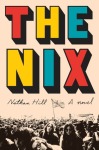 Among new fiction titles, The Nix by Nathan Hill and Little Fires Everywhere by Celeste Ng were both memorable stand-outs. I also reread His Dark Materials by Philip Pullman ahead of the publication of La Belle Sauvage, the first part of the Book of Dust trilogy – a thrilling and imaginative story which did not disappoint. Solar Bones by Mike McCormack was an unexpected delight from this year’s Man Booker Prize longlist – beautifully written, gripping, funny and inventive. Continue reading
Filed under Books
The Diary of a Bookseller by Shaun Bythell
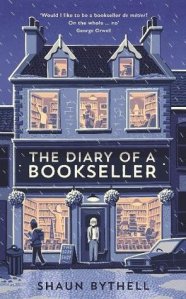 ‘The Diary of a Bookseller’ is Shaun Bythell’s account of running Scotland’s largest second-hand bookshop which he bought in 2001 in Wigtown, Scotland’s national book town. While many book lovers may dream about spending all day every day working in a rambling Georgian townhouse stuffed with over 100,000 books, Bythell’s diaries from 2014 to early 2015 dispel a lot of the romanticised myths about running a bookshop, particularly when it comes to the realities of competing against a certain online retailer. Continue reading
Filed under Books
Outlandish Knight: The Byzantine Life of Steven Runciman by Minoo Dinshaw
 The first non-fiction title to be shortlisted since the 2015 relaunch of the Sunday Times Young Writer of the Year Award is ‘Outlandish Knight: The Byzantine Life of Steven Runciman’ by Minoo Dinshaw. Runciman was an English historian and author who wrote several books about the Byzantine Empire and the Crusades and is still regarded as one of the most influential voices on the subject in academic circles and beyond. Continue reading
Filed under Books
Ghosts of the Tsunami by Richard Lloyd Parry
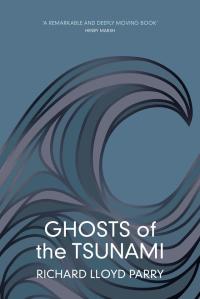 ‘Ghosts of the Tsunami: Death and Life in Japan’s Disaster Zone’ is Richard Lloyd Parry’s account of the devastation caused by the 9.0 magnitude earthquake which struck off the coast of north-east Japan on 11th March 2011 and the 120-foot high tsunami which followed less than an hour later. Much of the international news coverage at the time focused on the destruction of the Fukushima nuclear reactor. However, ‘Ghosts of the Tsunami’ centres on one particular human tragedy, namely the avoidable deaths of 74 pupils who should have been safely evacuated from Okawa Primary School. Continue reading
Filed under Books
Edinburgh Book Festival: I Am, I Am, I Am by Maggie O’Farrell
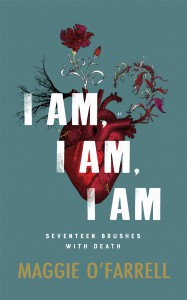 The last event I attended at the Edinburgh International Book Festival on Monday was Maggie O’Farrell in conversation with Hannah Beckerman. The discussion during the first half focused on her latest novel This Must Be The Place which I read last year while the second half explored her new book and first work of non-fiction ‘I Am, I Am, I Am: Seventeen Brushes With Death’ which is published in the UK this week. Continue reading
Filed under Books
Edinburgh Book Festival: Admissions by Henry Marsh
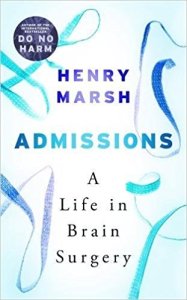 I have spent the past few days at the Edinburgh International Book Festival and on Monday, I went to a talk by Henry Marsh about his new book ‘Admissions: A Life in Brain Surgery’. I really enjoyed reading Do No Harm: Stories in Life, Death and Brain Surgery in 2014 in which he reflected on the successes and failures of his career as a consultant neurosurgeon and his frustrations with NHS hospital management with remarkable frankness. As the clever pun in the title suggests, his second book is similarly confessional and candid, perhaps even more so in some respects. Continue reading
Filed under Books
Three Political Books I’ve Read Recently
Political events across the world continue to move at a whirlwind pace, particularly here in the UK. Here are my recommendations for three recent non-fiction books about British politics.
 ‘The Women Who Shaped Politics’ by Sophy Ridge offers a broad overview of the female campaigners and Members of Parliament who have shifted the political landscape in Westminster. The first half focuses on historical pioneers such as Mary Wollstonecraft and those involved in the suffragette movement while the second half draws on interviews with a range of contemporary female politicians including current Prime Minister Theresa May. Continue reading
Filed under Books



 A Little Blog of Books
You must be logged in to post a comment.