 After a long period of reading either novels or non-fiction, I have been reading some short story collections recently, possibly a result of my slightly shorter attention span in recent weeks.
I found a copy of Treats by Lara Williams in a charity shop shortly after I read the author’s debut novel Supper Club which was published last summer. This very short collection – 21 stories in just over 100 pages – published in 2016 by the now-defunct Freight Books includes more of the same sharply observed prose about modern life, usually from the point of view of millennial age characters. Consequently, Williams is particularly good on the ways in which reality does not always meet expectations, whether it’s graduate job-hunting, relationships after university or creative writing courses. Her stories written in the second person are also very effective – a tricky perspective to get right. Overall, this is a fresh contemporary collection written by a striking new voice. Continue reading

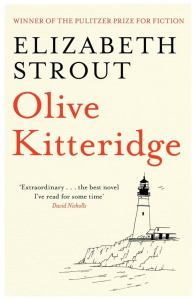 I really enjoyed watching the HBO TV mini-series adaptation of ‘Olive Kitteridge’ last year and have been keen to read the original book by Elizabeth Strout which won the Pulitzer Prize for Fiction in 2009. It is a novel in the form of 13 linked short stories set in the coastal town of Crosby, Maine centred around the life of the eponymous character during late middle age after retiring from her job as a junior high school maths teacher. Her gregarious husband, Richard, is a pharmacist and her son, Christopher, is a podiatrist. However, there are long-standing tensions in the family with Olive seemingly unable to communicate affection towards those closest to her.
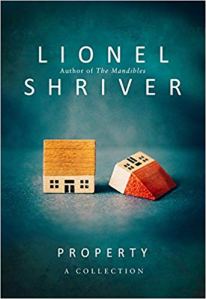 By coincidence, I have recently read two collections of short fiction by two of my favourite authors which bring together stories united around specific themes. ‘Property’ is Lionel Shriver’s first collection of short stories which all address the title’s literal definition in relation to real estate and also in a more figurative sense as ownership and possession. Ten shorter pieces many of which have previously been published in magazines are bookended by two novellas ‘The Standing Chandelier’ about the dynamics of Weston Babansky’s 20+ year friendship with Jillian Frisk and her unusual choice of wedding gift when he marries his girlfriend Paige and ‘The Subletter’ written in 1999 about an American journalist living in Belfast during the Troubles who has territorial struggles of her own.
 Among non-fiction titles, 21 Lessons for the 21st Century by Yuval Noah Harari will be out in August as the historian turns his attention to issues in the present day following the success of
 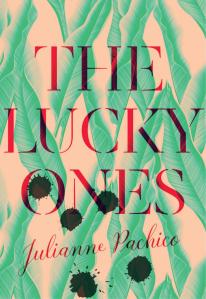 ‘The Lucky Ones’ by Julianne Pachico is described as a novel by its US publishers whereas it has been billed as a collection of interlinked short stories in the UK where it has recently been shortlisted for this year’s
 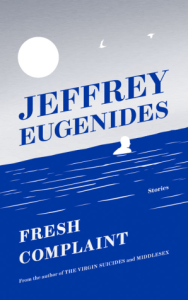 ‘Fresh Complaint’ is a collection of 10 short stories by Jeffrey Eugenides. The first and last stories in the collection, ‘Complainers’ and ‘Fresh Complaint’, are new and have never been published before while the rest have appeared in the New Yorker and other magazines over the past three decades or so.
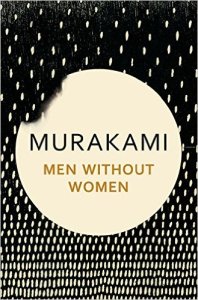 ‘Men Without Women’ by Haruki Murakami is the renowned Japanese author’s first new collection of short stories to be translated into English in over a decade. Echoing Ernest Hemingway’s collection of the same name, the seven tales in this collection are indeed about men experiencing loneliness and isolation without the women who are now absent from their lives for various reasons. The stories have been translated by Ted Goossen and Philip Gabriel who have both worked on many of Murakami’s previous books.
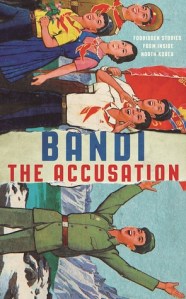 Translated from the Korean by last year’s Man Booker International Prize winner Deborah Smith ‘The Accusation’ by Bandi is a collection of seven short stories by a pseudonymous author who reportedly still lives in North Korea and works as an official writer for the government. Written in the early 1990s at a time when the country was gripped by famine, it is said that Bandi’s stories were eventually smuggled into South Korea by a relative who hid sheets of paper in a copy of ‘The Selected Works of Kim Il-sung’. While there have been many accounts of life in North Korea published by defectors, a work of fiction by an author still living in one of the most secretive countries in the world is exceptionally rare.
 The early months of the year tend to be when lots of debut novels are plugged heavily by publishers. The Nix by Nathan Hill has been a big success in the United States drawing comparisons with everyone from Jeffrey Eugenides to David Foster Wallace and is out this month in the UK. See What I Have Done by Sarah Schmidt is another high-profile debut due in May billed as a historical murder mystery while Lincoln in the Bardo by George Saunders is the long-awaited first novel from the prolific short story writer and is a fictional re-imagining of events following the death of Abraham Lincoln’s son Willie.

 It’s been a long time since I’ve read a collection of short stories so when Lydia Davis won the Man International Booker Prize earlier this year, I decided to investigate her work.



 A Little Blog of Books
You must be logged in to post a comment.