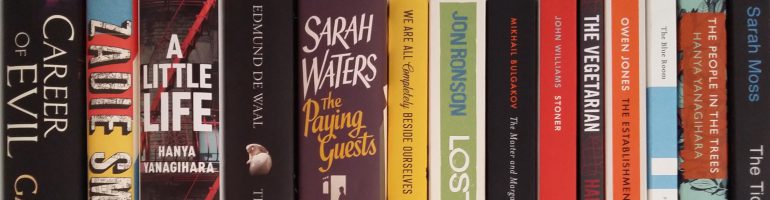

The Wellcome Book Prize is awarded to a fiction or non-fiction book about health or medicine. Since its launch in 2009, there has been a shortlist of six books but this year, there is a longlist of twelve books for the very first time. The nominated books which were announced today are:
- How to Survive a Plague by David France
- Homo Deus by Yuval Noah Harari
- When Breath Becomes Air by Paul Kalanithi
- Mend the Living by Maylis de Kerangal (translated from the French by Jessica Moore)
- The Golden Age by Joan London
- Cure by Jo Marchant
- The Tidal Zone by Sarah Moss
- The Gene by Siddhartha Mukherjee
- The Essex Serpent by Sarah Perry
- A Brief History of Everyone Who Ever Lived by Adam Rutherford
- Miss Jane by Brad Watson
- I Contain Multitudes by Ed Yong
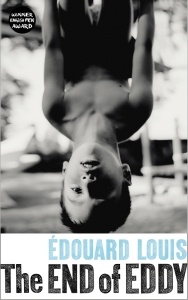 ‘The End of Eddy’ by Édouard Louis is a semi-autobiographical novel set in a deprived rural community in Picardy in northern France. Translated by Michael Lucey, it is a coming of age tale about Eddy Bellegueule (the author’s real name) and his life at home and at school in the late 1990s and 2000s. Eddy is gay and struggles to conform to what is widely perceived to be an acceptable type of masculinity in the small village where he is expected to go to work in the factory as soon as he leaves school. His mannerisms are routinely mocked by his peers and his family, particularly his father who even chose Eddy’s name because it sounds American and more “tough guy”. ‘The End of Eddy’ garnered lots of attention in France because Louis published his debut novel in 2014 when he was just 21 years old. However, aside from Louis’s young age and the unflinching descriptions of Eddy exploring his sexuality, ‘The End of Eddy’ also deserves acclaim more generally for articulating the reality of social exclusion in modern-day France so convincingly. Many thanks to Harvill Secker for sending me a review copy via NetGalley.
 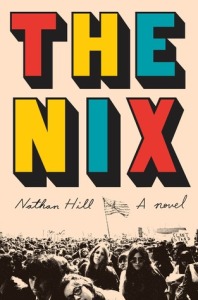 ‘The Nix’ by Nathan Hill tells the story of Samuel Andresen-Anderson, a thirty-something college professor with writer’s block whose estranged mother Faye is arrested for throwing rocks at a conservative Presidential candidate and subsequently portrayed in the media as a radical hippie. Samuel is on the verge of being sued by his publisher for failing to produce the novel he received a huge advance for several years earlier and in order to avoid bankruptcy, he must write a biography of his mother who he hasn’t seen for over twenty years. However, his quest for information about Faye reveals that she has a far more complex past than he ever imagined.
 Little Deaths’ by Emma Flint tells the story of Ruth Malone, a 26-year-old recently divorced single mother whose two young children Cindy and Frankie go missing from their home in Queens, New York. After they are both found dead in separate locations days later, it doesn’t take long for the police to suspect that Ruth had something to do with their disappearance. However, in the absence of any hard evidence, they draw their conclusions purely from what they consider to be her stylish appearance and unconventional behaviour following the murders. Meanwhile, local journalist Pete Wonicke becomes determined to prove Ruth’s innocence.
 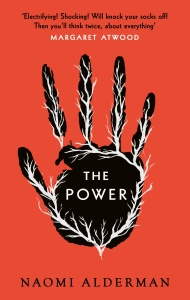 One of the books which kept cropping up frequently in lots of end-of-year book lists last month was ‘The Power’ by Naomi Alderman and so it got bumped up my TBR list as one of my not-very-festive Christmas holiday reads. The main concept of Alderman’s fourth novel explores what would or could happen in a world where women become more powerful than men in every sense. Due to a mutation caused by a nerve agent used during the Second World War, teenage girls develop the ability to release electrical jolts through their fingertips which can be either harmless or strong enough to kill people. The “power” eventually spreads and although it is initially used by women as a deterrent against violent and abusive men who have oppressed them, it has far-reaching implications beyond that.
 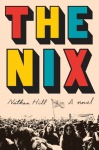 The early months of the year tend to be when lots of debut novels are plugged heavily by publishers. The Nix by Nathan Hill has been a big success in the United States drawing comparisons with everyone from Jeffrey Eugenides to David Foster Wallace and is out this month in the UK. See What I Have Done by Sarah Schmidt is another high-profile debut due in May billed as a historical murder mystery while Lincoln in the Bardo by George Saunders is the long-awaited first novel from the prolific short story writer and is a fictional re-imagining of events following the death of Abraham Lincoln’s son Willie.
 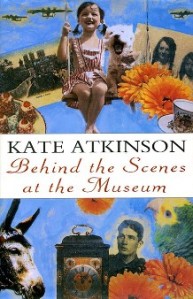 ‘Behind the Scenes at the Museum’ is Kate Atkinson’s debut novel first published in 1995 and narrated by Ruby Lennox born in 1952 to a middle-class family who live above a pet shop in York. The plot alternates between chapters recounting significant events in Ruby’s childhood during the 1950s and 1960s and extended “footnotes” about the earlier generations of her family told in non-chronological order. Most significantly, the story of what happened to Ruby’s great-grandmother Alice has implications for the whole family for many years to come.




 A Little Blog of Books
You must be logged in to post a comment.