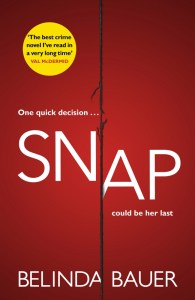
 The opening chapter of ‘Snap’ by Belinda Bauer presents a chilling premise based on the unsolved murder of Marie Wilks. On a hot day in the summer of 1998, eleven-year-old Jack Bright is left in a broken-down car by the side of a motorway with his two younger sisters, Joy and Merry, while their pregnant mother, Eileen, goes in search of a telephone for help. However, she never returns and her body is eventually found stabbed to death.
Three years later and abandoned by their father who was unable to cope, Jack turns to burgling houses to provide for his sisters and escape being noticed by social services. On the other side of town, a young pregnant woman, Catherine While, discovers a knife next to her bed with a note that reads “I could have killed you” but she decides not to tell her husband about the break-in or report it to the police. Elsewhere, DS Reynolds who does everything by the book and DCI Marvel who takes a slightly more unorthodox approach towards detective work are investigating multiple burglaries and the identity of Eileen’s killer who still hasn’t been caught and are in a race against time to solve both mysteries. Continue reading
 I have recently read this year’s winner of the Man Booker International Prize ‘Flights’ by Olga Tokarczuk which was first published in Poland back in 2007 and has been translated by Jennifer Croft. I didn’t have time to shadow the MBIP last spring but as August is Women in Translation Month, this seemed like a good time to find out what to make of it. ‘Flights’ is about an unnamed woman and her reflections on travelling – and that’s about it as far as plot goes in this very fragmented book which can only be described as a “novel” in the loosest sense possible as it is more of a collection of thematically linked observations and vignettes.
  2018 marks the centenary of Muriel Spark’s birth and I have recently read her autobiography ‘Curriculum Vitae’ and one of her most famous novels ‘The Driver’s Seat’ which was first published in 1970. The main protagonist, Lise, is in her mid-thirties and is unhappy with her dead-end job. She hops on a plane to an unnamed southern European city looking for adventure and has a series of odd interactions with even odder people she meets along the way. Spark ingeniously drops a massive spoiler at the beginning of the third chapter in which it is casually stated that Lise “will be found tomorrow morning dead from multiple stab-wounds, her wrists bound with a silk scarf and her ankles bound with a man’s necktie, in the grounds of an empty villa, in a park of the foreign city to which she is travelling on the flight now boarding at Gate 14.” The narrative then continues as if this information had never been mentioned and the mystery of who the perpetrator is and how and why the murder occurs isn’t revealed until the final paragraphs.
 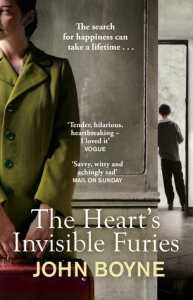 ‘The Heart’s Invisible Furies’ by John Boyne
 The Man Booker Prize longlist will be announced on Tuesday 24th July and the annual guessing game of “posh bingo” commences once again. When considering which books could make the cut, I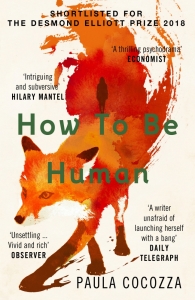
 Medical memoirs such as
  The final part of Margaret Atwood’s MaddAddam trilogy brings together the bioengineered Crakers from
 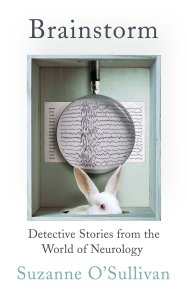 I enjoyed reading
 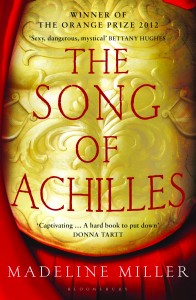 ‘The Song of Achilles’ by Madeline Miller is a modern retelling of ‘The Iliad’ and won the Women’s Prize (then Orange Prize) for Fiction in 2012. Whereas Homer’s epic was told from the perspective of demi-god Achilles as the warrior hero of ancient Greece, it is the exiled prince Patroclus who takes centre stage here, having been a minor character in the original. In Miller’s interpretation of events, Achilles and Patroclus are inseparable childhood friends who later become lovers, and when the time comes for Achilles to fulfil his destiny, Patroclus follows him to war with the Trojans.
  The Man Booker Prize is celebrating its 50th anniversary this year with a “best of the best”
 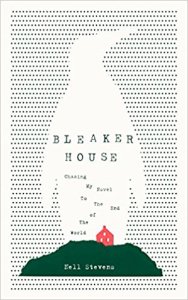 Bleaker House: Chasing My Novel to the End of the World by Nell Stevens is an account of her attempt to write a novel by living in the Falkland Islands for three months using funding from her Global Fellowship at the end of her creative writing course at Boston University. After arriving in Stanley where many of the 2,500 residents are based, she lived in self-imposed isolation on the uninhabited Bleaker Island for several weeks, believing that a total lack of distraction would be beneficial for her levels of creativity and productivity. For her stint on Bleaker Island, she had to pack all of her food supplies, restricting herself to just over 1,000 calories a day living mostly on instant porridge and Ferrero Rocher with just a copy of the film ‘Eat Pray Love’ on her laptop for company. Despite the unusual setting, Stevens’ experience of writing procrastination will resonate with anyone who has ever had an essay deadline to meet, even if her expectations and lack of preparation for some aspects of her trip are a tad infuriating in places. Extracts of her fiction are interspersed throughout and while these chapters are variable in quality and pad out what would otherwise be a very slim book, I think they are worth reading to get a sense of her creative output at the time.
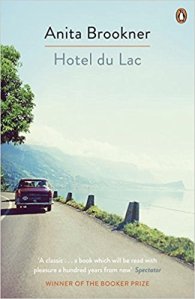 I haven’t read many of the early winners of the Booker Prize but ‘Hotel du Lac’ by Anita Brookner is one I have been meaning to read ahead of the
 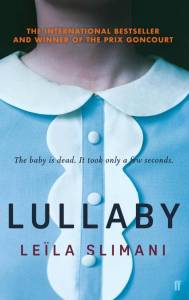 Winner of the prestigious Prix Goncourt and recently translated from the French by Sam Taylor, ‘Lullaby’ by Leïla Slimani has been one of the most talked-about novels so far this year, partly inspired by a real-life case of a nanny who killed two children in New York in 2012. Paul and Myriam live in a fashionable area of north-west Paris with their two young children, Mila and Adam. Paul works in the music business and Myriam is a criminal lawyer of North African descent who hires a nanny, Louise, to look after the children when she decides to resume her career. Initially, Louise appears to be perfect and indispensable to the family, but her behaviour becomes increasingly concerning.
 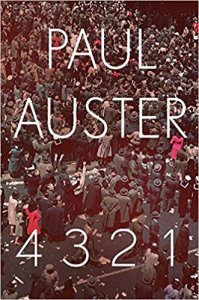 Shortlisted for the Man Booker Prize last year, ‘4 3 2 1’ by Paul Auster consists of four different versions of the life of Archibald Issac Ferguson, born in Newark, New Jersey in 1947 (the same year as Auster). Descended from Russian-Jewish immigrants, Archie is the only child of Rose and Stanley Ferguson and during his early childhood, random events change the path of his life splitting into four different trajectories – in one version his parents divorce, in another they stay together, in another Stanley dies, and so on. The parallel structure means that each of the seven parts is rewound three times before moving on to the next stage in Archie’s life covering his early childhood through to his coming-of-age in the late 1960s.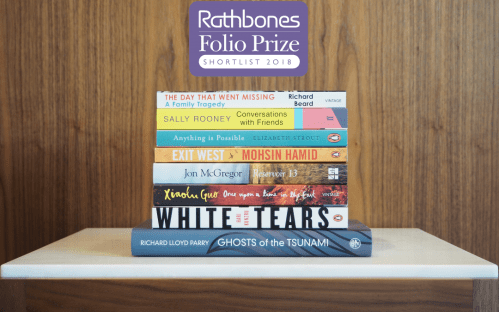
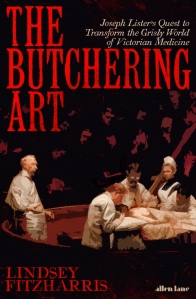 My final Wellcome Book Prize shortlist post is also part of the final day of the blog tour showcasing each book before the winner is announced tomorrow. ‘The Butchering Art: Joseph Lister’s Quest to Transform the Grisly World of Victorian Medicine’ by Lindsey Fitzharris is one of the titles I was particularly interested in reading when the longlist was announced in February. Although Lister is the main biographical subject of the book, ‘The Butchering Art’ also works as a more general narrative non-fiction account of the history of surgery in the mid 19th century.
 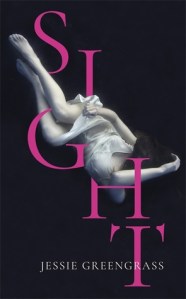 I haven’t yet finished shadowing this year’s Wellcome Book Prize shortlist but I have already come across a novel which has very strong potential to be on next year’s longlist of books which engage in some aspect of health, illness or medicine. I enjoyed reading Jessie Greengrass’s collection of short stories




You must be logged in to post a comment.