 ‘Asymmetry’ by Lisa Halliday consists of two seemingly unrelated stories which are eventually revealed to have surprising connections. The first part, ‘Folly’, concerns Alice, an editorial assistant in her twenties living in post 9/11 New York City who begins a relationship with a much older man, a Jewish author named Ezra Blazer who has repeatedly been overlooked for a Nobel Prize for Literature. In the second part, ‘Madness’, an Iraqi-American economist, Amar Jaafari, is on his way to Kurdistan to visit his brother but is detained by immigration officials at Heathrow Airport. Continue reading
Tag Archives: Book Review
Asymmetry by Lisa Halliday
Filed under Books
Fire and Fury: An Evening with Michael Wolff and Armando Iannucci
 It’s almost impossible to avoid hearing about Donald Trump’s latest exploits via rolling news headlines every day, but until now, I hadn’t read any books detailing the whole sorry saga of the Trump administration to date. However, ‘Fire and Fury: Inside the Trump White House’ is very much the book of the moment and seeing its author Michael Wolff in conversation with Armando Iannucci (creator of some of the best TV political satires including ‘The Thick of It’ and ‘Veep’) at the Friends House near Euston in London on Friday night was simply too good an opportunity to miss. Continue reading
Filed under Books
The Accident on the A35 by Graeme Macrae Burnet
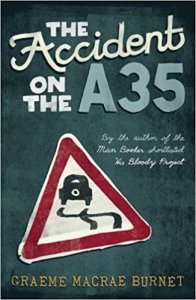 ‘The Accident on the A35’ by Graeme Macrae Burnet sees the return of Inspector Georges Gorski who featured in The Disappearance of Adèle Bedeau. His latest case in the sleepy French town of Saint-Louis in Alsace involves the circumstances surrounding a car accident which fatally injures prominent local solicitor Bertrand Barthelme. Although there is no evidence to suggest a crime has been committed, it is soon discovered that Barthelme had repeatedly lied about his whereabouts to his wife Lucette and teenage son Raymond so Gorski agrees to Lucette’s request to look into the circumstances further. Meanwhile Raymond discovers the address of a house in the rue Saint-Fiacre in Mulhouse on a piece of paper in his father’s desk and sets out to conduct his own investigation.
Filed under Books
Larry’s Party by Carol Shields

Winner of the Orange Prize for Fiction in 1998, ‘Larry’s Party’ is the third book I have read by Carol Shields. I read ‘Unless’ a couple of years ago but didn’t love it, didn’t review it and now can’t really remember anything about it. However, I really enjoyed The Stone Diaries back in 2013 and ‘Larry’s Party’ is very similar in many ways – both novels are fictional biographies of “ordinary” people who live quiet yet complex lives. While ‘The Stone Diaries’ spans nearly the whole 20th century, ‘Larry’s Party’ is slightly more focused in scope covering a mere two decades of the life of Laurence “Larry” J. Weller, born in 1950 in Winnipeg to English immigrant parents. Continue reading
Filed under Books
Cold Earth by Sarah Moss
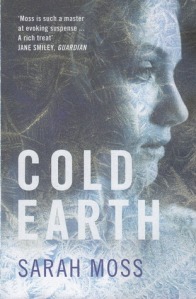 I have really enjoyed all of the books by Sarah Moss I have read to date and I recently read her 2009 debut novel ‘Cold Earth’. It follows a team of six archaeologists and academics who travel to western Greenland for a three week dig excavating the remains of a Viking settlement. They leave behind their homes in the United States and Europe just as a deadly flu-like virus has started to spread rapidly across the world. Archaeologists Catriona, Ben, Jim and Ruth are joined by team leader Yianni and his friend Nina, the only non-archaeologist in the group whose academic research is vaguely linked to Norse literature. However, Nina experiences night terrors and becomes convinced that the supernatural events are the result of ghosts disturbed by the group’s dig at their resting place. Continue reading
Filed under Books
Feel Free by Zadie Smith
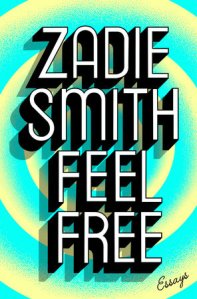 ‘Feel Free’ is a new collection of over thirty essays, reviews and interviews by Zadie Smith divided into five sections. The first and last of these, ‘In the World’ and ‘Feel Free’, cover current events and some autobiographical “life writing”, while ‘In the Audience’, ‘In the Gallery’ and ‘On the Bookshelf’ concern her musings on film, art and writing respectively.
Covering a vast array of topics, the collection opens with an impassioned defence of libraries (“the only thing left on the high street that doesn’t want either your soul or your wallet”) while a new security fence constructed around her daughter’s primary school is the springboard for a nuanced and insightful piece on Brexit. As to be expected, some of the more in-depth reviews may only be of real interest for those who already know about the subject matter. I am familiar with some of the films and authors discussed here (‘The Social Network’, ‘Get Out’ and Karl Ove Knausgaard are all featured), but it has to be said that the more academic essays about art were less appealing to me and I skimmed most of these. As well as subject matter, the essays were originally written for very different audiences across different publications and while many pieces first appeared in the New York Review of Books and Harper’s magazine, some were delivered as lectures. Continue reading
Filed under Books
The Mermaid and Mrs Hancock by Imogen Hermes Gowar
 Set in eighteenth century Britain, ‘The Mermaid and Mrs Hancock’ by Imogen Hermes Gowar tells the story of Jonah Hancock, a middle-aged widower and respectable Deptford merchant who discovers that the captain of one of his ships has sold his vessel in exchange for a stuffed “mermaid”. Although initially horrified by this transaction, Mr Hancock is later persuaded to profit from the rare curiosity he has acquired and loans the mermaid to Mrs Chappell for display at her infamous high society parties and Soho brothel. Celebrated courtesan Angelica Neal is tasked with entertaining Mr Hancock which she sees as an irritating distraction at first. However, as the display becomes the talk of London, Angelica decides she wants a mermaid of her own and Mr Hancock does whatever it takes to find another one. Continue reading
Filed under Books
Winter by Ali Smith
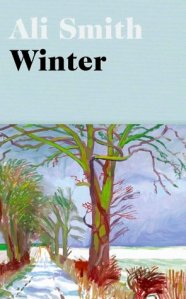 ‘Winter’ is the second volume in the seasons cycle of novels by Ali Smith. It is loosely set at a family gathering in which twenty-something Art (Arthur) visits his mother Sophia Cleves in Cornwall over Christmas. Art has recently been dumped by Charlotte and hires a Croatian-Canadian immigrant, Lux, to pretend to be his girlfriend. Meanwhile, Sophia has a frosty relationship with her subversive sister Iris who has a long history of political activism. Continue reading
Filed under Books
Three Non-Fiction Books About Medicine
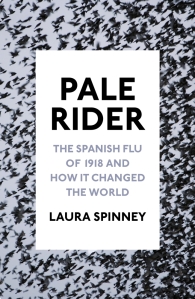 Pale Rider: The Spanish Flu of 1918 and How It Changed The World by Laura Spinney probably isn’t what most people consider to be cosy festive reading over Christmas but it is somewhat seasonal. Much of what has been written about the Spanish flu tends to focus on the impact it had on Western countries in the aftermath of the First World War but Spinney’s book is a refreshingly global account of how the virus reached all corners of the earth from Alaska to Rio de Janeiro to Samoa to China. Estimates remain vague but the Spanish flu is believed to have killed at least 50 million people worldwide, possibly as many as 100 million, and its rapid spread is likely to have been partly exacerbated by soldiers returning home at the end of the First World War. Continue reading
Filed under Books
Elmet by Fiona Mozley
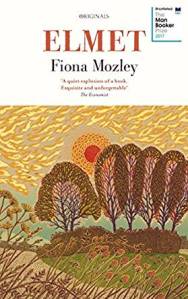 Last year’s Man Booker Prize longlist was largely dominated by established authors apart from the surprise inclusion of PhD student Fiona Mozley with her debut novel ‘Elmet’ which made the shortlist but lost out to Lincoln in the Bardo by George Saunders for the overall prize. Set in Yorkshire, it tells the story of teenage siblings Daniel and Cathy and their father Daddy (also known as John) who relocate from their red-brick house in town to secluded woodland where they have built their own home by hand and living according to ethical principles. However, they soon come into conflict with the rich landowners, putting their way of life in danger. Continue reading
Filed under Books
Emotionally Weird by Kate Atkinson
 My first review of the year was of Kate Atkinson’s debut novel Behind the Scenes at the Museum which prompted me to make more of an effort to read the back catalogues of my favourite authors. It therefore seems fitting to end the year with a review of Atkinson’s third novel ‘Emotionally Weird’ which was first published in 2000 and tells the story of Euphemia (Effie) Stuart-Murray and her mother Nora who live on a remote Scottish island. Effie is telling Nora about her life as a student in Dundee living with her Star Trek-obsessed boyfriend Bob. However, Effie also has questions about her family history and what she really wants is for Nora to disclose who her real father is. Continue reading
Filed under Books
The Diary of a Bookseller by Shaun Bythell
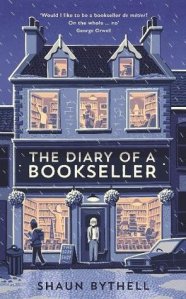 ‘The Diary of a Bookseller’ is Shaun Bythell’s account of running Scotland’s largest second-hand bookshop which he bought in 2001 in Wigtown, Scotland’s national book town. While many book lovers may dream about spending all day every day working in a rambling Georgian townhouse stuffed with over 100,000 books, Bythell’s diaries from 2014 to early 2015 dispel a lot of the romanticised myths about running a bookshop, particularly when it comes to the realities of competing against a certain online retailer. Continue reading
Filed under Books
Little Fires Everywhere by Celeste Ng
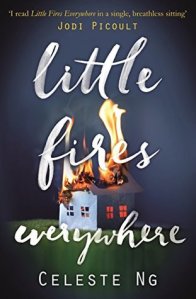 In the opening chapter of ‘Little Fires Everywhere’ by Celeste Ng, the Richardson family home in the affluent suburb of Shaker Heights near Cleveland, Ohio, is burning to the ground in a fire believed to have been started deliberately by their rebellious daughter, Izzy. The story looks back at the events which led to this catastrophe, ultimately beginning when the Richardsons’ tenant, Mia Warren, becomes a part-time housekeeper for the family and Mia’s fifteen-year-old daughter Pearl, befriends the Richardson teenage siblings Lexie, Trip, Moody and Izzy. Continue reading
Filed under Books
Reservoir 13 by Jon McGregor
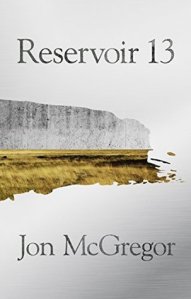 ‘Reservoir 13’ by Jon McGregor begins with the disappearance of Rebecca Shaw, a thirteen-year-old girl who goes missing while on holiday with her family in the Peak District in the early 2000s. In the years that pass following her disappearance, the various residents of the small rural village get on with their lives, but the mystery of what happened to Rebecca continues to have an impact on the tight-knit community. Continue reading
Filed under Books
Women Who Blow on Knots by Ece Temelkuran
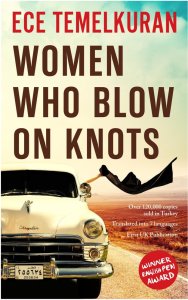 Translated from the Turkish by Alexander Dawe, ‘Women Who Blow on Knots’ by Ece Temelkuran won the Edinburgh First Book Award earlier this year and I bought my copy during my visit to the city last summer. It tells the story of four women embarking on a road trip across North Africa from Tunisia to Lebanon during the Arab Spring. They are Tunisian activist and dancer Amira, Egyptian academic Maryam who is obsessed with Dido, Queen of Carthage, an unnamed Turkish journalist who narrates the story and the mysterious elderly Madam Lilla who has connections with the Russian mafia and intelligence agencies. It is Madam Lilla who invites the three women to accompany her on the trip although her real intentions for travelling to Lebanon only become clear much later. Continue reading
Filed under Books
Outlandish Knight: The Byzantine Life of Steven Runciman by Minoo Dinshaw
 The first non-fiction title to be shortlisted since the 2015 relaunch of the Sunday Times Young Writer of the Year Award is ‘Outlandish Knight: The Byzantine Life of Steven Runciman’ by Minoo Dinshaw. Runciman was an English historian and author who wrote several books about the Byzantine Empire and the Crusades and is still regarded as one of the most influential voices on the subject in academic circles and beyond. Continue reading
Filed under Books
The End of the Day by Claire North
 The Sunday Times Young Writer of the Year Award isn’t just about literary debuts – occasionally, young writers can be prolific and I am pleased that there has been some recognition on this year’s shortlist for Claire North, a pseudonym for Catherine Webb. Webb/North has somehow found the time to publish several science fiction and fantasy novels under her own name and two pseudonyms, writing her first book when she was just 14 and is best known for ‘The First Fifteen Lives of Harry August’. Her latest novel ‘The End of the Day’ begins with an intriguing premise in which Charlie is the Harbinger of Death, living in Dulwich and answering to his boss, Death, at head office in Milton Keynes, travelling around the world usually to meet people before their lives end: “sometimes he is sent as a courtesy, sometimes as a warning”. However, the demands of the job begin to take their toll on Charlie and put a strain on his relationship with his girlfriend Emmi. Continue reading
Filed under Books
The Lauras by Sara Taylor
 Following her debut ‘The Shore’ which was shortlisted for the Sunday Times Young Writer of the Year Award in 2015, Sara Taylor has been nominated again for the same prize with her second novel ‘The Lauras’. I read it several months ago before the shortlist was announced but didn’t have enough time to review it, so I have revisited it this week ahead of our shadow panel meeting on Friday when we will choose our winner. ‘The Lauras’ is a road trip novel in which Ma and thirteen-year-old Alex leave their home and Alex’s father behind in Virginia and travel across North America visiting five places which all hold some significance in Ma’s past. Ma attempts to track down a friend from each of these places, all of whom are called Laura and were an important part of Ma’s life at the time. Continue reading
The Lucky Ones by Julianne Pachico
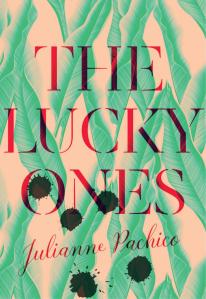 ‘The Lucky Ones’ by Julianne Pachico is described as a novel by its US publishers whereas it has been billed as a collection of interlinked short stories in the UK where it has recently been shortlisted for this year’s Sunday Times Young Writer of the Year Award. I approached ‘The Lucky Ones’ as a collection of short stories when reading it for the shadow panel discussions earlier this month but I think it can be read and enjoyed equally as a novel too, albeit a relatively fragmented one. Continue reading
Filed under Books
La Belle Sauvage by Philip Pullman
 I reread the His Dark Materials trilogy in July in anticipation of the release last month of the first volume of the new Book of Dust trilogy by Philip Pullman which he describes as an “equel” to stand alongside ‘His Dark Materials’ as neither a prequel or a sequel. This particular volume is set before the events in ‘His Dark Materials’ in Lyra’s universe when she is a baby and features 11-year-old Malcolm Polstead, son of a local pub landlord, who ends up supplying information to a resistance group attempting to subvert the Magisterium, a powerful church authority. With the help of Alice, an older girl who works at the pub with him, and his trusty canoe named La Belle Sauvage, they seek to protect baby Lyra from the church, and specifically from the clutches of Gerard Bonneville and Lyra’s mother, Mrs Coulter. Continue reading
Filed under Books



 A Little Blog of Books
You must be logged in to post a comment.