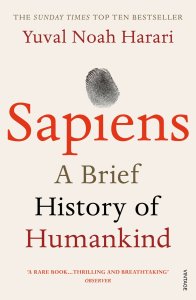
 I was half way through reading ‘Sapiens: A Brief History of Humankind’ by Yuval Noah Harari on the tube the other week when a fellow commuter asked me what the book is about. Even though I have been writing reviews regularly for over five years, I still don’t enjoy being put on the spot about books I am still reading and mulling over, particularly at 8:15am on a crowded train. My initial response was to say that it’s about, well, pretty much everything. Even though that statement is fairly accurate, the expression on his face suggested that it was also quite unhelpful, so I added that it’s about how and why the human race has developed in the way that it has. This appeared to be a more satisfactory answer, which is just as well because I still can’t think of a better way to summarise its content.
Tag Archives: Book Review
Sapiens: A Brief History of Humankind by Yuval Noah Harari
Filed under Books
The Disappearance of Adèle Bedeau by Graeme Macrae Burnet
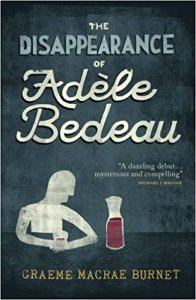 I really enjoyed reading His Bloody Project by Graeme Macrae Burnet after discovering it through the Man Booker Prize shortlist last year. His 2014 debut novel ‘The Disappearance of Adèle Bedeau’ which was also published by Contraband tells the story of Manfred Baumann, a loner who lives in the nondescript French town of Saint-Louis in Alsace and frequently dines at a bistro where waitress Adèle Bedeau works. When Adèle suddenly disappears one evening after finishing her shift, Manfred quickly comes under suspicion. However, after giving a false statement to Inspector Georges Gorski in which he fails to admit that he was the last person to see her alive, his life begins to spiral out of control. Continue reading
Filed under Books
Man Booker International Prize Reviews: Part 5 (and the shadow panel shortlist)
 The Man Booker International Prize shadow panel’s scores are in and we can now announce our own shortlist of six books. They are:
- Compass by Mathias Énard (translated from the French by Charlotte Mandell)
- The Unseen by Roy Jacobsen (translated from the Norwegian by Don Bartlett and Don Shaw)
- Bricks and Mortar by Clemens Meyer (translated from the German by Katy Derbyshire)
- Judas by Amos Oz (translated from the Hebrew by Nicholas de Lange)
- Fever Dream by Samanta Schweblin (translated from the Spanish by Megan McDowell)
- Fish Have No Feet by Jón Kalman Stefánsson (translated from the Icelandic by Philip Roughton)
There is a fair amount of overlap between our shortlist and the official shortlist with just ‘Bricks and Mortar’ and ‘Fish Have No Feet’ being favoured over ‘Mirror, Shoulder, Signal’ and ‘A Horse Walks Into A Bar’. My personal preferences lean towards the books by Jacobsen, Stefánsson and Schweblin while other shadow panel members have made strong cases in favour of the more avant-garde titles. We will be deliberating our choices this month and announcing our winner in June.
Continue reading
Filed under Books
Lincoln in the Bardo by George Saunders
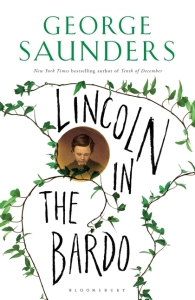 Told through a chorus of over 160 different voices, ‘Lincoln in the Bardo’ by George Saunders follows the aftermath of the death of Abraham Lincoln’s eleven-year-old son Willie in 1862 from typhoid fever during the American Civil War. Willie finds himself trapped between death and rebirth with other spirits in the cemetery who believe he should proceed to the next stage of the afterlife. However, Willie is resistant as he wants to spend more time with his distraught father who regularly visits the crypt to mourn his loss. Continue reading
Filed under Books
Man Booker International Reviews: Part 4 (and the official shortlist)
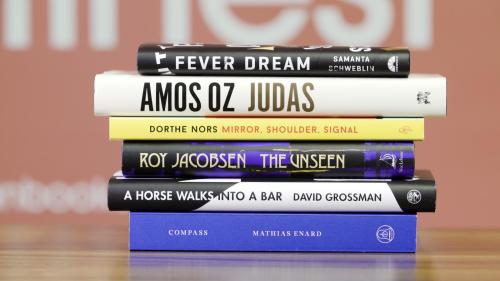
The official Man Booker International Prize shortlist of six books was announced on Thursday:
- Compass by Mathias Enard (translated from the French by Charlotte Mandell)
- A Horse Walks Into a Bar by David Grossman (translated from the Hebrew by Jessica Cohen)
- The Unseen by Roy Jacobsen (translated from the Norwegian by Don Bartlett and Don Shaw)
- Mirror, Shoulder, Signal by Dorthe Nors (translated from the Danish by Misha Hoekstra)
- Judas by Amos Oz (translated from the Hebrew by Nicholas de Lange)
- Fever Dream by Samanta Schweblin (translated from the Spanish by Megan McDowell)
I think this is an interesting selection with some very strong contrasts in genre and style. The shadow panel shortlist will be revealed at a later date as we have decided to allow ourselves a bit more time to finish reading the longlist and deliberate our views. You will have to wait until 9am UK time on Thursday 4th May to find out how many of our collective choices match those of the official judges… Continue reading
Filed under Books
How to Survive a Plague by David France
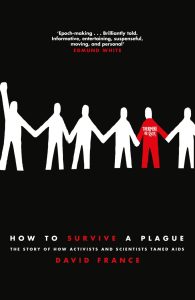 I am very pleased to be taking part in the official Wellcome Book Prize blog tour this week to champion ‘How to Survive a Plague’ by David France which is one of six titles shortlisted for this year’s prize awarded to a book on the subject of healthcare or medicine. It follows France’s 2012 Oscar-nominated documentary film of the same name and is a remarkable account of the activists and scientists who campaigned for awareness and funding towards fighting the AIDS epidemic in the United States.
Continue reading
Filed under Books
Man Booker International Prize Reviews: Part 3
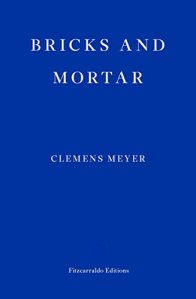 Bricks and Mortar by Clemens Meyer is the biggest of the big tomes on this year’s longlist and I have been reading it in between other books on the longlist over the last three weeks. For that reason, I’m not sure if I felt the full force of its power but as the book is so fragmented anyway, I don’t think I felt any more disorientated each time I picked it up again than I would have done if I had read it straight through without distractions. Translated from the German by Katy Derbyshire, it follows a variety of characters involved in the sex trade in an unnamed East German city from the end of the Cold War to the present day exploring the consequences of legalised prostitution, corruption, capitalism, and much much more. Each chapter explores a different character associated in some way with the industry and the chorus of unique voices effectively becomes a collection of interconnected short stories. At the centre of the story is Arnold Kraushaar and his rise “from football hooligan to large-scale landlord and service-provider for prostitutes”. Continue reading
Filed under Books
Man Booker International Prize Reviews: Part 2
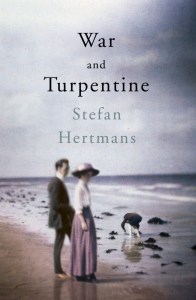 My Man Booker International Prize shadowing duties continue with two more reviews this week. First up is War and Turpentine by Stefan Hertmans which has been translated from the Dutch by David McKay. Hertmans inherited his grandfather’s diaries after his death in 1981 and eventually used these personal memoirs to create a compelling narrative of his life as an ironworker, soldier and amateur painter. Born in 1891, the first part of the book focuses on Urbain Martien’s childhood in Ghent in a working class family with his father Franciscus and mother Céline. Hertmans also inserts himself into this part of the story as he unravels his family history in the present day. The second part is a more conventional narrative of Urbain’s experiences in the trenches following the German invasion of Belgium. The final part recounts the post-war years during which Martien sought solace in painting and a secret at the heart of his marriage to Gabrielle is revealed.
Continue reading
Filed under Books
Man Booker International Prize Reviews: Part 1
 The shadow panel members have been busy reading the titles longlisted for the Man Booker International Prize. Here are my thoughts about the first four books I have read since the announcement last month:
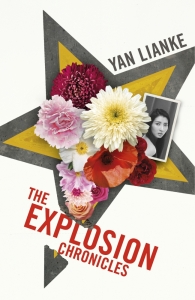
Yan Lianke’s novel The Four Books was shortlisted for the Man Booker International Prize last year and was one of the most interesting new discoveries I made last year. Translated from the Chinese by Carlos Rojas, The Explosion Chronicles follows three families – the Kongs, the Zhus and the Chens – who compete to turn their small village into a super metropolis. Lianke’s latest novel to be translated into English is another absurdist satire which criticises corruption, capitalist excess and China’s rapid economic growth with impressive detail and the way in which the story is presented as a history of the town as a sort of miniature account of what has happened to the country in general is done very effectively. Continue reading
Filed under Books
Spaceman of Bohemia by Jaroslav Kalfar
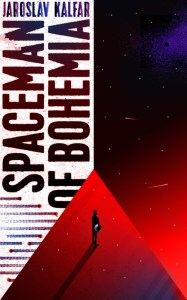 Out of all of the debut novels which have been published recently, ‘Spaceman of Bohemia’ by Jaroslav Kalfar has one of the most intriguing and original premises. Set in 2018, it tells the story of Jakub Procházka, a Czech astrophysicist turned astronaut on a solo mission to investigate a dust cloud between Earth and Venus and collect samples for analysis. However, his marriage to Lenka is under further strain as she is left behind on Earth and Jakub has plenty of time on his own to reflect on his family’s past. The appearance of a giant Nutella-loving alien spider called Hanuš who may or may not be a figment of Jakub’s imagination only complicates things further.
Filed under Books
Fever Dream by Samanta Schweblin
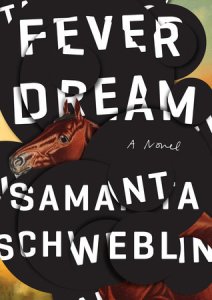 Translated from the Spanish by Megan McDowell, ‘Fever Dream’ by Samanta Schweblin tells the story of Amanda, a woman who is critically ill in a rural Argentinian hospital, where David is trying to get her to remember the events which led her there. She recalls encounters with her daughter Nina and David’s mother Carla who once told her how David’s soul was split in two in order to save him after he was poisoned. However, David is not quite the same afterwards, and neither are Amanda and Nina. Continue reading
Filed under Books
The Accusation by Bandi
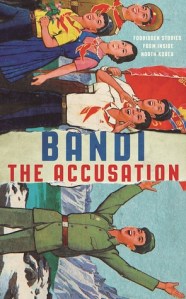 Translated from the Korean by last year’s Man Booker International Prize winner Deborah Smith ‘The Accusation’ by Bandi is a collection of seven short stories by a pseudonymous author who reportedly still lives in North Korea and works as an official writer for the government. Written in the early 1990s at a time when the country was gripped by famine, it is said that Bandi’s stories were eventually smuggled into South Korea by a relative who hid sheets of paper in a copy of ‘The Selected Works of Kim Il-sung’. While there have been many accounts of life in North Korea published by defectors, a work of fiction by an author still living in one of the most secretive countries in the world is exceptionally rare. Continue reading
Filed under Books
Harmless Like You by Rowan Hisayo Buchanan
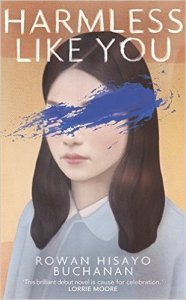 ‘Harmless Like You’ by Rowan Hisayo Buchanan tells the story of Yukiko Oyama, a teenager in New York in 1968 whose parents move back to Japan after emigrating to the United States when she was a child. She decides to stay in New York with her friend Odile to pursue her dream of becoming an artist. Many years later, her son Jay, who has recently become a father himself, travels to Berlin to find his estranged mother and inform Yuki that his father has died and has left the house to her in his will. The journey also leads Jay to discover why Yuki abandoned him suddenly when he was just two years old. Continue reading
Filed under Books
Bel Canto by Ann Patchett
 Winner of the Orange Prize for Fiction in 2002, ‘Bel Canto’ by Ann Patchett is set during a birthday party for Japanese businessman Katsumi Hosokawa held in his honour at the vice-president’s mansion in an unnamed South American country. While entertainment is provided by renowned American opera singer Roxane Coss, the property is suddenly stormed by terrorists who had originally planned to kidnap the president. However, in his absence, they end up holding dozens of guests under house arrest for several months. Continue reading
Filed under Books
American Wife by Curtis Sittenfeld
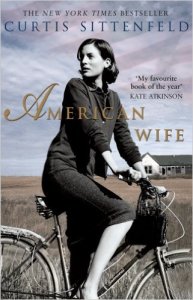 I enjoyed reading Sisterland by Curtis Sittenfeld a couple of years ago and as part of my ongoing efforts to read other books by authors I have discovered since starting my blog, I turned to Sittenfeld’s best known novel ‘American Wife’ which was published in 2008. It is a portrait of Alice Lindgren and her path towards becoming First Lady of the United States in 2001, from her youth in Wisconsin, to marriage and motherhood in her thirties through to her life in the White House during her husband’s unpopular presidency. Knowing that the story was inspired by key events in the life of Laura Bush means it is difficult not to picture Alice’s husband Charlie Blackwell as George W. Bush who took office in the same year. Continue reading
Filed under Books
3 French Novellas I Have Read Recently
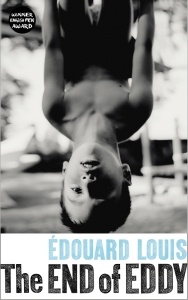 ‘The End of Eddy’ by Édouard Louis is a semi-autobiographical novel set in a deprived rural community in Picardy in northern France. Translated by Michael Lucey, it is a coming of age tale about Eddy Bellegueule (the author’s real name) and his life at home and at school in the late 1990s and 2000s. Eddy is gay and struggles to conform to what is widely perceived to be an acceptable type of masculinity in the small village where he is expected to go to work in the factory as soon as he leaves school. His mannerisms are routinely mocked by his peers and his family, particularly his father who even chose Eddy’s name because it sounds American and more “tough guy”. ‘The End of Eddy’ garnered lots of attention in France because Louis published his debut novel in 2014 when he was just 21 years old. However, aside from Louis’s young age and the unflinching descriptions of Eddy exploring his sexuality, ‘The End of Eddy’ also deserves acclaim more generally for articulating the reality of social exclusion in modern-day France so convincingly. Many thanks to Harvill Secker for sending me a review copy via NetGalley. Continue reading
Filed under Books
The Nix by Nathan Hill
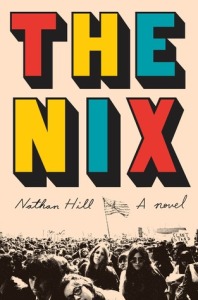 ‘The Nix’ by Nathan Hill tells the story of Samuel Andresen-Anderson, a thirty-something college professor with writer’s block whose estranged mother Faye is arrested for throwing rocks at a conservative Presidential candidate and subsequently portrayed in the media as a radical hippie. Samuel is on the verge of being sued by his publisher for failing to produce the novel he received a huge advance for several years earlier and in order to avoid bankruptcy, he must write a biography of his mother who he hasn’t seen for over twenty years. However, his quest for information about Faye reveals that she has a far more complex past than he ever imagined. Continue reading
Filed under Books
Homesick for Another World by Ottessa Moshfegh

Ottessa Moshfegh’s Man Booker Prize-shortlisted Eileen generated a very mixed reaction among readers last year. However, I was one of those who really enjoyed (if that’s the right word) her debut novel and I was intrigued by her new book ‘Homesick for Another World’, a collection of fourteen short stories which will be published this week in the UK. The tales in this collection range from ‘The Beach Boy’ about a middle-aged couple on an unnamed tropical island to ‘Bettering Myself’ from the perspective of an alcoholic maths teacher in a Catholic school to ‘Nothing Ever Happens Here’ in which an aspiring actor in Hollywood falls for his landlady. Continue reading
Filed under Books
Little Deaths by Emma Flint
Set in the mid-1960s, ‘ Little Deaths’ by Emma Flint tells the story of Ruth Malone, a 26-year-old recently divorced single mother whose two young children Cindy and Frankie go missing from their home in Queens, New York. After they are both found dead in separate locations days later, it doesn’t take long for the police to suspect that Ruth had something to do with their disappearance. However, in the absence of any hard evidence, they draw their conclusions purely from what they consider to be her stylish appearance and unconventional behaviour following the murders. Meanwhile, local journalist Pete Wonicke becomes determined to prove Ruth’s innocence. Continue reading
Filed under Books
The Power by Naomi Alderman
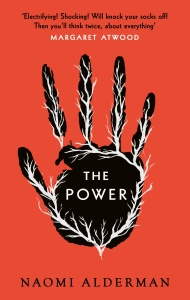 One of the books which kept cropping up frequently in lots of end-of-year book lists last month was ‘The Power’ by Naomi Alderman and so it got bumped up my TBR list as one of my not-very-festive Christmas holiday reads. The main concept of Alderman’s fourth novel explores what would or could happen in a world where women become more powerful than men in every sense. Due to a mutation caused by a nerve agent used during the Second World War, teenage girls develop the ability to release electrical jolts through their fingertips which can be either harmless or strong enough to kill people. The “power” eventually spreads and although it is initially used by women as a deterrent against violent and abusive men who have oppressed them, it has far-reaching implications beyond that. Continue reading
Filed under Books



 A Little Blog of Books
You must be logged in to post a comment.