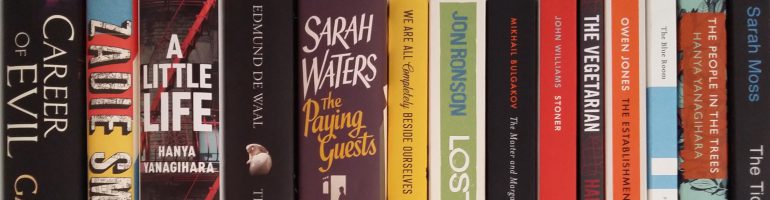
Is it possible not to have a good year for books? Thankfully, I don’t think this has happened to me yet, so here is a list of the books I enjoyed the most in 2018.
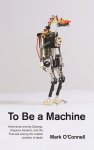

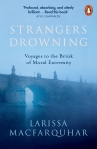

I have read more non-fiction than ever this year, partly due to shadowing the Wellcome Book Prize shortlist in March and April which I hope to do again in 2019. To Be a Machine by Mark O’Connell won the official prize and was also our shadow panel winner – it’s a fun, informative and pretty terrifying book about transhumanism. , Yet while transhumanists are trying to avoid death at all costs, With the End in Mind by Kathryn Mannix explores the practical side of dying and what a “good” death can look like from her work as a palliative care consultant and this was a stand-out title for me this year. Another book I would happily press into the hands of everyone I meet is The Secret Barrister: Stories of the Law and How It’s Broken which is an eye-opening account of the inner workings of the criminal justice system in the United Kingdom. And Strangers Drowning by Larissa MacFarquhar is a book I am still thinking about regularly months after I finished it mostly because the stories of extreme do-gooders are actually more unsettling than uplifting in many cases. Continue reading
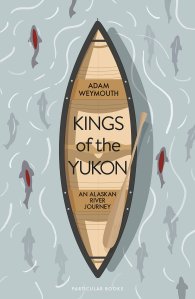 Kings of the Yukon: An Alaskan River Journey by Adam Weymouth won this year’s
  I will be taking a short break from blogging in December while I sort out moving to my new flat but I have been to two great book events this month to take my mind off some of the stress. Rebecca at
 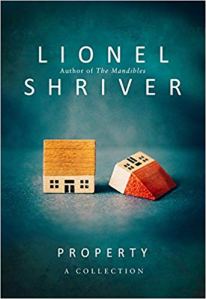 By coincidence, I have recently read two collections of short fiction by two of my favourite authors which bring together stories united around specific themes. ‘Property’ is Lionel Shriver’s first collection of short stories which all address the title’s literal definition in relation to real estate and also in a more figurative sense as ownership and possession. Ten shorter pieces many of which have previously been published in magazines are bookended by two novellas ‘The Standing Chandelier’ about the dynamics of Weston Babansky’s 20+ year friendship with Jillian Frisk and her unusual choice of wedding gift when he marries his girlfriend Paige and ‘The Subletter’ written in 1999 about an American journalist living in Belfast during the Troubles who has territorial struggles of her own.
 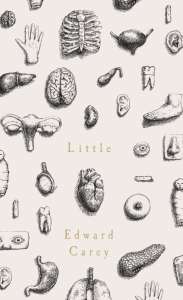 ‘Little’ by Edward Carey is a fictionalised account of the early life of Madame Tussaud who founded the famous waxwork museum in London that bears her name. Born Anne Marie Grosholtz in 1761 and orphaned as a young child, she is employed by Swiss wax sculptor, Doctor Curtius, who makes anatomical models in his studio and names his young apprentice ‘Little’ on account of her small stature. When Curtius’ financial difficulties finally catch up with him, they move to Paris where they take rooms with widow Charlotte Picot who helps transform the business and set up popular exhibitions displaying wax replicas of the heads of noblemen and famous murderers. She banishes Marie to work in the kitchen out of jealousy but following a surprise visit by Princess Elisabeth, the youngest sister of King Louis XVI, Marie is invited to become her wax modelling tutor at the Palace of Versailles. However, with revolution on the horizon, nobody associated with the Royal Family is safe from the threat of the guillotine.
 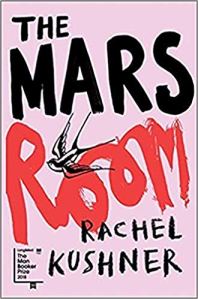 The winner of this year’s Man Booker Prize was announced last month. While ‘The Overstory’ by Richard Powers and ‘Washington Black’ by Esi Edugyan appeared to be the favourites to win among bloggers I follow, ‘Milkman’ by Anna Burns triumphed in the end. I’m undecided about whether or not to read it. There has been a lot of focus on the experimental prose style and the question of its “readability” with its unnamed characters and paragraphs without breaks. However, when chair of the judges Kwame Anthony Appiah said “I spend my time reading articles in the Journal of Philosophy so by my standards this is not too hard”, I wasn’t sure he really succeeded in selling it to a wider audience. On the other hand, it should be noted that the actual sales figures since Burns’ win tell a different story and it will be interesting to see how it is critically received in the long term. Do let me know what you think of ‘Milkman’
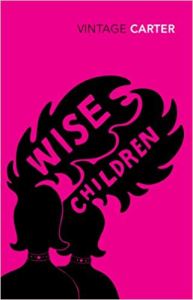 I went to see ‘Wise Children’ at the Old Vic theatre in Waterloo last week after Rebecca of
 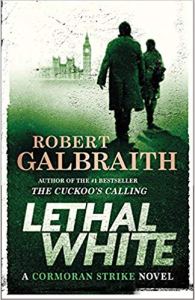 It’s been almost three years since
 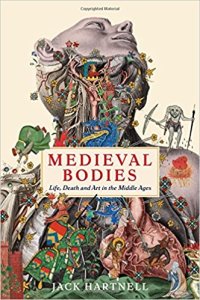 Medieval Bodies: Life, Death and Art in the Middle Ages by Jack Hartnell makes a convincing case against the widely held perception of the Middle Ages as a bloodthirsty and violent period of history where beliefs about medicine were guided primarily by superstition. Instead, the reality is shown to be very different in Hartnell’s examination of how medieval people experienced their physical selves. Each chapter of this lavishly illustrated book focuses on a different part of the body and explores their cultural significance and how medieval attitudes towards them were shaped by a range of influences.
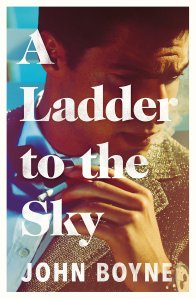 I don’t normally read books by the same author within the space of a few weeks but after enjoying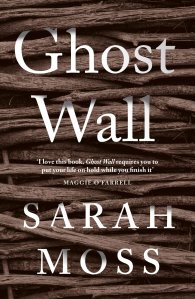
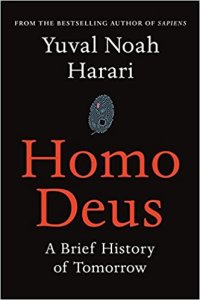 ‘Homo Deus: A Brief History of Tomorrow’ is the follow-up to the hugely successful ‘Sapiens: A Brief History of Humankind’ by Yuval Noah Harari which I read last year. Having examined the development of humans in his first book through the cognitive, agricultural, scientific and industrial revolutions, Harari turns to the challenges of the future in which humans will seek to “upgrade” from Homo Sapiens to gods (or “Homo Deus”), re-engineering our physical and mental capabilities to prevent ageing, escape death and increase happiness. The impact of famine, war and plague has been significantly reduced in recent decades, to the point where we now face the opposite challenges in the form of an obesity crisis, caring for an ageing population with people living longer than ever and a world where more people commit suicide than are killed by terrorists, criminals and conflicts.
 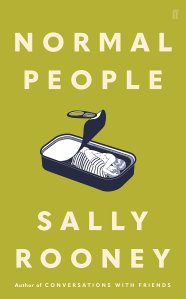 ‘Normal People’ by Sally Rooney tells the story of teenagers Marianne Sheridan and Connell Waldron who go to school together in the small rural town of Carricklea in the west of Ireland and later move to Dublin to study at Trinity College in the early 2010s. Marianne is a loner from a well-off family while Connell is popular at school and their romance is kept secret from their classmates. However, Marianne finds friends easily among their privileged contemporaries at university whereas Connell feels alienated, and this sudden reversal in their social status complicates their relationship.
  Translated from the Japanese by Ginny Tapley Takemori, ‘Convenience Store Woman’ by Sayaka Murata tells the story of Keiko Furukura, a socially awkward woman in her mid-thirties who has been working at the Hiiromachi Station Smile Mart shop for the past eighteen years. She feels under pressure from others, particularly her family, to appear “normal” and meet society’s expectations, by which she must find a career with more prospects or get married and have children.
 If you had to choose between saving two people you didn’t know or one of your close relatives from drowning, what would you do? What if there were ten strangers who needed to be rescued? Or one thousand? Would you help a starving child standing right in front of you? How about three million living on the other side of the world? Where do you draw the line? These are some of the questions posed by journalist Larissa MacFarquhar in her 2015 book ‘Strangers Drowning: Voyages to the Brink of Moral Extremity’ in which she profiles the true stories of extreme “do-gooders” or those who devote their lives to help strangers rather than people they are close to through a sense of duty. These include a couple who adopt 20 children, a founder of a leper colony, a radical vegan activist, a nurse who set up a women’s health clinic in a warzone and others who live on the bare minimum so that they can donate the vast majority of their salary to charity.
 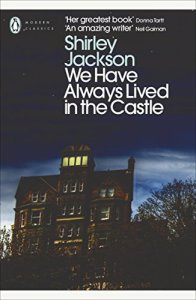 I enjoyed reading
 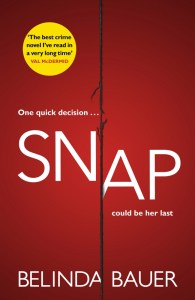 The opening chapter of ‘Snap’ by Belinda Bauer presents a chilling premise based on the unsolved murder of Marie Wilks. On a hot day in the summer of 1998, eleven-year-old Jack Bright is left in a broken-down car by the side of a motorway with his two younger sisters, Joy and Merry, while their pregnant mother, Eileen, goes in search of a telephone for help. However, she never returns and her body is eventually found stabbed to death.
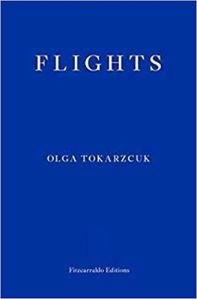 I have recently read this year’s winner of the Man Booker International Prize ‘Flights’ by Olga Tokarczuk which was first published in Poland back in 2007 and has been translated by Jennifer Croft. I didn’t have time to shadow the MBIP last spring but as August is Women in Translation Month, this seemed like a good time to find out what to make of it. ‘Flights’ is about an unnamed woman and her reflections on travelling – and that’s about it as far as plot goes in this very fragmented book which can only be described as a “novel” in the loosest sense possible as it is more of a collection of thematically linked observations and vignettes.
  2018 marks the centenary of Muriel Spark’s birth and I have recently read her autobiography ‘Curriculum Vitae’ and one of her most famous novels ‘The Driver’s Seat’ which was first published in 1970. The main protagonist, Lise, is in her mid-thirties and is unhappy with her dead-end job. She hops on a plane to an unnamed southern European city looking for adventure and has a series of odd interactions with even odder people she meets along the way. Spark ingeniously drops a massive spoiler at the beginning of the third chapter in which it is casually stated that Lise “will be found tomorrow morning dead from multiple stab-wounds, her wrists bound with a silk scarf and her ankles bound with a man’s necktie, in the grounds of an empty villa, in a park of the foreign city to which she is travelling on the flight now boarding at Gate 14.” The narrative then continues as if this information had never been mentioned and the mystery of who the perpetrator is and how and why the murder occurs isn’t revealed until the final paragraphs.
 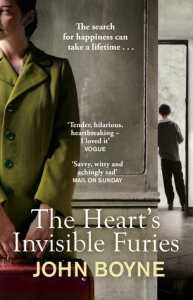 ‘The Heart’s Invisible Furies’ by John Boyne



 A Little Blog of Books
You must be logged in to post a comment.