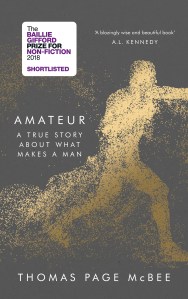
 Gender is a notable theme on this year’s Wellcome Book Prize longlist and two of the books shortlisted this year (by the official judges and by the shadow panel) look at the lives and experiences of transgender individuals. ‘Amateur’ by Thomas Page McBee was also shortlisted for the Baillie Gifford Prize for Non-Fiction last year and is an exploration of modern masculinity told through McBee’s training as the first trans man to fight in a charity boxing match at Madison Square Garden. From a childhood dominated by male violence in which he was abused by his stepfather from the age of four, McBee untangles the tricky relationship between masculinity and violence, questioning if aggression is an exclusively “toxic” male trait. Continue reading
Tag Archives: Book
Wellcome Book Prize: Amateur and The Trauma Cleaner
Filed under Books
The Wellcome Book Prize 2019 Shortlist
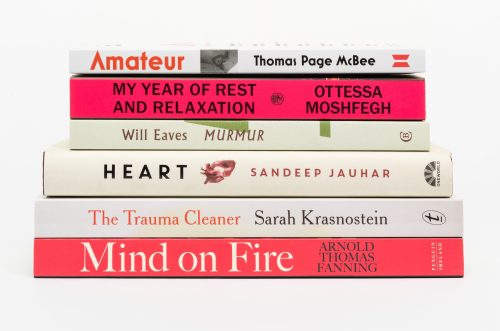
The Wellcome Book Prize shortlist was announced earlier this week and the six titles are:
Murmur by Will Eaves
Mind on Fire by Arnold Thomas Fanning
Heart by Sandeep Jauhar
The Trauma Cleaner by Sarah Krasnostein
Amateur by Thomas Page McBee
My Year of Rest and Relaxation by Ottessa Moshfegh
From what we have read between us so far, the shadow panel has also come up with our own shortlist of seven titles (due to a tie on a couple), four of which overlap with the official shortlist:
Murmur by Will Eaves
This Really Isn’t About You by Jean Hannah Edelstein
Sight by Jessie Greengrass
Heart by Sandeep Jauhar
The Trauma Cleaner by Sarah Krasnostein
Amateur by Thomas Page McBee
Educated by Tara Westover
Continue reading
Filed under Books
The Man Booker International Prize Longlist 2019

I’ve been a bit out of the loop with translated fiction in the last few months as non-fiction seems to have taken over my reading recently and I am currently shadowing the Wellcome Book Prize. However, the Man Booker International Prize longlist was announced this week (to be known as the International Booker Prize when the Man Group sponsorship ends this year). The 13 titles are:
Celestial Bodies by Jokha Alharthi (Oman), translated from the Arabic by Marilyn Booth
Love in the New Millennium by Can Xue (China), translated from the Chinese by Annelise Finegan
The Years by Annie Ernaux (France), translated from the French by Alison Strayer
At Dusk by Hwang Sok-yong (South Korea), translated from the Korean by Sora Kim-Russell
Jokes for the Gunmen by Mazen Maarouf (Iceland and Palestine), translated from the Arabic by Jonathan Wright
Four Soldiers by Hubert Mingarelli (France), translated from the French by Sam Taylor
The Pine Islands by Marion Poschmann (Germany), translated from the German by Jen Calleja
Mouthful of Birds by Samanta Schweblin (Argentina and Italy), translated from the Spanish by Megan McDowell
The Faculty of Dreams by Sara Stridsberg (Sweden), translated from the Swedish by Deborah Bragan-Turner
Drive Your Plow Over the Bones of the Dead by Olga Tokarczuk (Poland), translated from the Polish by Antonia Lloyd-Jones
The Shape of the Ruins by Juan Gabriel Vásquez (Colombia), translated from the Spanish by Anne McLean
The Death of Murat Idrissi by Tommy Wieringa (Netherlands), translated from the Dutch by Sam Garrett
The Remainder by Alia Trabucco Zerán (Chile and Italy), translated from the Spanish by Sophie Hughes
Filed under Books
The Women’s Prize for Fiction Longlist 2019
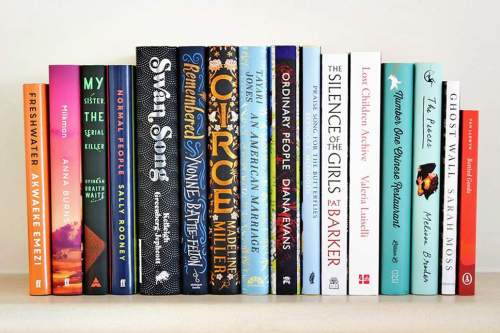
The Women’s Prize for Fiction 2019 longlist was announced earlier this week. The 16 nominated books are:
The Silence of the Girls by Pat Barker
Remembered by Yvonne Battle-Felton
My Sister, the Serial Killer by Oyinkan Braithwaite
The Pisces by Melissa Broder
Milkman by Anna Burns
Freshwater by Akwaeke Emezi
Ordinary People by Diana Evans
Swan Song by Kelleigh Greenberg-Jephcott
An American Marriage by Tayari Jones
Number One Chinese Restaurant by Lilian Li
Bottled Goods by Sophie van Llewyn
Lost Children Archive by Valeria Luiselli
Praise Songs for the Butterflies by Bernice L McFadden
Circe by Madeline Miller
Ghost Wall by Sarah Moss
Normal People by Sally Rooney Continue reading
Filed under Books
Chernobyl by Serhii Plokhy
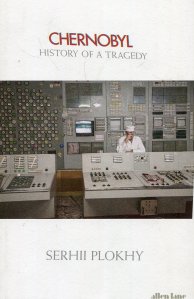 Winner of the Baillie Gifford Prize for Non-Fiction last year, ‘Chernobyl: History of a Tragedy’ by Serhii Plokhy is a comprehensive account of the worst nuclear accident in history. The small Ukrainian city will forever be associated with the explosion which occurred on 26th April 1986 after a failed safety test. It is now a key destination for “disaster tourism”, despite the 30-mile exclusion zone which is still in place around the site of the reactor which will remain unfit for human habitation for 20,000 years. The technical statistics are staggering – the radiation released by the explosion was equivalent to 500 Hiroshima bombs spreading rapidly across Europe – and the human cost of those affected by radiation sickness is incalculable. Continue reading
Filed under Books
Educated by Tara Westover
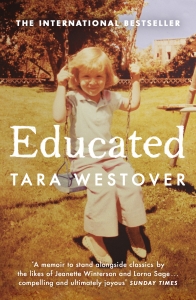 I had heard of ‘Educated’ before it was longlisted for the Wellcome Book Prize but hadn’t considered Tara Westover’s widely acclaimed memoir of her childhood growing up in a Mormon fundamentalist family in rural Idaho as a possible contender. Although not immediately obvious from the title or basic premise of the book, there are numerous connections to the main thematic criteria of the prize related to health. Isolated from mainstream society by radical survivalist parents, Westover and her six older siblings didn’t attend school and the family never saw doctors – even serious incidents like car accidents and third degree burns were treated at home with her mother’s herbal tinctures rather than at hospital. She didn’t receive a birth certificate until she was nine years old and spent most of her time working at her father’s junkyard, later studying independently at home. Continue reading
Filed under Books
Olive Kitteridge by Elizabeth Strout
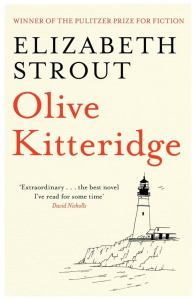 I really enjoyed watching the HBO TV mini-series adaptation of ‘Olive Kitteridge’ last year and have been keen to read the original book by Elizabeth Strout which won the Pulitzer Prize for Fiction in 2009. It is a novel in the form of 13 linked short stories set in the coastal town of Crosby, Maine centred around the life of the eponymous character during late middle age after retiring from her job as a junior high school maths teacher. Her gregarious husband, Richard, is a pharmacist and her son, Christopher, is a podiatrist. However, there are long-standing tensions in the family with Olive seemingly unable to communicate affection towards those closest to her. Continue reading
Filed under Books
The Wellcome Book Prize Longlist 2019
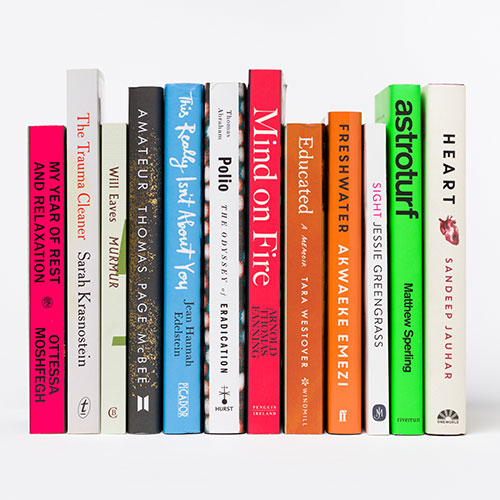
The 12 books longlisted for this year’s Wellcome Book Prize are:
Amateur by Thomas Page McBee
Astroturf by Matthew Sperling
Educated by Tara Westover
Freshwater by Akwaeke Emezi
Heart: A History by Sandeep Jauhar
Mind on Fire by Arnold Thomas Fanning
Murmur by Will Eaves
My Year of Rest and Relaxation by Ottessa Moshfegh
Polio: The Odyssey of Eradication by Thomas Abraham
Sight by Jessie Greengrass
The Trauma Cleaner by Sarah Krasnostein
This Really Isn’t About You by Jean Hannah Edelstein
Among the five fiction and seven non-fiction titles, the judges have noted that gender, identity and mental health have emerged as prominent themes this year. I will be shadowing the shortlist of six books which will be announced on 19th March with fellow book bloggers Rebecca, Annabel, Paul and Laura and we will also be covering the longlist between us over the next few weeks. Continue reading
Filed under Books
The Wellcome Book Prize 2019: Predictions
Celebrating its tenth anniversary this year, the longlist for the 2019 Wellcome Book Prize will be announced on Tuesday. The £30,000 prize is awarded to a work of fiction or non-fiction which engages with some aspect of healthcare or medicine published in the UK last year. It has become my favourite book award in the last couple of years and once again, I will be shadowing the shortlist of six books to be announced in March with Rebecca, Paul, Laura and Annabel and between us, we will also be covering the longlist of twelve books too.
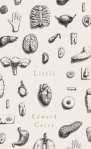 I imagine that the majority of the books submitted for consideration are non-fiction titles (they usually dominate the shortlists at any rate) but there are a fair number of novels which could also be in the running, even though the thematic criteria is more subjective. An obvious contender among fiction titles is Sight by Jessie Greengrass about a woman who is pregnant with her second child and undertakes research into the history of psychoanalysis and X-rays. I have also read Little by Edward Carey which is a fictionalised account of the early life of Madame Tussaud who made wax models of body parts in Paris in the late 18th century before living in London. Continue reading
Filed under Books
Face to Face by Jim McCaul and All That Remains by Sue Black
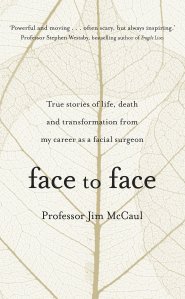 Since starting this blog, I have read various memoirs by medical professionals – a genre which provides thought-provoking insight into the practical and emotional side of modern medicine. From Atul Gawande to Suzanne O’Sullivan to Kathryn Mannix, each has offered new insight into their work and area of expertise, often through the stories of individual patients. I have recently read two more books which broaden the scope of the genre beyond case studies and explore other aspects of the author’s personal lives, careers and their specialties.
In his memoir ‘Face to Face’, Professor Jim McCaul, a consultant surgeon in maxillofacial surgery at Queen Elizabeth University Hospital in Glasgow, recounts cases in which he has restored patients’ appearances following accidents, violence and the removal of tumours from the head and neck (which take up around 80% of his work). Continue reading
Filed under Books
Transcription by Kate Atkinson
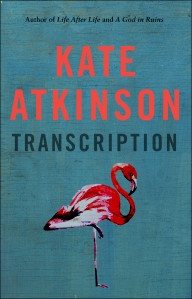 ’Transcription’ is the latest stand-alone novel by Kate Atkinson in which eighteen-year-old Juliet Armstrong is recruited straight out of school by MI5 in 1940 not long after her mother has died. Initially given secretarial tasks as well as the roles usually left to women such as making the tea, she soon begins transcription work monitoring the conversations held in a flat in Pimlico between Fascist sympathisers and an undercover British agent named Godfrey Toby who poses as a member of the Gestapo. A decade later, she is working as a radio producer of children’s programmes at the BBC believing that her wartime activities now lie in the past. However, a chance encounter with Godfrey (also known as John Hazeldine), some threatening notes and a sense that she is being followed remind her that the world of espionage is not one easily left behind and there are some who want Juliet to know that her actions have had far-reaching consequences. Continue reading
Filed under Books
Melmoth by Sarah Perry
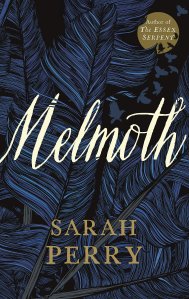 ‘Melmoth’ by Sarah Perry tells the story of Helen Franklin, a British woman in her forties working as a translator in Prague where she has lived for some twenty years in self-imposed exile. Her friend Karel has come into possession of the papers of fellow scholar Josef Hoffman who has recently been found dead in the National Library. Among the papers is a manuscript which tells of Melmoth the Witness, an obscure legend in which, according to superstition, Melmoth travels through the ages, persuading those wracked with guilt to wander alongside her on a journey of eternal damnation. Helen’s initial scepticism of the legend wanes when Karel disappears and she is forced to confront the reasons why she cannot forgive herself for the outcome of events in her own past.
Continue reading
Filed under Books
My Most Anticipated Books of 2019
I have an ever-growing list of books I want to read which will be published in 2019, even though it is extremely unlikely I will get round to all of them in the next 12 months and more will inevitably distract me as the year goes on. Here is a selection of some I will be looking out for. All publication dates where known apply to the UK only and may be subject to change.
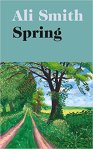
Among fiction titles, there are numerous sequels and instalments of series due in 2019. Spring by Ali Smith is the third book in the Scottish author’s seasons cycle following Autumn (2016) and Winter (2017) with Summer presumably following in 2020.
A part of me wonders if The Testaments by Margaret Atwood would ever have been written if the TV adaptation of The Handmaid’s Tale hadn’t been so successful. Set 15 years after the original book, the new volume won’t be based on the grim storylines of the second season broadcast last year, but it’s safe to assume that it won’t be a light and cheery read either. Continue reading
Filed under Books
My Books of the Year 2018
Is it possible not to have a good year for books? Thankfully, I don’t think this has happened to me yet, so here is a list of the books I enjoyed the most in 2018.
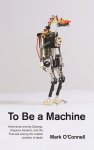

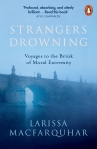

I have read more non-fiction than ever this year, partly due to shadowing the Wellcome Book Prize shortlist in March and April which I hope to do again in 2019. To Be a Machine by Mark O’Connell won the official prize and was also our shadow panel winner – it’s a fun, informative and pretty terrifying book about transhumanism. , Yet while transhumanists are trying to avoid death at all costs, With the End in Mind by Kathryn Mannix explores the practical side of dying and what a “good” death can look like from her work as a palliative care consultant and this was a stand-out title for me this year. Another book I would happily press into the hands of everyone I meet is The Secret Barrister: Stories of the Law and How It’s Broken which is an eye-opening account of the inner workings of the criminal justice system in the United Kingdom. And Strangers Drowning by Larissa MacFarquhar is a book I am still thinking about regularly months after I finished it mostly because the stories of extreme do-gooders are actually more unsettling than uplifting in many cases. Continue reading
Filed under Books
Books I Read in December 2018
I’m back from a month-long blogging break after moving house this month. Thankfully, everything has gone smoothly and I managed to fit in some reading (albeit at a much slower pace than normal) with non-fiction being the order of the day in the run up to Christmas.
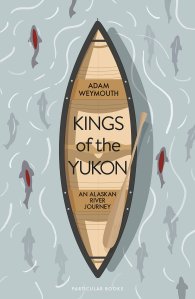 Kings of the Yukon: An Alaskan River Journey by Adam Weymouth won this year’s Sunday Times Young Writer of the Year Award earlier this month and documents Weymouth’s 2,000 mile journey by canoe along the Yukon river through Canada and Alaska to the Bering Sea in a highly original and ecologically aware travel memoir. The remotest areas of the world tend to be where the effects of climate change, globalisation and industrial fishing are felt most keenly and the far north-west of North America is no exception. Local communities relying on King salmon (also known as chinook) for their livelihoods now face huge uncertainty with rapidly dwindling numbers of fish now spawning there. Fishing quotas might not sound like the most fascinating topic but the lyrical descriptions of the landscape alongside tales of the people he meets along the way, help put the worrying statistics into context. I doubt I would have come across ‘Kings of the Yukon if it hadn’t been shortlisted for the Young Writer of the Year Award and I hope that the extra exposure from winning the prize will see Weymouth’s audience expand much further. Continue reading
Filed under Books
Book Events: Barbara Kingsolver and Young Writer of the Year 2018
 I will be taking a short break from blogging in December while I sort out moving to my new flat but I have been to two great book events this month to take my mind off some of the stress. Rebecca at Bookish Beck has been on a roll winning free tickets on Twitter recently and after our trip to see Wise Children at the theatre last month, we went to see Barbara Kingsolver in conversation with Samira Ahmed at the Royal Festival Hall in London a couple of weeks ago where we also met up with Laura from our Wellcome Book Prize shadow panel. Continue reading
Filed under Books
Property by Lionel Shriver and Public Library and Other Stories by Ali Smith
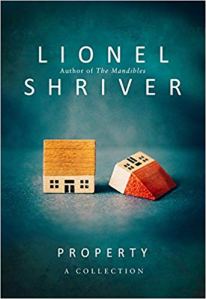 By coincidence, I have recently read two collections of short fiction by two of my favourite authors which bring together stories united around specific themes. ‘Property’ is Lionel Shriver’s first collection of short stories which all address the title’s literal definition in relation to real estate and also in a more figurative sense as ownership and possession. Ten shorter pieces many of which have previously been published in magazines are bookended by two novellas ‘The Standing Chandelier’ about the dynamics of Weston Babansky’s 20+ year friendship with Jillian Frisk and her unusual choice of wedding gift when he marries his girlfriend Paige and ‘The Subletter’ written in 1999 about an American journalist living in Belfast during the Troubles who has territorial struggles of her own. Continue reading
Filed under Books
Little by Edward Carey
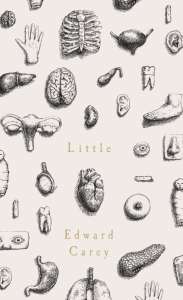 ‘Little’ by Edward Carey is a fictionalised account of the early life of Madame Tussaud who founded the famous waxwork museum in London that bears her name. Born Anne Marie Grosholtz in 1761 and orphaned as a young child, she is employed by Swiss wax sculptor, Doctor Curtius, who makes anatomical models in his studio and names his young apprentice ‘Little’ on account of her small stature. When Curtius’ financial difficulties finally catch up with him, they move to Paris where they take rooms with widow Charlotte Picot who helps transform the business and set up popular exhibitions displaying wax replicas of the heads of noblemen and famous murderers. She banishes Marie to work in the kitchen out of jealousy but following a surprise visit by Princess Elisabeth, the youngest sister of King Louis XVI, Marie is invited to become her wax modelling tutor at the Palace of Versailles. However, with revolution on the horizon, nobody associated with the Royal Family is safe from the threat of the guillotine. Continue reading
Filed under Books
The Mars Room by Rachel Kushner
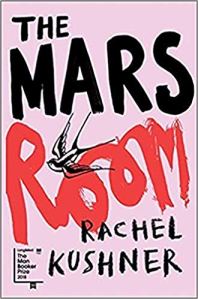 The winner of this year’s Man Booker Prize was announced last month. While ‘The Overstory’ by Richard Powers and ‘Washington Black’ by Esi Edugyan appeared to be the favourites to win among bloggers I follow, ‘Milkman’ by Anna Burns triumphed in the end. I’m undecided about whether or not to read it. There has been a lot of focus on the experimental prose style and the question of its “readability” with its unnamed characters and paragraphs without breaks. However, when chair of the judges Kwame Anthony Appiah said “I spend my time reading articles in the Journal of Philosophy so by my standards this is not too hard”, I wasn’t sure he really succeeded in selling it to a wider audience. On the other hand, it should be noted that the actual sales figures since Burns’ win tell a different story and it will be interesting to see how it is critically received in the long term. Do let me know what you think of ‘Milkman’ if you have read it. Continue reading
Filed under Books
Wise Children by Angela Carter: Book and Theatre Review
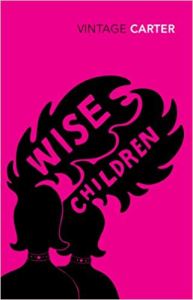 I went to see ‘Wise Children’ at the Old Vic theatre in Waterloo last week after Rebecca of bookishbeck won a pair of tickets and very kindly offered her spare one to me. I also managed to track down a copy of the book from the library and read it this week. ‘Wise Children’ is Angela Carter’s final novel published in 1991 a year before her death and the stage adaptation is Emma Rice’s first project with her new theatre company (also called Wise Children) since leaving her role as artistic director at Shakespeare’s Globe in 2016.
Dora and Nora Chance are the illegitimate twin daughters of one of the great Shakespearean actors, Sir Melchior Hazard, whose twin brother Peregrine is believed to be dead. As Dora and Nora celebrate their 75th birthday towards the end of the 20th century, Melchior is about to turn 100 (and possibly Peregrine too…). The story is narrated by Dora who looks back on the sisters’ humble beginnings in south London brought up by the eccentric Grandma Chance and their career as a double act as chorus girls in the weird and wonderful world of Hollywood, theatre and music hall variety shows. Continue reading
Filed under Books



 A Little Blog of Books
You must be logged in to post a comment.