
The Wellcome Book Prize celebrating fiction and non-fiction with a medical theme was “paused” this year and Rebecca has organised an alternative blog tour and public vote of books that would have been eligible. Rebecca, Laura, Paul, Annabel and I have selected a shortlist and you can vote for your favourite at this Twitter poll (see both tweets in the thread for all six books) which is open for a few more hours today. The six books we have chosen are:
Exhalation by Ted Chiang – a collection of sci-fi short stories about artificial intelligence and what it means to be human
Invisible Women by Caroline Criado Perez – a non-fiction book exposing gender bias in the modern world
Constellations by Sinéad Gleeson – an essay collection about health, motherhood and grief
The Nocturnal Brain by Guy Leschziner – a non-fiction book about the neuroscience of sleep
The Remarkable Life of the Skin by Monty Lyman – a non-fiction-book about the history and science of skin
War Doctor by David Nott – a memoir by a trauma surgeon who has worked on the frontline of war zones and natural disasters







 ‘Babel: Around the World in 20 Languages’ by Gaston Dorren takes the reader on a fascinating tour of the most popular languages spoken across the world today. Out of approximately 6,000 different languages currently in use, over half of the world’s population speak at least one of the top 20 as a mother tongue, from Vietnamese (85 million speakers) to English (over 1.5 billion speakers), spanning all corners of the globe.
  ‘Gotta Get Theroux This: My Life and Strange Times in Television’ is Louis Theroux’s memoir reflecting on over twenty years of making television documentaries. His career began in 1994 with a one-off segment on Michael Moore’s ‘TV Nation’ on apocalyptic religious sects followed by the ‘Weird Weekends’ series which focused on odd aspects of Americana. More recently, he has moved towards documentaries about hard-hitting topics such as eating disorders and addiction.
  It’s been a while since I’ve been to a literary event, and three years since I last went to Chiswick Book Festival in 2016, so another visit was long overdue. Yesterday, I went to two events: Sadie Jones talking to Cathy Rentzenbrink about her latest novel ‘The Snakes’ and Sonia Purnell discussing her book ‘A Woman of No Importance’ with Julia Wheeler.
 If you enjoyed
  “Fake news” had yet to become a common term when ‘Nothing is True and Everything is Possible: Adventures in Modern Russia’ was published in the UK in 2015, but the concept is very much present in Peter Pomerantsev’s anecdotal depiction of post-Soviet Russia. Raised in London, he moved to Russia as an adult and his work as a reality television producer allowed him access to all sorts of people and places at the peak of the television industry boom years in the 2000s.
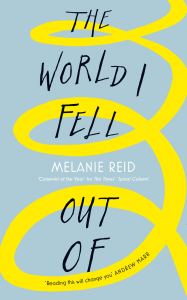 I have read two non-fiction books recently which both draw on regular newspaper columns penned by their authors. In April 2010, at the age of 52, journalist Melanie Reid broke her neck and fractured her back after falling from a horse, spending nearly a year in a high-dependency spinal unit. She is now a tetraplegic, permanently paralysed from the top of her chest downwards and will spend the rest of her life in a wheelchair. She has documented her experience of adult-acquired disability in her ‘Spinal Column’ in the Times for several years now. Her memoir ‘The World I Fell Out Of’ draws on those articles but also provides a fuller account of how her life changed following the accident.
  I saw Francesca Segal in conversation with Amanda Craig at the Jewish Book Festival in March 2018 and was immediately intrigued when she said she was writing a non-fiction book about the premature birth of her identical twin daughters ten weeks before their due date. Published in the UK this week, ‘Mother Ship’ is presented as a diary of the 56 fraught days the babies (initially known as A-lette and B-lette) spent in the neonatal intensive care unit (NICU) in the weeks leading up to Christmas 2015.



 A Little Blog of Books
You must be logged in to post a comment.