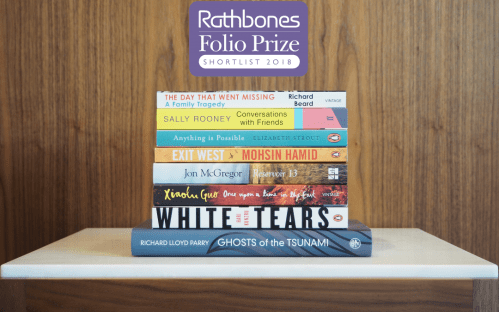
Today I’m very pleased to host a Q&A with Richard Lloyd Parry who has been shortlisted for the Rathbones Folio Prize for his brilliant book Ghosts of the Tsunami – one of the best books I read in 2017. It is a narrative non-fiction account about the aftermath of the tsunami which devastated the east coast of Japan on 11th March 2011 and how it impacted a small community where many people lost their lives. I’m very pleased that this riveting book has recently been shortlisted for the Rathbones Folio Prize – a relatively new literary award in which 60 fiction and non-fiction books are nominated by members of the Folio Academy and then whittled down to a shortlist of eight. This year’s list also includes two novels I have read and enjoyed very much: Conversations with Friends by Sally Rooney and Reservoir 13 by Jon McGregor.
Q&A with Richard Lloyd Parry
1. At what age did you know you wanted to become a writer?
Eighteen. I thought that wanted to direct plays, but brief experience at university made me realise how dependent theatre is on the temperamental peculiarities of other people. I prefer to work alone, or in a small team. Continue reading
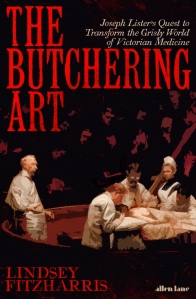 My final Wellcome Book Prize shortlist post is also part of the final day of the blog tour showcasing each book before the winner is announced tomorrow. ‘The Butchering Art: Joseph Lister’s Quest to Transform the Grisly World of Victorian Medicine’ by Lindsey Fitzharris is one of the titles I was particularly interested in reading when the longlist was announced in February. Although Lister is the main biographical subject of the book, ‘The Butchering Art’ also works as a more general narrative non-fiction account of the history of surgery in the mid 19th century.
 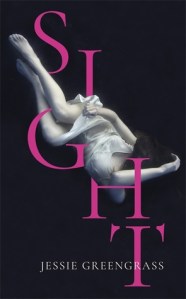 I haven’t yet finished shadowing this year’s Wellcome Book Prize shortlist but I have already come across a novel which has very strong potential to be on next year’s longlist of books which engage in some aspect of health, illness or medicine. I enjoyed reading Jessie Greengrass’s collection of short stories
 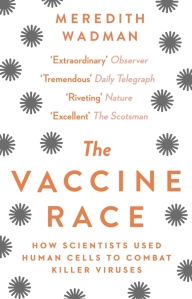 ‘The Vaccine Race: How Scientists Used Human Cells to Combat Killer Diseases’ by Meredith Wadman is an account of the history, science and ethics of vaccine development in the United States. It primarily concerns the career of American anatomy professor Leonard Hayflick and his quest to find and mass produce the safest human cells for use in vaccines at a time when viruses such as polio and rubella were far more prevalent than they are today.
 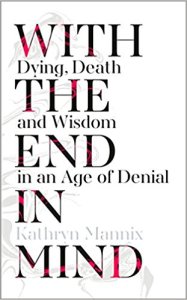 ‘With the End in Mind: Dying, Death and Wisdom in an Age of Denial’ by Dr Kathryn Mannix is a collection of anonymised patient case studies (or “stories” as Mannix calls them) drawn from her thirty years of experience as a palliative care clinician and consultant. It has been shortlisted for this year’s Wellcome Book Prize which I am shadowing with fellow book bloggers
 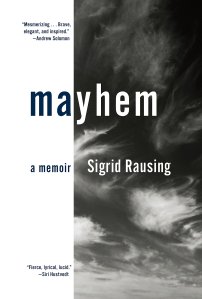 Shortlisted for the Wellcome Book Prize, ‘Mayhem’ is Sigrid Rausing’s family memoir about drug addiction. Her younger brother and heir to the Tetra Pak fortune, Hans Kristian, met American businesswoman, Eva Kemeny, when they were in rehab together in the late 1980s. They later married and became well-known philanthropists based in London. However, they relapsed and in 2007, Sigrid was granted custody of Hans and Eva’s four children. In July 2012, Hans was stopped by the police after driving erratically through London and was found with drugs in his possession. When the police searched his Belgravia mansion, they discovered Eva’s remains hidden under a mattress. She had been dead for approximately two months.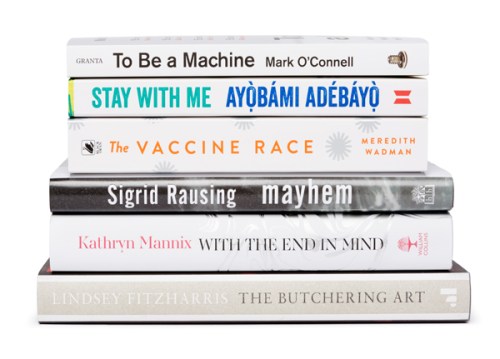
 ‘Asymmetry’ by Lisa Halliday consists of two seemingly unrelated stories which are eventually revealed to have surprising connections. The first part, ‘Folly’, concerns Alice, an editorial assistant in her twenties living in post 9/11 New York City who begins a relationship with a much older man, a Jewish author named Ezra Blazer who has repeatedly been overlooked for a Nobel Prize for Literature. In the second part, ‘Madness’, an Iraqi-American economist, Amar Jaafari, is on his way to Kurdistan to visit his brother but is detained by immigration officials at Heathrow Airport.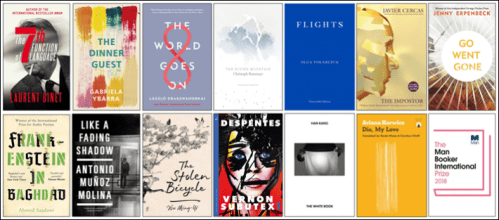
 Although I’m not participating in the shadow panel this year, I have been thinking about possible contenders for this year’s Man Booker International Prize longlist which is due to be announced tomorrow. My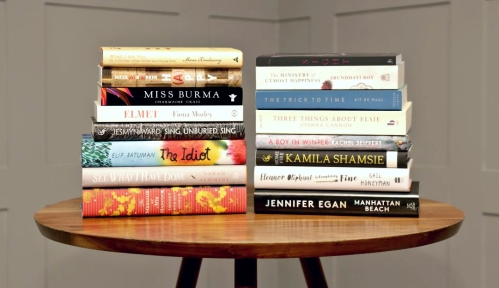


 The Women’s Prize for Fiction longlist is due to be announced on Thursday 8th March and I have been thinking about which books could make the cut. My
  It’s almost impossible to avoid hearing about Donald Trump’s latest exploits via rolling news headlines every day, but until now, I hadn’t read any books detailing the whole sorry saga of the Trump administration to date. However, ‘Fire and Fury: Inside the Trump White House’ is very much the book of the moment and seeing its author Michael Wolff in conversation with Armando Iannucci (creator of some of the best TV political satires including ‘The Thick of It’ and ‘Veep’) at the Friends House near Euston in London on Friday night was simply too good an opportunity to miss.
 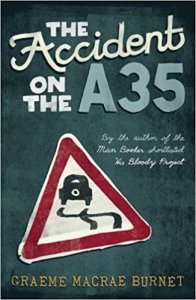 ‘The Accident on the A35’ by Graeme Macrae Burnet sees the return of Inspector Georges Gorski who featured in
  2018 marks the 50th anniversary of the Man Booker Prize and the organisers have launched a one-off prize to celebrate the best of the winning novels to date.
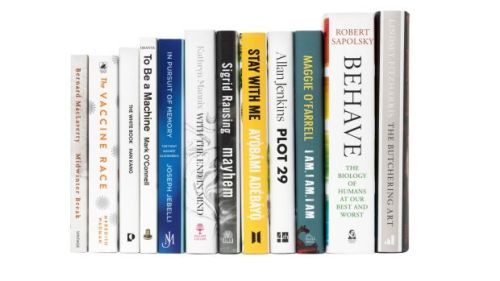 This year’s Wellcome Book Prize longlist has been announced today. The twelve books are:
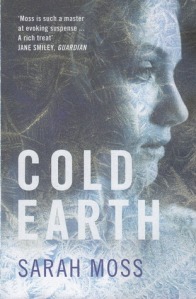 I have really enjoyed all of the books by Sarah Moss I have read to date and I recently read her 2009 debut novel ‘Cold Earth’. It follows a team of six archaeologists and academics who travel to western Greenland for a three week dig excavating the remains of a Viking settlement. They leave behind their homes in the United States and Europe just as a deadly flu-like virus has started to spread rapidly across the world. Archaeologists Catriona, Ben, Jim and Ruth are joined by team leader Yianni and his friend Nina, the only non-archaeologist in the group whose academic research is vaguely linked to Norse literature. However, Nina experiences night terrors and becomes convinced that the supernatural events are the result of ghosts disturbed by the group’s dig at their resting place.
 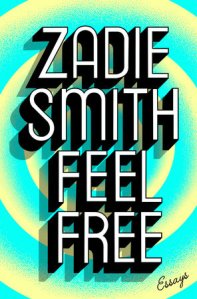 ‘Feel Free’ is a new collection of over thirty essays, reviews and interviews by Zadie Smith divided into five sections. The first and last of these, ‘In the World’ and ‘Feel Free’, cover current events and some autobiographical “life writing”, while ‘In the Audience’, ‘In the Gallery’ and ‘On the Bookshelf’ concern her musings on film, art and writing respectively.



 A Little Blog of Books
You must be logged in to post a comment.