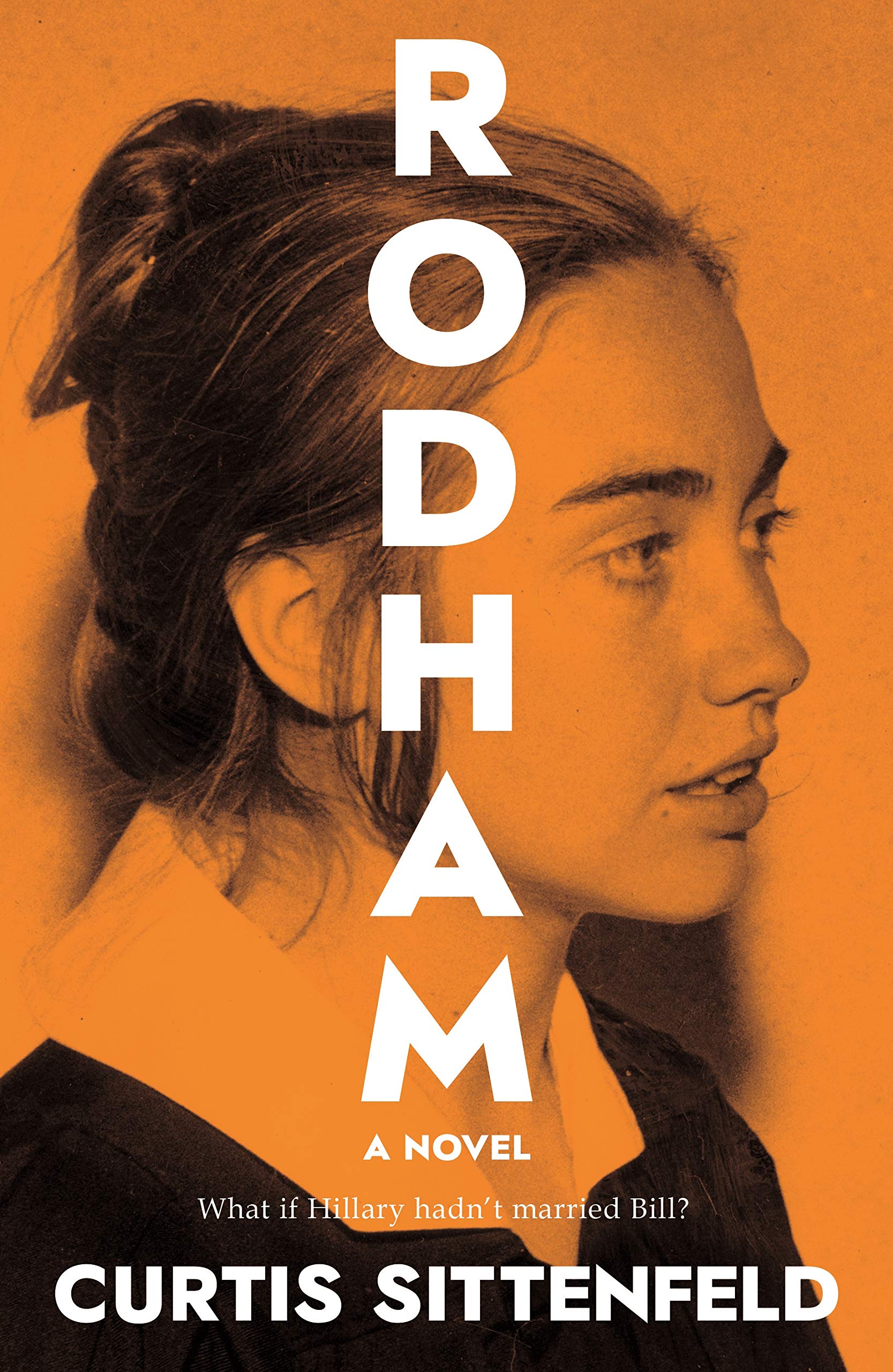
 I really enjoyed American Wife by Curtis Sittenfeld which is a thinly disguised account of the life of Laura Bush, wife of George W. Bush and former First Lady of the United States. I also enjoyed Sittenfeld’s short story ‘The Nominee’ which is included in the UK edition of You Think It, I’ll Say It and is told from the perspective of Hillary Rodham Clinton a few months before the 2016 US presidential election. The premise of her sixth novel ‘Rodham’ – “What if Hillary hadn’t married Bill?” – is one of the most intriguing alternative history scenarios I can think of, so it was the first book I picked up at a physical bookshop after they reopened following lockdown. Continue reading
Tag Archives: Reviews
Rodham by Curtis Sittenfeld
Filed under Books
Scabby Queen by Kirstin Innes
 I read a proof copy of Scabby Queen by Kirstin Innes back in April, when it was originally due to be published, but its release date in the UK was pushed back to July due to the pandemic. It tells the story of Clio Campbell, a one-hit-wonder Scottish pop star and political activist who takes her own life just before she turns 51, some three decades after a brief period of fame as the singer of the anti-poll tax anthem ‘Rise Up’.
Clio’s suicide isn’t a spoiler as it is revealed right at the beginning of the book when her body is discovered by her friend Ruth. The story then jumps back and forth in time looking back at Clio’s life with each part retold by a selection of people who knew Clio from very different perspectives. The non-linear story is slightly confusing initially, but I really got into it by the second half as the glimpses of Clio’s life through the eyes of others gradually come together to reveal an affecting character portrait of someone who is very vulnerable in lots of ways behind the outspoken public facade. Continue reading
Three Short Story Collections I’ve Read Recently
 After a long period of reading either novels or non-fiction, I have been reading some short story collections recently, possibly a result of my slightly shorter attention span in recent weeks.
I found a copy of Treats by Lara Williams in a charity shop shortly after I read the author’s debut novel Supper Club which was published last summer. This very short collection – 21 stories in just over 100 pages – published in 2016 by the now-defunct Freight Books includes more of the same sharply observed prose about modern life, usually from the point of view of millennial age characters. Consequently, Williams is particularly good on the ways in which reality does not always meet expectations, whether it’s graduate job-hunting, relationships after university or creative writing courses. Her stories written in the second person are also very effective – a tricky perspective to get right. Overall, this is a fresh contemporary collection written by a striking new voice. Continue reading
Filed under Books
Lockdown Reading: Part Two
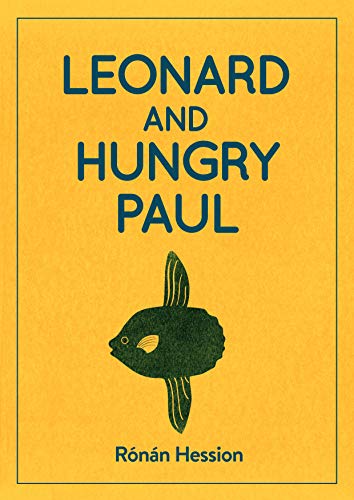 There wasn’t much in the way of comfort reading in my previous blog post, but there is in this one in the form of Leonard and Hungry Paul by Ronan Hession which has become a word-of-mouth success since it was published by the small independent press Bluemoose Books last year. It is a novel which defies straightforward genre categorisation and tells the story of two quiet friends in their thirties who live seemingly unremarkable lives driven by familiar routine. Leonard is a ghostwriter who has a growing bond with his colleague Shelley while Hungry Paul (his nickname is never explained) lives with his retired parents who are busy with preparations for the wedding of his sister Grace who is frustrated by Hungry Paul’s lack of ambition in life. Hession is particularly skilful at showing how introverts deal with both small-scale events such as the awkwardness of small talk on a first date as well as the bigger picture questions of what they really want from life. Other than the rhythms of everyday scenes, there is little in the way of plot which happily means there is no attempt to improve their characters via a saccharine journey towards them becoming more extroverted. ‘Leonard and Hungry Paul’ is an understated gem of a book. Continue reading
Filed under Books
Lockdown Reading: Part One
 Lots of people might be seeking out comfort reads in these strange times, but it seems that I am not one of them. Anyone with anxieties about hospitals, lockdown or politics probably won’t want to look at the books I have been reading recently which include a novel set in a hospital, diaries written by a prisoner at HMP Wandsworth and a survey of modern UK Prime Ministers from Harold Wilson to Theresa May. On the plus side, all three books contain a fair amount of dark humour.
Bodies by Jed Mercurio is the 2002 novel which forms the basis of the BBC TV drama of the same name which aired from 2004-06 about whistleblowing in hospitals. Best known for creating the TV series Line of Duty and Bodyguard, Mercurio trained as a junior doctor in Birmingham and his knowledge and experience is evident in a grimly realistic account of frontline healthcare. It is clear that his debut novel was very much an early blueprint for the TV series which, in my view, is far more developed in terms of plot and characterisation, both of which are only lightly sketched in the novel. The TV series is set in an obstetrics and gynaecology department with junior doctor Rob Lake suspecting that consultant Roger Hurley is negligent towards his patients. The novel shares the same central theme of whistleblowing and sees an unnamed newly qualified house officer fresh out of medical school starting work in an accident and emergency department. He makes mistakes resulting in injury and death, as do his colleagues, and the central dilemma is neatly summarised towards the end: “Whether as doctors we make an honest mistake or we commit a huge clanging act of incompetence, the system treats us the same” (p. 329). The unnamed protagonist becomes detached and disillusioned as the boundaries between right and wrong become increasingly blurred. I wasn’t sure the dramatic tension on screen would be as effective in the book but I would say both are equally stressful with plenty of black humour and cynicism thrown in for good measure. ‘Bodies’ is engaging and pacy but definitely not for the faint-hearted.
Filed under Books
Not The Wellcome Prize: Invisible Women by Caroline Criado Perez

The Wellcome Book Prize celebrating fiction and non-fiction with a medical theme was “paused” this year and Rebecca has organised an alternative blog tour and public vote of books that would have been eligible. Rebecca, Laura, Paul, Annabel and I have selected a shortlist and you can vote for your favourite at this Twitter poll (see both tweets in the thread for all six books) which is open for a few more hours today. The six books we have chosen are:
Exhalation by Ted Chiang – a collection of sci-fi short stories about artificial intelligence and what it means to be human
Invisible Women by Caroline Criado Perez – a non-fiction book exposing gender bias in the modern world
Constellations by Sinéad Gleeson – an essay collection about health, motherhood and grief
The Nocturnal Brain by Guy Leschziner – a non-fiction book about the neuroscience of sleep
The Remarkable Life of the Skin by Monty Lyman – a non-fiction-book about the history and science of skin
War Doctor by David Nott – a memoir by a trauma surgeon who has worked on the frontline of war zones and natural disasters
Filed under Books
Not The Wellcome Prize: The Body by Bill Bryson

The Wellcome Book Prize celebrating fiction and non-fiction with a medical theme was “paused” this year – a decision taken before the current pandemic, although even if it had gone ahead, it would have inevitably faced disruption anyway. Fortunately, Rebecca has organised an alternative Not the Wellcome Prize blog tour of books that would have been eligible had the prize taken place this year. Rebecca, Laura, Paul, Annabel and I will be selecting a shortlist over the weekend based on what we’ve managed to read between us and announcing a winner on 11th May based on our discussions and a Twitter poll. Continue reading
Filed under Books
East West Street by Philippe Sands
 I went to a Baillie Gifford Prize for Non-Fiction shortlist readings event in 2016 where Philippe Sands spoke about his book ‘East West Street: On the Origins of Genocide and Crimes Against Humanity’ which won the prize that year, and I finally got round to reading it last month. Sands, an international human rights lawyer, was invited to give a lecture on genocide and crimes against humanity at the university in the Ukrainian city of Lviv in 2010 and took the opportunity to explore his family history on his mother’s side, particularly the life of his grandfather, Leon Buchholz, who was born near the city in the early 20th century. Continue reading
Filed under Books
Books I Read in February
 I have reduced my blog post frequency to monthly round-ups of what I have been reading instead of the weekly posts I was writing before. A consequence of taking a bit of a step back meant that February was a slightly slower month for me in terms of how much I read, but I recommend all of the books below:
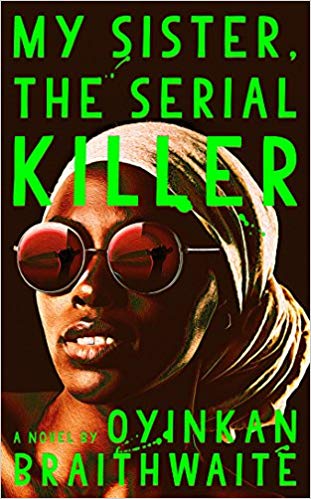
My Sister, the Serial Killer by Oyinkan Braithwaite was shortlisted for the Women’s Prize for Fiction and longlisted for the Man Booker Prize last year. Set in Nigeria, it tells the story of Korede who keeps coming to the aid of her sister, Ayoola, whenever she bumps off one of her boyfriends, always claiming self-defence each time. Grimly deadpan and satirical, it’s easy to see why the setting, tone and plot of this provocative debut all stand out for their originality. However, the paciness means it lacks a bit of depth, so I’m not too surprised it didn’t progress further in the literary prizes it was nominated for. Continue reading
Filed under Books
More Books I Read in January
 I am planning to reduce my blog post frequency to fortnightly or monthly posts, so I can use my time to write shorter reviews of more books, rather than focusing on the ones I can write longer reviews for each week which has been my main pattern for nearly 8 years (!) of blogging.
I am also planning to reread a few books this year, mostly ones I first read when I was a teenager. ‘Nineteen Eighty-Four’ by George Orwell is not quite the blueprint of the modern dystopian novel, but it is probably the one which has had the most cultural significance since it was first published in 1949 and the concepts of Big Brother, Room 101 and the Thought Police remain commonly used terms. Even if you haven’t read ‘Nineteen Eighty-Four’, you may well be aware of the basic plot in which low-ranking member of The Party, Winston Smith, secretly denounces the government and begins a forbidden relationship with Julia. Needless to say their rebellion is risky and complicated and it is remarkable just how prescient and perceptive Orwell was about the sinister consequences of certain technological developments in the 20th century and the ways in which totalitarian states seek to gain control through surveillance. As a reread, the thing that struck me most was how powerful and fitting the ending is and it’s easy to see why ‘Nineteen Eighty-Four’ has become such an enduring classic. Continue reading
Filed under Books
Nickel and Dimed by Barbara Ehrenreich
 I read Hired by James Bloodworth in 2018 which is the author’s eye-opening account of working undercover in Britain as an Amazon warehouse picker, Uber driver, call centre worker and carer on zero-hours contracts in the mid 2010s. Barbara Ehrenreich undertook a similar experiment almost 20 years earlier in the United States and ‘Nickel and Dimed: On (Not) Getting By in America’ first published in 2001 is now regarded as a classic of narrative non-fiction reportage. The book is split into three parts: ‘Serving in Florida’ sees Ehrenreich working as a waitress and housekeeper, ‘Scrubbing in Maine’ is about her experience as a cleaner and ‘Selling in Minnesota’ where she folded clothes in Wal-Mart. Continue reading
Filed under Books
Trick Mirror by Jia Tolentino
 ‘Trick Mirror: Reflections on Self-Delusion’ by Jia Tolentino has been highlighted in several best of 2019 non-fiction book lists recently. The New Yorker staff writer’s debut collection of nine essays are pieces of cultural criticism about modern life today with its relentless focus on performance, productivity and optimisation. In ‘Trick Mirror’, Tolentino explores what this means for the development of the Internet and the current wave of feminism amongst other things. Continue reading
Filed under Books
Three Books By Nora Ephron
 It is rare for me to read consecutive books by the same author, but Nora Ephron’s are both very short and very funny and therefore eminently binge-readable. Best known as a screenwriter and director of films such as ‘Sleepless in Seattle’, ‘You’ve Got Mail’ and ‘Julie and Julia’, Ephron’s career began in journalism in the 1960s. Her essay collection ‘I Feel Bad About My Neck And Other Thoughts On Being a Woman’ was published in 2006 and has recently been reissued. Continue reading
Filed under Books
The Secret Commonwealth by Philip Pullman
 My main read over Christmas was ‘The Secret Commonwealth’ by Philip Pullman, the second volume in the Book of Dust trilogy following La Belle Sauvage two years ago. ‘La Belle Sauvage’ was essentially a prequel to the His Dark Materials trilogy in which we saw Lyra as a baby. The events in ‘The Secret Commonwealth’ take place about seven years after the end of that trilogy with Lyra now a 20-year-old undergraduate in Oxford. It opens with the murder of a botanist who had recently returned from a research trip to central Asia studying the effects of rose oil. The web of intrigue which follows this murder has implications for the authoritarian rule of the Magisterium and leads to Lyra and Malcolm undertaking separate journeys across Europe through to Turkey and Syria. Continue reading
Filed under Books
The Warlow Experiment by Alix Nathan
 I mentioned ‘The Warlow Experiment’ by Alix Nathan in my Booker Prize longlist predictions post in July as a possible contender for the 2019 prize. Even though my prediction about the dominance of historical fiction on this year’s longlist ended up being way off the mark, I was intrigued by the premise of this particular novel which is based on a real experiment proposed in the late 18th century. Nathan came across a brief article in the 1797 edition of the Annual Register which suggests that someone had taken up the offer posted by a Mr Herbert Powyss a few years earlier to spend seven years living in total isolation in the cellar of his manor house in the Welsh Marches. Only one person applied: a labourer who was apparently attracted by the reward offered by Powyss of 50 pounds per year for life in order to provide for his large family. However, further information about the outcome of the experiment is unknown and Nathan’s imagining of the scenario is therefore entirely fictionalised. Continue reading
Filed under Books
The Bus on Thursday by Shirley Barrett
 ‘The Bus on Thursday’ by Shirley Barrett will appeal to those with a certain sense of humour, most likely a dark one. It opens with Eleanor Mellett discovering that she has been diagnosed with an aggressive form of breast cancer at the age of 31. After being dumped by her boyfriend, she gets a new job teaching at a tiny school in Talbingo (population: 241) in a particularly remote area of rural Australia. The previous teacher, Miss Barker, has gone missing in mysterious circumstances and the oddball residents are bewildered by her sudden disappearance. Continue reading
Filed under Books
A History of Loneliness by John Boyne
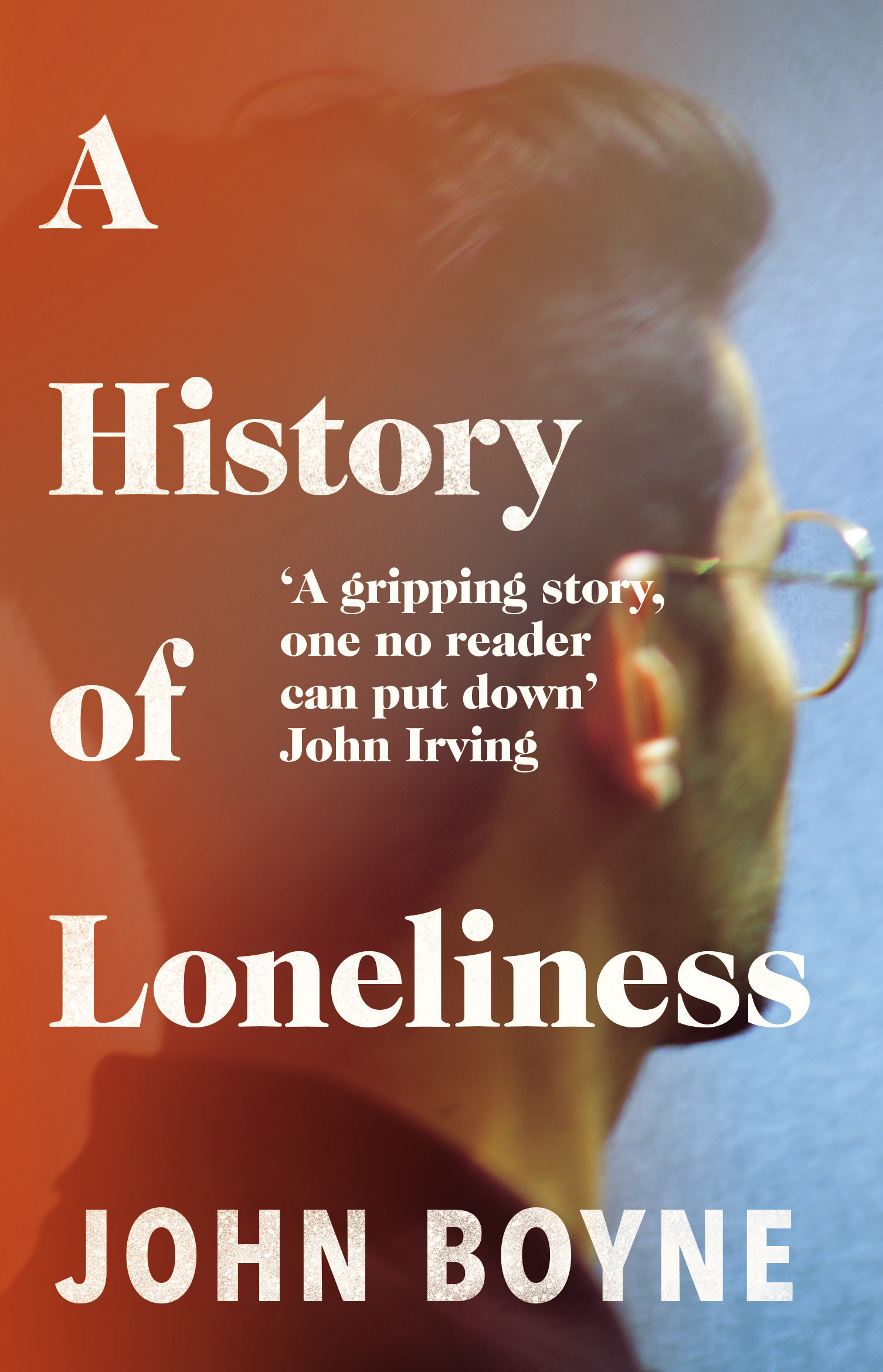
I really enjoyed reading John Boyne’s two most recent novels The Heart’s Invisible Furies and A Ladder to the Sky last year and this week I have read his 2015 novel ‘A History of Loneliness’ which tackles the child abuse scandal in the Catholic Church in Ireland. It tells the story of Odran Yates who enters Conliffe College seminary at the age of 17 in the 1970s after his mother informs him that he has a vocation. It is there that he first meets Tom Cardle, and the two remain friends despite Tom moving between several different parishes and Odran having his suspicions about why that keeps happening. It isn’t until many years later that Odran is forced to come to terms with what happened and recognise his own complicity. Continue reading
Filed under Books
Their Brilliant Careers by Ryan O’Neill
 I have been reading a lot of non-fiction over the last few weeks, and even the most recent novel I have read masquerades as a series of biographical sketches. ‘Their Brilliant Careers’ by Ryan O’Neill is introduced as a collection of sixteen portraits of Australian literary figures from the 20th century. It is a shame that the blurb and my review are forced by necessity to reveal that everything from the dedication to the index is invented, but O’Neill’s highly amusing pastiche more than makes up for this. Continue reading
Filed under Books
The Five by Hallie Rubenhold
 I enjoy following the Baillie Gifford Prize for Non-Fiction (previously known as the Samuel Johnson Prize) because it is the one book prize which consistently picks winners I actually agree with: Chernobyl by Serhii Plokhy, How to Survive a Plague by David France and H is for Hawk by Helen Macdonald to name a few from recent years. I had just finished ‘The Five’ by Hallie Rubenhold when it was announced as this year’s winner on Tuesday and, once again, I think it is another book which really deserves this prestigious award. It is about the “untold lives of the women killed by Jack the Ripper”, namely Mary Ann “Polly” Nichols, Annie Chapman, Elizabeth Stride, Catherine “Kate” Eddowes and Mary Jane Kelly who all died in 1888 in Whitechapel in east London. Continue reading
Filed under Books
Character Breakdown by Zawe Ashton and Where Am I Now? by Mara Wilson
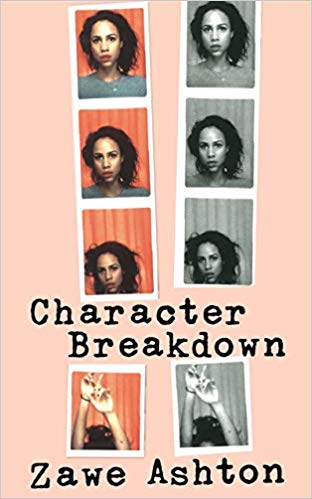 I have read two memoirs written by actresses recently, namely Zawe Ashton and Mara Wilson. Despite their very different career paths, both clearly have mixed feelings about the industry and how it operates.
Zawe Ashton’s memoir ‘Character Breakdown’ has an unusual but brilliant structure switching between prose sections about different auditions and roles she has played, and scenes from her life in the form of a play script as she makes the transition to roles in Hollywood. Each chapter begins with the “character breakdown” of the audition – in other words, a short description of the role and the type of actor they are looking to cast. Some chapters are about the auditions or roles themselves, and others draw on events in her life at the time. Continue reading
Filed under Books



 A Little Blog of Books
You must be logged in to post a comment.