Tag Archives: Reviews
February 10, 2019 · 6:41 pm
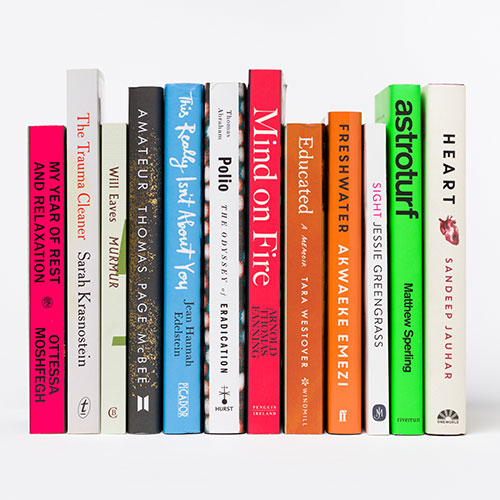
The 12 books longlisted for this year’s Wellcome Book Prize are:
Amateur by Thomas Page McBee
Astroturf by Matthew Sperling
Educated by Tara Westover
Freshwater by Akwaeke Emezi
Heart: A History by Sandeep Jauhar
Mind on Fire by Arnold Thomas Fanning
Murmur by Will Eaves
My Year of Rest and Relaxation by Ottessa Moshfegh
Polio: The Odyssey of Eradication by Thomas Abraham
Sight by Jessie Greengrass
The Trauma Cleaner by Sarah Krasnostein
This Really Isn’t About You by Jean Hannah Edelstein
Among the five fiction and seven non-fiction titles, the judges have noted that gender, identity and mental health have emerged as prominent themes this year. I will be shadowing the shortlist of six books which will be announced on 19th March with fellow book bloggers Rebecca, Annabel, Paul and Laura and we will also be covering the longlist between us over the next few weeks. Continue reading →
Filed under Books
Tagged as Book, Book Awards, Book Review, Book Reviews, Fiction, Health, Literary Awards, Medicine, Memoirs, Non fiction, Reading, Reviews, Wellcome Book Prize, Wellcome Book Prize 2019
January 27, 2019 · 5:43 pm
 Since starting this blog, I have read various memoirs by medical professionals – a genre which provides thought-provoking insight into the practical and emotional side of modern medicine. From Atul Gawande to Suzanne O’Sullivan to Kathryn Mannix, each has offered new insight into their work and area of expertise, often through the stories of individual patients. I have recently read two more books which broaden the scope of the genre beyond case studies and explore other aspects of the author’s personal lives, careers and their specialties.
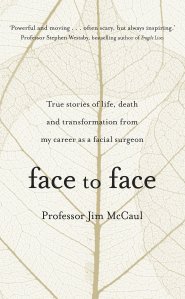
In his memoir ‘Face to Face’, Professor Jim McCaul, a consultant surgeon in maxillofacial surgery at Queen Elizabeth University Hospital in Glasgow, recounts cases in which he has restored patients’ appearances following accidents, violence and the removal of tumours from the head and neck (which take up around 80% of his work). Continue reading →
Filed under Books
Tagged as All That Remains, Book, Book Review, Book Reviews, Death, Face to Face, Health, Jim McCaul, Medicine, Non fiction, Reading, Reviews, Sue Black
January 20, 2019 · 6:04 pm
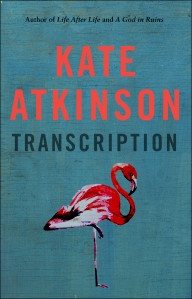 ’Transcription’ is the latest stand-alone novel by Kate Atkinson in which eighteen-year-old Juliet Armstrong is recruited straight out of school by MI5 in 1940 not long after her mother has died. Initially given secretarial tasks as well as the roles usually left to women such as making the tea, she soon begins transcription work monitoring the conversations held in a flat in Pimlico between Fascist sympathisers and an undercover British agent named Godfrey Toby who poses as a member of the Gestapo. A decade later, she is working as a radio producer of children’s programmes at the BBC believing that her wartime activities now lie in the past. However, a chance encounter with Godfrey (also known as John Hazeldine), some threatening notes and a sense that she is being followed remind her that the world of espionage is not one easily left behind and there are some who want Juliet to know that her actions have had far-reaching consequences. Continue reading →
Filed under Books
Tagged as Book, Book Review, Book Reviews, Historical, Kate Atkinson, Literary Fiction, London, New Books, Novels, Reading, Reviews, Spies, Transcription, World War Two
January 13, 2019 · 5:11 pm
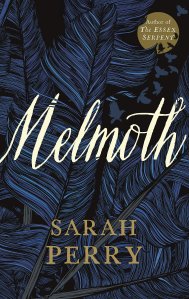 ‘Melmoth’ by Sarah Perry tells the story of Helen Franklin, a British woman in her forties working as a translator in Prague where she has lived for some twenty years in self-imposed exile. Her friend Karel has come into possession of the papers of fellow scholar Josef Hoffman who has recently been found dead in the National Library. Among the papers is a manuscript which tells of Melmoth the Witness, an obscure legend in which, according to superstition, Melmoth travels through the ages, persuading those wracked with guilt to wander alongside her on a journey of eternal damnation. Helen’s initial scepticism of the legend wanes when Karel disappears and she is forced to confront the reasons why she cannot forgive herself for the outcome of events in her own past.
Continue reading →
Filed under Books
Tagged as Book, Book Review, Book Reviews, Gothic, Literary Fiction, Literature, Melmoth, Novels, Prague, Reading, Reviews, Sarah Perry
December 31, 2018 · 12:00 pm
Is it possible not to have a good year for books? Thankfully, I don’t think this has happened to me yet, so here is a list of the books I enjoyed the most in 2018.
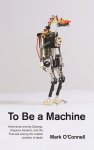

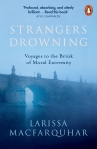

I have read more non-fiction than ever this year, partly due to shadowing the Wellcome Book Prize shortlist in March and April which I hope to do again in 2019. To Be a Machine by Mark O’Connell won the official prize and was also our shadow panel winner – it’s a fun, informative and pretty terrifying book about transhumanism. , Yet while transhumanists are trying to avoid death at all costs, With the End in Mind by Kathryn Mannix explores the practical side of dying and what a “good” death can look like from her work as a palliative care consultant and this was a stand-out title for me this year. Another book I would happily press into the hands of everyone I meet is The Secret Barrister: Stories of the Law and How It’s Broken which is an eye-opening account of the inner workings of the criminal justice system in the United Kingdom. And Strangers Drowning by Larissa MacFarquhar is a book I am still thinking about regularly months after I finished it mostly because the stories of extreme do-gooders are actually more unsettling than uplifting in many cases. Continue reading →
Filed under Books
Tagged as Book, Book Review, Book Reviews, Fiction, Literary Awards, Literary Fiction, Literature, Man Booker Prize, Non fiction, Novels, Reading, Reviews, Wellcome Book Prize, Young Writer of the Year 2018
December 29, 2018 · 3:55 pm
I’m back from a month-long blogging break after moving house this month. Thankfully, everything has gone smoothly and I managed to fit in some reading (albeit at a much slower pace than normal) with non-fiction being the order of the day in the run up to Christmas.
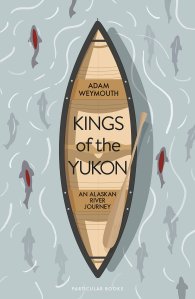 Kings of the Yukon: An Alaskan River Journey by Adam Weymouth won this year’s Sunday Times Young Writer of the Year Award earlier this month and documents Weymouth’s 2,000 mile journey by canoe along the Yukon river through Canada and Alaska to the Bering Sea in a highly original and ecologically aware travel memoir. The remotest areas of the world tend to be where the effects of climate change, globalisation and industrial fishing are felt most keenly and the far north-west of North America is no exception. Local communities relying on King salmon (also known as chinook) for their livelihoods now face huge uncertainty with rapidly dwindling numbers of fish now spawning there. Fishing quotas might not sound like the most fascinating topic but the lyrical descriptions of the landscape alongside tales of the people he meets along the way, help put the worrying statistics into context. I doubt I would have come across ‘Kings of the Yukon if it hadn’t been shortlisted for the Young Writer of the Year Award and I hope that the extra exposure from winning the prize will see Weymouth’s audience expand much further. Continue reading →
Filed under Books
Tagged as Adam Weymouth, Alan Connor, Book, Book Review, Book Reviews, Jon Ronson, Kings of the Yukon, Lost at Sea, Non fiction, Reading, Reviews, The Joy of Quiz
November 18, 2018 · 4:21 pm
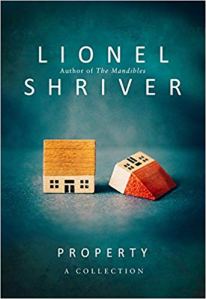 By coincidence, I have recently read two collections of short fiction by two of my favourite authors which bring together stories united around specific themes. ‘Property’ is Lionel Shriver’s first collection of short stories which all address the title’s literal definition in relation to real estate and also in a more figurative sense as ownership and possession. Ten shorter pieces many of which have previously been published in magazines are bookended by two novellas ‘The Standing Chandelier’ about the dynamics of Weston Babansky’s 20+ year friendship with Jillian Frisk and her unusual choice of wedding gift when he marries his girlfriend Paige and ‘The Subletter’ written in 1999 about an American journalist living in Belfast during the Troubles who has territorial struggles of her own. Continue reading →
Filed under Books
Tagged as Ali Smith, Book, Book Review, Book Reviews, Fiction, Home, Libraries, Library, Lionel Shriver, Literary Fiction, Property, Reading, Reviews, Short Stories
November 11, 2018 · 4:05 pm
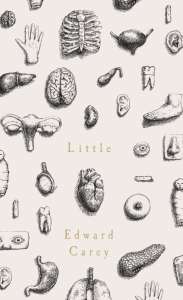 ‘Little’ by Edward Carey is a fictionalised account of the early life of Madame Tussaud who founded the famous waxwork museum in London that bears her name. Born Anne Marie Grosholtz in 1761 and orphaned as a young child, she is employed by Swiss wax sculptor, Doctor Curtius, who makes anatomical models in his studio and names his young apprentice ‘Little’ on account of her small stature. When Curtius’ financial difficulties finally catch up with him, they move to Paris where they take rooms with widow Charlotte Picot who helps transform the business and set up popular exhibitions displaying wax replicas of the heads of noblemen and famous murderers. She banishes Marie to work in the kitchen out of jealousy but following a surprise visit by Princess Elisabeth, the youngest sister of King Louis XVI, Marie is invited to become her wax modelling tutor at the Palace of Versailles. However, with revolution on the horizon, nobody associated with the Royal Family is safe from the threat of the guillotine. Continue reading →
Filed under Books
Tagged as Book, Book Review, Book Reviews, Edward Carey, Fiction, France, French Revolution, Historical, Little, Madame Tussaud, Paris, Reading, Reviews, Waxworks
November 4, 2018 · 4:22 pm
 The winner of this year’s Man Booker Prize was announced last month. While ‘The Overstory’ by Richard Powers and ‘Washington Black’ by Esi Edugyan appeared to be the favourites to win among bloggers I follow, ‘Milkman’ by Anna Burns triumphed in the end. I’m undecided about whether or not to read it. There has been a lot of focus on the experimental prose style and the question of its “readability” with its unnamed characters and paragraphs without breaks. However, when chair of the judges Kwame Anthony Appiah said “I spend my time reading articles in the Journal of Philosophy so by my standards this is not too hard”, I wasn’t sure he really succeeded in selling it to a wider audience. On the other hand, it should be noted that the actual sales figures since Burns’ win tell a different story and it will be interesting to see how it is critically received in the long term. Do let me know what you think of ‘Milkman’ if you have read it. Continue reading →
Filed under Books
Tagged as Book, Book Review, Book Reviews, Fiction, Literary Awards, Literary Fiction, Literature, Man Booker Prize, Prisons, Rachel Kushner, Reading, Reviews, The Mars Room
October 28, 2018 · 6:15 pm
 I went to see ‘Wise Children’ at the Old Vic theatre in Waterloo last week after Rebecca of bookishbeck won a pair of tickets and very kindly offered her spare one to me. I also managed to track down a copy of the book from the library and read it this week. ‘Wise Children’ is Angela Carter’s final novel published in 1991 a year before her death and the stage adaptation is Emma Rice’s first project with her new theatre company (also called Wise Children) since leaving her role as artistic director at Shakespeare’s Globe in 2016.
Dora and Nora Chance are the illegitimate twin daughters of one of the great Shakespearean actors, Sir Melchior Hazard, whose twin brother Peregrine is believed to be dead. As Dora and Nora celebrate their 75th birthday towards the end of the 20th century, Melchior is about to turn 100 (and possibly Peregrine too…). The story is narrated by Dora who looks back on the sisters’ humble beginnings in south London brought up by the eccentric Grandma Chance and their career as a double act as chorus girls in the weird and wonderful world of Hollywood, theatre and music hall variety shows. Continue reading →
Filed under Books
Tagged as Angela Carter, Book, Book Review, Book Reviews, Drama, Fiction, Literature, London, Old Vic Theatre, Reading, Reviews, Shakespeare, Theatre, Wise Children
October 21, 2018 · 5:17 pm
 It’s been almost three years since Career of Evil by Robert Galbraith was published and it has been a very long wait to find out what happens following the cliffhanger ending of ex-military policeman and private detective Cormoran Strike’s late arrival at the wedding of his agency partner Robin Ellacott and her insufferable fiancé Matthew Cunliffe. The prologue of the fourth book in the series published last month, ‘Lethal White’, picks up exactly where ‘Career of Evil’ left off and the story then jumps forward a year later to the summer of 2012 when London is hosting the Olympic Games. A mentally distressed young man named Billy Knight arrives at Strike’s office and then flees again shortly after claiming to have witnessed the murder of a child many years ago. Strike is subsequently approached by Jasper Chiswell, Secretary of State for Culture, Media and Sport who has been receiving blackmail threats from Geraint Winn, husband of the Minister for Sport Della Winn, and Billy’s older brother, Jimmy Knight. Continue reading →
Filed under Books
Tagged as Book, Book Review, Book Reviews, Cormoran Strike, Crime, Crime Fiction, Fiction, J. K. Rowling, Lethal White, London, Novels, Reading, Reviews, Robert Galbraith
October 14, 2018 · 5:19 pm
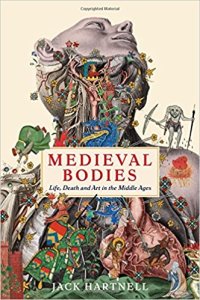 Medieval Bodies: Life, Death and Art in the Middle Ages by Jack Hartnell makes a convincing case against the widely held perception of the Middle Ages as a bloodthirsty and violent period of history where beliefs about medicine were guided primarily by superstition. Instead, the reality is shown to be very different in Hartnell’s examination of how medieval people experienced their physical selves. Each chapter of this lavishly illustrated book focuses on a different part of the body and explores their cultural significance and how medieval attitudes towards them were shaped by a range of influences.
Drawing on art, medicine, literature, science, politics, history, philosophy and much more, I think Hartnell sometimes tries to tackle too much here. The geographical range of sources spanning across Europe and the Middle East is impressive but the scope is so wide that it is a lot to grasp for non-expert readers, whereas I think those who are more knowledgeable about this period of history may find the analysis too thin in some areas. However, Hartnell’s evident passion for his subject is infectious and I think ‘Medieval Bodies’ could be a possible contender for the next Wellcome Book Prize longlist. Continue reading →
Filed under Books
Tagged as Biography, Book, Book Review, Book Reviews, Craig Brown, History, Jack Hartnell, James Bloodworth, Medieval Bodies, Non fiction, Politics, Princess Margaret, Reading, Reviews
October 7, 2018 · 12:30 pm
 I don’t normally read books by the same author within the space of a few weeks but after enjoying The Heart’s Invisible Furies by John Boyne so much in July, I was very keen to read his latest novel ‘A Ladder to the Sky’. It tells the story of Maurice Swift, an aspiring young writer who meets moderately successful novelist Erich Ackermann in Berlin in the late 1980s. Erich becomes infatuated with Maurice and reveals a long-held secret from his youth in Nazi Germany. Maurice later publishes a novel based on Erich’s secret to great critical acclaim but struggles to follow the success of his debut. He can write average prose but ideas, plots and characters don’t come naturally to him at all, so he goes in search of other people’s stories, resorting to extreme measures in order to pass them off as his own work. Continue reading →
Filed under Books
Tagged as A Ladder to the Sky, Authors, Book, Book Review, Book Reviews, Creative Writing, Fiction, John Boyne, Novels, Plagiarism, Publishing, Reading, Reviews, Writing
September 30, 2018 · 4:27 pm
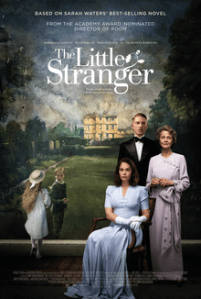 I read ‘The Little Stranger’ by Sarah Waters over seven years ago before I started my blog and reread it this month when the film adaptation was released in the UK. Set in the Warwickshire countryside in the late 1940s, Dr Faraday is called to Hundreds Hall, a once grand now derelict stately home where his mother once worked as a maid and which he has long viewed with fascination since he was a child. Occupied by the Ayres family for more than two centuries, the house is now in decline with just Mrs Ayres and her two adult children Caroline and Roderick struggling to manage the estate on their own. Roderick sustained serious injuries during the war and when Faraday offers some treatment for his leg, his regular visits to Hundreds Hall see him become increasingly more involved in the family’s affairs. Continue reading →
Filed under Books
Tagged as Book, Cinema, Fiction, Film, Film Review, Films, Lenny Abrahamson, Literary Fiction, Reading, Reviews, Sarah Waters, The Little Stranger
September 23, 2018 · 2:52 pm
 ‘Ghost Wall’ is Sarah Moss’s sixth novel which tells the story of Silvie, a teenage girl spending her summer in a remote area of Northumberland taking part in an “experiential” archaeological experiment in which the participants attempt to recreate the exact living conditions of the original Iron Age occupants of the site. However, this is not a gentle comedy in the style of the BBC series ‘Detectorists’. Silvie’s father, Bill, is a bus driver and amateur historian who has obsessive ideas about the “purity” of ancient Britons and his domineering personality and prejudices begin to take over the trip led by archaeology professor Jim Slade accompanied by three of his students, Molly, Dan and Pete. Continue reading →
Filed under Books
Tagged as Archaeology, Book, Book Review, Book Reviews, Fiction, Ghost Wall, History, Literary Fiction, Literature, Novels, Reading, Reviews, Sarah Moss
September 16, 2018 · 3:02 pm
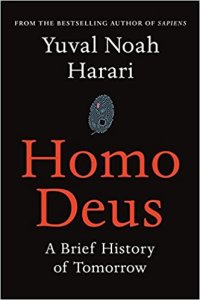 ‘Homo Deus: A Brief History of Tomorrow’ is the follow-up to the hugely successful ‘Sapiens: A Brief History of Humankind’ by Yuval Noah Harari which I read last year. Having examined the development of humans in his first book through the cognitive, agricultural, scientific and industrial revolutions, Harari turns to the challenges of the future in which humans will seek to “upgrade” from Homo Sapiens to gods (or “Homo Deus”), re-engineering our physical and mental capabilities to prevent ageing, escape death and increase happiness. The impact of famine, war and plague has been significantly reduced in recent decades, to the point where we now face the opposite challenges in the form of an obesity crisis, caring for an ageing population with people living longer than ever and a world where more people commit suicide than are killed by terrorists, criminals and conflicts. Continue reading →
Filed under Books
Tagged as Book, Book Review, Book Reviews, History, Homo Deus, Non fiction, Popular Science, Reading, Religion, Reviews, Sapiens, Science, Technology, Yuval Noah Harari
September 9, 2018 · 3:48 pm
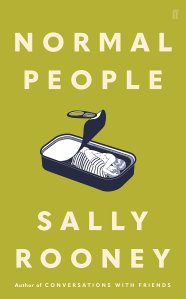 ‘Normal People’ by Sally Rooney tells the story of teenagers Marianne Sheridan and Connell Waldron who go to school together in the small rural town of Carricklea in the west of Ireland and later move to Dublin to study at Trinity College in the early 2010s. Marianne is a loner from a well-off family while Connell is popular at school and their romance is kept secret from their classmates. However, Marianne finds friends easily among their privileged contemporaries at university whereas Connell feels alienated, and this sudden reversal in their social status complicates their relationship. Continue reading →
Filed under Books
Tagged as Book, Book Review, Book Reviews, Fiction, Ireland, Literary Fiction, Literature, Man Booker Prize, Normal People, Novels, Reading, Reviews, Sally Rooney
August 26, 2018 · 3:42 pm
 If you had to choose between saving two people you didn’t know or one of your close relatives from drowning, what would you do? What if there were ten strangers who needed to be rescued? Or one thousand? Would you help a starving child standing right in front of you? How about three million living on the other side of the world? Where do you draw the line? These are some of the questions posed by journalist Larissa MacFarquhar in her 2015 book ‘Strangers Drowning: Voyages to the Brink of Moral Extremity’ in which she profiles the true stories of extreme “do-gooders” or those who devote their lives to help strangers rather than people they are close to through a sense of duty. These include a couple who adopt 20 children, a founder of a leper colony, a radical vegan activist, a nurse who set up a women’s health clinic in a warzone and others who live on the bare minimum so that they can donate the vast majority of their salary to charity. Continue reading →
Filed under Books
Tagged as Altruism, Book, Book Review, Book Reviews, Charity, Ethics, Larissa Macfarquhar, Non fiction, Philosophy, Psychology, Reading, Reviews, Strangers Drowning
August 19, 2018 · 3:33 pm
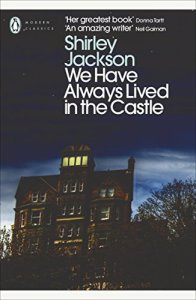 I enjoyed reading The Haunting of Hill House by Shirley Jackson last year and her final novel ‘We Have Always Lived in the Castle’ published in 1962 three years before Jackson’s death tells the story of eighteen-year-old Mary Katherine “Merricat” Blackwood who lives with her older sister, Constance, and their uncle, Julian, on a large secluded estate in New England. Six years earlier, half of the Blackwood family including Merricat and Constance’s parents were poisoned when the sugar bowl used at dinner was laced with arsenic. Although Constance was acquitted of the murders, the three surviving Blackwoods remain isolated from the rest of their small village. However, the arrival of their cousin Charles threatens their future and Merricat becomes increasingly suspicious of the real reason why he has suddenly turned up out of the blue. Continue reading →
Filed under Books
Tagged as American Literature, Book, Book Review, Book Reviews, Classic Literature, Fiction, Horror, Literature, Reading, Reviews, Shirley Jackson, We Have Always Lived in the Castle
August 17, 2018 · 2:25 pm
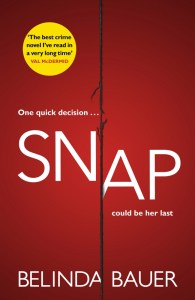 The opening chapter of ‘Snap’ by Belinda Bauer presents a chilling premise based on the unsolved murder of Marie Wilks. On a hot day in the summer of 1998, eleven-year-old Jack Bright is left in a broken-down car by the side of a motorway with his two younger sisters, Joy and Merry, while their pregnant mother, Eileen, goes in search of a telephone for help. However, she never returns and her body is eventually found stabbed to death.
Three years later and abandoned by their father who was unable to cope, Jack turns to burgling houses to provide for his sisters and escape being noticed by social services. On the other side of town, a young pregnant woman, Catherine While, discovers a knife next to her bed with a note that reads “I could have killed you” but she decides not to tell her husband about the break-in or report it to the police. Elsewhere, DS Reynolds who does everything by the book and DCI Marvel who takes a slightly more unorthodox approach towards detective work are investigating multiple burglaries and the identity of Eileen’s killer who still hasn’t been caught and are in a race against time to solve both mysteries. Continue reading →
Filed under Books
Tagged as Belinda Bauer, Book, Book Review, Book Reviews, Booker Prize, Crime, Crime Fiction, Fiction, Man Booker Prize, Novels, Reading, Reviews, Snap




You must be logged in to post a comment.