 I mentioned ‘The Warlow Experiment’ by Alix Nathan in my Booker Prize longlist predictions post in July as a possible contender for the 2019 prize. Even though my prediction about the dominance of historical fiction on this year’s longlist ended up being way off the mark, I was intrigued by the premise of this particular novel which is based on a real experiment proposed in the late 18th century. Nathan came across a brief article in the 1797 edition of the Annual Register which suggests that someone had taken up the offer posted by a Mr Herbert Powyss a few years earlier to spend seven years living in total isolation in the cellar of his manor house in the Welsh Marches. Only one person applied: a labourer who was apparently attracted by the reward offered by Powyss of 50 pounds per year for life in order to provide for his large family. However, further information about the outcome of the experiment is unknown and Nathan’s imagining of the scenario is therefore entirely fictionalised. Continue reading
Tag Archives: Book
The Warlow Experiment by Alix Nathan
Filed under Books
The Bus on Thursday by Shirley Barrett
 ‘The Bus on Thursday’ by Shirley Barrett will appeal to those with a certain sense of humour, most likely a dark one. It opens with Eleanor Mellett discovering that she has been diagnosed with an aggressive form of breast cancer at the age of 31. After being dumped by her boyfriend, she gets a new job teaching at a tiny school in Talbingo (population: 241) in a particularly remote area of rural Australia. The previous teacher, Miss Barker, has gone missing in mysterious circumstances and the oddball residents are bewildered by her sudden disappearance. Continue reading
Filed under Books
A History of Loneliness by John Boyne
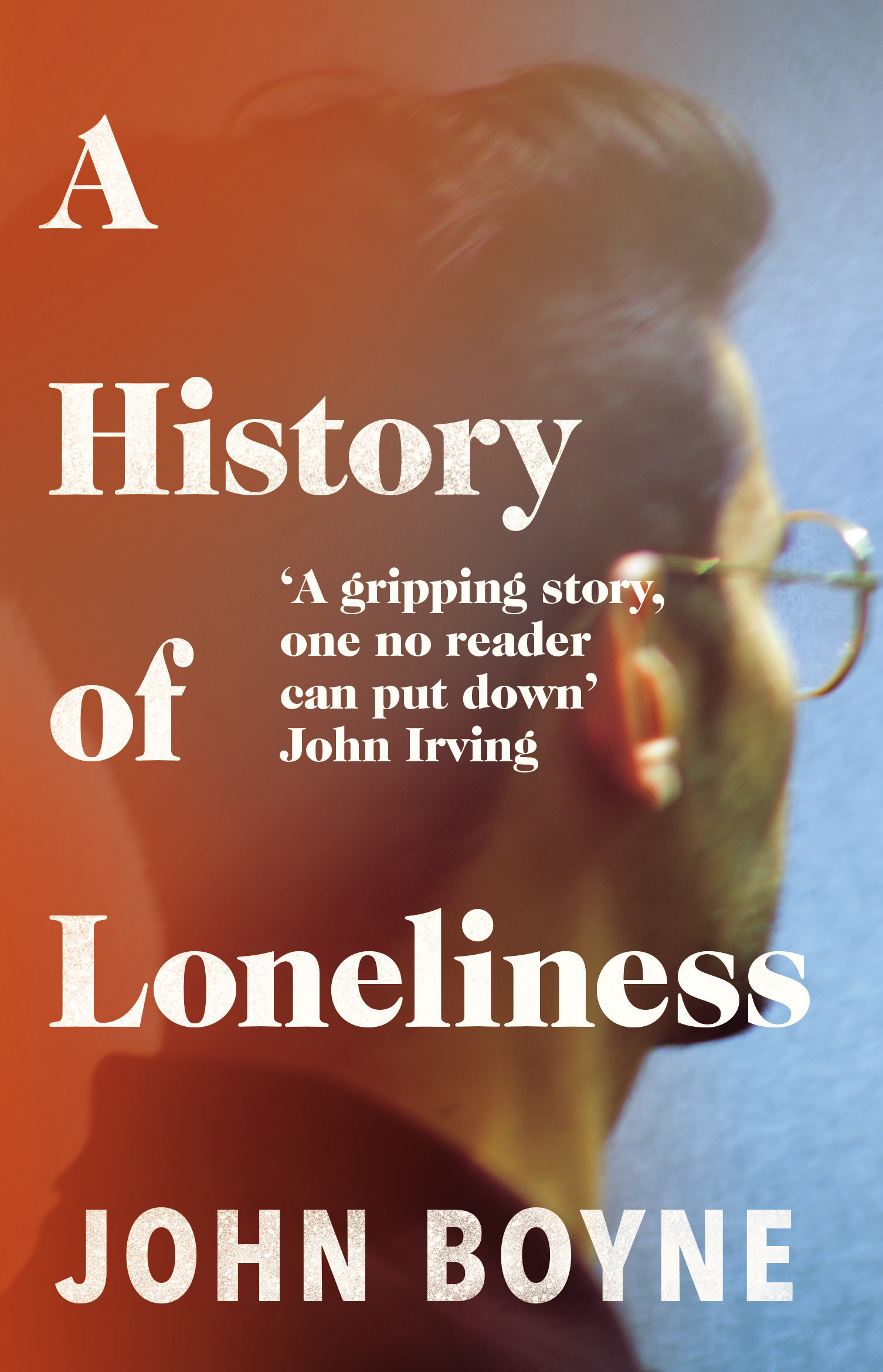
I really enjoyed reading John Boyne’s two most recent novels The Heart’s Invisible Furies and A Ladder to the Sky last year and this week I have read his 2015 novel ‘A History of Loneliness’ which tackles the child abuse scandal in the Catholic Church in Ireland. It tells the story of Odran Yates who enters Conliffe College seminary at the age of 17 in the 1970s after his mother informs him that he has a vocation. It is there that he first meets Tom Cardle, and the two remain friends despite Tom moving between several different parishes and Odran having his suspicions about why that keeps happening. It isn’t until many years later that Odran is forced to come to terms with what happened and recognise his own complicity. Continue reading
Filed under Books
Their Brilliant Careers by Ryan O’Neill
 I have been reading a lot of non-fiction over the last few weeks, and even the most recent novel I have read masquerades as a series of biographical sketches. ‘Their Brilliant Careers’ by Ryan O’Neill is introduced as a collection of sixteen portraits of Australian literary figures from the 20th century. It is a shame that the blurb and my review are forced by necessity to reveal that everything from the dedication to the index is invented, but O’Neill’s highly amusing pastiche more than makes up for this. Continue reading
Filed under Books
The Five by Hallie Rubenhold
 I enjoy following the Baillie Gifford Prize for Non-Fiction (previously known as the Samuel Johnson Prize) because it is the one book prize which consistently picks winners I actually agree with: Chernobyl by Serhii Plokhy, How to Survive a Plague by David France and H is for Hawk by Helen Macdonald to name a few from recent years. I had just finished ‘The Five’ by Hallie Rubenhold when it was announced as this year’s winner on Tuesday and, once again, I think it is another book which really deserves this prestigious award. It is about the “untold lives of the women killed by Jack the Ripper”, namely Mary Ann “Polly” Nichols, Annie Chapman, Elizabeth Stride, Catherine “Kate” Eddowes and Mary Jane Kelly who all died in 1888 in Whitechapel in east London. Continue reading
Filed under Books
Character Breakdown by Zawe Ashton and Where Am I Now? by Mara Wilson
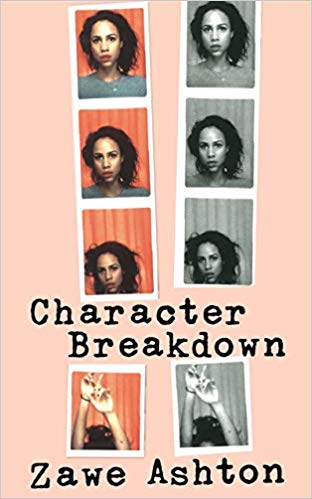 I have read two memoirs written by actresses recently, namely Zawe Ashton and Mara Wilson. Despite their very different career paths, both clearly have mixed feelings about the industry and how it operates.
Zawe Ashton’s memoir ‘Character Breakdown’ has an unusual but brilliant structure switching between prose sections about different auditions and roles she has played, and scenes from her life in the form of a play script as she makes the transition to roles in Hollywood. Each chapter begins with the “character breakdown” of the audition – in other words, a short description of the role and the type of actor they are looking to cast. Some chapters are about the auditions or roles themselves, and others draw on events in her life at the time. Continue reading
Filed under Books
Novels That Shaped Our World
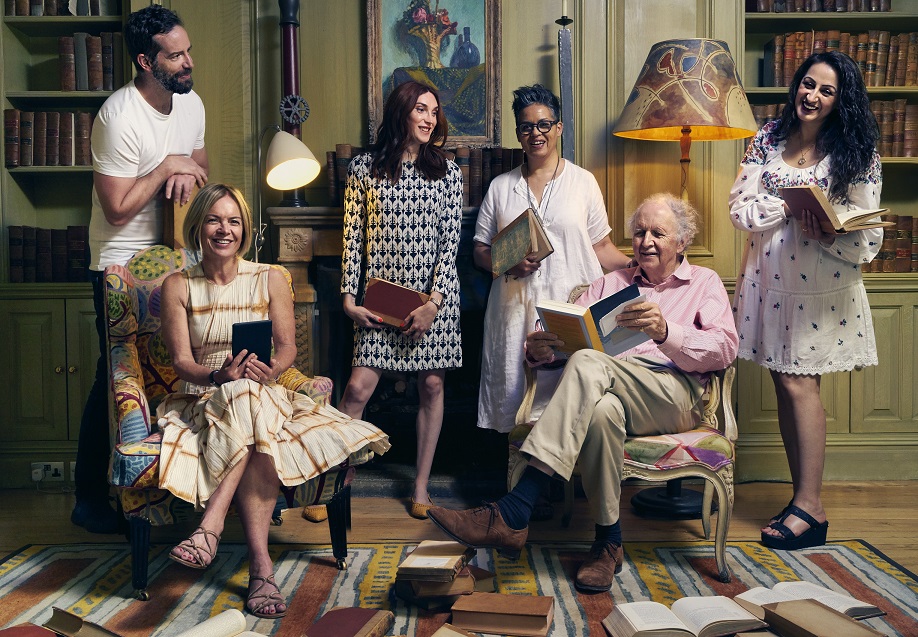
I was invited to celebrate the launch of the BBC’s ‘Novels That Shaped Our World’ campaign at New Broadcasting House on Tuesday night with other book bloggers and vloggers. It begins a year-long celebration of literature at the BBC and also marks the 300th anniversary of ‘Robinson Crusoe’ by Daniel Defoe which is widely considered to be the first modern English novel.
Six writers and critics – Stig Abell, Syima Aslam, Juno Dawson, Kit de Waal, Mariella Frostrup and Alexander McCall Smith – have come up with a list of 100 novels that shaped our world. The list itself is not going to please everyone. It consists of English language titles only and it also includes several series such as the Earthsea trilogy and Discworld, so to call it a list of “100 novels” isn’t strictly true. However, I think those bemoaning the fact that it is not a collection of “greatest” novels featuring lots of worthy tomes are slightly missing the point, as it is very much a list of books which have had personal impact on the panellists. That’s not to say that books traditionally thought of as great literature are not here because they are (‘Pride and Prejudice’, ‘Middlemarch’, ‘Nineteen Eighty-Four’ and ‘To Kill A Mockingbird’ are among those which made the cut). But it seems to have upset some people that they appear alongside more modern books considered to be guilty pleasures (‘The Twilight Saga’ and ‘Riders’ being two which are typically excluded from these kind of lists). Organised thematically, it’s a bit like an updated version of The Big Read series from the early 2000s but without a public vote, thereby preventing the overrepresentation of Jeffrey Archer and Jacqueline Wilson this time. Continue reading
Filed under Books
Babel by Gaston Dorren
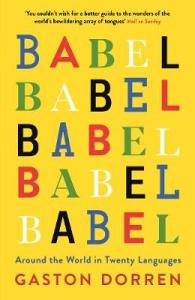 ‘Babel: Around the World in 20 Languages’ by Gaston Dorren takes the reader on a fascinating tour of the most popular languages spoken across the world today. Out of approximately 6,000 different languages currently in use, over half of the world’s population speak at least one of the top 20 as a mother tongue, from Vietnamese (85 million speakers) to English (over 1.5 billion speakers), spanning all corners of the globe. Continue reading
Filed under Books
The Overstory by Richard Powers
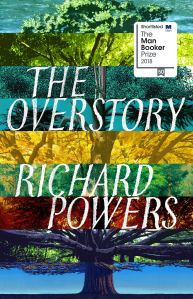 Shortlisted for the Man Booker Prize in 2018 and winner of the Pulitzer Prize for Fiction, ‘The Overstory’ by Richard Powers brings together nine stories in which the characters grow to realise the extent of the ecological crisis, particularly where trees are concerned. It is difficult to elaborate further on the plot in which the structural concept is, according to the blurb, based around “concentric rings of interlocking fable” which sees the various strands gradually become interlinked. The diverse cast of characters includes a war veteran, a biologist, a childless married couple and a college student who has a near-death experience. The first part ‘Roots’ reads more like a collection of short stories in which trees feature in one way or another. However, links between the characters start to emerge in the second part ‘Trunk’ and the narrative finally starts to read more like a novel. Continue reading
Filed under Books
Akin by Emma Donoghue and The Confession by Jessie Burton
 Autumn usually sees the publication of novels by popular authors in the run-up to Christmas and there are some excellent ones appearing on the shelves this year. ‘Akin’ by Emma Donoghue tells the story of Noah Selvaggio is a widower and retired chemistry professor born in France and based in New York. He is planning his first visit back to Nice since he was a child in time for his 80th birthday. However, he discovers he has an 11-year-old great-nephew called Michael whose father died from a drug overdose and whose mother is in prison. Noah is the only relative available to take care of Michael and he decides to take him along on his trip of a lifetime. Continue reading
Filed under Books
Gotta Get Theroux This by Louis Theroux
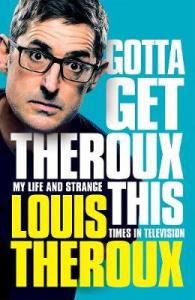 ‘Gotta Get Theroux This: My Life and Strange Times in Television’ is Louis Theroux’s memoir reflecting on over twenty years of making television documentaries. His career began in 1994 with a one-off segment on Michael Moore’s ‘TV Nation’ on apocalyptic religious sects followed by the ‘Weird Weekends’ series which focused on odd aspects of Americana. More recently, he has moved towards documentaries about hard-hitting topics such as eating disorders and addiction. Continue reading
Filed under Books
Three Books I’ve Read Recently About Crime
I have been going through a mini crime phase in my reading across different genres recently, namely non-fiction, crime fiction and historical fiction. Here are three books I have enjoyed over the last few weeks:
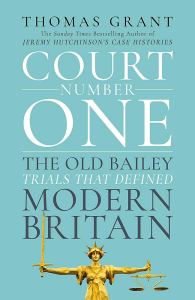 Court Number One by Thomas Grant is an anthology of 11 significant trials held at the Central Criminal Court in London, more commonly known as the Old Bailey, during the 20th century. The majority of these deal with murders, but also include espionage and treason, and as the subtitle of the book promises, Grant shows how the trials defined modern Britain, particularly where attitudes towards social change are concerned. The earlier chapters tend to involve cases which have largely been forgotten such as the Camden Town murder trial in 1907 shortly after the court opened, while those in the second half of the century mostly remain notorious such as those involving John Christie, Ruth Ellis and Jeremy Thorpe. While some chapters are a tad overlong due to the considerable amount of detail, each case is outlined in a gripping narrative, capturing the essence of courtroom drama. Grant, a practising barrister, shines a light on the tactics involved and how and why the trials had the outcomes that they did. ‘Court Number One’ is ideal for a lay reader who wants to understand more about the history of the English criminal justice system, and would be a good companion to The Secret Barrister. Continue reading
Filed under Books
All Among the Barley by Melissa Harrison
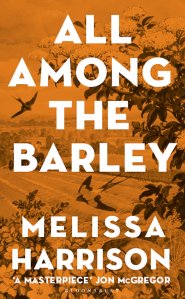 ‘All Among the Barley’ by Melissa Harrison tells the story of fourteen-year-old Edie Mather, living at Wych Farm in the East Anglian countryside in 1933 with her family. The impact of the Great War and the Depression is still being felt and the fickle nature of the weather and the outcome of the harvest are a constant worry. Bookish Edie is naïve and impressionable and the arrival of former Suffragette Constance FitzAllen brings new ideas to the community and repercussions for the Mather family. Continue reading
Filed under Books
Chiswick Book Festival: Sadie Jones and Sonia Purnell
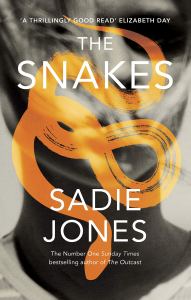 It’s been a while since I’ve been to a literary event, and three years since I last went to Chiswick Book Festival in 2016, so another visit was long overdue. Yesterday, I went to two events: Sadie Jones talking to Cathy Rentzenbrink about her latest novel ‘The Snakes’ and Sonia Purnell discussing her book ‘A Woman of No Importance’ with Julia Wheeler.
‘The Snakes’ tells the story of Beatrice, the thirty-something daughter of multimillionaire property developer, Griff Adamson. Having more or less cut herself off from her parents and their money, she works as a psychotherapist and lives in a small flat with her husband Dan, an estate agent from a working-class background who doesn’t know the full extent of Bea’s family’s wealth. They plan to use their savings of a few thousand pounds to travel across Europe for a couple of months and stop to visit Bea’s brother Alex in the dilapidated hotel he runs in the south of France. However, Bea’s parents drop in for a surprise visit and when tragedy strikes, Bea is forced to confront some uncomfortable truths about the family’s past. Continue reading
Comments Off on Chiswick Book Festival: Sadie Jones and Sonia Purnell
Filed under Books
Confessions of a Bookseller by Shaun Bythell
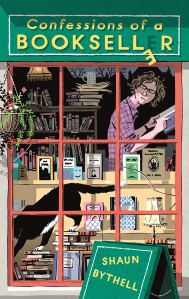 If you enjoyed The Diary of a Bookseller, then the second volume of Shaun Bythell’s account of running a large second-hand bookshop in Wigtown, Scotland will definitely appeal. It is very much more of the same in terms of content, format and sense of humour with bizarre customer queries and the trials and tribulations of book dealing providing the main focus of his diary entries from 2015. Continue reading
Filed under Books
Platform Seven by Louise Doughty
 Louise Doughty is brilliant at writing about underlying resentment and the things we secretly notice about people but rarely articulate. I suspect she will remain best known for Apple Tree Yard but her latest novel ‘Platform Seven’ is a very effective domestic psychological thriller and likely to be another commercially successful one too. Continue reading
Filed under Books
Nothing is True and Everything is Possible by Peter Pomerantsev
 “Fake news” had yet to become a common term when ‘Nothing is True and Everything is Possible: Adventures in Modern Russia’ was published in the UK in 2015, but the concept is very much present in Peter Pomerantsev’s anecdotal depiction of post-Soviet Russia. Raised in London, he moved to Russia as an adult and his work as a reality television producer allowed him access to all sorts of people and places at the peak of the television industry boom years in the 2000s. However, Pomerantsev quickly discovered that the media remained heavily state-influenced and he was not always free to produce the content he had planned. It is no surprise that his account of his time there shows how the boundaries between truth and reality were constantly blurred. Continue reading
Filed under Books
Spring by Ali Smith and Supper Club by Lara Williams
 I haven’t read any of this year’s Booker Prize longlist yet, but I have read two of the novels shortlisted for the Guardian’s Not the Booker prize which recognises an alternative selection of eligible books chosen by the public, judges and book champions. ‘Spring’ by Ali Smith wouldn’t look out of place on this year’s official Booker Prize longlist which mostly consists of novels by established authors, although I have read that her novels are no longer submitted to literary awards for consideration. It is the third book in Smith’s quartet of seasonally themed novels following Autumn (which was shortlisted for the Man Booker Prize in 2016) and Winter. Continue reading
Filed under Books
Sweet Sorrow by David Nicholls
 David Nicholls’ fifth novel ‘Sweet Sorrow’ is set during the summer of 1997. Charlie Lewis is waiting for his GCSE results, living with his depressed father and working at a petrol station. In a chance encounter on a bike ride, he becomes a member of the Full Fathom Five amateur theatre company and lands the role of Benvolio in ‘Romeo and Juliet’. Charlie falls for Fran Fisher, the girl playing Juliet, but just like Shakespeare’s famous play, there is plenty of foreshadowing that their happiness will not last long. Continue reading
Filed under Books
The World I Fell Out Of by Melanie Reid and Another Planet by Tracey Thorn
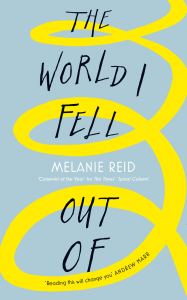 I have read two non-fiction books recently which both draw on regular newspaper columns penned by their authors. In April 2010, at the age of 52, journalist Melanie Reid broke her neck and fractured her back after falling from a horse, spending nearly a year in a high-dependency spinal unit. She is now a tetraplegic, permanently paralysed from the top of her chest downwards and will spend the rest of her life in a wheelchair. She has documented her experience of adult-acquired disability in her ‘Spinal Column’ in the Times for several years now. Her memoir ‘The World I Fell Out Of’ draws on those articles but also provides a fuller account of how her life changed following the accident. Continue reading
Filed under Books



 A Little Blog of Books
You must be logged in to post a comment.