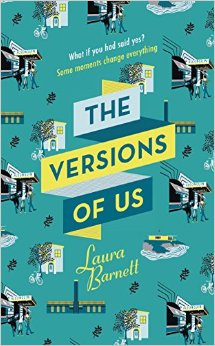
 Widely touted as “Sliding Doors meets One Day”, ‘The Versions of Us’ by Laura Barnett tells the story of Eva Edelstein and Jim Taylor who meet as undergraduates at Cambridge University in the late 1950s. Eva is injured in a cycling accident after swerving to avoid a dog and from this point onwards, there are three versions of their story. In one version, Eva and Jim start a relationship. In another version, Eva barely acknowledges Jim and marries her current boyfriend, David. In another version, Eva discovers she has fallen pregnant and cuts Jim out of her life to marry David. Continue reading
Tag Archives: Fiction
The Girl in the Red Coat by Kate Hamer
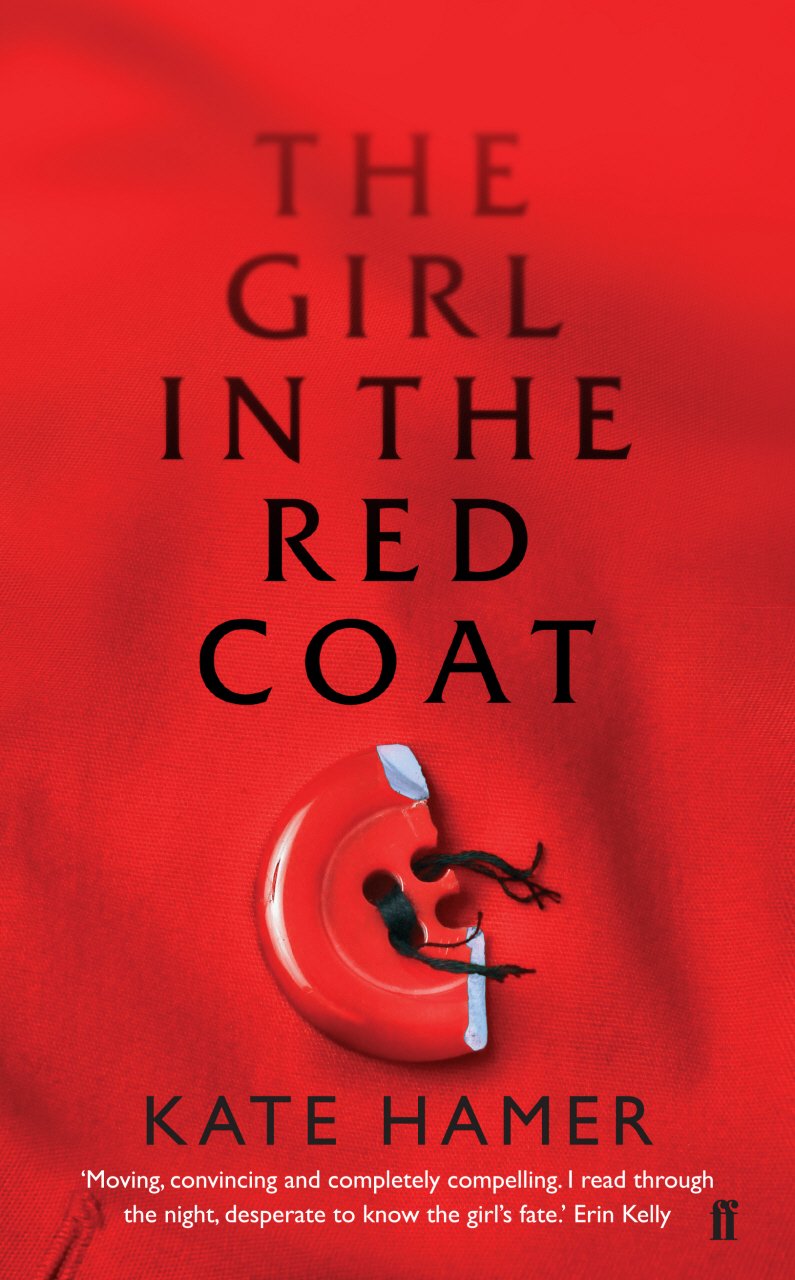 One of the most anticipated debut novels of the year, ‘The Girl in the Red Coat’ by Kate Hamer tells the story of Carmel Wakeford, an eight-year-old girl who goes missing after becoming separated from her mother, Beth, at a local storytelling festival in Norfolk. She is abducted by a man who says he is her estranged grandfather and believes Carmel has a special gift. He tells her that her mother is dead and he takes her to start a new life in the United States as a faith healer travelling to various evangelical churches. Meanwhile, Beth is struggling to come to terms with her disappearance and is doing everything she can to find her daughter. Continue reading
Filed under Books
The End of Days by Jenny Erpenbeck
 Shortlisted for the Independent Foreign Fiction Prize, ‘The End of Days’ by Jenny Erpenbeck and translated from the German by Susan Bernofsky tells the story of the various possible lives of one woman during the twentieth century. The book is split into five stories. In the first part, we learn that a baby has suffocated in a cot in a small Galician town. In the second part, we learn what might have happened had the baby lived as a teenager in Vienna shortly after the First World War. The third part sees her as a communist in Moscow, the fourth part follows her as a celebrated writer in Berlin and finally, as an elderly lady aged in her nineties living in a care home.
Filed under Books
Zone by Mathias Énard
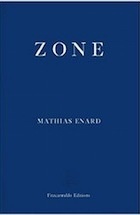 ‘Zone’ by Mathias Énard and translated from the French by Charlotte Mandell tells the story of Francis Mirkovic, a Franco-Croat intelligence officer who is travelling by train from Milan to Rome after missing his plane. He will be delivering a briefcase containing a dossier about war crimes across various parts of the “zone” where he worked – the region around the Mediterranean Sea spanning across Spain, Lebanon, Cairo and Croatia – which he plans to sell to the highest bidder thus ending his career as an agent. During the journey, Francis reflects on his twenty-year career, his future, his family, his relationships with Marianne, Stéphanie and Sashka, his fellow passengers on the train and much more. Continue reading
Filed under Books
Stoner by John Williams
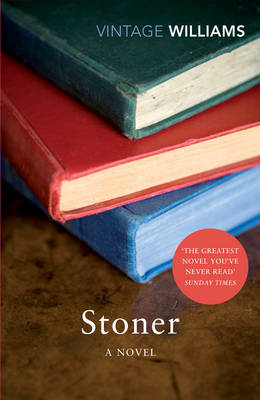 As noted by The Millions, “There are things that are famous for being famous, such as the Kardashians, and then there are things that are famous for not being famous, such as John Williams’s Stoner”. This week marks the fiftieth anniversary since ‘Stoner’ was first published but the almost forgotten novel has only become well-known in the last couple of years some two decades after the author’s death and ten years after being reissued. Somewhat ironically, it is revealed in the first paragraph that the main character, William Stoner, is also quickly forgotten by his students and colleagues after his death in 1956. Originally a student of agriculture entering the University of Missouri as a freshman in 1910, he later switches to literature and becomes an academic and professor. Continue reading
Filed under Books
World Book Night: Top 10 Books for Reluctant Readers
 Thousands of volunteers and institutions will be getting involved with World Book Night tomorrow and giving away around 250,000 special editions of 20 different books to people in their communities. While World Book Day celebrates reading specifically for children, World Book Night was established in 2011 as an alternative celebration for adults. 35% of the population in the UK never read for pleasure and World Book Night is about reaching as many people as possible who don’t regularly read, particularly in prisons, hospitals, care homes and homeless shelters. As well as improving literacy and employability, reading has profound positive effects including social interaction through participating in book groups, as well as general well-being and happiness.
Filed under Books
How to be both by Ali Smith
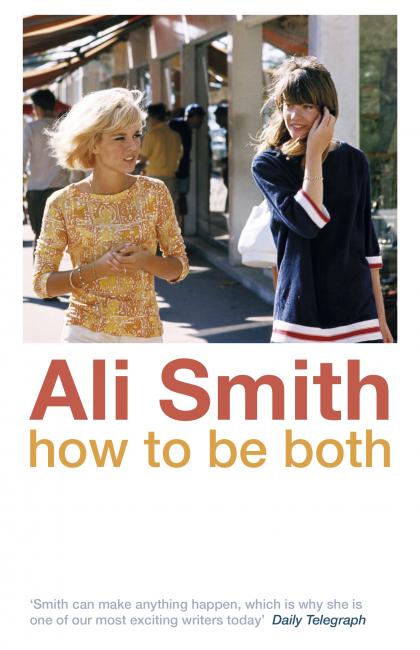 Now that the shortlist for the Independent Foreign Fiction Prize has been released, I am taking a break from reading and reviewing translated fiction for a while. ‘How to be both’ by Ali Smith has been shortlisted for just about every major literary award in recent months including the Man Booker Prize, the Folio Prize, the Baileys Women’s Prize for Fiction and the Costa Book Awards as well as winning the Goldsmiths Prize and the more I have heard about it in recent months, the more I have wanted to read it. One half is set in fifteenth century Italy and tells the story of al fresco Renaissance artist Franceshco del Cossa. The other half is set in modern Britain and tells the story of a sixteen-year-old girl called George whose mother has recently died. Continue reading
Filed under Books
The Independent Foreign Fiction Prize Shortlist 2015
 The official shortlist for the Independent Foreign Fiction Prize was announced this week:
- The End of Days by Jenny Erpenbeck translated from the German by Susan Bernofsky
- In the Beginning Was the Sea by Tomás González translated from the Spanish by Frank Wynne
- F by Daniel Kehlmann translated from the German by Carol Brown Janeway
- By Night the Mountain Burns by Juan Tomás Ávila Laurel translated from the Spanish by Jethro Soutar
- While the Gods Were Sleeping by Erwin Mortier translated from the Dutch by Paul Vincent
- Colorless Tsukuru Tazaki and His Years of Pilgrimage by Haruki Murakami translated from the Japanese by Philip Gabriel
We can also reveal our shadow jury shortlist:
- The Ravens by Tomas Bannerhed translated from the Swedish by Sarah Death
- The End of Days by Jenny Erpenbeck translated from the German by Susan Bernofsky
- Bloodlines by Marcello Fois translated from the Italian by Silvester Mazzarella
- The Dead Lake by Hamid Ismailov translated from the Russian by Andrew Bromfield
- Colorless Tsukuru Tazaki and His Years of Pilgrimage by Haruki Murakami translated from the Japanese by Philip Gabriel
- Zone by Mathias Énard translated from the French by Charlotte Mandell
Filed under Books
Boyhood Island by Karl Ove Knausgaard
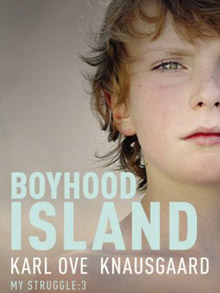 Translated from the Norwegian by Don Bartlett, ‘Boyhood Island’ is the third instalment of Karl Ove Knausgaard’s ambitious six-book cycle of autobiographical novels known as ‘My Struggle’. Having explored some of Knausgaard’s later childhood in ‘A Death in the Family‘, the second volume ‘A Man in Love‘ jumped forward in time to concentrate on his experiences of fatherhood. As you may guess from the title, ‘Boyhood Island’ jumps back in time again to Knausgaard’s childhood. Continue reading
Filed under Books
While the Gods Were Sleeping by Erwin Mortier and The Last Lover by Can Xue
 ‘While the Gods Were Sleeping’ by Erwin Mortier and translated from the Dutch by Paul Vincent tells the story of Helena Demont, a very elderly woman approaching her hundredth birthday who is reflecting on her experiences as a young woman living in Belgium at the start of the First World War. The story explores Helena’s relationships with her French mother, Belgian father, brother Edgard and her British husband Matthew with whom she has a daughter. Continue reading
Filed under Books
By Night the Mountain Burns by Juan Tomás Ávila Laurel
 ‘By Night the Mountain Burns’ by Juan Tomás Ávila Laurel is the first novel by an author from Equatorial Guinea to be longlisted for the Independent Foreign Fiction Prize. It is also only the second book from the country ever to be translated into English and recounts the narrator’s childhood memories of living on the small remote island of Annobón in the South Atlantic Ocean where the inhabitants deal with various crises including a bush fire and a cholera epidemic. Continue reading
Filed under Books
Bloodlines by Marcello Fois
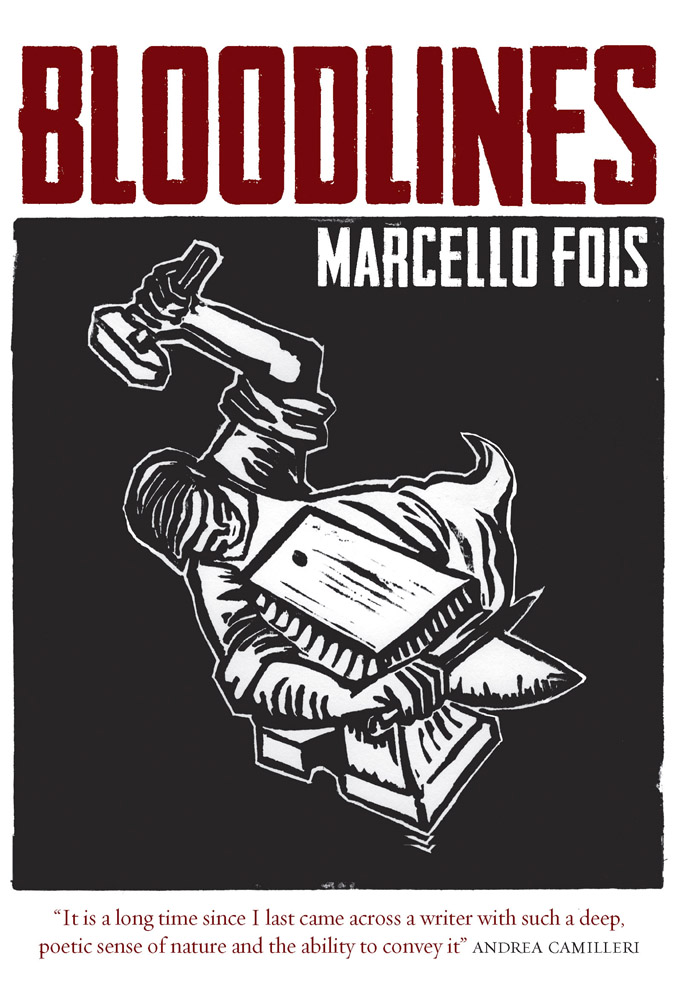 ‘Bloodlines’ by Marcello Fois and translated from the Italian by Silvester Mazzarella tells the story of the Chironi family during the early twentieth century in Sardinia. Michele Angelo Chironi, a blacksmith and Mercede Lai are both orphans who marry seven months after they first meet at a church in 1889. While the early years of their marriage are happy ones, their lives are plagued with misfortune after the turn of the century. Continue reading
Filed under Books
The Giraffe’s Neck by Judith Schalansky
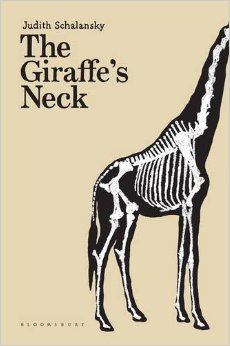 Longlisted for this year’s Independent Foreign Fiction Prize, ‘The Giraffe’s Neck’ by Judith Schalansky and translated from the German by Shaun Whiteside tells the story of Inge Lohmark, a biology teacher approaching the end of her career at a high school in a former East German country backwater. She has a firm belief in Charles Darwin’s theory of evolution yet, somewhat ironically, she is highly resistant to adapting to change in her own life.
Filed under Books
The Investigation by Jung-Myung Lee
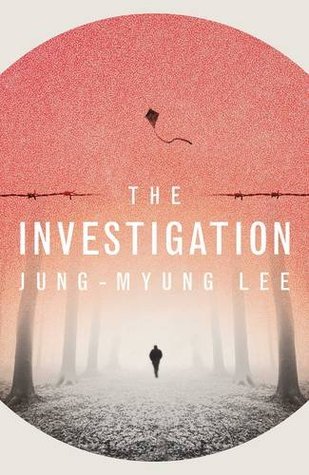 ‘The Investigation’ by Jung-Myung Lee and translated by Chi-Young Kim is only the second book translated from Korean into English to ever be longlisted for the Independent Foreign Fiction Prize in its twenty-five year history. Set in Japan during the Second World War, it tells the story of Watanabe, a literature student and guard at Fukouka prison which holds anti-Japanese Korean rebels, intellectuals and dissidents. Watanabe is attempting to find the criminal behind the brutal murder of the much-loathed prison censor and war hero, Sugiyama. However, he is unconvinced by an early confession from one of the most notorious inmates and after taking over the role of prison censor himself, his investigation starts to unravel a very different side to Sugiyama. Continue reading
Filed under Books
In the Beginning Was the Sea by Tomás González

I have read a few French books translated into English by Frank Wynne including ‘Alex’ and ‘Irene’ by Pierre Lemaitre but I was unfamiliar with his translations from Spanish until now. ‘In the Beginning Was the Sea’ is Tomás González’s debut novel and was first published in 1983 by the owner of a Bogotá nightclub where he worked as a barman. Over thirty years later, it is the first of his books to be translated into English and has recently been longlisted for the Independent Foreign Fiction Prize. Continue reading
Filed under Books
The Independent Foreign Fiction Prize Longlist 2015
It’s been an interesting week for book award longlists. First, there was the Baileys Women’s Prize for Fiction longlist announced on Tuesday followed by the Independent Foreign Fiction Prize longlist announced late on Wednesday. The fifteen novels are:
- The Ravens by Tomas Bannerhed translated from the Swedish by Sarah Death
- The End of Days by Jenny Erpenbeck translated from the German by Susan Bernofsky
- Bloodlines by Marcello Fois translated from the Italian by Silvester Mazzarella
- In the Beginning Was the Sea by Tomás González translated from the Spanish by Frank Wynne
- The Dead Lake by Hamid Ismailov translated from the Russian by Andrew Bromfield
- F by Daniel Kehlmann translated from the German by Carol Brown Janeway
- Boyhood Island by Karl Ove Knausgaard translated from the Norwegian by Don Bartlett
- By Night the Mountain Burns by Juan Tomás Ávila Laurel translated from the Spanish by Jethro Soutar
- The Investigation by Jung-Myung Lee translated from the Korean by Chi-Young Kim
- While the Gods Were Sleeping by Erwin Mortier translated from the Dutch by Paul Vincent
- Colorless Tsukuru Tazaki and His Years of Pilgrimage by Haruki Murakami translated from the Japanese by Philip Gabriel
- The Giraffe’s Neck by Judith Schalansky translated from the German by Shaun Whiteside
- Tiger Milk by Stefanie de Velasco translated from the German by Tim Mohr
- Look Who’s Back by Timur Vermes translated from the German by Jamie Bulloch
- The Last Lover by Can Xue translated from the Chinese by Annelise Finegan Wasmoen
Filed under Books
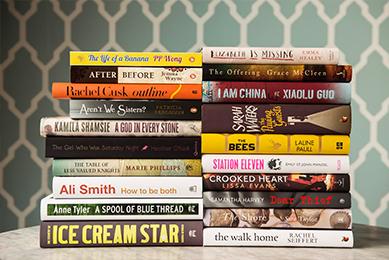
The Baileys Women’s Prize for Fiction Longlist 2015
This year’s Baileys Women’s Prize for Fiction longlist was announced today. The twenty novels are:
Filed under Books
The Faithful Couple by A. D. Miller
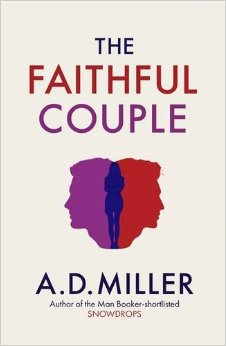 ‘The Faithful Couple’ is very different from A. D. Miller’s first novel ‘Snowdrops‘, a crime thriller set in post-Soviet Russia which was shortlisted for the Man Booker Prize in 2011. While the judges of the Prize that year were famously looking for books that were “readable” and “zip along”, ‘The Faithful Couple’ falls into the more familiar Booker Prize territory of traditional literary fiction. It tells the story of two British men in their twenties, Neil Collins and Adam Tayler, who meet at a hostel in San Diego in 1993 a couple of years after graduating from university. Although they come from very different backgrounds, they quickly strike up a firm friendship. However, a betrayal during a camping trip in Yosemite casts a shadow over their relationship over the next two decades. Continue reading
Filed under Books
V. by Thomas Pynchon
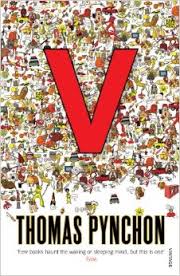 I can’t really explain what made me pick up ‘V.’ by Thomas Pynchon from the library shelf three weeks ago. It’s likely to have been a combination of recently seeing a trailer for the film adaptation of ‘Inherent Vice’ and coming across an old article in The Guardian by Ian Rankin about Pynchon as well as the weird and wonderful cover design of this Vintage Books edition. Moreover, although I’ve read a lot of enjoyable and thought-provoking books in the past few months, it’s been a while since I’ve read something that has properly challenged me. Continue reading
Filed under Books
A Dark-Adapted Eye by Barbara Vine
 ‘A Dark-Adapted Eye’ by Barbara Vine opens with the death of Vera Hillyard, one of the last women to be hanged for murder in Britain in the late 1940s. The story is told from the point of view of Vera’s niece, Faith, who was in her early teens during the Second World War when the main events and crime in question take place. Some thirty years later, Faith is approached by a journalist called Daniel Stewart who is researching the case for a book he is writing and she slowly unravels her version of events as well as a number of family secrets.
Filed under Books



 A Little Blog of Books
You must be logged in to post a comment.