 I borrowed Rush Oh! by Shirley Barrett from the library because I really enjoyed reading The Bus on Thursday last year. Barrett’s debut novel was longlisted for the Baileys Women’s Prize for Fiction in 2016. Set in the early 20th century in the port town of Eden in New South Wales, ‘Rush Oh!’ is loosely based on the life of George Davidson, one of Australia’s most prominent master whalers at the time. During the 1908 season, his fictional teenage daughter, Mary, is tasked with supporting her father’s whaling crew and caring for her five siblings after their mother’s death, and the arrival of the mysterious former Methodist preacher, John Beck, proves to be a welcome distraction for her.
In ‘Rush Oh!’, Barrett strikes a good balance between the well-researched and brutal descriptions of whale hunting and the more gentle strands of Davidson family drama. Mary is a brilliantly imagined narrator, looking back on the events of her youth with amusingly chatty asides to the reader. In terms of genre, Barrett’s two novels to date couldn’t be more different, but they share a brilliant sense of humour and I look forward to reading more by Barrett in the future. Continue reading






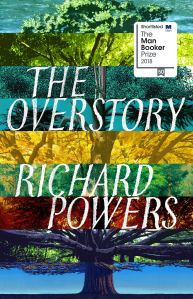 Shortlisted for the Man Booker Prize in 2018 and winner of the Pulitzer Prize for Fiction, ‘The Overstory’ by Richard Powers brings together nine stories in which the characters grow to realise the extent of the ecological crisis, particularly where trees are concerned. It is difficult to elaborate further on the plot in which the structural concept is, according to the blurb, based around “concentric rings of interlocking fable” which sees the various strands gradually become interlinked. The diverse cast of characters includes a war veteran, a biologist, a childless married couple and a college student who has a near-death experience. The first part ‘Roots’ reads more like a collection of short stories in which trees feature in one way or another. However, links between the characters start to emerge in the second part ‘Trunk’ and the narrative finally starts to read more like a novel.
 Autumn usually sees the publication of novels by popular authors in the run-up to Christmas and there are some excellent ones appearing on the shelves this year. ‘Akin’ by Emma Donoghue tells the story of Noah Selvaggio is a widower and retired chemistry professor born in France and based in New York. He is planning his first visit back to Nice since he was a child in time for his 80th birthday. However, he discovers he has an 11-year-old great-nephew called Michael whose father died from a drug overdose and whose mother is in prison. Noah is the only relative available to take care of Michael and he decides to take him along on his trip of a lifetime.
 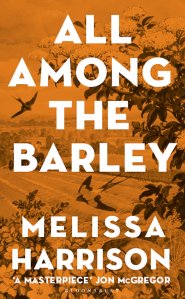 ‘All Among the Barley’ by Melissa Harrison tells the story of fourteen-year-old Edie Mather, living at Wych Farm in the East Anglian countryside in 1933 with her family. The impact of the Great War and the Depression is still being felt and the fickle nature of the weather and the outcome of the harvest are a constant worry. Bookish Edie is
  I haven’t read any of this year’s Booker Prize longlist yet, but I have read two of the novels shortlisted for the Guardian’s
  The Booker Prize longlist (no longer sponsored by the Man Group) for 2019 is due to be announced on Wednesday 24th July which means it’s time for another game of what Julian Barnes once termed “posh bingo”. I’ve come up with a list of predictions in terms of what I think could be some strong possibilities alongside my own personal preferences, based on a few eligible books I have read in recent months as well as ones I haven’t. As ever, I have no idea which novels have actually been submitted for consideration.
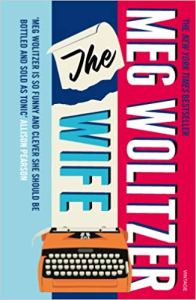 I watched the excellent film adaptation of ‘The Wife’ by Meg Wolitzer recently (currently available to stream on Netflix in the UK) and still had Glenn Close’s performance in mind when I read the book which was first published in 2003, so this week’s blog post is more of a joint review of both. Joan has been married to celebrated novelist Joe Castleman for forty years after meeting in the late 1950s. She was his student in a creative writing class at Smith College and they began an affair which ended his first marriage. In the present day, they are travelling to Scandinavia where Joe is due to receive a literary award – the Nobel Prize for Literature in the film, the fictional Helsinki Prize in the book, which is said to be slightly less important than the Nobel Prize for Literature but prestigious nonetheless. However, during the flight, Joan decides that enough is enough and plans to end their marriage after years of putting up with Joe’s philandering.
 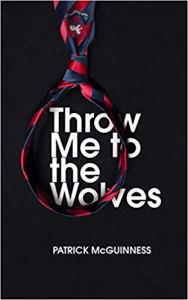 I enjoyed Patrick McGuinness’s debut
 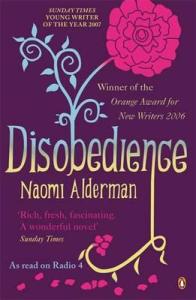 I enjoyed Naomi Alderman’s Baileys Women’s Prize for Fiction-winning feminist dystopian novel
 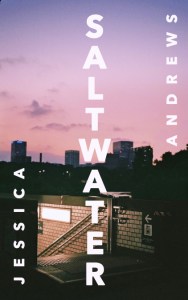 You would be forgiven for thinking that I had pretty much abandoned fiction based on my blog content over the past few months, but I have started reading more novels again recently. Some aspects of Jessica Andrews’ debut ‘Saltwater’ reminded me a lot of ‘Sight’ by Jessie Greengrass, particularly in its visceral imagery concerning changing bodies and an emerging sense of self. Based on Andrews’ life so far, it also appears that there is a strong element of autofiction in this coming-of-age story in which Lucy is finding her way in the world from growing up in Sunderland to her student years in London to inheriting a cottage in Donegal from her grandfather after she graduates from university.



 A Little Blog of Books
You must be logged in to post a comment.