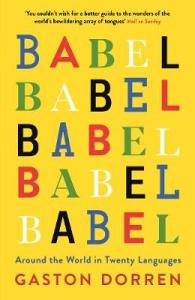
 ‘Babel: Around the World in 20 Languages’ by Gaston Dorren takes the reader on a fascinating tour of the most popular languages spoken across the world today. Out of approximately 6,000 different languages currently in use, over half of the world’s population speak at least one of the top 20 as a mother tongue, from Vietnamese (85 million speakers) to English (over 1.5 billion speakers), spanning all corners of the globe. Continue reading
Tag Archives: Reviews
Babel by Gaston Dorren
Filed under Books
The Overstory by Richard Powers
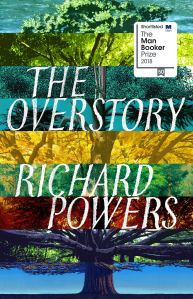 Shortlisted for the Man Booker Prize in 2018 and winner of the Pulitzer Prize for Fiction, ‘The Overstory’ by Richard Powers brings together nine stories in which the characters grow to realise the extent of the ecological crisis, particularly where trees are concerned. It is difficult to elaborate further on the plot in which the structural concept is, according to the blurb, based around “concentric rings of interlocking fable” which sees the various strands gradually become interlinked. The diverse cast of characters includes a war veteran, a biologist, a childless married couple and a college student who has a near-death experience. The first part ‘Roots’ reads more like a collection of short stories in which trees feature in one way or another. However, links between the characters start to emerge in the second part ‘Trunk’ and the narrative finally starts to read more like a novel. Continue reading
Filed under Books
Akin by Emma Donoghue and The Confession by Jessie Burton
 Autumn usually sees the publication of novels by popular authors in the run-up to Christmas and there are some excellent ones appearing on the shelves this year. ‘Akin’ by Emma Donoghue tells the story of Noah Selvaggio is a widower and retired chemistry professor born in France and based in New York. He is planning his first visit back to Nice since he was a child in time for his 80th birthday. However, he discovers he has an 11-year-old great-nephew called Michael whose father died from a drug overdose and whose mother is in prison. Noah is the only relative available to take care of Michael and he decides to take him along on his trip of a lifetime. Continue reading
Filed under Books
Gotta Get Theroux This by Louis Theroux
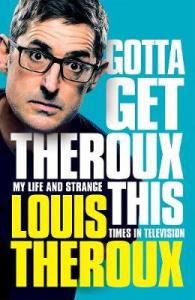 ‘Gotta Get Theroux This: My Life and Strange Times in Television’ is Louis Theroux’s memoir reflecting on over twenty years of making television documentaries. His career began in 1994 with a one-off segment on Michael Moore’s ‘TV Nation’ on apocalyptic religious sects followed by the ‘Weird Weekends’ series which focused on odd aspects of Americana. More recently, he has moved towards documentaries about hard-hitting topics such as eating disorders and addiction. Continue reading
Filed under Books
Three Books I’ve Read Recently About Crime
I have been going through a mini crime phase in my reading across different genres recently, namely non-fiction, crime fiction and historical fiction. Here are three books I have enjoyed over the last few weeks:
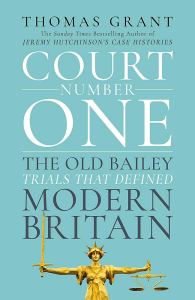 Court Number One by Thomas Grant is an anthology of 11 significant trials held at the Central Criminal Court in London, more commonly known as the Old Bailey, during the 20th century. The majority of these deal with murders, but also include espionage and treason, and as the subtitle of the book promises, Grant shows how the trials defined modern Britain, particularly where attitudes towards social change are concerned. The earlier chapters tend to involve cases which have largely been forgotten such as the Camden Town murder trial in 1907 shortly after the court opened, while those in the second half of the century mostly remain notorious such as those involving John Christie, Ruth Ellis and Jeremy Thorpe. While some chapters are a tad overlong due to the considerable amount of detail, each case is outlined in a gripping narrative, capturing the essence of courtroom drama. Grant, a practising barrister, shines a light on the tactics involved and how and why the trials had the outcomes that they did. ‘Court Number One’ is ideal for a lay reader who wants to understand more about the history of the English criminal justice system, and would be a good companion to The Secret Barrister. Continue reading
Filed under Books
All Among the Barley by Melissa Harrison
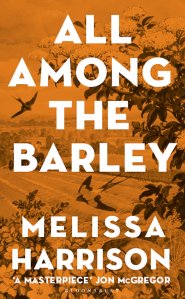 ‘All Among the Barley’ by Melissa Harrison tells the story of fourteen-year-old Edie Mather, living at Wych Farm in the East Anglian countryside in 1933 with her family. The impact of the Great War and the Depression is still being felt and the fickle nature of the weather and the outcome of the harvest are a constant worry. Bookish Edie is naïve and impressionable and the arrival of former Suffragette Constance FitzAllen brings new ideas to the community and repercussions for the Mather family. Continue reading
Filed under Books
Confessions of a Bookseller by Shaun Bythell
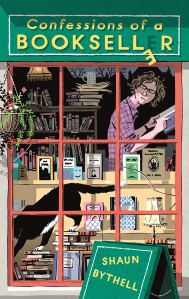 If you enjoyed The Diary of a Bookseller, then the second volume of Shaun Bythell’s account of running a large second-hand bookshop in Wigtown, Scotland will definitely appeal. It is very much more of the same in terms of content, format and sense of humour with bizarre customer queries and the trials and tribulations of book dealing providing the main focus of his diary entries from 2015. Continue reading
Filed under Books
Platform Seven by Louise Doughty
 Louise Doughty is brilliant at writing about underlying resentment and the things we secretly notice about people but rarely articulate. I suspect she will remain best known for Apple Tree Yard but her latest novel ‘Platform Seven’ is a very effective domestic psychological thriller and likely to be another commercially successful one too. Continue reading
Filed under Books
Nothing is True and Everything is Possible by Peter Pomerantsev
 “Fake news” had yet to become a common term when ‘Nothing is True and Everything is Possible: Adventures in Modern Russia’ was published in the UK in 2015, but the concept is very much present in Peter Pomerantsev’s anecdotal depiction of post-Soviet Russia. Raised in London, he moved to Russia as an adult and his work as a reality television producer allowed him access to all sorts of people and places at the peak of the television industry boom years in the 2000s. However, Pomerantsev quickly discovered that the media remained heavily state-influenced and he was not always free to produce the content he had planned. It is no surprise that his account of his time there shows how the boundaries between truth and reality were constantly blurred. Continue reading
Filed under Books
Spring by Ali Smith and Supper Club by Lara Williams
 I haven’t read any of this year’s Booker Prize longlist yet, but I have read two of the novels shortlisted for the Guardian’s Not the Booker prize which recognises an alternative selection of eligible books chosen by the public, judges and book champions. ‘Spring’ by Ali Smith wouldn’t look out of place on this year’s official Booker Prize longlist which mostly consists of novels by established authors, although I have read that her novels are no longer submitted to literary awards for consideration. It is the third book in Smith’s quartet of seasonally themed novels following Autumn (which was shortlisted for the Man Booker Prize in 2016) and Winter. Continue reading
Filed under Books
Sweet Sorrow by David Nicholls
 David Nicholls’ fifth novel ‘Sweet Sorrow’ is set during the summer of 1997. Charlie Lewis is waiting for his GCSE results, living with his depressed father and working at a petrol station. In a chance encounter on a bike ride, he becomes a member of the Full Fathom Five amateur theatre company and lands the role of Benvolio in ‘Romeo and Juliet’. Charlie falls for Fran Fisher, the girl playing Juliet, but just like Shakespeare’s famous play, there is plenty of foreshadowing that their happiness will not last long. Continue reading
Filed under Books
The World I Fell Out Of by Melanie Reid and Another Planet by Tracey Thorn
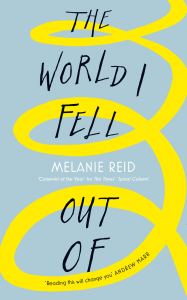 I have read two non-fiction books recently which both draw on regular newspaper columns penned by their authors. In April 2010, at the age of 52, journalist Melanie Reid broke her neck and fractured her back after falling from a horse, spending nearly a year in a high-dependency spinal unit. She is now a tetraplegic, permanently paralysed from the top of her chest downwards and will spend the rest of her life in a wheelchair. She has documented her experience of adult-acquired disability in her ‘Spinal Column’ in the Times for several years now. Her memoir ‘The World I Fell Out Of’ draws on those articles but also provides a fuller account of how her life changed following the accident. Continue reading
Filed under Books
The Booker Prize 2019 Longlist
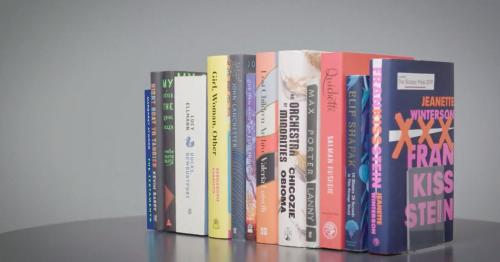 The Booker Prize 2019 longlist was announced on Wednesday. The 13 titles are:
The Testaments by Margaret Atwood
Night Boat to Tangier by Kevin Barry
My Sister, The Serial Killer by Oyinkan Braithwaite
Ducks, Newburyport by Lucy Ellmann
Girl, Woman, Other by Bernardine Evaristo
The Wall by John Lanchester
The Man Who Saw Everything by Deborah Levy
Lost Children Archive by Valeria Luiselli
An Orchestra of Minorities by Chigozie Obioma
Lanny by Max Porter
Quichotte by Salman Rushdie
10 Minutes 38 Seconds In This Strange World by Elif Shafak
Frankissstein by Jeanette Winterson
I posted a list of predictions last Sunday – part personal wish list and part those I thought might be successful based on trends from past longlists. In the end, I got four right: ‘Lost Children Archive’ by Valeria Luiselli which was also on the Women’s Prize for Fiction longlist, ‘Ducks, Newburyport’ by Lucy Ellmann which looks set to be the indie publishing hit of the year, ‘The Wall’ by John Lanchester and ‘The Testaments’ by Margaret Atwood. Overall, there are fewer surprises than usual in a longlist dominated by established names and previous prizewinners. My prediction about historical fiction hasn’t really transpired in the actual longlist which appears to be more focused on contemporary settings and issues, but I will still be looking out for the books I listed last week. Continue reading
Filed under Books
Daisy Jones & The Six by Taylor Jenkins Reid
 ‘Daisy Jones & The Six’ by Taylor Jenkins Reid charts the rise to fame of a fictional 1970s rock group based in California and the making of their seminal album ‘Aurora’. Billy Dunne formed The Six with his brother Graham and fellow band members, Eddie, Warren, Karen and Pete. Following the success of a collaboration with Daisy Jones, the solo artist and rising star officially joins the group. However, the dynamic between Billy and Daisy as two competing singer-songwriters soon becomes a fraught one when they embark on creating a hit record together. Continue reading
Filed under Books
The Wife by Meg Wolitzer
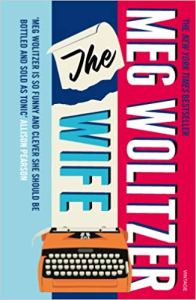 I watched the excellent film adaptation of ‘The Wife’ by Meg Wolitzer recently (currently available to stream on Netflix in the UK) and still had Glenn Close’s performance in mind when I read the book which was first published in 2003, so this week’s blog post is more of a joint review of both. Joan has been married to celebrated novelist Joe Castleman for forty years after meeting in the late 1950s. She was his student in a creative writing class at Smith College and they began an affair which ended his first marriage. In the present day, they are travelling to Scandinavia where Joe is due to receive a literary award – the Nobel Prize for Literature in the film, the fictional Helsinki Prize in the book, which is said to be slightly less important than the Nobel Prize for Literature but prestigious nonetheless. However, during the flight, Joan decides that enough is enough and plans to end their marriage after years of putting up with Joe’s philandering. Continue reading
Filed under Books
Throw Me to the Wolves by Patrick McGuinness
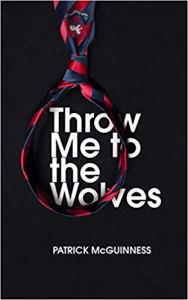 I enjoyed Patrick McGuinness’s debut The Last Hundred Days which is an evocative portrait of the end of Ceausescu’s rule in Romania and was longlisted for the Man Booker Prize in 2011. His second novel ‘Throw Me to the Wolves’ is inspired by the real events of the Joanna Yeates case in which her landlord, Christopher Jefferies, was arrested on suspicion of her murder in Bristol in December 2010. The retired English teacher was released without charge and the real killer was caught, but extensive press coverage at the time of his arrest had portrayed him as an eccentric loner with false suggestions by ex-pupils that he had behaved inappropriately. In ‘Throw Me to the Wolves’, the setting has been changed to Kent and the character based on Jefferies is Michael Wolphram, accused of the murder of his neighbour Zalie Dyer. Continue reading
Filed under Books
Disobedience by Naomi Alderman
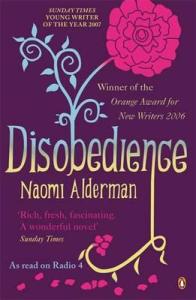 I enjoyed Naomi Alderman’s Baileys Women’s Prize for Fiction-winning feminist dystopian novel The Power and I have recently read her 2006 debut ‘Disobedience’ which won the Sunday Times Young Writer of the Year Award and Orange Award for New Writers. It tells the story of Ronit Krushka who grew up in a strict Orthodox Jewish community in Hendon in north London and now lives in New York working as a financial analyst having turned her back on her faith and family. She is due to attend a memorial service for her estranged father who was a respected rabbi and it appears that Ronit’s cousin, Dovid, is likely to be his successor. However, when she returns to London, she discovers that Dovid has married Esti, her childhood best friend and former lover. Continue reading
Filed under Books
Mother Ship by Francesca Segal
 I saw Francesca Segal in conversation with Amanda Craig at the Jewish Book Festival in March 2018 and was immediately intrigued when she said she was writing a non-fiction book about the premature birth of her identical twin daughters ten weeks before their due date. Published in the UK this week, ‘Mother Ship’ is presented as a diary of the 56 fraught days the babies (initially known as A-lette and B-lette) spent in the neonatal intensive care unit (NICU) in the weeks leading up to Christmas 2015. Continue reading
Filed under Books
The Capital by Robert Menasse
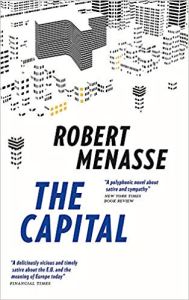 I am sure there are many books of various genres currently being written about Britain leaving the European Union right now, but maybe not so many which satirise the complex bureaucracy of the EU itself. However, Robert Menasse’s novel addresses the latter topic, won the German Book Prize in 2017 and has now been translated into English by Jamie Bulloch. Set in Brussels where the headquarters of the main EU institutions are located, the Directorate-General for Culture has been tasked with organising a celebration to mark the 50th anniversary of the European Commission. Martin Susman, the Austrian PA to ambitious Greek Cypriot Fenia Xenopoulou suggests putting Auschwitz survivors at the centre of the jubilee event. Meanwhile, the complexities of European agricultural policy, trade deals and the cost of pork exports to China cause headaches and petty power games galore and Inspector Brunfaut is investigating the death of an unnamed man in the Hotel Atlas. Oh, and a pig is running wild in the streets of Brussels too. Continue reading
Filed under Books
Saltwater by Jessica Andrews
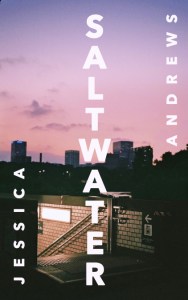 You would be forgiven for thinking that I had pretty much abandoned fiction based on my blog content over the past few months, but I have started reading more novels again recently. Some aspects of Jessica Andrews’ debut ‘Saltwater’ reminded me a lot of ‘Sight’ by Jessie Greengrass, particularly in its visceral imagery concerning changing bodies and an emerging sense of self. Based on Andrews’ life so far, it also appears that there is a strong element of autofiction in this coming-of-age story in which Lucy is finding her way in the world from growing up in Sunderland to her student years in London to inheriting a cottage in Donegal from her grandfather after she graduates from university. Continue reading
Filed under Books



 A Little Blog of Books
You must be logged in to post a comment.