
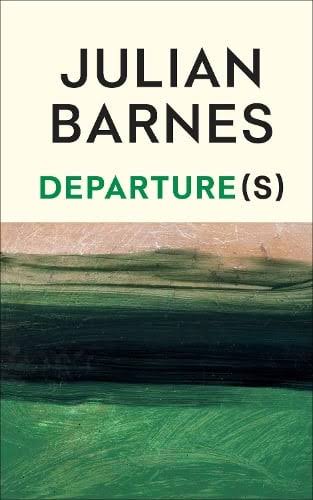
 Departure(s) by Julian Barnes is the Booker Prize-winning author’s final novel, published earlier this year on his 80th birthday. I included it in my list of Booker Prize predictions last month, although it is also a hybrid memoir which details Barnes’ diagnosis of “incurable but manageable” blood cancer in early 2020. The novel side of the book tells the story of Stephen and Jean who fall in love when they are at university with Barnes and then reconnect after 40 years apart. Departure(s) returns to familiar themes of mortality and ageing which Barnes has explored in many other books over the years, but this time it feels like the personal reality is felt much more keenly. The musings on Proust are a bit tedious, and I think The Sense of an Ending still stands out as his best recent work.
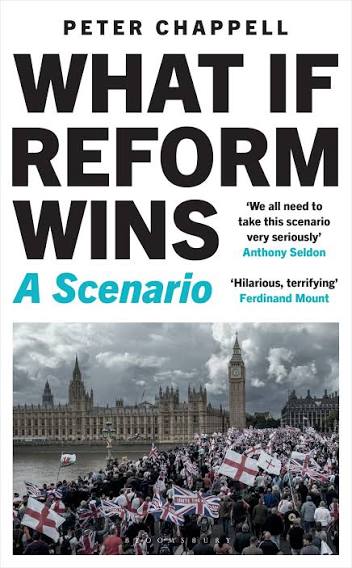 What If Reform Wins: A Scenario by Peter Chappell imagines what would follow a 2029 general election in which Reform UK led by Nigel Farage won enough seats in Parliament to form a government with a small majority. Billed as a “non-fiction thriller”, it examines how the party’s current policies would work (or not) in practice, such as handling attempts to stop small boats crossing the English Channel, a domestic crisis involving catastrophic flooding in Bristol, foreign policy matters resulting in potential war with Argentina, dealing with the BBC and a seismic budget statement. Speculative non-fiction about current affairs inevitably goes out of date extremely quickly. Chappell is wise to present this as one possible scenario rather than a full-on prediction because there are too many unknowns to come in the next three years that will truly determine what happens, not least the result of the parliamentary standards inquiry amid recent scrutiny of Reform UK’s finances. What If Reform Wins was only published three months ago, yet many aspects of what would have been considered to be a relatively plausible scenario at the beginning of this year already seem a lot less likely to actually happen. Chappell also depicts Farage refusing to leave 10 Downing Street following a no-confidence vote, whereas I think he will quit very easily as soon as the party stops being useful to him. Plausibility aside, the book certainly highlights the pace of change in the British political landscape and offers a thought-provoking scenario based on the briefest of snapshots of the state of UK politics in early 2026.
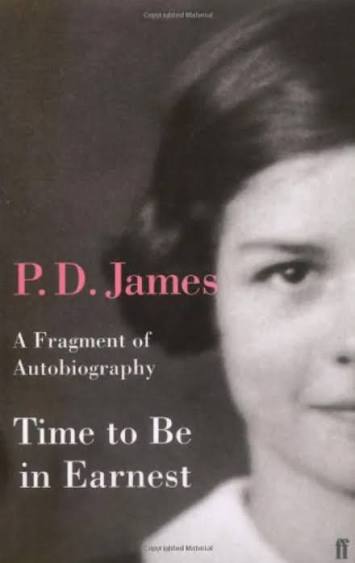 Time to Be in Earnest by P. D. James is “a fragment of autobiography” by the acclaimed crime fiction author. Taking Samuel Johnson’s maxim, James kept a diary from her 77th birthday in the summer of 1997 for a whole year and used the events as a loose framework for reminiscing about other aspects of her busy life, from her childhood in Cambridge, her career in the NHS and the Home Office, her literary life as a successful author, governor of the BBC and a member of the House of Lords. James reveals in the prologue that she had never kept a diary before and doesn’t like to dwell on painful experiences, so her natural reserve means that she isn’t always very candid about her personal life and the structure is more random like a journal. She doesn’t hold back on her views about modern society in comparison with her upbringing, but she was clearly very perceptive and the descriptions of her book tours are amusingly written.




Departures became available to me from the library on the same day as this post. I’d previously given up waiting for it, as it’s got a wait till December 2028 as an audio book, but it’s since been added as an eBook with a much shorter wait, and I loved it.
I feel that there’s been a big shift towards autofiction in literary circles in recent years, and it’s interesting to see established writers moving with this trend.
My book group famously disliked Sense of an Ending when I suggested it. Autofiction is one of my favourite genres, and I always love any flavour of metafiction, so Departures will be one of the more memorable JB books for me.
LikeLiked by 1 person