‘Brave New World’ by Aldous Huxley is one of the most famous dystopian novels of all time. I’m generally not a fan of science-fiction but this book is undeniably a classic. Set in London hundreds of years in the future in which humans are conditioned in a caste system of Alphas, Betas, Gammas, Deltas and Epsilons, ‘Brave New World’ initially presents an ‘ideal’ World State to the reader. But below-average Alpha, Bernard Marx, believes there is something missing in this society where everybody is supposedly ‘happy’. The arrival of John ‘the Savage’ from outside the World State inevitably raises even more questions about just how ‘ideal’ this society really is. Continue reading
Category Archives: Books
Brave New World by Aldous Huxley
Filed under Books
The Finkler Question by Howard Jacobson
After reading ‘1Q84’ last week, I felt like tackling something a tad shorter this week (although pretty much anything would seem short after that). Winner of the 2010 Man Booker Prize, ‘The Finkler Question’ by Howard Jacobson was the first ‘comic’ novel to win the prize since Kingsley Amis won in 1986 with ‘The Old Devils’. I’ve read some terrible reviews for this book but as part of my ongoing quest to read as many Booker Prize-winning or nominated novels as possible, I thought I’d give it a go anyway when I found it in the library the other day.
‘The Finkler Question’ tells the story of middle-aged former BBC producer Julian Treslove, his old schoolfriend Jewish philosopher Samuel Finkler and their former tutor Libor Sevcik. It’s certainly not an easy book to fall in love with. The satire of the BBC was nicely done as were the general observations of relationships and aging but I still think Julian Barnes is more skilled than Jacobson when it comes to incorporating subtle humour and irony into his work. Continue reading
Filed under Books
1Q84 by Haruki Murakami
 Wow. What can I say? I loved it. All 925 pages of it. Haruki Murakami’s magnum opus is a crime thriller and a love story set in 1984 and a parallel world of 1Q84 (Q for question mark) with elements of magical realism. Told through Murakami’s characteristically surreal and dream-like prose, ‘1Q84’ is a spectacularly addictive read.
The thing about ‘1Q84’ that you can’t ignore is that it’s… well… very long. It’s certainly the longest novel I’ve ever read anyway. Before I started reading it, I found the sheer length of the book quite daunting given that it is unusual for me to take over a week to read a novel especially when I’m not working. But the way in which the stories of Aomame and Tengo gradually become more and more entwined through the mysterious religious cult of Sakigake in the parallel world of 1Q84 is highly absorbing. It was so brilliantly written that I still didn’t want it to end. Continue reading
Filed under Books
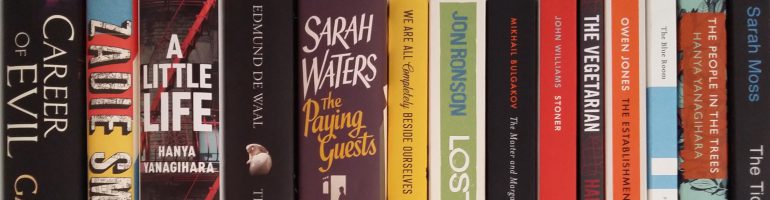
Spine Poetry

I know I’m jumping on the bandwagon a bit late but here is my first attempt at spine poetry. Now that I have moved back home this week, I have been reunited with my own/family book collection so I can experiment with it properly.
P.S. I will be going into hibernation again for the next few days as I plan to finally start reading ‘1Q84’ by Haruki Murakami…
Filed under Books
Oranges Are Not The Only Fruit by Jeanette Winterson
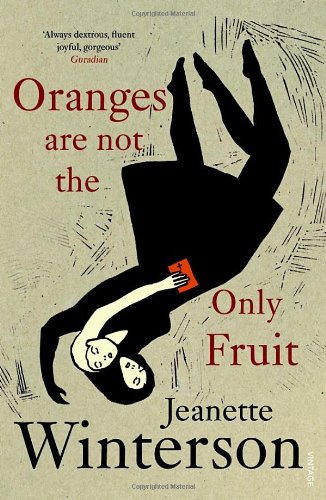 ‘Oranges Are Not The Only Fruit’ is Jeanette Winterson’s controversial debut novel first published in 1985. It is a semi-autobiographical novel: the main character is called Jeanette and her experiences of growing up in a Pentecostal household in Lancashire and exploring her sexuality are heavily drawn from the author’s own life. It is a coming-of-age story like no other.
Having read Winterson’s memoirs ‘Why Be Happy When You Could Be Normal?’ last month, ‘Oranges Are Not The Only Fruit’ seems perhaps less shocking to me than if I had read these books the other way round even though the events are virtually the same. The novel is sensitively written but I found ‘Why Be Happy When You Could Be Normal?’ to be the more poignant of the two books probably because the distance of time after writing ‘Oranges Are Not The Only Fruit’ made her own memoirs more personal and reflective. Continue reading
Filed under Books
Last Man In Tower by Aravind Adiga
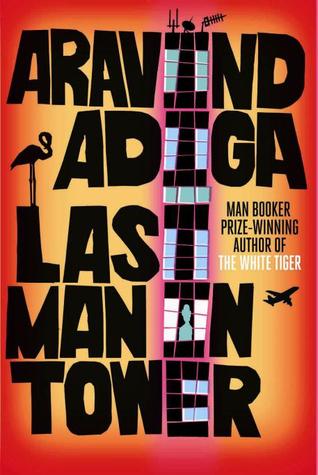 I loved Aravind Adiga’s Man Booker Prize-winning novel ‘The White Tiger’ and short story collection ‘Between the Assassinations’ and his latest novel ‘Last Man in Tower’ is equally enthralling. The story is about a real estate developer Dharmen Shah who offers the residents of a dilapidated tower block in Mumbai vast amounts of money to leave so that he can build luxury apartments on the land. Of course, one by one they all accept his offer apart from Masterji, a retired widower. Soon, his neighbours become prepared to take matters into their own hands.
I love Adiga’s evocative and colourful descriptions of life in India. His writing in ‘Last Man In Tower’ truly brings twenty-first century Mumbai to life – everything from the smell of the traffic to the taste of the food leaps off the page. The book is as much about the city as it is about the large and complex cast of characters who inhabit it with the reader being confronted with the messy realities of life in modern India. Continue reading
Filed under Books
Before I Go To Sleep by S. J. Watson
‘Before I Go To Sleep’ by S. J. Watson has been one of this year’s most talked about thrillers. The plot centres around Christine who wakes up every day not knowing where she is, who her husband is or what has happened in the last twenty odd years of her life. With her memories of the day being erased every single night, who can she trust?
The concept of memory loss is an interesting one and if it is done convincingly, like in the film ‘Memento’, it can be highly intriguing and enthralling. The first part of the novel seemed very promising. However, as I was reading the book, I found myself wanting to pick holes in the situation that Watson presents to us. For a start, Christine’s journal entries are too detailed to be plausible and are still written in the style of a novel (who has time to write 20+ pages in a day with complete dialogue?). The fact that nobody checked up on Christine after she was discharged from hospital is also barely believable (but then S. J. Watson did work for the NHS so maybe the catalogue of failings in Christine’s care is based on truth…). Continue reading
Filed under Books
Smut by Alan Bennett
 Alan Bennett’s dry, satirical wit and versatile style of writing ensures that he falls naturally under the category of ‘national treasure’ in Britain. While always surprising, his most recent work: ‘Smut: two unseemly stories’ is not exactly shocking, particularly if you’ve read ‘Fifty Shades of Grey’ recently. The first story, ‘The Greening of Mrs Donaldson’, is about a middle-aged widower and, shall we say, her adventurous student lodgers and their unusual method of paying rent. The second story, ‘The Shielding of Mrs Forbes’, is about a woman who secretly knows that her married son is secretly gay and who also has her own secrets. They are both neatly written, enjoyable stories complete with Bennett’s trademark subtle, ironic humour and wry character observations. However, I think ‘The Uncommon Reader’ and ‘The Lady in the Van’ are more amusing examples of Bennett’s work – those who are unfamiliar with him should probably start there instead.
A Kestrel for a Knave by Barry Hines
 Having got my craving for chick lit out of my system for another year, I have been reading ‘A Kestrel for a Knave’ by Barry Hines, one of the grittiest books I’ve read in a while. Set in South Yorkshire in 1968 over the course of a single day, fifteen year old Billy Casper finds Kes, a kestrel hawk, who he learns to take care of and confide in. It’s an accurate and poignant portrait of life in northern England at that time (so my mother tells me) and although the book has a very specific setting, it has timeless qualities and themes that would still resonate with disaffected youth today. Continue reading
The Devotion of Suspect X by Keigo Higashino
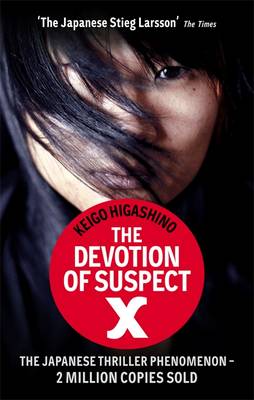 Touted as ‘the Japanese Steig Larsson’, Keigo Higashino manages to live up to the hype with crime thriller ‘The Devotion of Suspect X’ which is fast becoming a worldwide best-seller following its huge success in Japan. The story of how a mathematician helps his next door neighbour cover up the murder of her abusive ex-husband is not so much a whodunnit but more of a how-did-they-do-it with just as much suspense and intrigue as a more straightforward murder mystery plot. Continue reading
Comments Off on The Devotion of Suspect X by Keigo Higashino
Filed under Books
White Teeth by Zadie Smith
I thought I would hate ‘White Teeth’ given the tidal wave of hype which still seems to be continuing over a decade after the book was first published. But Zadie Smith’s writing is warmer and less pretentious than I thought it would be and her sprawling take on multicultural London focusing on three families in the second half of the twentieth century is ambitious but not exhausting to read. Although I had my doubts at the beginning, I found myself being carried along by the story to the point where I realised about 200 pages in that I was actually quite enjoying it. Character observation is her main strength, and the dialogue is often very witty albeit in a wordy sort of way. Continue reading
Filed under Books
The Sisters Brothers by Patrick DeWitt
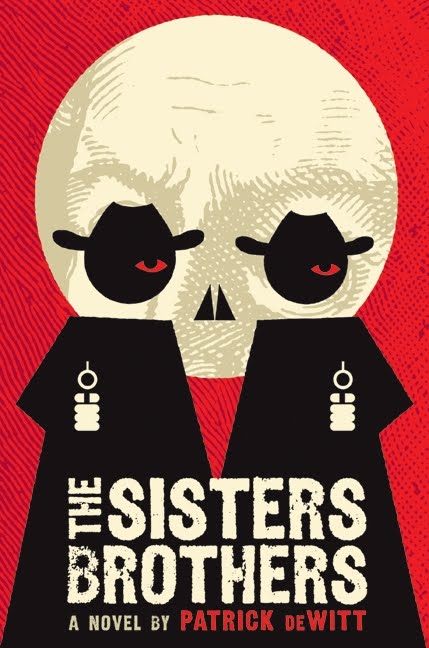 I should probably stop underestimating westerns. I read ‘No Country For Old Men’ a few months ago and really liked it. I went to see ‘True Grit’ at the cinema last year on a friend’s recommendation and really liked it. This week, I have been reading ‘The Sisters Brothers’ by Patrick DeWitt having only picked it up on the basis of its Man Booker Prize nomination… and also really liked it. Something tells me that I might not be as indifferent to westerns as I thought I was. Continue reading
Filed under Books
The Prime of Miss Jean Brodie by Muriel Spark
Apologies for lack of posts this week but at the beginning of the month it was looking as though my blog word count was in danger of overtaking my coursework word count and as much as I like blogging I do kind of need a degree… So this week, in between revising for my first exam on Wednesday, I have read ‘The Prime of Miss Jean Brodie’ by Muriel Spark – a short, witty novel about betrayal and shattering illusions. Set mostly in Edinburgh in the 1930s, the crème de la crème of the Marcia Blaine School for Girls are taken under the wing of eccentric Scottish schoolmistress Miss Jean Brodie whose influence on her impressionable pupils has huge consequences on all of their lives. The plot is almost as unconventional as the characters and the structural complexity of the novel is extremely subtle making the reader feel almost as manipulated by Miss Brodie’s glamorously eccentric ways as her pupils are. Spark’s method of revealing what happened to each of the Brodie Set before and after the betrayal is also very effective and shuttles backwards and forwards over time effortlessly. Her dry wit is perfectly weaved into her deceptively simple style of writing with its sinister undertones.
Is Miss Jean Brodie truly evil or just an egoist? Either way, she is certainly an immortal creation and the book remains in its prime some five decades after its first publication.
Filed under Books
Why Be Happy When You Could Be Normal? by Jeanette Winterson
‘Why be happy when you could be normal?’ These are the words Jeanette Winterson’s adoptive mother said to her when she left home at the age of sixteen after falling in love with another woman. Her memoirs mostly recount her childhood growing up in working-class Accrington living with her adoptive Pentecostal parents and her later search for her birth parents. I used to think that no autobiography could be more bleak than Frank McCourt’s account of growing up in poverty in ‘Angela’s Ashes’ but Winterson’s description of her fearsome adoptive mother was particularly harrowing. To say her childhood was appalling is probably an understatement and yet she poignantly reflects on love and life without succumbing to self-indulgence. Her search for her birth mother is very moving and you will feel her frustration at the bureaucracy process coming off the page. Continue reading
Filed under Books
Room by Emma Donoghue
‘Room’ tells the harrowing story of Ma, kidnapped seven years ago by captor Old Nick and her five year old son Jack who are imprisoned in a single room. Partially inspired by Josef Fritzl’s incarceration of his daughter, there are no real surprises to the plot of this novel if you are familiar with the background of this case. But whereas the hysterical media coverage of such crimes often focuses as much if not more on the abusers than the abused, Donoghue has wisely chosen to focus on the story of Ma and Jack rather than Old Nick who only makes brief appearances throughout.
For Ma, Room is a prison where she has been abused and raped. But for Jack, Room is home and he knows nothing else. It is his struggle to deal with the alien concept of Outside that is the most affecting aspect of the book. As well as writing very convincingly on this subject, Donoghue is also excellent at building suspense and evoking the claustrophobia of solitary confinement. Continue reading
Filed under Books
The Art of Fielding by Chad Harbach
Being British, I know virtually nothing about baseball. What I do know, I learnt from Charlie Brown in the Peanuts comic strip, meaning that in fact, I probably know even less than I think I do about what is probably the most American of sports. Happily, as far as I can tell, this did not really hinder my enjoyment of ‘The Art of Fielding’ by Chad Harbach. It does feature a lot of baseball especially in the first few chapters and some other passages which I admit were kind of lost on me. But the book as a whole is more about relationships which is something anyone can identify with (baseball fan or not) and the college experience which most people can identify with (American or not). Continue reading
Tipping the Velvet by Sarah Waters
Having read all of her other books, I finally got round to reading Sarah Waters’ début novel ‘Tipping the Velvet’ this week. This picaresque coming-of-age tale set in the 1890s sees Nancy Astley, an oyster-girl from Whitstable run off to London with music hall performer Kitty Butler who later becomes her lover and co-star on the stage. When her career comes to an abrupt end, Nancy journeys through London exploring her sexuality and experiencing plenty of love, lust and heartbreak along the way.
Although much of what has been written about ‘Tipping the Velvet’ focuses on the presence of lesbian characters, the fact that Sarah Waters is a master of good old-fashioned storytelling must not be overlooked. She knows how to weave an intriguing plot with believable characters. As with all of her other books, the level of historical detail is impressive and blends into the story effortlessly without being either overwhelming or irrelevant – and that even goes for the detailed descriptions of Victorian sex toys. Continue reading
Filed under Books
Underground by Haruki Murakami
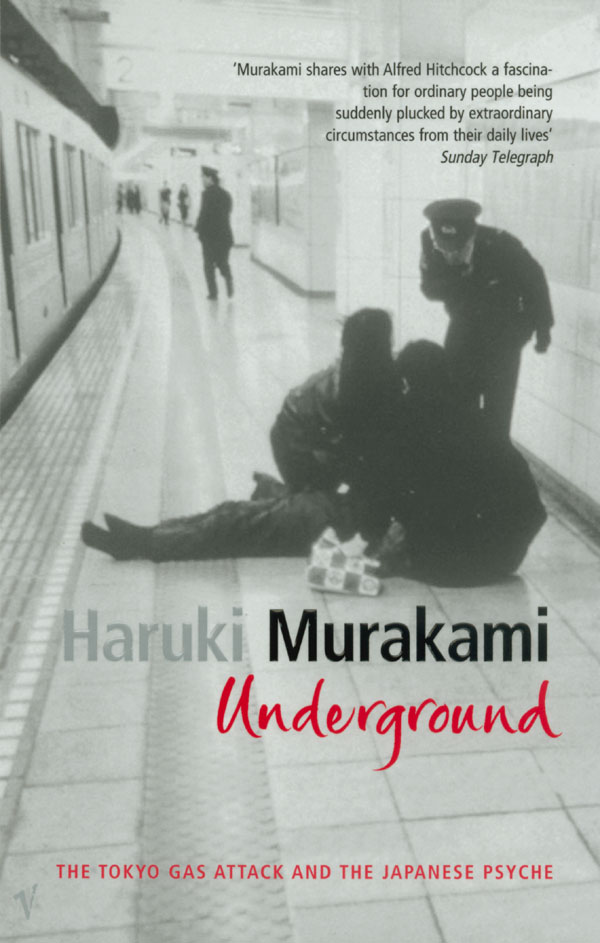 ‘Underground: The Tokyo Gas Attack and the Japanese Psyche’ is a non fiction work by Haruki Murakami about the terrorist attacks on the Tokyo subway in 1995 by members of the Aum cult. I am a big fan of Murakami’s fiction and admit that I only picked up the book from the library because it had his name on the cover. I also didn’t know too much about this particular incident before reading about it this week but ‘Underground’ seems to have been the best place to start as it is a balanced and insightful view of the dreadful events of 20th March 1995 whilst also exploring further questions about the Japanese mentality towards their everyday lives. Continue reading
Filed under Books
A History of the World in 10 1/2 Chapters by Julian Barnes
Is it a novel? Or is it a tapestry of 10 1/2 vignettes on the broad theme of discovery? Barnes himself has said that ‘A History of the World in 10 1/2 Chapters’ was conceived as the former but I would be more inclined to agree with the latter. The irony here is that the main themes of this book revolve around the idea of alternative perspectives … so perhaps we are both right.
Like Barnes’ other short stories (I reviewed his latest collection ‘Pulse’ last month), the ‘chapters’ are a mixed bunch and aside from repeated nautical metaphors, I’m not fully convinced that it hangs together all that well as a ‘novel’. However, the opening chapter set on Noah’s Ark is pure satirical brilliance, and the 1/2 chapter ‘Parenthesis’ is beautifully written and is definitely Barnes at his best. Perhaps I will only fully appreciate the book at a novel by re-reading it as a later date. Continue reading
Filed under Books
The Map and the Territory by Michel Houellebecq
It’s just as well that I don’t judge books by their covers because let’s face it, this cover of the hardback English language version of Michel Houellebecq’s ‘The Map and the Territory’ is pretty bad. Happily, the contents are more rewarding as the enfant terrible of modern French literature has produced his most innovative work yet. Perhaps more subtly provocative than his previous novels, ‘The Map and the Territory’ follows the story of Jed Martin, a French artist who discovers fame by taking photographs of Michelin maps and completing a series of portraits of people and their professions whilst dealing with personal crises such as his father’s illness. Houellebecq includes himself as a fictional character in the book working on the text of Martin’s exhibition guide and his comical self-caricature is one of the most amusing aspects of the novel. Continue reading
Comments Off on The Map and the Territory by Michel Houellebecq
Filed under Books



 A Little Blog of Books
You must be logged in to post a comment.