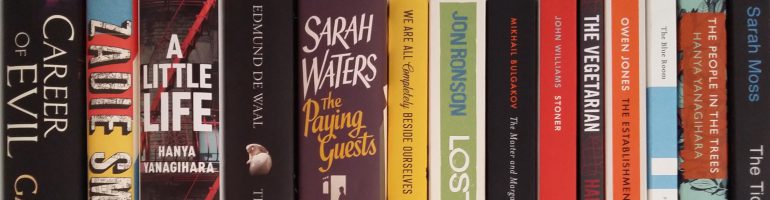
As some of you may already know, August is Women in Translation Month (founded by book blogger Meytal at Biblibio in 2014) which aims to increase readership of translated books by female authors and raise awareness of the gender imbalance in publishing (estimates vary but currently only around 25-30% of books translated into English are by female authors). The three titles I have been reading this month from authors based in Israel, Austria and Mexico showcase the variety of fiction written by women around the world and championed by independent publishers Pushkin Press, Peirene Press and Granta.
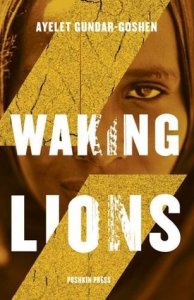 Waking Lions by Ayelet Gundar-Goshen (translated from the Hebrew by Sondra Silverston) tells the story of Dr Eitan Green, a neurosurgeon who has recently relocated to the Israeli city of Beersheba and is involved in a collision with an illegal Eritrean immigrant while he is driving home from work through the desert. In a panic, Eitan leaves him to die at the side of the road, but the dead man’s widow shows up the next day on his doorstep holding his wallet which he left at the scene and blackmails him into providing medical assistance to other illegal immigrants in the area. To complicate matters even further, Eitan’s wife Liat is the police detective tasked with uncovering the identity of the driver who left the scene of the hit-and-run. Continue reading
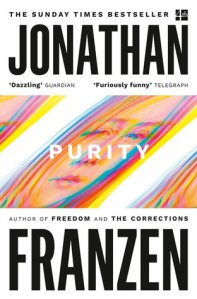 ‘Purity’ by Jonathan Franzen tells the story of Pip, a college graduate in her 20s living in Oakland, California and deeply in debt who is offered the chance to take an internship with the Sunlight Project in Bolivia led by East German peace activist Andreas Wolf. Pip hopes that working for the Sunlight Project – a Wikileaks-style organisation which traffics secrets – will lead her to some answers about her origins including the identity of her father. Her work eventually takes her to Denver where she meets investigative journalist Tom Aberant who has connections with Andreas and knows his darkest secret.
 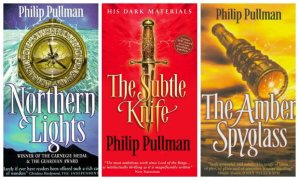 This month, I’ve broken the habit of a (five-year blogging) lifetime and reread the ‘His Dark Materials’ trilogy by Philip Pullman ahead of the publication of ‘La Belle Sauvage’, the first volume of the Book of Dust trilogy later this year. The first book in the series ‘Northern Lights’ is set in a parallel universe similar to ours but different in many ways and introduces twelve-year-old Lyra Belacqua and her dæmon companion Pantalaimon who travel to the North Pole to rescue her friend Roger from the Gobblers who are carrying out experiments on children. In ‘The Subtle Knife’ and ‘The Amber Spyglass’, Lyra meets Will Parry and they travel between different universes including our own in pursuit of the meaning of Dust.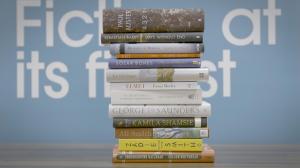
 I only started blogging about my predictions for literary award longlists relatively recently. Three of
  ‘The Women Who Shaped Politics’ by Sophy Ridge offers a broad overview of the female campaigners and Members of Parliament who have shifted the political landscape in Westminster. The first half focuses on historical pioneers such as Mary Wollstonecraft and those involved in the suffragette movement while the second half draws on interviews with a range of contemporary female politicians including current Prime Minister Theresa May.
 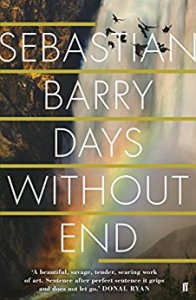 ‘Days Without End’ by Sebastian Barry tells the story of Thomas McNulty, a young Irishman who emigrates to Canada and later the United States in the mid-19th century after his family perished in the Great Famine. He befriends and falls in love with John Cole when they are teenagers and they work at a saloon where they dress as women and dance for miners. They later enlist for the US army fighting in two wars and adopt an orphaned Indian Sioux girl who they name Winona.
  I’ve had a copy of ‘On Beauty’ by Zadie Smith on my shelf for ages but as it is based on ‘Howards End’ by E. M. Forster, I decided to read the latter first about six years ago as I usually prefer to have some knowledge of the source material when reading an adaptation or homage to another book. However, I didn’t get on with ‘Howards End’ at all and consequently I have neglected ‘On Beauty’ for a very long time, but after enjoying Smith’s latest novel
 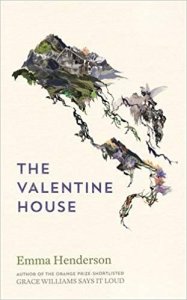 ‘The Valentine House’ by Emma Henderson is set in the French Alps at Arete, a large chalet built by Sir Anthony Valentine in the late nineteenth century and used as a summer house by the family across several generations. In 1914, Mathilde, a local girl from the valley, is selected by Sir Anthony’s wife Lady Charlotte to work as a servant at Arete on account of her being one of the ‘uglies’ and therefore less likely to catch Sir Anthony’s wandering eye. Mathilde gradually becomes acquainted with the quirks of this strange English family until she is betrayed by Sir Anthony’s granddaughter Daisy. Decades later in 1976, Sir Anthony’s great-great-grandson George is visiting Arete with his cousins, continuing many of the Valentine traditions such as the outdoor physical challenges known as ‘paideia’. With Mathilde’s help, they finally uncover the mystery surrounding the fate of Sir Anthony’s daughter Margaret.
 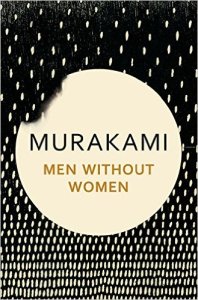 ‘Men Without Women’ by Haruki Murakami is the renowned Japanese author’s first new collection of short stories to be translated into English in over a decade. Echoing Ernest Hemingway’s collection of the same name, the seven tales in this collection are indeed about men experiencing loneliness and isolation without the women who are now absent from their lives for various reasons. The stories have been translated by Ted Goossen and Philip Gabriel who have both worked on many of Murakami’s previous books.
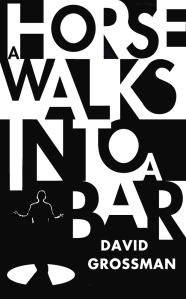 The official winner of the Man Booker International Prize was announced last night with
 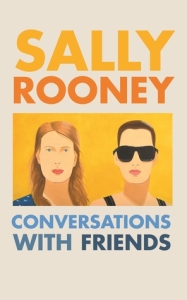 ‘Conversations with Friends’ by Sally Rooney tells the story of twenty-one-year-old student and aspiring poet Frances and her friend and ex-girlfriend Bobbi who live in Dublin and perform spoken word pieces together. They meet Melissa, a journalist and photographer in her thirties who wants to write a profile of their work, and her husband Nick who is an actor. Frances soon begins an affair with Nick which profoundly changes the dynamic of her friendship with Bobbi and becomes very messy very quickly to say the least.
 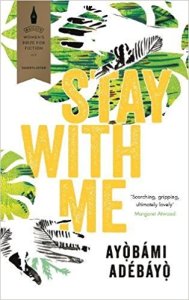 Set in Nigeria during a period of political turmoil in the 1980s, ‘Stay With Me’ tells the story of Yejide who is married to Akin and has struggled to get pregnant after four years of marriage. Akin’s family decide that he must marry a second wife, Funmi, to bear the children that Yejide is apparently unable to carry. After a long phantom pregnancy, she eventually does conceive but the spectre of sickle-cell disease looms over the family. Years later, Yejide is due to attend Akin’s father’s funeral where she must face further consequences of past events.
 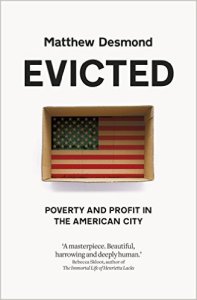 ‘Evicted: Poverty and Profit in the American City’ by Matthew Desmond is a piece of contemporary narrative non-fiction reporting very much in the same vein as one of my favourite non-fiction books of 2016
 ‘Alias Grace’ by Margaret Atwood is based on the true story of Grace Marks, a servant convicted of the notorious double murder of her employer Thomas Kinnear and his housekeeper and mistress Nancy Montgomery alongside stable hand James McDermott in Toronto in 1843 when she was just sixteen years old. After they were caught attempting to escape from Canada to the United States, McDermott was hanged for the crime while Grace was sentenced to life imprisonment at Kingston Penitentiary in Ontario after her death sentence was commuted at the last minute. Despite confessing to the crime at the time, Grace still claims to have no memory of the murders fifteen years later. Her sanity is being investigated by American psychiatrist Dr. Simon Jordan at the invitation of a liberal minister who believes she is innocent.
 I was half way through reading ‘Sapiens: A Brief History of Humankind’ by Yuval Noah Harari on the tube the other week when a fellow commuter asked me what the book is about. Even though I have been writing reviews regularly for over five years, I still don’t enjoy being put on the spot about books I am still reading and mulling over, particularly at 8:15am on a crowded train. My initial response was to say that it’s about, well, pretty much everything. Even though that statement is fairly accurate, the expression on his face suggested that it was also quite unhelpful, so I added that it’s about how and why the human race has developed in the way that it has. This appeared to be a more satisfactory answer, which is just as well because I still can’t think of a better way to summarise its content.
 I really enjoyed reading
  The Man Booker International Prize shadow panel’s scores are in and we can now announce our own shortlist of six books. They are:
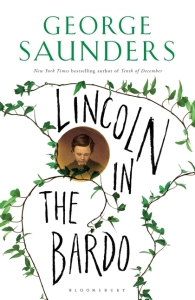 Told through a chorus of over 160 different voices, ‘Lincoln in the Bardo’ by George Saunders follows the aftermath of the death of Abraham Lincoln’s eleven-year-old son Willie in 1862 from typhoid fever during the American Civil War. Willie finds himself trapped between death and rebirth with other spirits in the cemetery who believe he should proceed to the next stage of the afterlife. However, Willie is resistant as he wants to spend more time with his distraught father who regularly visits the crypt to mourn his loss.



 A Little Blog of Books
You must be logged in to post a comment.