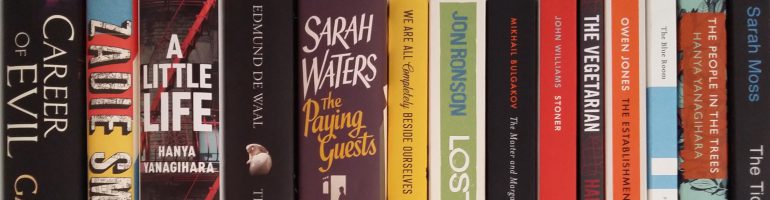
 My main read over Christmas was ‘The Secret Commonwealth’ by Philip Pullman, the second volume in the Book of Dust trilogy following La Belle Sauvage two years ago. ‘La Belle Sauvage’ was essentially a prequel to the His Dark Materials trilogy in which we saw Lyra as a baby. The events in ‘The Secret Commonwealth’ take place about seven years after the end of that trilogy with Lyra now a 20-year-old undergraduate in Oxford. It opens with the murder of a botanist who had recently returned from a research trip to central Asia studying the effects of rose oil. The web of intrigue which follows this murder has implications for the authoritarian rule of the Magisterium and leads to Lyra and Malcolm undertaking separate journeys across Europe through to Turkey and Syria. Continue reading
Tag Archives: Fiction
The Secret Commonwealth by Philip Pullman
Filed under Books
My Most Anticipated Books of 2020
 I have an ever-growing list of anticipated books due to be published in 2020. Here are the titles I am looking forward to reading the most. All publication dates where known are for the United Kingdom only.
In non-fiction, Notes from an Apocalypse by Mark O’Connell is the Wellcome Book Prize-winning author’s second book after To Be a Machine. Due in April, it will explore how we get to grips with the future and the possible end of the world in an age of anxiety.
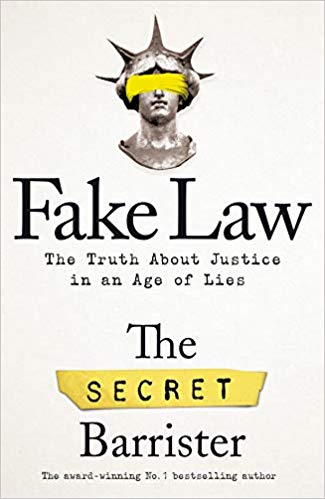
Also due in April, Fake Law: The Truth About Justice in an Age of Lies by The Secret Barrister promises to be an equally eye-opening account as his/her bestselling debut book of how the legal system really works, this time focusing on themes of ignorance, corruption and fake news. Continue reading
Filed under Books
My Books of the Year 2019
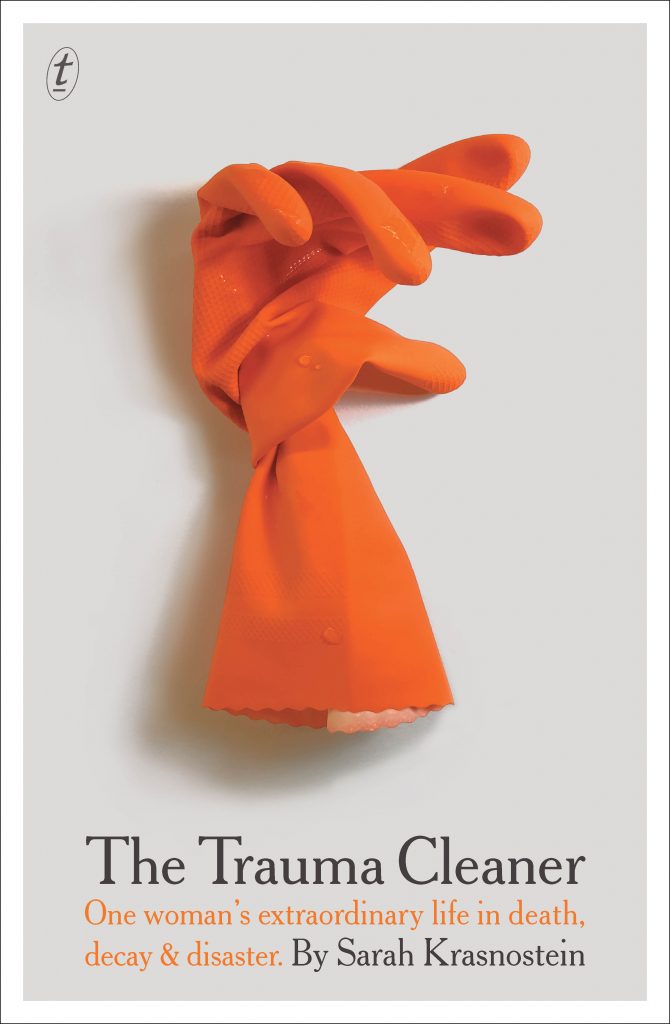
2019 is the first year non-fiction has more or less overtaken fiction in my reading. This is partly due to shadowing the Wellcome Book Prize at the beginning of the year. My favourite titles from this year’s longlist include the excellent This Really Isn’t About You by Jean Hannah Edelstein and The Trauma Cleaner by Sarah Krasnostein – the latter was our shadow panel winner.



Unfortunately, the Wellcome Book Prize has been paused for 2020. Mother Ship by Francesca Segal and The World I Fell Out Of by Melanie Reid would definitely have been on my longlist wishlist – two outstanding memoirs about the premature birth of twins and spinal injury respectively. This year’s Baillie Gifford Prize winner The Five by Hallie Rubenhold about the lives of Jack the Ripper’s victims is another stand-out title as is last year’s winner Chernobyl by Serhii Plokhy. Continue reading
Filed under Books
The Warlow Experiment by Alix Nathan
 I mentioned ‘The Warlow Experiment’ by Alix Nathan in my Booker Prize longlist predictions post in July as a possible contender for the 2019 prize. Even though my prediction about the dominance of historical fiction on this year’s longlist ended up being way off the mark, I was intrigued by the premise of this particular novel which is based on a real experiment proposed in the late 18th century. Nathan came across a brief article in the 1797 edition of the Annual Register which suggests that someone had taken up the offer posted by a Mr Herbert Powyss a few years earlier to spend seven years living in total isolation in the cellar of his manor house in the Welsh Marches. Only one person applied: a labourer who was apparently attracted by the reward offered by Powyss of 50 pounds per year for life in order to provide for his large family. However, further information about the outcome of the experiment is unknown and Nathan’s imagining of the scenario is therefore entirely fictionalised. Continue reading
Filed under Books
The Bus on Thursday by Shirley Barrett
 ‘The Bus on Thursday’ by Shirley Barrett will appeal to those with a certain sense of humour, most likely a dark one. It opens with Eleanor Mellett discovering that she has been diagnosed with an aggressive form of breast cancer at the age of 31. After being dumped by her boyfriend, she gets a new job teaching at a tiny school in Talbingo (population: 241) in a particularly remote area of rural Australia. The previous teacher, Miss Barker, has gone missing in mysterious circumstances and the oddball residents are bewildered by her sudden disappearance. Continue reading
Filed under Books
A History of Loneliness by John Boyne
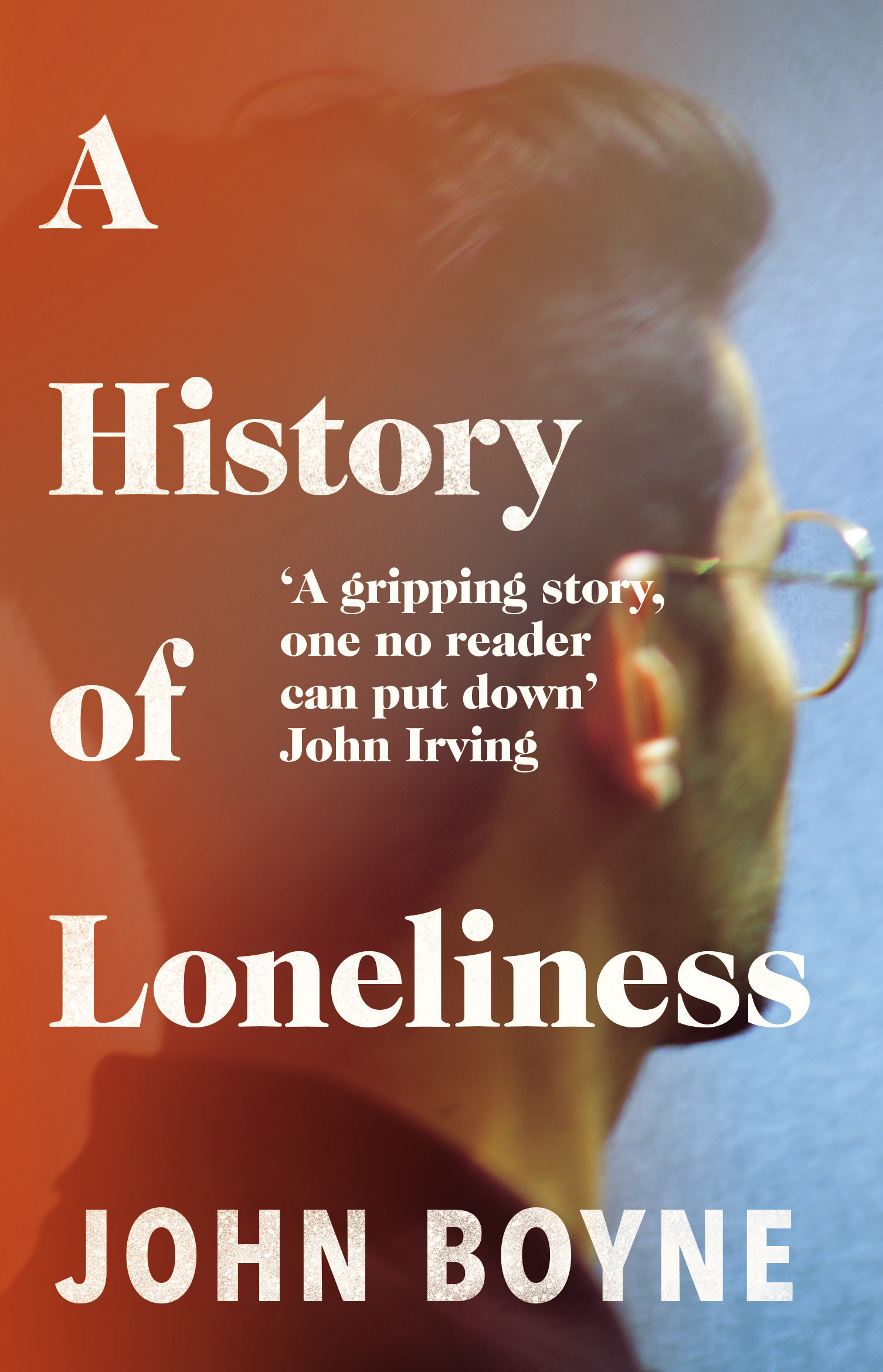
I really enjoyed reading John Boyne’s two most recent novels The Heart’s Invisible Furies and A Ladder to the Sky last year and this week I have read his 2015 novel ‘A History of Loneliness’ which tackles the child abuse scandal in the Catholic Church in Ireland. It tells the story of Odran Yates who enters Conliffe College seminary at the age of 17 in the 1970s after his mother informs him that he has a vocation. It is there that he first meets Tom Cardle, and the two remain friends despite Tom moving between several different parishes and Odran having his suspicions about why that keeps happening. It isn’t until many years later that Odran is forced to come to terms with what happened and recognise his own complicity. Continue reading
Filed under Books
Their Brilliant Careers by Ryan O’Neill
 I have been reading a lot of non-fiction over the last few weeks, and even the most recent novel I have read masquerades as a series of biographical sketches. ‘Their Brilliant Careers’ by Ryan O’Neill is introduced as a collection of sixteen portraits of Australian literary figures from the 20th century. It is a shame that the blurb and my review are forced by necessity to reveal that everything from the dedication to the index is invented, but O’Neill’s highly amusing pastiche more than makes up for this. Continue reading
Filed under Books
Novels That Shaped Our World
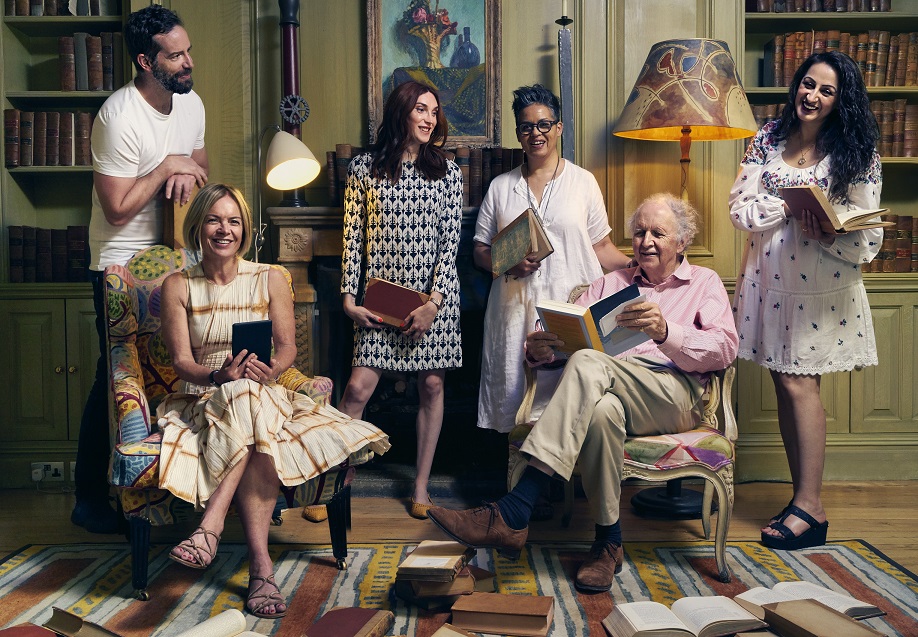
I was invited to celebrate the launch of the BBC’s ‘Novels That Shaped Our World’ campaign at New Broadcasting House on Tuesday night with other book bloggers and vloggers. It begins a year-long celebration of literature at the BBC and also marks the 300th anniversary of ‘Robinson Crusoe’ by Daniel Defoe which is widely considered to be the first modern English novel.
Six writers and critics – Stig Abell, Syima Aslam, Juno Dawson, Kit de Waal, Mariella Frostrup and Alexander McCall Smith – have come up with a list of 100 novels that shaped our world. The list itself is not going to please everyone. It consists of English language titles only and it also includes several series such as the Earthsea trilogy and Discworld, so to call it a list of “100 novels” isn’t strictly true. However, I think those bemoaning the fact that it is not a collection of “greatest” novels featuring lots of worthy tomes are slightly missing the point, as it is very much a list of books which have had personal impact on the panellists. That’s not to say that books traditionally thought of as great literature are not here because they are (‘Pride and Prejudice’, ‘Middlemarch’, ‘Nineteen Eighty-Four’ and ‘To Kill A Mockingbird’ are among those which made the cut). But it seems to have upset some people that they appear alongside more modern books considered to be guilty pleasures (‘The Twilight Saga’ and ‘Riders’ being two which are typically excluded from these kind of lists). Organised thematically, it’s a bit like an updated version of The Big Read series from the early 2000s but without a public vote, thereby preventing the overrepresentation of Jeffrey Archer and Jacqueline Wilson this time. Continue reading
Filed under Books
The Overstory by Richard Powers
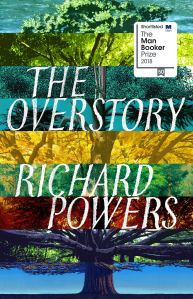 Shortlisted for the Man Booker Prize in 2018 and winner of the Pulitzer Prize for Fiction, ‘The Overstory’ by Richard Powers brings together nine stories in which the characters grow to realise the extent of the ecological crisis, particularly where trees are concerned. It is difficult to elaborate further on the plot in which the structural concept is, according to the blurb, based around “concentric rings of interlocking fable” which sees the various strands gradually become interlinked. The diverse cast of characters includes a war veteran, a biologist, a childless married couple and a college student who has a near-death experience. The first part ‘Roots’ reads more like a collection of short stories in which trees feature in one way or another. However, links between the characters start to emerge in the second part ‘Trunk’ and the narrative finally starts to read more like a novel. Continue reading
Filed under Books
Akin by Emma Donoghue and The Confession by Jessie Burton
 Autumn usually sees the publication of novels by popular authors in the run-up to Christmas and there are some excellent ones appearing on the shelves this year. ‘Akin’ by Emma Donoghue tells the story of Noah Selvaggio is a widower and retired chemistry professor born in France and based in New York. He is planning his first visit back to Nice since he was a child in time for his 80th birthday. However, he discovers he has an 11-year-old great-nephew called Michael whose father died from a drug overdose and whose mother is in prison. Noah is the only relative available to take care of Michael and he decides to take him along on his trip of a lifetime. Continue reading
Filed under Books
All Among the Barley by Melissa Harrison
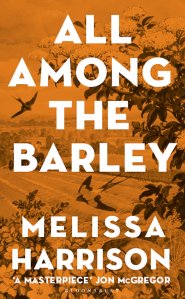 ‘All Among the Barley’ by Melissa Harrison tells the story of fourteen-year-old Edie Mather, living at Wych Farm in the East Anglian countryside in 1933 with her family. The impact of the Great War and the Depression is still being felt and the fickle nature of the weather and the outcome of the harvest are a constant worry. Bookish Edie is naïve and impressionable and the arrival of former Suffragette Constance FitzAllen brings new ideas to the community and repercussions for the Mather family. Continue reading
Filed under Books
Chiswick Book Festival: Sadie Jones and Sonia Purnell
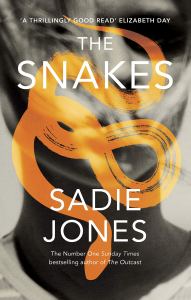 It’s been a while since I’ve been to a literary event, and three years since I last went to Chiswick Book Festival in 2016, so another visit was long overdue. Yesterday, I went to two events: Sadie Jones talking to Cathy Rentzenbrink about her latest novel ‘The Snakes’ and Sonia Purnell discussing her book ‘A Woman of No Importance’ with Julia Wheeler.
‘The Snakes’ tells the story of Beatrice, the thirty-something daughter of multimillionaire property developer, Griff Adamson. Having more or less cut herself off from her parents and their money, she works as a psychotherapist and lives in a small flat with her husband Dan, an estate agent from a working-class background who doesn’t know the full extent of Bea’s family’s wealth. They plan to use their savings of a few thousand pounds to travel across Europe for a couple of months and stop to visit Bea’s brother Alex in the dilapidated hotel he runs in the south of France. However, Bea’s parents drop in for a surprise visit and when tragedy strikes, Bea is forced to confront some uncomfortable truths about the family’s past. Continue reading
Comments Off on Chiswick Book Festival: Sadie Jones and Sonia Purnell
Filed under Books
Platform Seven by Louise Doughty
 Louise Doughty is brilliant at writing about underlying resentment and the things we secretly notice about people but rarely articulate. I suspect she will remain best known for Apple Tree Yard but her latest novel ‘Platform Seven’ is a very effective domestic psychological thriller and likely to be another commercially successful one too. Continue reading
Filed under Books
Spring by Ali Smith and Supper Club by Lara Williams
 I haven’t read any of this year’s Booker Prize longlist yet, but I have read two of the novels shortlisted for the Guardian’s Not the Booker prize which recognises an alternative selection of eligible books chosen by the public, judges and book champions. ‘Spring’ by Ali Smith wouldn’t look out of place on this year’s official Booker Prize longlist which mostly consists of novels by established authors, although I have read that her novels are no longer submitted to literary awards for consideration. It is the third book in Smith’s quartet of seasonally themed novels following Autumn (which was shortlisted for the Man Booker Prize in 2016) and Winter. Continue reading
Filed under Books
Sweet Sorrow by David Nicholls
 David Nicholls’ fifth novel ‘Sweet Sorrow’ is set during the summer of 1997. Charlie Lewis is waiting for his GCSE results, living with his depressed father and working at a petrol station. In a chance encounter on a bike ride, he becomes a member of the Full Fathom Five amateur theatre company and lands the role of Benvolio in ‘Romeo and Juliet’. Charlie falls for Fran Fisher, the girl playing Juliet, but just like Shakespeare’s famous play, there is plenty of foreshadowing that their happiness will not last long. Continue reading
Filed under Books
The Booker Prize 2019: Predictions, Possibilities and Preferences
 The Booker Prize longlist (no longer sponsored by the Man Group) for 2019 is due to be announced on Wednesday 24th July which means it’s time for another game of what Julian Barnes once termed “posh bingo”. I’ve come up with a list of predictions in terms of what I think could be some strong possibilities alongside my own personal preferences, based on a few eligible books I have read in recent months as well as ones I haven’t. As ever, I have no idea which novels have actually been submitted for consideration.
Of the eligible books I have read, one of the most striking titles is Throw Me To The Wolves by Patrick McGuinness which is a literary crime novel loosely based on what happened to Christopher Jefferies when he was wrongly accused of murder and follows the 2011 shortlisting for McGuinness’s debut novel The Last Hundred Days. I would also like to see Little by Edward Carey on the longlist which is a fictionalised account of the early life of Madame Tussaud. Continue reading
Filed under Books
Daisy Jones & The Six by Taylor Jenkins Reid
 ‘Daisy Jones & The Six’ by Taylor Jenkins Reid charts the rise to fame of a fictional 1970s rock group based in California and the making of their seminal album ‘Aurora’. Billy Dunne formed The Six with his brother Graham and fellow band members, Eddie, Warren, Karen and Pete. Following the success of a collaboration with Daisy Jones, the solo artist and rising star officially joins the group. However, the dynamic between Billy and Daisy as two competing singer-songwriters soon becomes a fraught one when they embark on creating a hit record together. Continue reading
Filed under Books
The Wife by Meg Wolitzer
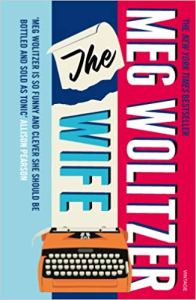 I watched the excellent film adaptation of ‘The Wife’ by Meg Wolitzer recently (currently available to stream on Netflix in the UK) and still had Glenn Close’s performance in mind when I read the book which was first published in 2003, so this week’s blog post is more of a joint review of both. Joan has been married to celebrated novelist Joe Castleman for forty years after meeting in the late 1950s. She was his student in a creative writing class at Smith College and they began an affair which ended his first marriage. In the present day, they are travelling to Scandinavia where Joe is due to receive a literary award – the Nobel Prize for Literature in the film, the fictional Helsinki Prize in the book, which is said to be slightly less important than the Nobel Prize for Literature but prestigious nonetheless. However, during the flight, Joan decides that enough is enough and plans to end their marriage after years of putting up with Joe’s philandering. Continue reading
Filed under Books
Throw Me to the Wolves by Patrick McGuinness
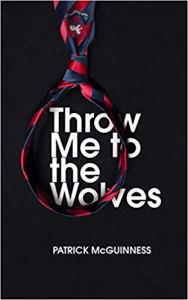 I enjoyed Patrick McGuinness’s debut The Last Hundred Days which is an evocative portrait of the end of Ceausescu’s rule in Romania and was longlisted for the Man Booker Prize in 2011. His second novel ‘Throw Me to the Wolves’ is inspired by the real events of the Joanna Yeates case in which her landlord, Christopher Jefferies, was arrested on suspicion of her murder in Bristol in December 2010. The retired English teacher was released without charge and the real killer was caught, but extensive press coverage at the time of his arrest had portrayed him as an eccentric loner with false suggestions by ex-pupils that he had behaved inappropriately. In ‘Throw Me to the Wolves’, the setting has been changed to Kent and the character based on Jefferies is Michael Wolphram, accused of the murder of his neighbour Zalie Dyer. Continue reading
Filed under Books
Disobedience by Naomi Alderman
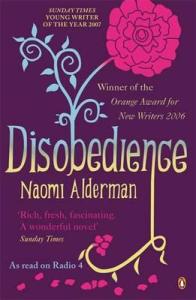 I enjoyed Naomi Alderman’s Baileys Women’s Prize for Fiction-winning feminist dystopian novel The Power and I have recently read her 2006 debut ‘Disobedience’ which won the Sunday Times Young Writer of the Year Award and Orange Award for New Writers. It tells the story of Ronit Krushka who grew up in a strict Orthodox Jewish community in Hendon in north London and now lives in New York working as a financial analyst having turned her back on her faith and family. She is due to attend a memorial service for her estranged father who was a respected rabbi and it appears that Ronit’s cousin, Dovid, is likely to be his successor. However, when she returns to London, she discovers that Dovid has married Esti, her childhood best friend and former lover. Continue reading
Filed under Books



 A Little Blog of Books
You must be logged in to post a comment.