‘Lolita’ by Vladimir Nabokov tells the story of Humbert Humbert and his obsession with twelve year old Dolores Haze also known as Lolita. Humbert marries her mother, Charlotte, to be closer to Lolita and after her sudden death, Humbert becomes sexually involved with Lolita and they travel around the United States. The themes of obsession and loss of innocence are dark and so is the humour in this densely written classic which is still as controversial today as it was when it was first published in the 1950s. Continue reading
Tag Archives: Literature
Lolita by Vladimir Nabokov
Filed under Books
The History of Love by Nicole Krauss
I will admit that I had never heard of ‘The History of Love’ by Nicole Krauss until relatively recently in spite of the huge number of endorsements it seems to have had from critics over the last few years. The novel only came to my attention after reading some blog reviews recently which gave it extremely high praise so I decided to hunt it down at the library this week. In a nutshell, ‘The History of Love’ tells the parallel stories of Leo Gorsky, an elderly man living in New York City who is unaware that a novel he wrote in his youth entitled ‘The History of Love’ was published under a different name, and Alma Singer, a fourteen year old girl who tries to track down her namesake from the same book who also happens to be the woman that Leo based his novel on. However, this brief summary only scratches the surface of the intricately-drawn mystery at the heart of the story. Continue reading
Filed under Books
The Kite Runner by Khaled Hosseini
 I found a copy of ‘The Kite Runner’ by Khaled Hosseini on top of a hand dryer in the ladies toilets somewhere a couple of years ago with a note inside which read ‘If you enjoy this book, please pass it on!’. I feel quite bad for hanging on to it for so long as so many other people could have read it in the time that it has sat on my book shelf collecting dust. But I also wish I had got round to reading it sooner simply because it is a very worthwhile (if imperfect) read. ‘The Kite Runner’ tells the story of Amir and his friend Hassan growing up in Afghanistan in the 1970s and the tragic consequences following a kite-fighting competition they take part in. Although the Russian invasion forces Amir to leave Afghanistan to start a new life in the United States, the events of his childhood never really go away and years later, he returns to his home country following the rise of the Taliban in the hope of finding redemption. Continue reading
Filed under Books
One Day in the Life of Ivan Denisovich by Aleksandr Solzhenitsyn
I was born somewhere between the Berlin Wall coming down and the Soviet Union completely disintegrating so I have no memory of the Cold War divide that dominated the world for nearly half of the twentieth century, but even I realise that the publication of ‘One Day in the Life of Ivan Denisovich’ by Aleksandr Solzhenitsyn in 1962 in both the Soviet Union itself and Western countries was pretty significant to say the least. Based on Solzhenitsyn’s own experience of the gulag system, this short novella tells the story of a Soviet prisoner or zek, Ivan Denisovich Shukhov, who is in his eighth year of a ten year sentence for espionage for the Germans (a false accusation). This shattering depiction of life in the Stalinist-era labour camps won the Nobel Prize for Literature in 1970 – and got Solzhenitsyn permanently expelled from the Soviet Union a few years later. Continue reading
Filed under Books
Dracula by Bram Stoker
I had planned to read ‘Dracula’ by Bram Stoker when I was studying ‘Frankenstein’ by Mary Shelley at school but never got round to it. This chilling story begins with a young lawyer called Jonathan Harker visiting Count Dracula in Transylvania to conclude a real estate investment only to find he is effectively a prisoner at his castle. He survives his ordeal but the nightmare does not end there – several strange events are occurring back in England involving Jonathan’s fiancée Mina and her friend Lucy. It is up to Doctor Van Helsing to try and stop Dracula before it is too late… Continue reading
Filed under Books
Arthur & George by Julian Barnes
‘Arthur & George’ by Julian Barnes is a fictionalised account of the Great Wyrley Outrages case at the turn of the twentieth century in which George Edalji, a half-Indian solicitor from Staffordshire, is accused of mutilating farm animals and is later sentenced to seven years in prison. Fans of Sherlock Holmes will already know that Sir Arthur Conan Doyle played a significant role in this case by setting out to prove Edalji’s innocence. Although this miscarriage of justice has largely been forgotten over a century later, Barnes has brought the story vividly back to life and I think this book would be enjoyable for both those who have prior knowledge of the case and also for those who don’t. Continue reading
Filed under Books
Gillespie and I by Jane Harris
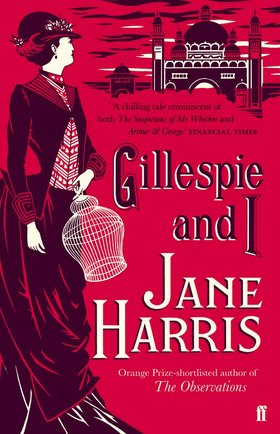 ‘Gillespie and I’ by Jane Harris tells the story of Harriet Baxter and her close friendship with the Gillespie family in Glasgow in the late 1880s while the International Exhibition was being held. However, when tragedy strikes the family, their relationship with Harriet quickly unravels and deep secrets are revealed. Harriet tells the story as she looks back on events whilst writing her memoirs in 1933 at the age of eighty but the story is not over as it soon becomes clear that a figure from Harriet’s past has re-emerged in her life.
I think the book’s real strength lies in Harriet’s biased narrative and the way in which Harris builds suspense and subtly manipulates the reader’s expectations and perceptions of the characters. The first 100 pages or so definitely lull you into a false sense of security because of the supposed innocence with which they are written. I love unreliable narrators and this one does not disappoint. Continue reading
Filed under Books
Books I Want To Re-Read
I hardly ever re-read books these days. There always seems to be something new to read. But there are some that I would like to re-read one day either to re-live nostalgia from my youth or because they confused me the first time round and I still haven’t made up my mind about what I think of them or because I read them a really long time ago and I want to see if I appreciate them more now…
Never Let Me Go: Kazuo Ishiguro
When my mum gave me this book to read, she said ‘This book freaked me out, you should read it.’ It freaked me out too but not so much that I would never touch it again – it’s a complex book full of complex ideas and characters. Continue reading
Filed under Books
Lord of the Flies by William Golding
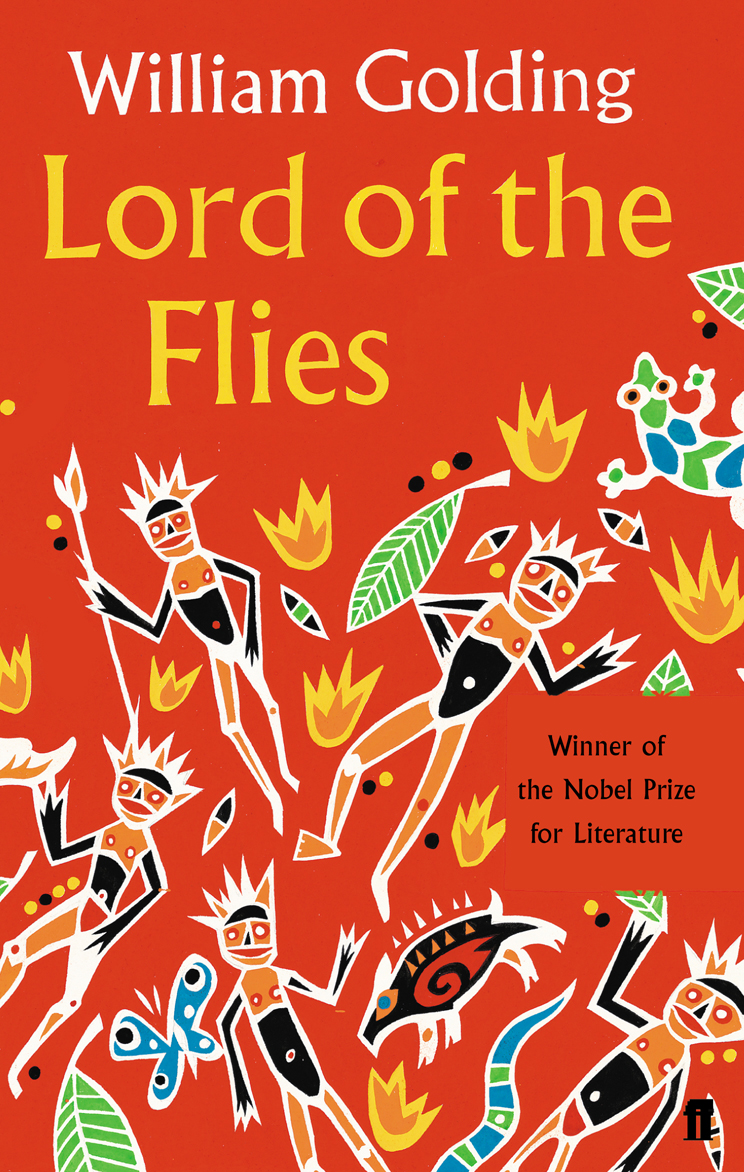 ‘Lord of the Flies’ by William Golding tells the story of a group of boys stranded on a remote island after a plane crash who attempt to organise themselves into some form of functioning civilised society while they wait to be rescued. Instead, they quickly descend into savagery with the novel posing key questions about the nature of leadership and rationality.
I’m quite glad I never had to study ‘Lord of the Flies’ at school as I reckon I would have hated it and probably wouldn’t have seen its relevance for today’s world. Continue reading
Filed under Books
A Clockwork Orange by Anthony Burgess
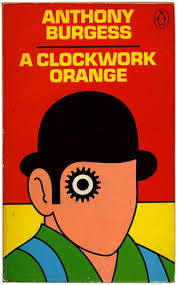 Disturbing, powerful and thought-provoking in equal measure, ‘A Clockwork Orange’ by Anthony Burgess tells the story of Alex, a 15 year old anti-hero in a dystopian future who carries out theft, rape and murder before ending up in prison where he is put through an experiment in an attempt to cure him. Anyone who has tried to read my Kindle over my shoulder on the train to work this week will probably have regretted it. The book is pretty brutal. Continue reading
Filed under Books
Brave New World by Aldous Huxley
‘Brave New World’ by Aldous Huxley is one of the most famous dystopian novels of all time. I’m generally not a fan of science-fiction but this book is undeniably a classic. Set in London hundreds of years in the future in which humans are conditioned in a caste system of Alphas, Betas, Gammas, Deltas and Epsilons, ‘Brave New World’ initially presents an ‘ideal’ World State to the reader. But below-average Alpha, Bernard Marx, believes there is something missing in this society where everybody is supposedly ‘happy’. The arrival of John ‘the Savage’ from outside the World State inevitably raises even more questions about just how ‘ideal’ this society really is. Continue reading
Filed under Books
1Q84 by Haruki Murakami
 Wow. What can I say? I loved it. All 925 pages of it. Haruki Murakami’s magnum opus is a crime thriller and a love story set in 1984 and a parallel world of 1Q84 (Q for question mark) with elements of magical realism. Told through Murakami’s characteristically surreal and dream-like prose, ‘1Q84’ is a spectacularly addictive read.
The thing about ‘1Q84’ that you can’t ignore is that it’s… well… very long. It’s certainly the longest novel I’ve ever read anyway. Before I started reading it, I found the sheer length of the book quite daunting given that it is unusual for me to take over a week to read a novel especially when I’m not working. But the way in which the stories of Aomame and Tengo gradually become more and more entwined through the mysterious religious cult of Sakigake in the parallel world of 1Q84 is highly absorbing. It was so brilliantly written that I still didn’t want it to end. Continue reading
Filed under Books
The Map and the Territory by Michel Houellebecq
It’s just as well that I don’t judge books by their covers because let’s face it, this cover of the hardback English language version of Michel Houellebecq’s ‘The Map and the Territory’ is pretty bad. Happily, the contents are more rewarding as the enfant terrible of modern French literature has produced his most innovative work yet. Perhaps more subtly provocative than his previous novels, ‘The Map and the Territory’ follows the story of Jed Martin, a French artist who discovers fame by taking photographs of Michelin maps and completing a series of portraits of people and their professions whilst dealing with personal crises such as his father’s illness. Houellebecq includes himself as a fictional character in the book working on the text of Martin’s exhibition guide and his comical self-caricature is one of the most amusing aspects of the novel. Continue reading
Comments Off on The Map and the Territory by Michel Houellebecq
Filed under Books
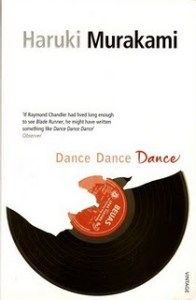
Dance Dance Dance by Haruki Murakami
 Last summer, I set myself the slightly insane task of reading two novels a week purely for pleasure, in other words, not related to my degree course. Originally, this ‘project’ was only meant to last for my sixteen week summer break and had been something I had been looking forward to for a long time as I had had only limited access to English language books when I was studying in Paris for a year (the time when I really should have started writing a blog). I expected that I wouldn’t be able to continue the pace during term time. However, nearly ten months later, possibly at the expense of getting a decent result in my degree, I am still managing to read two novels a week, having possibly borrowed more fiction from the university than the non-fiction I am supposed to be reading for my course. Some people ruin their degrees by drinking too many Jagerbombs at toga parties. I, however, may ruin my degree by spending too much of my time reading 653 page novels by Jonathan Franzen instead of journal articles about political analysis. And if my blogging word count starts getting higher than my project word count…well, that’s when I’ll know I have a bit of a problem. Continue reading



 A Little Blog of Books
You must be logged in to post a comment.