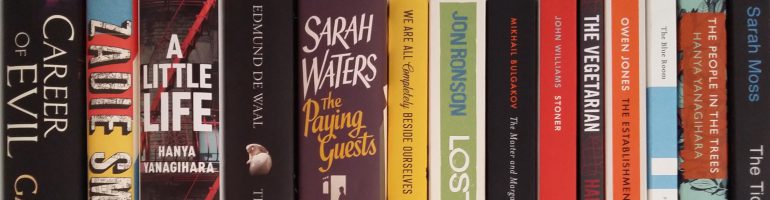
I have been reading more non-fiction than ever recently, moving away from the science and medical themed books I covered for the Wellcome Book Prize shortlist to memoirs about all things literary, specifically writing, libraries and children’s literature. Here are three titles I recommend to bookworms everywhere:
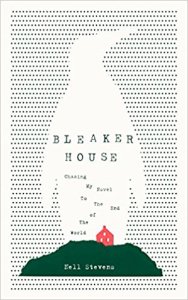 Bleaker House: Chasing My Novel to the End of the World by Nell Stevens is an account of her attempt to write a novel by living in the Falkland Islands for three months using funding from her Global Fellowship at the end of her creative writing course at Boston University. After arriving in Stanley where many of the 2,500 residents are based, she lived in self-imposed isolation on the uninhabited Bleaker Island for several weeks, believing that a total lack of distraction would be beneficial for her levels of creativity and productivity. For her stint on Bleaker Island, she had to pack all of her food supplies, restricting herself to just over 1,000 calories a day living mostly on instant porridge and Ferrero Rocher with just a copy of the film ‘Eat Pray Love’ on her laptop for company. Despite the unusual setting, Stevens’ experience of writing procrastination will resonate with anyone who has ever had an essay deadline to meet, even if her expectations and lack of preparation for some aspects of her trip are a tad infuriating in places. Extracts of her fiction are interspersed throughout and while these chapters are variable in quality and pad out what would otherwise be a very slim book, I think they are worth reading to get a sense of her creative output at the time. Overall, this is an interesting and often very funny account of a unique travel experience which proved to be inspiring for Stevens in the end, even if it wasn’t quite in the way she had initially bargained for. Continue reading
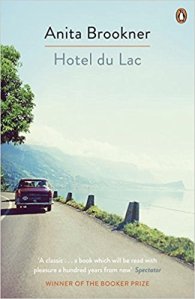 I haven’t read many of the early winners of the Booker Prize but ‘Hotel du Lac’ by Anita Brookner is one I have been meaning to read ahead of the
 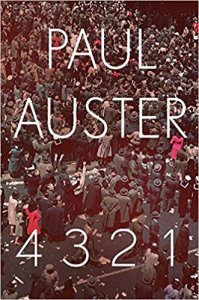 Shortlisted for the Man Booker Prize last year, ‘4 3 2 1’ by Paul Auster consists of four different versions of the life of Archibald Issac Ferguson, born in Newark, New Jersey in 1947 (the same year as Auster). Descended from Russian-Jewish immigrants, Archie is the only child of Rose and Stanley Ferguson and during his early childhood, random events change the path of his life splitting into four different trajectories – in one version his parents divorce, in another they stay together, in another Stanley dies, and so on. The parallel structure means that each of the seven parts is rewound three times before moving on to the next stage in Archie’s life covering his early childhood through to his coming-of-age in the late 1960s.
 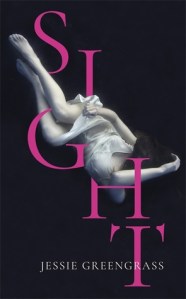 I haven’t yet finished shadowing this year’s Wellcome Book Prize shortlist but I have already come across a novel which has very strong potential to be on next year’s longlist of books which engage in some aspect of health, illness or medicine. I enjoyed reading Jessie Greengrass’s collection of short stories
  ‘Asymmetry’ by Lisa Halliday consists of two seemingly unrelated stories which are eventually revealed to have surprising connections. The first part, ‘Folly’, concerns Alice, an editorial assistant in her twenties living in post 9/11 New York City who begins a relationship with a much older man, a Jewish author named Ezra Blazer who has repeatedly been overlooked for a Nobel Prize for Literature. In the second part, ‘Madness’, an Iraqi-American economist, Amar Jaafari, is on his way to Kurdistan to visit his brother but is detained by immigration officials at Heathrow Airport.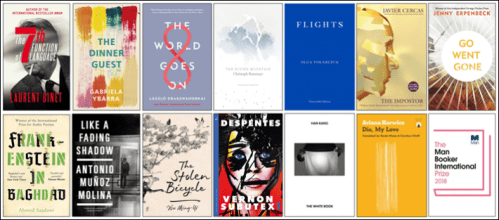
 Although I’m not participating in the shadow panel this year, I have been thinking about possible contenders for this year’s Man Booker International Prize longlist which is due to be announced tomorrow. My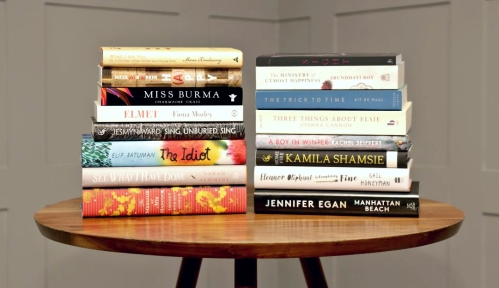
 The Women’s Prize for Fiction longlist is due to be announced on Thursday 8th March and I have been thinking about which books could make the cut. My
  2018 marks the 50th anniversary of the Man Booker Prize and the organisers have launched a one-off prize to celebrate the best of the winning novels to date.
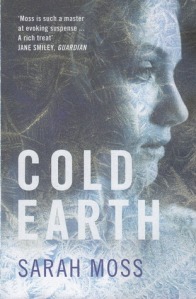 I have really enjoyed all of the books by Sarah Moss I have read to date and I recently read her 2009 debut novel ‘Cold Earth’. It follows a team of six archaeologists and academics who travel to western Greenland for a three week dig excavating the remains of a Viking settlement. They leave behind their homes in the United States and Europe just as a deadly flu-like virus has started to spread rapidly across the world. Archaeologists Catriona, Ben, Jim and Ruth are joined by team leader Yianni and his friend Nina, the only non-archaeologist in the group whose academic research is vaguely linked to Norse literature. However, Nina experiences night terrors and becomes convinced that the supernatural events are the result of ghosts disturbed by the group’s dig at their resting place.
 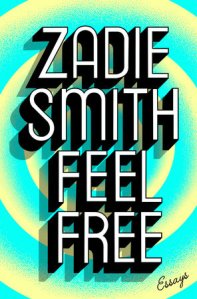 ‘Feel Free’ is a new collection of over thirty essays, reviews and interviews by Zadie Smith divided into five sections. The first and last of these, ‘In the World’ and ‘Feel Free’, cover current events and some autobiographical “life writing”, while ‘In the Audience’, ‘In the Gallery’ and ‘On the Bookshelf’ concern her musings on film, art and writing respectively.
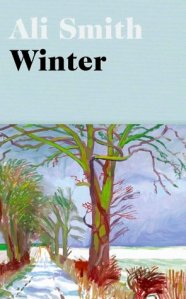 ‘Winter’ is the second volume in the seasons cycle of novels by Ali Smith. It is loosely set at a family gathering in which twenty-something Art (Arthur) visits his mother Sophia Cleves in Cornwall over Christmas. Art has recently been dumped by Charlotte and hires a Croatian-Canadian immigrant, Lux, to pretend to be his girlfriend. Meanwhile, Sophia has a frosty relationship with her subversive sister Iris who has a long history of political activism.
  Among non-fiction titles, 21 Lessons for the 21st Century by Yuval Noah Harari will be out in August as the historian turns his attention to issues in the present day following the success of
 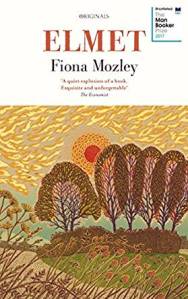 Last year’s Man Booker Prize longlist was largely dominated by established authors apart from the surprise inclusion of PhD student Fiona Mozley with her debut novel ‘Elmet’ which made the shortlist but lost out to
  Among new fiction titles,
  My first review of the year was of Kate Atkinson’s debut novel
 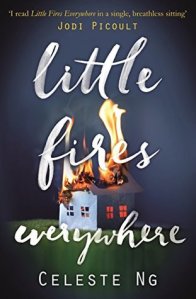 In the opening chapter of ‘Little Fires Everywhere’ by Celeste Ng, the Richardson family home in the affluent suburb of Shaker Heights near Cleveland, Ohio, is burning to the ground in a fire believed to have been started deliberately by their rebellious daughter, Izzy. The story looks back at the events which led to this catastrophe, ultimately beginning when the Richardsons’ tenant, Mia Warren, becomes a part-time housekeeper for the family and Mia’s fifteen-year-old daughter Pearl, befriends the Richardson teenage siblings Lexie, Trip, Moody and Izzy.
 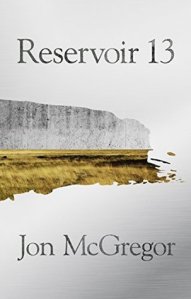 ‘Reservoir 13’ by Jon McGregor begins with the disappearance of Rebecca Shaw, a thirteen-year-old girl who goes missing while on holiday with her family in the Peak District in the early 2000s. In the years that pass following her disappearance, the various residents of the small rural village get on with their lives, but the mystery of what happened to Rebecca continues to have an impact on the tight-knit community.




You must be logged in to post a comment.