
I’ve been a bit out of the loop with translated fiction in the last few months as non-fiction seems to have taken over my reading recently and I am currently shadowing the Wellcome Book Prize. However, the Man Booker International Prize longlist was announced this week (to be known as the International Booker Prize when the Man Group sponsorship ends this year). The 13 titles are:
Celestial Bodies by Jokha Alharthi (Oman), translated from the Arabic by Marilyn Booth
Love in the New Millennium by Can Xue (China), translated from the Chinese by Annelise Finegan
The Years by Annie Ernaux (France), translated from the French by Alison Strayer
At Dusk by Hwang Sok-yong (South Korea), translated from the Korean by Sora Kim-Russell
Jokes for the Gunmen by Mazen Maarouf (Iceland and Palestine), translated from the Arabic by Jonathan Wright
Four Soldiers by Hubert Mingarelli (France), translated from the French by Sam Taylor
The Pine Islands by Marion Poschmann (Germany), translated from the German by Jen Calleja
Mouthful of Birds by Samanta Schweblin (Argentina and Italy), translated from the Spanish by Megan McDowell
The Faculty of Dreams by Sara Stridsberg (Sweden), translated from the Swedish by Deborah Bragan-Turner
Drive Your Plow Over the Bones of the Dead by Olga Tokarczuk (Poland), translated from the Polish by Antonia Lloyd-Jones
The Shape of the Ruins by Juan Gabriel Vásquez (Colombia), translated from the Spanish by Anne McLean
The Death of Murat Idrissi by Tommy Wieringa (Netherlands), translated from the Dutch by Sam Garrett
The Remainder by Alia Trabucco Zerán (Chile and Italy), translated from the Spanish by Sophie Hughes
 I imagine that the majority of the books submitted for consideration are non-fiction titles (they usually dominate the shortlists at any rate) but there are a fair number of novels which could also be in the running, even though the thematic criteria is more subjective. An obvious contender among fiction titles is
 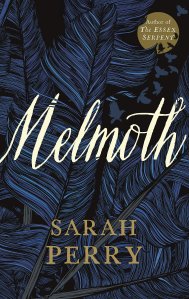 ‘Melmoth’ by Sarah Perry tells the story of Helen Franklin, a British woman in her forties working as a translator in Prague where she has lived for some twenty years in self-imposed exile. Her friend Karel has come into possession of the papers of fellow scholar Josef Hoffman who has recently been found dead in the National Library. Among the papers is a manuscript which tells of Melmoth the Witness, an obscure legend in which, according to superstition, Melmoth travels through the ages, persuading those wracked with guilt to wander alongside her on a journey of eternal damnation. Helen’s initial scepticism of the legend wanes when Karel disappears and she is forced to confront the reasons why she cannot forgive herself for the outcome of events in her own past.


 I will be taking a short break from blogging in December while I sort out moving to my new flat but I have been to two great book events this month to take my mind off some of the stress. Rebecca at
 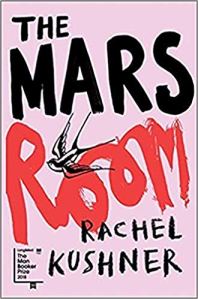 The winner of this year’s Man Booker Prize was announced last month. While ‘The Overstory’ by Richard Powers and ‘Washington Black’ by Esi Edugyan appeared to be the favourites to win among bloggers I follow, ‘Milkman’ by Anna Burns triumphed in the end. I’m undecided about whether or not to read it. There has been a lot of focus on the experimental prose style and the question of its “readability” with its unnamed characters and paragraphs without breaks. However, when chair of the judges Kwame Anthony Appiah said “I spend my time reading articles in the Journal of Philosophy so by my standards this is not too hard”, I wasn’t sure he really succeeded in selling it to a wider audience. On the other hand, it should be noted that the actual sales figures since Burns’ win tell a different story and it will be interesting to see how it is critically received in the long term. Do let me know what you think of ‘Milkman’
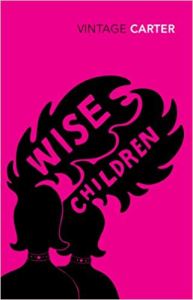 I went to see ‘Wise Children’ at the Old Vic theatre in Waterloo last week after Rebecca of
 ‘Normal People’ by Sally Rooney tells the story of teenagers Marianne Sheridan and Connell Waldron who go to school together in the small rural town of Carricklea in the west of Ireland and later move to Dublin to study at Trinity College in the early 2010s. Marianne is a loner from a well-off family while Connell is popular at school and their romance is kept secret from their classmates. However, Marianne finds friends easily among their privileged contemporaries at university whereas Connell feels alienated, and this sudden reversal in their social status complicates their relationship.
  Translated from the Japanese by Ginny Tapley Takemori, ‘Convenience Store Woman’ by Sayaka Murata tells the story of Keiko Furukura, a socially awkward woman in her mid-thirties who has been working at the Hiiromachi Station Smile Mart shop for the past eighteen years. She feels under pressure from others, particularly her family, to appear “normal” and meet society’s expectations, by which she must find a career with more prospects or get married and have children.
 I enjoyed reading
  I have recently read this year’s winner of the Man Booker International Prize ‘Flights’ by Olga Tokarczuk which was first published in Poland back in 2007 and has been translated by Jennifer Croft. I didn’t have time to shadow the MBIP last spring but as August is Women in Translation Month, this seemed like a good time to find out what to make of it. ‘Flights’ is about an unnamed woman and her reflections on travelling – and that’s about it as far as plot goes in this very fragmented book which can only be described as a “novel” in the loosest sense possible as it is more of a collection of thematically linked observations and vignettes.
  2018 marks the centenary of Muriel Spark’s birth and I have recently read her autobiography ‘Curriculum Vitae’ and one of her most famous novels ‘The Driver’s Seat’ which was first published in 1970. The main protagonist, Lise, is in her mid-thirties and is unhappy with her dead-end job. She hops on a plane to an unnamed southern European city looking for adventure and has a series of odd interactions with even odder people she meets along the way. Spark ingeniously drops a massive spoiler at the beginning of the third chapter in which it is casually stated that Lise “will be found tomorrow morning dead from multiple stab-wounds, her wrists bound with a silk scarf and her ankles bound with a man’s necktie, in the grounds of an empty villa, in a park of the foreign city to which she is travelling on the flight now boarding at Gate 14.” The narrative then continues as if this information had never been mentioned and the mystery of who the perpetrator is and how and why the murder occurs isn’t revealed until the final paragraphs.
 The Man Booker Prize longlist will be announced on Tuesday 24th July and the annual guessing game of “posh bingo” commences once again. When considering which books could make the cut, I
 The final part of Margaret Atwood’s MaddAddam trilogy brings together the bioengineered Crakers from
 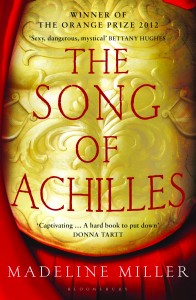 ‘The Song of Achilles’ by Madeline Miller is a modern retelling of ‘The Iliad’ and won the Women’s Prize (then Orange Prize) for Fiction in 2012. Whereas Homer’s epic was told from the perspective of demi-god Achilles as the warrior hero of ancient Greece, it is the exiled prince Patroclus who takes centre stage here, having been a minor character in the original. In Miller’s interpretation of events, Achilles and Patroclus are inseparable childhood friends who later become lovers, and when the time comes for Achilles to fulfil his destiny, Patroclus follows him to war with the Trojans.
  The Man Booker Prize is celebrating its 50th anniversary this year with a “best of the best”




You must be logged in to post a comment.