I have been reading two of the Baileys Women’s Prize for Fiction shortlisted books ahead of the announcement of the winner this Wednesday. I won a copy of ‘Stay With Me’ by Ayobami Adebayo via a competition on Twitter (thanks, Canongate!) and I recently bought a copy of ‘The Dark Circle’ by Linda Grant.
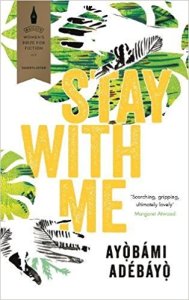 Set in Nigeria during a period of political turmoil in the 1980s, ‘Stay With Me’ tells the story of Yejide who is married to Akin and has struggled to get pregnant after four years of marriage. Akin’s family decide that he must marry a second wife, Funmi, to bear the children that Yejide is apparently unable to carry. After a long phantom pregnancy, she eventually does conceive but the spectre of sickle-cell disease looms over the family. Years later, Yejide is due to attend Akin’s father’s funeral where she must face further consequences of past events. Continue reading
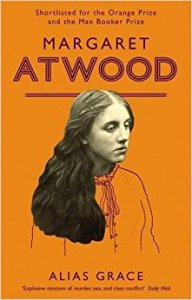 ‘Alias Grace’ by Margaret Atwood is based on the true story of Grace Marks, a servant convicted of the notorious double murder of her employer Thomas Kinnear and his housekeeper and mistress Nancy Montgomery alongside stable hand James McDermott in Toronto in 1843 when she was just sixteen years old. After they were caught attempting to escape from Canada to the United States, McDermott was hanged for the crime while Grace was sentenced to life imprisonment at Kingston Penitentiary in Ontario after her death sentence was commuted at the last minute. Despite confessing to the crime at the time, Grace still claims to have no memory of the murders fifteen years later. Her sanity is being investigated by American psychiatrist Dr. Simon Jordan at the invitation of a liberal minister who believes she is innocent.
 The Man Booker International Prize shadow panel’s scores are in and we can now announce our own shortlist of six books. They are:
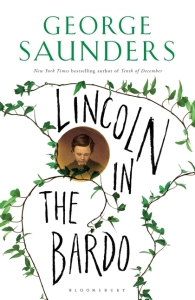 Told through a chorus of over 160 different voices, ‘Lincoln in the Bardo’ by George Saunders follows the aftermath of the death of Abraham Lincoln’s eleven-year-old son Willie in 1862 from typhoid fever during the American Civil War. Willie finds himself trapped between death and rebirth with other spirits in the cemetery who believe he should proceed to the next stage of the afterlife. However, Willie is resistant as he wants to spend more time with his distraught father who regularly visits the crypt to mourn his loss.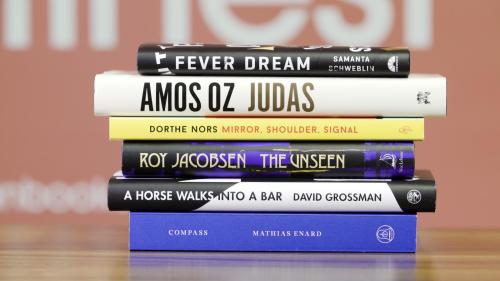
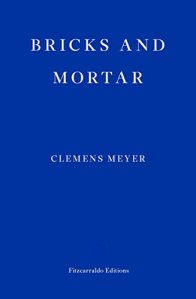 Bricks and Mortar by Clemens Meyer is the biggest of the big tomes on this year’s longlist and I have been reading it in between other books on the longlist over the last three weeks. For that reason, I’m not sure if I felt the full force of its power but as the book is so fragmented anyway, I don’t think I felt any more disorientated each time I picked it up again than I would have done if I had read it straight through without distractions. Translated from the German by Katy Derbyshire, it follows a variety of characters involved in the sex trade in an unnamed East German city from the end of the Cold War to the present day exploring the consequences of legalised prostitution, corruption, capitalism, and much much more. Each chapter explores a different character associated in some way with the industry and the chorus of unique voices effectively becomes a collection of interconnected short stories. At the centre of the story is Arnold Kraushaar and his rise “from football hooligan to large-scale landlord and service-provider for prostitutes”.
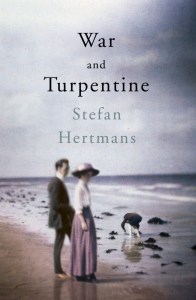 My Man Booker International Prize shadowing duties continue with two more reviews this week. First up is War and Turpentine by Stefan Hertmans which has been translated from the Dutch by David McKay. Hertmans inherited his grandfather’s diaries after his death in 1981 and eventually used these personal memoirs to create a compelling narrative of his life as an ironworker, soldier and amateur painter. Born in 1891, the first part of the book focuses on Urbain Martien’s childhood in Ghent in a working class family with his father Franciscus and mother Céline. Hertmans also inserts himself into this part of the story as he unravels his family history in the present day. The second part is a more conventional narrative of Urbain’s experiences in the trenches following the German invasion of Belgium. The final part recounts the post-war years during which Martien sought solace in painting and a secret at the heart of his marriage to Gabrielle is revealed.
 The shadow panel members have been busy reading the titles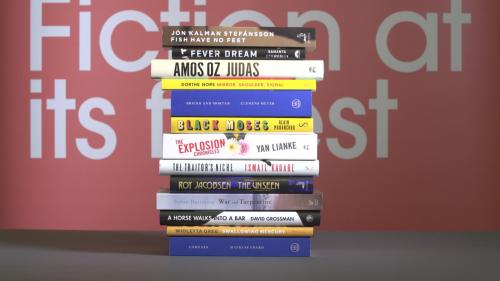


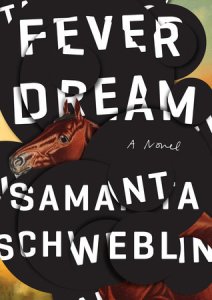 Translated from the Spanish by Megan McDowell, ‘Fever Dream’ by Samanta Schweblin tells the story of Amanda, a woman who is critically ill in a rural Argentinian hospital, where David is trying to get her to remember the events which led her there. She recalls encounters with her daughter Nina and David’s mother Carla who once told her how David’s soul was split in two in order to save him after he was poisoned. However, David is not quite the same afterwards, and neither are Amanda and Nina.
  Having had some success with my
 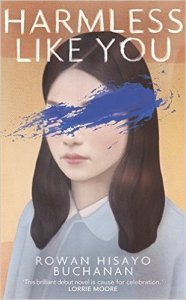 ‘Harmless Like You’ by Rowan Hisayo Buchanan tells the story of Yukiko Oyama, a teenager in New York in 1968 whose parents move back to Japan after emigrating to the United States when she was a child. She decides to stay in New York with her friend Odile to pursue her dream of becoming an artist. Many years later, her son Jay, who has recently become a father himself, travels to Berlin to find his estranged mother and inform Yuki that his father has died and has left the house to her in his will. The journey also leads Jay to discover why Yuki abandoned him suddenly when he was just two years old.
  Winner of the Orange Prize for Fiction in 2002, ‘Bel Canto’ by Ann Patchett is set during a birthday party for Japanese businessman Katsumi Hosokawa held in his honour at the vice-president’s mansion in an unnamed South American country. While entertainment is provided by renowned American opera singer Roxane Coss, the property is suddenly stormed by terrorists who had originally planned to kidnap the president. However, in his absence, they end up holding dozens of guests under house arrest for several months.
 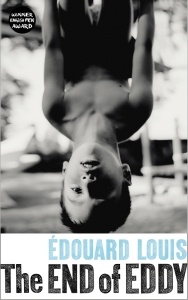 ‘The End of Eddy’ by Édouard Louis is a semi-autobiographical novel set in a deprived rural community in Picardy in northern France. Translated by Michael Lucey, it is a coming of age tale about Eddy Bellegueule (the author’s real name) and his life at home and at school in the late 1990s and 2000s. Eddy is gay and struggles to conform to what is widely perceived to be an acceptable type of masculinity in the small village where he is expected to go to work in the factory as soon as he leaves school. His mannerisms are routinely mocked by his peers and his family, particularly his father who even chose Eddy’s name because it sounds American and more “tough guy”. ‘The End of Eddy’ garnered lots of attention in France because Louis published his debut novel in 2014 when he was just 21 years old. However, aside from Louis’s young age and the unflinching descriptions of Eddy exploring his sexuality, ‘The End of Eddy’ also deserves acclaim more generally for articulating the reality of social exclusion in modern-day France so convincingly. Many thanks to Harvill Secker for sending me a review copy via NetGalley.
 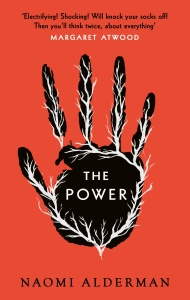 One of the books which kept cropping up frequently in lots of end-of-year book lists last month was ‘The Power’ by Naomi Alderman and so it got bumped up my TBR list as one of my not-very-festive Christmas holiday reads. The main concept of Alderman’s fourth novel explores what would or could happen in a world where women become more powerful than men in every sense. Due to a mutation caused by a nerve agent used during the Second World War, teenage girls develop the ability to release electrical jolts through their fingertips which can be either harmless or strong enough to kill people. The “power” eventually spreads and although it is initially used by women as a deterrent against violent and abusive men who have oppressed them, it has far-reaching implications beyond that.
  The early months of the year tend to be when lots of debut novels are plugged heavily by publishers. The Nix by Nathan Hill has been a big success in the United States drawing comparisons with everyone from Jeffrey Eugenides to David Foster Wallace and is out this month in the UK. See What I Have Done by Sarah Schmidt is another high-profile debut due in May billed as a historical murder mystery while Lincoln in the Bardo by George Saunders is the long-awaited first novel from the prolific short story writer and is a fictional re-imagining of events following the death of Abraham Lincoln’s son Willie.




You must be logged in to post a comment.