 Although Ian McEwan has tackled a vast range of subject matters in his literary fiction, many of his books fall into specific categories or share distinct themes. There are the early macabre works like ‘The Cement Garden’, the espionage stories such as ‘The Innocent’ or Sweet Tooth, the state-of-the-nation novels like ‘Saturday’ or The Children Act and then there are the books like ‘Nutshell’ which somehow fall into all of these categories. Nutshell’ is a unique interpretation of William Shakespeare’s ‘Hamlet’ from the point of view of an unnamed foetus who overhears a murder plot hatched by his mother Trudy and her lover Claude to kill John, who is Trudy’s husband and Claude’s brother, and cash in on the value of their marital home.
Continue reading
Tag Archives: Literature
Nutshell by Ian McEwan
Filed under Books
The Year of the Flood by Margaret Atwood
 I really enjoyed Oryx and Crake by Margaret Atwood a couple of years ago and have finally got round to reading the second book in her acclaimed MaddAddam trilogy ‘The Year of the Flood’. Set in the same universe as ‘Oryx and Crake’, ‘The Year of the Flood’ follows a lower class eco-religious cult known as the God’s Gardeners and their alternative perspective of the same apocalypse. Only two women from the community, Toby and Ren, survive the catastrophe which was predicted years earlier by the Gardeners who coined it the Waterless Flood. Continue reading
Filed under Books
Autumn by Ali Smith
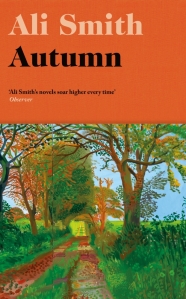 ‘Autumn’ is the first of four books in a planned series of novels by Ali Smith named after the seasons and which focus on how we experience time. Set during the fallout of the Brexit referendum result in 2016, it follows the friendship between Elisabeth Demand, a thirty-two-year-old history of art lecturer and her eccentric 101-year-old former next-door neighbour Daniel Gluck who is spending his dying days in an assisted care facility. Continue reading
Filed under Books
Swing Time by Zadie Smith
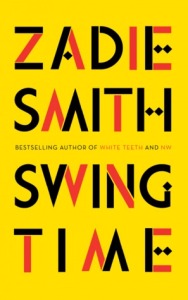 ‘Swing Time’ by Zadie Smith tells the story of two mixed-race girls, an unnamed narrator and her friendship with Tracey who grow up together on neighbouring council estates in north-west London in the 1980s. From Fred Astaire to Michael Jackson, music and dance dominate their lives but it is only Tracey who has the real talent to pursue a career as a dancer. The narrator goes to university and works as a personal assistant for mononymous international pop star Aimee who decides to set up a school for girls in west Africa. The story alternates between the past and present and even though the girls spend a considerable time apart in later years, Tracey’s influence can always be felt. Continue reading
Filed under Books
Life: A User’s Manual by Georges Perec
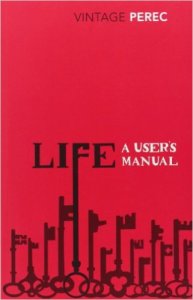 I first came across Georges Perec’s work at university through his first novel ‘Things: A Story of the Sixties’ which was by far the most interesting book I had to read for one of my French literature modules focusing on consumerism. I’ve had ‘Life: A User’s Manual’ on my TBR list ever since which is probably Perec’s best known novel published in 1978 and translated from the French by David Bellos in 1987. Continue reading
Filed under Books
Do Not Say We Have Nothing by Madeleine Thien
 Shortlisted for this year’s Man Booker Prize, ‘Do Not Say We Have Nothing’ by Madeleine Thien is a multi-generational saga of two families set against the backdrop of key events in 20th century Chinese history, from the Great Leap Forward and the Cultural Revolution to the Tiananmen Square protests in 1989. In Vancouver in the early 1990s, Chinese refugee Ai-ming comes to stay with Marie whose father Jiang Kai committed suicide in 1989 when she was ten years old. Kai, a talented concert pianist, knew Ai-ming’s father Sparrow, an equally gifted composer, when they studied music in the 1960s at the Shanghai Conservatory of Music with Sparrow’s cousin Zhuli, a violin prodigy. Through fragments from a series of notebooks and diaries, Marie searches for answers about her father and his life in China during a turbulent period of the country’s history. Continue reading
Filed under Books
On Anonymity, Identity and Elena Ferrante
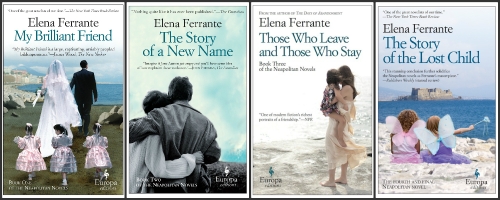
There are many reasons why authors may choose to publish their work anonymously or pseudonymously. Historically, this has primarily been due to the threat of persecution or prosecution if the material produced was controversial and/or illegal. More recently, however, it has often stemmed from the author’s desire to simply let the words speak for themselves. Continue reading
Filed under Books
Vinegar Girl and Dinner at the Homesick Restaurant by Anne Tyler
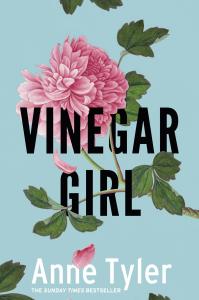 ‘Vinegar Girl’ by Anne Tyler is part of the Hogarth Shakespeare series – a project which involves today’s bestselling novelists retelling William Shakespeare’s best known plays. In this modern interpretation of the comedy ‘The Taming of the Shrew’, Kate Battista is a single twenty-nine-year-old nursery teacher living with her absent-minded academic father Louis and her fifteen-year-old sister Bunny. Her father hatches a plan to marry Kate off to his socially awkward eastern European lab assistant Pyotr so he can stay in the United States after his Visa expires. Continue reading
Filed under Books
Chiswick Book Festival 2016
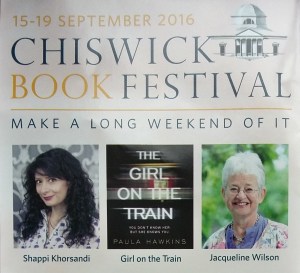
I have been to a number of individual literary events in London over the last few years but until this weekend, I had never been to one of the many book festivals held in the capital each year. Now in its eighth year, Chiswick Book Festival in west London runs from Thursday 15th – Monday 19th September with talks from a wide variety of authors and other speakers. Armed with an all-day pass, I went to four events at St Michael and All Angels Church and the Tabard Theatre yesterday.
Filed under Books
The Tidal Zone by Sarah Moss
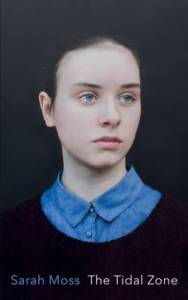 ‘The Tidal Zone’ by Sarah Moss tells the story of Adam Goldschmidt, a stay-at-home dad and part-time academic, married to overworked GP Emma. Their eldest daughter fifteen-year-old Miriam suddenly collapses on a school playing field and nearly dies after going into anaphylactic cardiac arrest. In the aftermath of the incident, the family must find a way to move on and return to some form of normality whilst coming to terms with the possibility that Miriam’s condition could be genetic and may happen again at any time. Continue reading
Filed under Books
Serious Sweet by A. L. Kennedy
 Longlisted for this year’s Man Booker Prize, ‘Serious Sweet’ by A. L. Kennedy is set over the course of twenty-four hours in London in 2014, following a day in the lives of 45-year-old recovering alcoholic Meg Williams and 59-year-old divorced senior civil servant Jon Sigurdsson. At first, the characters appear to lead seemingly separate lives but it is gradually revealed that their paths have already crossed before. The day revolves around the pair attempting to meet and whether they are able to move on from the traumatic events which have shaped their lives. Continue reading
Filed under Books
How Blogging Has Changed My Reading Habits
1. I read more books than I used to. This must be something that pretty much every book blogger can identify with. Even though blogging itself takes up a lot of time, it’s pretty hard not to start reading more when following other blogs leads to so many new sources of book recommendations. However, I also know my limits and reading during my commute to work and sticking consistently to one or two blog posts a week feels achievable and has helped me avoid both reading and blogging burnout.
2. I read more new books than I used to. This is partly a consequence of receiving review copies from publishers but following other bloggers with similar reading tastes and literary award longlists means I often seek out copies of newly published books from other sources too.
3. My reading tastes have diversified a lot in terms of genre. As well as newer books, I have been reading more non-fiction and translated fiction and I don’t think I would have made so many new discoveries if I didn’t run a blog.

Filed under Books
This Must Be The Place by Maggie O’Farrell
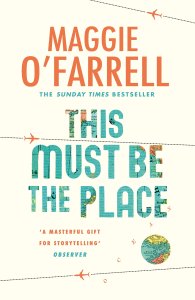 ‘This Must Be The Place’ by Maggie O’Farrell tells the story of Daniel Sullivan, an American linguistics professor living in a remote farmhouse in Donegal with his reclusive ex-film star wife Claudette, their two children and Claudette’s son from a previous relationship. When Daniel learns that an ex-girlfriend died shortly after they split up in the 1980s, he sets out to discover what happened to her all those years ago, even if it risks destroying his struggling marriage. Continue reading
Filed under Books
The People in the Trees by Hanya Yanagihara
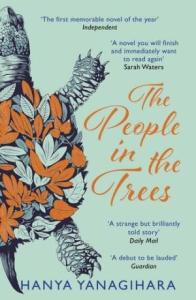 ‘The People in the Trees’ by Hanya Yanagihara tells the story of Norton Perina, a graduate of Harvard Medical School who accompanies Paul Tallent on an anthropological expedition to Ivu’ivu, a remote Micronesian island. During their travels in the 1950s, they come across a native tribe known as the Dreamers, a group of islanders who are well over a hundred years old after consuming the meat of a sacred turtle. The discovery and subsequent experiments win Norton a Nobel Prize but they also have serious consequences for the island and its inhabitants. Continue reading
Filed under Books
The Man Booker Prize Longlist 2016
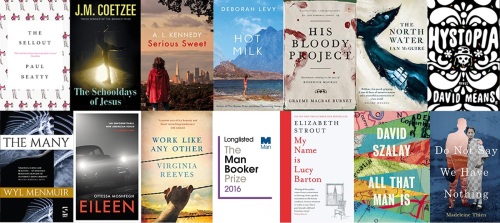
The longlist for the Man Booker Prize 2016 was announced today. The thirteen books are:
Filed under Books
The Man Booker Prize 2016 Longlist: Predictions, Possibilities and Preferences
 Although I have been following several major literary awards for the past few years, I have never written a blog post specifically outlining my predictions for the Man Booker Prize… until now. Famously dubbed “posh bingo” by 2011 winner Julian Barnes, predicting which 12 or 13 titles will be on the longlist has always been notoriously difficult. Until 2014, the Prize was previously only open to authors from Commonwealth countries but the eligibility criteria have since been extended to allow any work of fiction written in English and published in the United Kingdom to be entered for the Prize. This only makes the annual guessing game even more challenging.
Filed under Books
The God of Small Things by Arundhati Roy
 Winner of the Booker Prize in 1997, ‘The God of Small Things’ by Arundhati Roy tells the story of twins Esthappen and Rahel and their extended family living in Ayemenem House in Kerala, southern India including their mother Ammu, their uncle Chacko, grandmother Mammachi, great aunt Baby Kochamma and Chacko’s daughter Sophie Mol. The plot focuses on multiple family tragedies, the most significant of which are the mystery surrounding the death of Sophie Mol and the family’s disapproval of Ammu’s lover Velutha because he is an Untouchable. Continue reading
Filed under Books
Bodies of Light and Signs for Lost Children by Sarah Moss
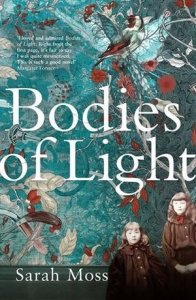 I really enjoyed reading Night Waking by Sarah Moss which told the story of Dr Anna Bennett, an academic living on the Scottish island of Colsay with her husband and young children, who sets out to uncover the mystery behind how the bones of an infant came to be buried in her garden. Her narrative is interspersed with letters written by May Moberley, a maternity nurse sent to the island to investigate the high infant mortality rate during the 1870s. ‘Bodies of Light’ is a very loose sequel which picks up the historical strand of the story focusing on other members of the Moberley family living in Manchester during the 1860s and 1870s. The novel is a coming-of-age tale of May’s older sister Ally who becomes one the first female students to read medicine in London. However, while their mother Elizabeth is a progressive social campaigner devoted to helping the destitute in the slums of Manchester, she is also a deeply repressed woman who offers no warmth at all towards her husband Alfred or her daughters. Continue reading
Filed under Books
The Special Relationship Between American and British English in Modern Fiction
Howdy, do you speak American? Or do you prefer conversing in Estuary English with some Cockney rhyming slang thrown in? The Irish playwright George Bernard Shaw once observed that “England and America are two countries separated by the same language”. If the modern publishing industry is anything to go by, then this sentiment certainly applies to the large numbers of books edited in both British and American English.

Book marketing and editing often reflects the assumption that British and American readers have different tastes. One of the most famous examples of a book being edited specifically for an American audience is ‘Harry Potter and the Philosopher’s Stone’ by J. K. Rowling which was published as ‘Harry Potter and the Sorcerer’s Stone’ in the United States to be “more suggestive of magic” than its original title. Numerous other words in the main text were also changed so that Harry and his Hogwarts chums (sorry, friends) ate candy rather than sweets, studied for their exams instead of revising for them and went on vacation rather than holiday. Continue reading
Filed under Books
The Man Booker International Prize Winner 2016
 It has just been announced that the first winner of this year’s reconfigured Man Booker International Prize is The Vegetarian by Han Kang translated from the Korean by Deborah Smith. A very well deserved win for one of the most startlingly original and surreal works of translated fiction I’ve read this year. Many congratulations to them both!
Myself and my fellow shadow panel members also voted for our winner last week from our own shortlist consisting of Ferrante, Lianke, NDiaye, Oe, Kang and de Kerangal. It was a close run thing between ‘The Vegetarian’ and Death by Water by Kenzaburo Oe in the run-off vote but ‘The Vegetarian’ also came out top in the end, meaning that we are in agreement with the real judging panel for the second year in a row (last year, we selected The End of Days by Jenny Erpenbeck as our winner for the now-defunct Independent Foreign Fiction Prize). While ‘Death by Water’ had its devoted fans amongst our group, ‘The Vegetarian’ had wider support in both the longlist and shortlist stages and also featured in many of our early prediction lists before the longlist was even announced. Continue reading
Filed under Books



 A Little Blog of Books
You must be logged in to post a comment.