
I’ve been a bit out of the loop with translated fiction in the last few months as non-fiction seems to have taken over my reading recently and I am currently shadowing the Wellcome Book Prize. However, the Man Booker International Prize longlist was announced this week (to be known as the International Booker Prize when the Man Group sponsorship ends this year). The 13 titles are:
Celestial Bodies by Jokha Alharthi (Oman), translated from the Arabic by Marilyn Booth
Love in the New Millennium by Can Xue (China), translated from the Chinese by Annelise Finegan
The Years by Annie Ernaux (France), translated from the French by Alison Strayer
At Dusk by Hwang Sok-yong (South Korea), translated from the Korean by Sora Kim-Russell
Jokes for the Gunmen by Mazen Maarouf (Iceland and Palestine), translated from the Arabic by Jonathan Wright
Four Soldiers by Hubert Mingarelli (France), translated from the French by Sam Taylor
The Pine Islands by Marion Poschmann (Germany), translated from the German by Jen Calleja
Mouthful of Birds by Samanta Schweblin (Argentina and Italy), translated from the Spanish by Megan McDowell
The Faculty of Dreams by Sara Stridsberg (Sweden), translated from the Swedish by Deborah Bragan-Turner
Drive Your Plow Over the Bones of the Dead by Olga Tokarczuk (Poland), translated from the Polish by Antonia Lloyd-Jones
The Shape of the Ruins by Juan Gabriel Vásquez (Colombia), translated from the Spanish by Anne McLean
The Death of Murat Idrissi by Tommy Wieringa (Netherlands), translated from the Dutch by Sam Garrett
The Remainder by Alia Trabucco Zerán (Chile and Italy), translated from the Spanish by Sophie Hughes
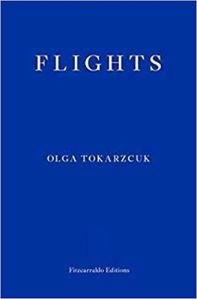 I have recently read this year’s winner of the Man Booker International Prize ‘Flights’ by Olga Tokarczuk which was first published in Poland back in 2007 and has been translated by Jennifer Croft. I didn’t have time to shadow the MBIP last spring but as August is Women in Translation Month, this seemed like a good time to find out what to make of it. ‘Flights’ is about an unnamed woman and her reflections on travelling – and that’s about it as far as plot goes in this very fragmented book which can only be described as a “novel” in the loosest sense possible as it is more of a collection of thematically linked observations and vignettes.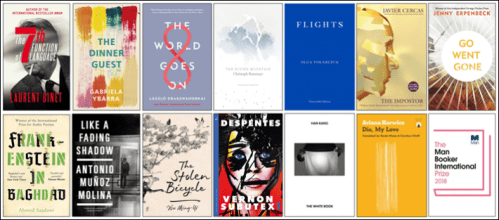
 Although I’m not participating in the shadow panel this year, I have been thinking about possible contenders for this year’s Man Booker International Prize longlist which is due to be announced tomorrow. My
 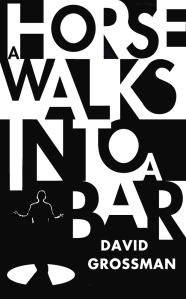 The official winner of the Man Booker International Prize was announced last night with
  The Man Booker International Prize shadow panel’s scores are in and we can now announce our own shortlist of six books. They are: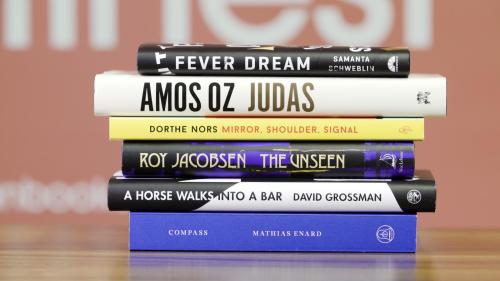
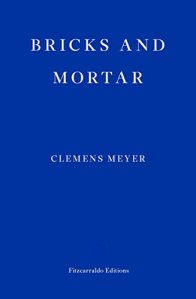 Bricks and Mortar by Clemens Meyer is the biggest of the big tomes on this year’s longlist and I have been reading it in between other books on the longlist over the last three weeks. For that reason, I’m not sure if I felt the full force of its power but as the book is so fragmented anyway, I don’t think I felt any more disorientated each time I picked it up again than I would have done if I had read it straight through without distractions. Translated from the German by Katy Derbyshire, it follows a variety of characters involved in the sex trade in an unnamed East German city from the end of the Cold War to the present day exploring the consequences of legalised prostitution, corruption, capitalism, and much much more. Each chapter explores a different character associated in some way with the industry and the chorus of unique voices effectively becomes a collection of interconnected short stories. At the centre of the story is Arnold Kraushaar and his rise “from football hooligan to large-scale landlord and service-provider for prostitutes”.
 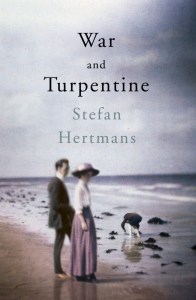 My Man Booker International Prize shadowing duties continue with two more reviews this week. First up is War and Turpentine by Stefan Hertmans which has been translated from the Dutch by David McKay. Hertmans inherited his grandfather’s diaries after his death in 1981 and eventually used these personal memoirs to create a compelling narrative of his life as an ironworker, soldier and amateur painter. Born in 1891, the first part of the book focuses on Urbain Martien’s childhood in Ghent in a working class family with his father Franciscus and mother Céline. Hertmans also inserts himself into this part of the story as he unravels his family history in the present day. The second part is a more conventional narrative of Urbain’s experiences in the trenches following the German invasion of Belgium. The final part recounts the post-war years during which Martien sought solace in painting and a secret at the heart of his marriage to Gabrielle is revealed.
 The shadow panel members have been busy reading the titles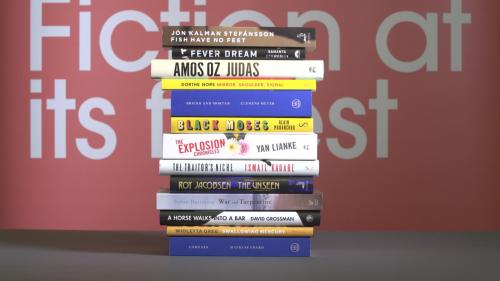

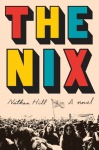 The early months of the year tend to be when lots of debut novels are plugged heavily by publishers. The Nix by Nathan Hill has been a big success in the United States drawing comparisons with everyone from Jeffrey Eugenides to David Foster Wallace and is out this month in the UK. See What I Have Done by Sarah Schmidt is another high-profile debut due in May billed as a historical murder mystery while Lincoln in the Bardo by George Saunders is the long-awaited first novel from the prolific short story writer and is a fictional re-imagining of events following the death of Abraham Lincoln’s son Willie.
  It has just been announced that the first winner of this year’s reconfigured Man Booker International Prize is
  A Whole Life by Robert Seethaler translated from the German by Charlotte Collins has been shortlisted for the Prize and deservedly so. Even though it didn’t make it on to the shadow panel list, this book is one of my personal favourites and I would be very happy if it won the overall prize. It tells the story of Andreas Egger, a solitary man who lives in a remote mountain village in Austria during the twentieth century. The tone is very similar to that of
 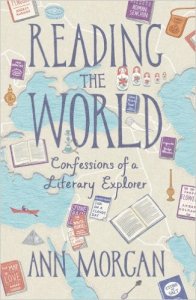 ‘Reading the World: Confessions of a Literary Explorer’ (also published under the title ‘The World Between Two Covers’ in the United States) is Ann Morgan’s account of how she read a book from every country in the world after realising that her literary diet mostly consisted of British and American authors. Rather than cobbling together Morgan’s reviews of the 197 books she read in 2012 which are already available for free on her excellent blog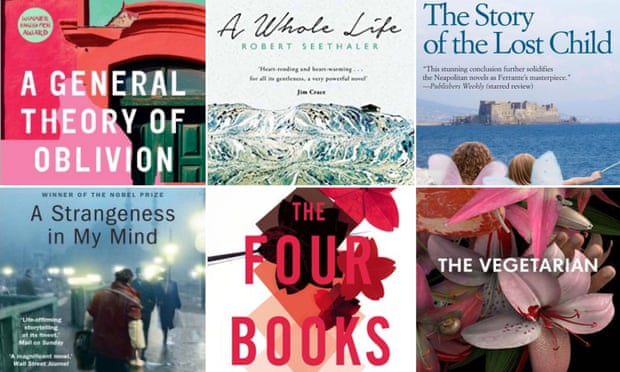
 Translated from the Japanese by Deborah Boliver Boehm, ‘Death by Water’ by Kenzaburo Oe tells the story of Kogito Choko, an author aged in his 70s reflecting on his long career. For many years, he has struggled to write the “drowning” novel based on his father’s death shortly after the Second World War. Kogito returns to his rural home town to look at his father’s red leather trunk which his mother had instructed him not to open until ten years had passed after her death. However, it soon transpires that the contents of the trunk do not provide him with many answers, leaving Kogito limited time to unlock the secrets he needs to finish his book.
 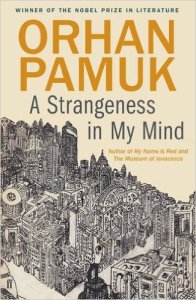 Translated from the Turkish by Ekin Oklap, ‘A Strangeness in My Mind’ by Orhan Pamuk tells the story of Mevlut Karata, a yoghurt and boza seller who lives in Istanbul. Melvut arrives in the city at the age of twelve in the late 1960s with his father from a poor village in Anatolia. He later elopes and marries Rayiha despite a case of mistaken identity in which he believed his love letters were being delivered to her sister. Over the course of four decades, he observes the political upheavals in the city and also experiences many personal challenges.




 A Little Blog of Books
You must be logged in to post a comment.