As well as all the books I missed in 2015 and want to catch up on, there are lots of new books to look forward to in 2016. Here is a selection I will be keeping my eye out for this year:
FICTION
I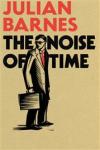 ‘m looking forward to reading The Noise of Time by Julian Barnes, an author who can always be relied upon to write about something completely different every time he publishes a new book. His latest novel, his first since The Sense of an Ending which won the Man Booker Prize in 2011, is based on the life of Dmitri Shostakovich.
The Muse by Jessie Burton will be out in the summer. I thought The Miniaturist was an enjoyable piece of historical literary fiction but a bit on the light side whereas her second novel looks like it’s going to be more ambitious in terms of content. Set in 1930s Spain and 1960s London, it tells the story of a painting which connects a Caribbean migrant and a bohemian artist.
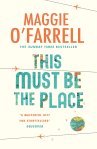 This Must Be The Place by Maggie O’Farrell will be published in May. I’ve enjoyed all of her novels, particularly The Hand That First Held Mine and I’m looking forward to her seventh novel about an American professor living in Ireland who has a secret which threatens to destroy his idyllic life in the countryside.
‘After Me Comes the Flood’ is a 50p charity shop bargain I haven’t read yet but I’m hoping to read both that as well as The Essex Serpent by Sarah Perry this year. Her second novel is set in Victorian London and Essex and tells the story of a unique relationship between a widow and a vicar. Continue reading →
Filed under Books
Tagged as 2016, Book, Emma Cline, Fiction, Han Kang, Julian Barnes, Literature, New Books, Non fiction, Novels, Publishing, Reading, Translated Fiction, Translation

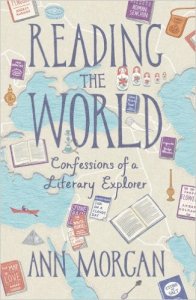 ‘Reading the World: Confessions of a Literary Explorer’ (also published under the title ‘The World Between Two Covers’ in the United States) is Ann Morgan’s account of how she read a book from every country in the world after realising that her literary diet mostly consisted of British and American authors. Rather than cobbling together Morgan’s reviews of the 197 books she read in 2012 which are already available for free on her excellent blog
 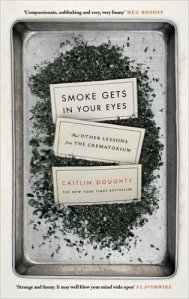 Smoke Gets in Your Eyes and Other Lessons from the Crematorium by Caitlin Doughty is an informative and thought-provoking memoir about the death industry written by a mortician seeking to demystify a taboo topic feared by almost everyone. Stories of burial practices, death rituals and cultural attitudes from around the world and throughout history are interwoven with Doughty’s personal experiences including the circumstances which led her to start working at Westwind Crematorium in San Francisco nearly a decade ago at the age of 23. Doughty’s sense of humour is appropriately dark without being disrespectful as she recounts some of her more memorable experiences at the crematorium and challenges readers to confront their own mortality. As much about life as it is about death, ‘Smoke Gets in Your Eyes’ is a fascinating look at a widely misunderstood career choice, although not a book I would recommend to the very squeamish or recently bereaved.
 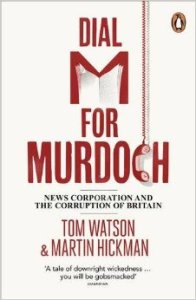 ‘Dial M for Murdoch: News Corporation and the Corruption of Britain’ by Tom Watson and Martin Hickman explores the background of the phone hacking scandal which engulfed Rupert Murdoch’s media empire News International. It was revealed in 2011 that messages on a mobile phone belonging to murdered teenager Milly Dowler had been hacked by journalists working for the News of the World, a former tabloid newspaper. The organisation initially used a “rogue reporter” defence but further evidence exposed how the practice had been carried out extensively for several years under the watch of several senior editors. This subsequently led to a complex investigation and public inquiry which implicated politicians and the police as much as the press.
 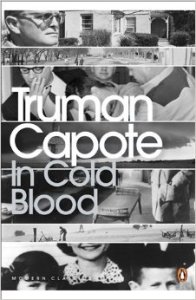 ‘In Cold Blood: A True Account of a Multiple Murder and Its Consequences’ by Truman Capote outlines the investigation into the murders of farmer Herb Clutter, his wife Bonnie and two of their teenage children at their home in Kansas in November 1959. After reading a short news article in the New York Times about the killings, Capote travelled to the small town of Holcomb with his friend, Harper Lee, where he undertook extensive research and interviewed hundreds of people who lived in the area or were involved in the case including the chief investigator, Alvin Dewey, and eventually the murderers themselves.
  The subtitle of Gavin Francis’ travel memoir would be a reasonably concise answer to the question: “What comes to mind when you think of Antarctica?”. While ice and emperor penguins are the more obvious responses to be expected from those who have never been there, it is the silence of such a remote landscape which Francis dwells on in his account of the fourteen months he spent as the base-camp doctor at the British Antarctic Survey’s Halley research station on the Caird Coast. What becomes clear from reading ‘Empire Antarctica’ is that claustrophobia and isolation are also major factors, although that would have made a much less satisfying book title.
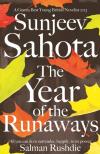
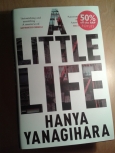
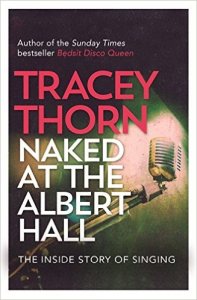 A couple of years ago, I really enjoyed reading Tracey Thorn’s memoir
  Whatever You Love by Louise Doughty
 ‘Dead Babies and Seaside Towns’ is Alice Jolly’s memoir about her attempts to have a second child. When her first son Thomas is two years old, Jolly falls pregnant again but a scan reveals that the placenta has become partly detached. Her daughter, Laura, was stillborn in 2005, twenty-four weeks into the pregnancy. After several miscarriages, rounds of IVF treatment and failed attempts to adopt, Jolly had a daughter named Hope born in 2011 to a surrogate mother in Minnesota using a donor egg.
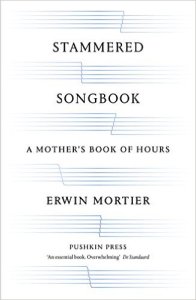 I’ve been reading more non-fiction and more translated fiction this year but not very much translated non-fiction. After reading Flemish author Erwin’ Mortier’s ‘
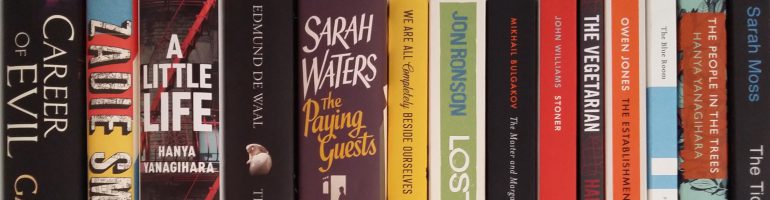
 ‘The Hare with Amber Eyes: A Hidden Inheritance’ is Edmund de Waal’s highly acclaimed memoir tracing his family history through a collection of objects. In the early 1990s, De Waal studied ceramics in Tokyo as part of a two-year scholarship where he met his great-uncle Ignace (Iggie). Following Iggie’s partner’s death, de Waal inherited 264 Japanese miniature wood and ivory carvings known as netsuke often representing animals, people or mythical creatures. Traditionally used as toggles to attach carrying pouches to Japanese robes, netsuke were originally designed to be useful everyday objects rather than purely decorative ones. De Waal became intrigued by the story behind the collection and how it came to be passed down through the generations of his family across the world.




 A Little Blog of Books
You must be logged in to post a comment.