‘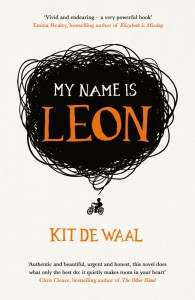 My Name is Leon’ by Kit de Waal is a story about two young children, mixed race eight-year-old Leon and his white half-brother Jake, who are taken into care in the early 1980s after their mother Carol develops serious mental health issues. While Jake is quickly adopted by another family, Leon stays behind with experienced foster carer Maureen and struggles to cope with being separated from his baby brother. When Maureen becomes unwell, he is taken in by her sister Sylvia and starts spending time with Tufty at the allotment but remains determined to find a way to be reunited with Jake and Carol. Continue reading
Tag Archives: Reading
My Name is Leon by Kit de Waal
Filed under Books
The Appearance of Murder by John Nightingale
 I was intrigued by Professor John Sutherland’s recommendation of ‘The Appearance of Murder’ by John Nightingale in his books of the year round-up in The Times last Christmas in which he described it as “the most teasingly pleasurable crime mystery novel I’ve come across this year”. It tells the story of crime fiction author David Knight who is trying to finish his latest novel but gets caught up in a mystery from his own past. A young woman named Perdita unexpectedly turns up at his house with an old photograph of five Cambridge undergraduates including David himself and a musician named Mark Ryland who died in mysterious circumstances. She believes that one of the five men in the picture is her father but doesn’t know which one. However, following an accident during a hockey game twenty-five years ago, David’s memory of that particular period of his life is decidedly sketchy, which somewhat restricts his ability to unravel the mystery of what happened to his university contemporaries all those years ago. Continue reading
Filed under Books
Chiswick Book Festival 2016
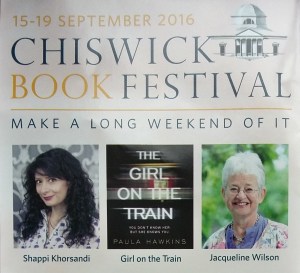
I have been to a number of individual literary events in London over the last few years but until this weekend, I had never been to one of the many book festivals held in the capital each year. Now in its eighth year, Chiswick Book Festival in west London runs from Thursday 15th – Monday 19th September with talks from a wide variety of authors and other speakers. Armed with an all-day pass, I went to four events at St Michael and All Angels Church and the Tabard Theatre yesterday.
Filed under Books
The Tidal Zone by Sarah Moss
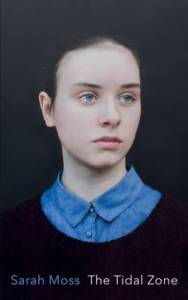 ‘The Tidal Zone’ by Sarah Moss tells the story of Adam Goldschmidt, a stay-at-home dad and part-time academic, married to overworked GP Emma. Their eldest daughter fifteen-year-old Miriam suddenly collapses on a school playing field and nearly dies after going into anaphylactic cardiac arrest. In the aftermath of the incident, the family must find a way to move on and return to some form of normality whilst coming to terms with the possibility that Miriam’s condition could be genetic and may happen again at any time. Continue reading
Filed under Books
Serious Sweet by A. L. Kennedy
 Longlisted for this year’s Man Booker Prize, ‘Serious Sweet’ by A. L. Kennedy is set over the course of twenty-four hours in London in 2014, following a day in the lives of 45-year-old recovering alcoholic Meg Williams and 59-year-old divorced senior civil servant Jon Sigurdsson. At first, the characters appear to lead seemingly separate lives but it is gradually revealed that their paths have already crossed before. The day revolves around the pair attempting to meet and whether they are able to move on from the traumatic events which have shaped their lives. Continue reading
Filed under Books
How Blogging Has Changed My Reading Habits
1. I read more books than I used to. This must be something that pretty much every book blogger can identify with. Even though blogging itself takes up a lot of time, it’s pretty hard not to start reading more when following other blogs leads to so many new sources of book recommendations. However, I also know my limits and reading during my commute to work and sticking consistently to one or two blog posts a week feels achievable and has helped me avoid both reading and blogging burnout.
2. I read more new books than I used to. This is partly a consequence of receiving review copies from publishers but following other bloggers with similar reading tastes and literary award longlists means I often seek out copies of newly published books from other sources too.
3. My reading tastes have diversified a lot in terms of genre. As well as newer books, I have been reading more non-fiction and translated fiction and I don’t think I would have made so many new discoveries if I didn’t run a blog.

Filed under Books
This Must Be The Place by Maggie O’Farrell
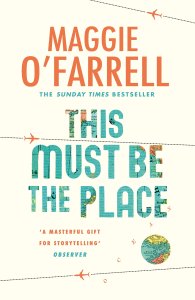 ‘This Must Be The Place’ by Maggie O’Farrell tells the story of Daniel Sullivan, an American linguistics professor living in a remote farmhouse in Donegal with his reclusive ex-film star wife Claudette, their two children and Claudette’s son from a previous relationship. When Daniel learns that an ex-girlfriend died shortly after they split up in the 1980s, he sets out to discover what happened to her all those years ago, even if it risks destroying his struggling marriage. Continue reading
Filed under Books
The Nakano Thrift Shop by Hiromi Kawakami
 My next Women in Translation Month read is ‘The Nakano Thrift Shop’ by Hiromi Kawakami, translated from the Japanese by Allison Markin Powell. I really enjoyed reading Strange Weather in Tokyo a couple of years ago (also known as ‘The Briefcase’ in the United States) and I was pleased to see another novel by Kawakami published by Portobello Books earlier this month with another excellent cover design by Natsumi Hayashi. Originally released in Japan in 2005, ‘The Nakano Thrift Shop’ tells the story of Hitomi Suganuma who starts working as a cashier selling second-hand goods in a thrift shop owned by the mysterious Haruo Nakano. He has several ex-wives and is having an affair with Sakiko while his older sister Masaya is an artist who regularly pops in and offers guidance. Meanwhile, Hitomi is largely preoccupied with another employee, the introverted Takeo, who helps Mr Nakano with house clearances. Continue reading
Filed under Books
Four Non-Fiction Books I’ve Read Recently
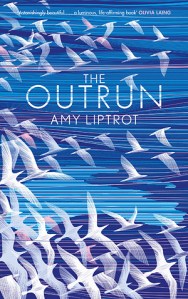 Shortlisted for the Wellcome Book Prize earlier this year and winner of the Wainwright Prize, The Outrun by Amy Liptrot is a memoir about her descent into alcoholism and subsequent recovery after returning to her childhood home of Orkney at the age of thirty. There is a stark contrast between Liptrot’s hipster lifestyle in east London in her twenties where her addiction to alcohol led to relationship breakdowns, job losses and a driving conviction and the contemplative days spent observing corncrakes and living on the remote island of Papa Westray with a population of just seventy. Above all, it is a book which explores the meaning of connections, whether it is through people, places, drugs, wildlife or technology. Much like the excellent H is for Hawk by Helen Macdonald, it successfully brings together a moving narrative of trauma with nature appreciation and could be a contender for the Baillie Gifford Prize for Non-Fiction (formerly known as the Samuel Johnson Prize) ahead of the longlist announcement next month. Continue reading
Filed under Books
In Other Words by Jhumpa Lahiri
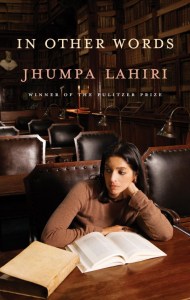 I have been reading ‘In Other Words’ by Jhumpa Lahiri for Women in Translation Month hosted by Biblibio for the third year running. I enjoyed Lahiri’s short stories and novels which mostly focus on themes based around the experience of Bengali immigrants living on the east coast of the United States so I was intrigued that she had recently written a non-fiction book in Italian about her experiences of learning the language with Ann Goldstein’s translation into English on the opposite page.
Filed under Books
The People in the Trees by Hanya Yanagihara
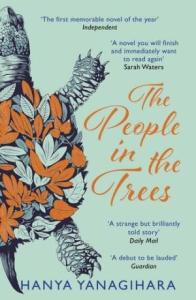 ‘The People in the Trees’ by Hanya Yanagihara tells the story of Norton Perina, a graduate of Harvard Medical School who accompanies Paul Tallent on an anthropological expedition to Ivu’ivu, a remote Micronesian island. During their travels in the 1950s, they come across a native tribe known as the Dreamers, a group of islanders who are well over a hundred years old after consuming the meat of a sacred turtle. The discovery and subsequent experiments win Norton a Nobel Prize but they also have serious consequences for the island and its inhabitants. Continue reading
Filed under Books
House of Cards by Michael Dobbs
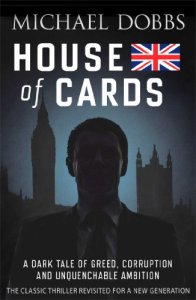 It’s easy to see how politics can provide ripe subject material for novelists. From Whitehall to the White House, the settings of these stories are inevitably concerned with power, money, intrigue and risk-taking, all excellent topics for dark humour and high drama. Given that recent political developments in the United Kingdom have become stranger than fiction, it seemed like an appropriate time to read ‘House of Cards’ by Michael Dobbs. Originally published in 1989, the story follows chief whip Francis Urquhart who will stop at nothing to become Prime Minister, getting rid of his potential opponents in any way possible, mostly by orchestrating various scandals for them to fall into. However, tenacious journalist Mattie Storin is getting closer than she realises to uncovering his web of lies and deceit. Continue reading
Filed under Books
The Man Booker Prize Longlist 2016
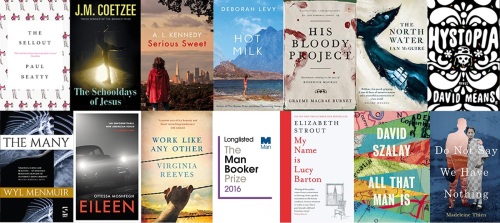
The longlist for the Man Booker Prize 2016 was announced today. The thirteen books are:
The Sellout by Paul Beatty (Oneworld)
The Schooldays of Jesus by J. M. Coetzee (Harvill Secker)
Serious Sweet by A. L. Kennedy (Jonathan Cape)
Hot Milk by Deborah Levy (Hamish Hamilton)
His Bloody Project by Graeme Macrae Burnet (Contraband)
The North Water by Ian McGuire (Scribner UK)
Hystopia by David Means (Faber & Faber)
The Many by Wyl Menmuir (Salt)
Eileen by Ottessa Moshfegh (Jonathan Cape)
Work Like Any Other by Virginia Reeves (Scribner UK)
My Name Is Lucy Barton by Elizabeth Strout (Viking)
All That Man Is by David Szalay (Jonathan Cape)
Do Not Say We Have Nothing by Madeleine Thien (Granta Books)
Filed under Books
The Man Booker Prize 2016 Longlist: Predictions, Possibilities and Preferences
 Although I have been following several major literary awards for the past few years, I have never written a blog post specifically outlining my predictions for the Man Booker Prize… until now. Famously dubbed “posh bingo” by 2011 winner Julian Barnes, predicting which 12 or 13 titles will be on the longlist has always been notoriously difficult. Until 2014, the Prize was previously only open to authors from Commonwealth countries but the eligibility criteria have since been extended to allow any work of fiction written in English and published in the United Kingdom to be entered for the Prize. This only makes the annual guessing game even more challenging.
Filed under Books
A Notable Woman: The Romantic Journals of Jean Lucey Pratt
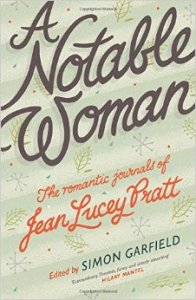 Jean Lucey Pratt was born in October 1909 and began writing her journal in 1925, filling up 45 exercise books until her death in 1986. Her diaries have been edited by Simon Garfield in the collection ‘A Notable Woman: The Romantic Journals of Jean Lucey Pratt’. As a young woman, she lived with her widowed father in Wembley before going on to study architecture and pursuing a career in journalism in London. She moved to a cottage near Slough in 1939, taking a job in the publicity department at a metals company during the Second World War and later ran her own bookshop. However, it was her ongoing search for a husband which preoccupied her the most throughout much of her adult life. Continue reading
Filed under Books
The God of Small Things by Arundhati Roy
 Winner of the Booker Prize in 1997, ‘The God of Small Things’ by Arundhati Roy tells the story of twins Esthappen and Rahel and their extended family living in Ayemenem House in Kerala, southern India including their mother Ammu, their uncle Chacko, grandmother Mammachi, great aunt Baby Kochamma and Chacko’s daughter Sophie Mol. The plot focuses on multiple family tragedies, the most significant of which are the mystery surrounding the death of Sophie Mol and the family’s disapproval of Ammu’s lover Velutha because he is an Untouchable. Continue reading
Filed under Books
Blood Wedding by Pierre Lemaitre
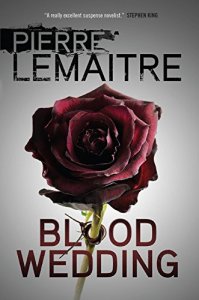 ‘Blood Wedding’ by Pierre Lemaitre and translated from the French by Frank Wynne tells the story of Sophie Duguet, a nanny who is becoming increasingly forgetful and paranoid. When the child in her care Leo is found brutally murdered, she has no recollection of what happened and goes on the run fearing that she killed him during one of her frequent blackouts. However, it soon becomes clear that something very sinister has been causing Sophie’s alarming behaviour and changing her identity won’t be the solution to her problems. Continue reading
Filed under Books
The Muse by Jessie Burton
 ‘The Muse’ by Jessie Burton tells the story of a young Trinidadian woman Odelle Bastien who lands a job as a typist at the prestigious Skelton art gallery in London in 1967, five years after she moved to the city. Odelle’s new boyfriend Lawrie has recently inherited a painting rumoured to be the work of Isaac Robles, a talented young Spanish artist who mysteriously disappeared during the Civil War in the 1930s. The painting causes quite a stir at the Skelton and Odelle’s enigmatic boss, Marjorie Quick, appears to have a personal interest in the painting as well as a professional one. Odelle sets out to uncover the true origins of the lost masterpiece whose secrets lie with the wealthy Anglo-Austrian Schloss family who employed Isaac’s sister Teresa as their housekeeper in Malaga at the beginning of the war. Continue reading
Filed under Books
Bodies of Light and Signs for Lost Children by Sarah Moss
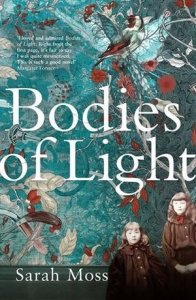 I really enjoyed reading Night Waking by Sarah Moss which told the story of Dr Anna Bennett, an academic living on the Scottish island of Colsay with her husband and young children, who sets out to uncover the mystery behind how the bones of an infant came to be buried in her garden. Her narrative is interspersed with letters written by May Moberley, a maternity nurse sent to the island to investigate the high infant mortality rate during the 1870s. ‘Bodies of Light’ is a very loose sequel which picks up the historical strand of the story focusing on other members of the Moberley family living in Manchester during the 1860s and 1870s. The novel is a coming-of-age tale of May’s older sister Ally who becomes one the first female students to read medicine in London. However, while their mother Elizabeth is a progressive social campaigner devoted to helping the destitute in the slums of Manchester, she is also a deeply repressed woman who offers no warmth at all towards her husband Alfred or her daughters. Continue reading
Filed under Books
The Special Relationship Between American and British English in Modern Fiction
Howdy, do you speak American? Or do you prefer conversing in Estuary English with some Cockney rhyming slang thrown in? The Irish playwright George Bernard Shaw once observed that “England and America are two countries separated by the same language”. If the modern publishing industry is anything to go by, then this sentiment certainly applies to the large numbers of books edited in both British and American English.

Book marketing and editing often reflects the assumption that British and American readers have different tastes. One of the most famous examples of a book being edited specifically for an American audience is ‘Harry Potter and the Philosopher’s Stone’ by J. K. Rowling which was published as ‘Harry Potter and the Sorcerer’s Stone’ in the United States to be “more suggestive of magic” than its original title. Numerous other words in the main text were also changed so that Harry and his Hogwarts chums (sorry, friends) ate candy rather than sweets, studied for their exams instead of revising for them and went on vacation rather than holiday. Continue reading
Filed under Books




You must be logged in to post a comment.