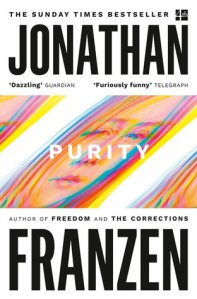
 ‘Purity’ by Jonathan Franzen tells the story of Pip, a college graduate in her 20s living in Oakland, California and deeply in debt who is offered the chance to take an internship with the Sunlight Project in Bolivia led by East German peace activist Andreas Wolf. Pip hopes that working for the Sunlight Project – a Wikileaks-style organisation which traffics secrets – will lead her to some answers about her origins including the identity of her father. Her work eventually takes her to Denver where she meets investigative journalist Tom Aberant who has connections with Andreas and knows his darkest secret. Continue reading
Tag Archives: Reviews
Purity by Jonathan Franzen
Filed under Books
His Dark Materials by Philip Pullman
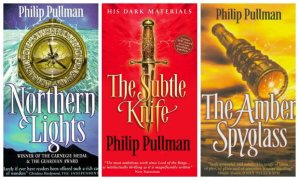 This month, I’ve broken the habit of a (five-year blogging) lifetime and reread the ‘His Dark Materials’ trilogy by Philip Pullman ahead of the publication of ‘La Belle Sauvage’, the first volume of the Book of Dust trilogy later this year. The first book in the series ‘Northern Lights’ is set in a parallel universe similar to ours but different in many ways and introduces twelve-year-old Lyra Belacqua and her dæmon companion Pantalaimon who travel to the North Pole to rescue her friend Roger from the Gobblers who are carrying out experiments on children. In ‘The Subtle Knife’ and ‘The Amber Spyglass’, Lyra meets Will Parry and they travel between different universes including our own in pursuit of the meaning of Dust. Continue reading
Filed under Books
Three Political Books I’ve Read Recently
Political events across the world continue to move at a whirlwind pace, particularly here in the UK. Here are my recommendations for three recent non-fiction books about British politics.
 ‘The Women Who Shaped Politics’ by Sophy Ridge offers a broad overview of the female campaigners and Members of Parliament who have shifted the political landscape in Westminster. The first half focuses on historical pioneers such as Mary Wollstonecraft and those involved in the suffragette movement while the second half draws on interviews with a range of contemporary female politicians including current Prime Minister Theresa May. Continue reading
Filed under Books
Days Without End by Sebastian Barry
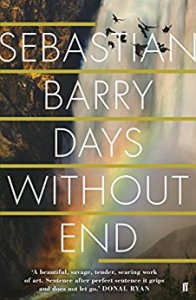 ‘Days Without End’ by Sebastian Barry tells the story of Thomas McNulty, a young Irishman who emigrates to Canada and later the United States in the mid-19th century after his family perished in the Great Famine. He befriends and falls in love with John Cole when they are teenagers and they work at a saloon where they dress as women and dance for miners. They later enlist for the US army fighting in two wars and adopt an orphaned Indian Sioux girl who they name Winona. Continue reading
Filed under Books
On Beauty by Zadie Smith
 I’ve had a copy of ‘On Beauty’ by Zadie Smith on my shelf for ages but as it is based on ‘Howards End’ by E. M. Forster, I decided to read the latter first about six years ago as I usually prefer to have some knowledge of the source material when reading an adaptation or homage to another book. However, I didn’t get on with ‘Howards End’ at all and consequently I have neglected ‘On Beauty’ for a very long time, but after enjoying Smith’s latest novel Swing Time so much last year, I wanted to try what is arguably her finest book.
Continue reading
Filed under Books
The Valentine House by Emma Henderson
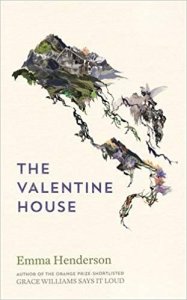 ‘The Valentine House’ by Emma Henderson is set in the French Alps at Arete, a large chalet built by Sir Anthony Valentine in the late nineteenth century and used as a summer house by the family across several generations. In 1914, Mathilde, a local girl from the valley, is selected by Sir Anthony’s wife Lady Charlotte to work as a servant at Arete on account of her being one of the ‘uglies’ and therefore less likely to catch Sir Anthony’s wandering eye. Mathilde gradually becomes acquainted with the quirks of this strange English family until she is betrayed by Sir Anthony’s granddaughter Daisy. Decades later in 1976, Sir Anthony’s great-great-grandson George is visiting Arete with his cousins, continuing many of the Valentine traditions such as the outdoor physical challenges known as ‘paideia’. With Mathilde’s help, they finally uncover the mystery surrounding the fate of Sir Anthony’s daughter Margaret. Continue reading
Filed under Books
Men Without Women by Haruki Murakami
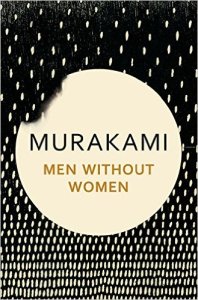 ‘Men Without Women’ by Haruki Murakami is the renowned Japanese author’s first new collection of short stories to be translated into English in over a decade. Echoing Ernest Hemingway’s collection of the same name, the seven tales in this collection are indeed about men experiencing loneliness and isolation without the women who are now absent from their lives for various reasons. The stories have been translated by Ted Goossen and Philip Gabriel who have both worked on many of Murakami’s previous books.
Continue reading
Filed under Books
Conversations with Friends by Sally Rooney
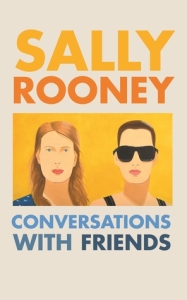 ‘Conversations with Friends’ by Sally Rooney tells the story of twenty-one-year-old student and aspiring poet Frances and her friend and ex-girlfriend Bobbi who live in Dublin and perform spoken word pieces together. They meet Melissa, a journalist and photographer in her thirties who wants to write a profile of their work, and her husband Nick who is an actor. Frances soon begins an affair with Nick which profoundly changes the dynamic of her friendship with Bobbi and becomes very messy very quickly to say the least. Continue reading
Filed under Books
Evicted: Poverty and Profit in the American City by Matthew Desmond
 ‘Evicted: Poverty and Profit in the American City’ by Matthew Desmond is a piece of contemporary narrative non-fiction reporting very much in the same vein as one of my favourite non-fiction books of 2016 Another Day in the Death of America by Gary Younge. While Younge explored the circumstances of ten fatal shootings involving children and teenagers in a single day in 2013, Desmond follows eight families in Milwaukee, Wisconsin and their experiences of the private housing rental market in the city and its suburbs. During previous financial crises in the twentieth century, evictions were comparatively rare, but numbers have skyrocketed since the last recession. Desmond explores the reasons behind why this has happened as well as the far-reaching social consequences. Continue reading
Filed under Books
Based on a True Story by Delphine de Vigan
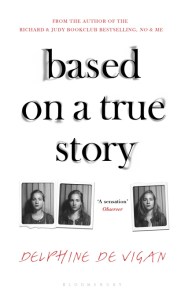
After a break from Man Booker International Prize shadowing duties last month, I have returned to reading translated fiction with ‘Based on a True Story’ by Delphine de Vigan translated from the French by George Miller. It is about a middle-aged Parisian author, Delphine, who is befriended by a woman known throughout only as “L.” who claims to be a professional ghostwriter. L.’s presence gradually takes over every aspect of Delphine’s life to the point where their close friendship turns into something far more sinister.
Filed under Books
Alias Grace by Margaret Atwood
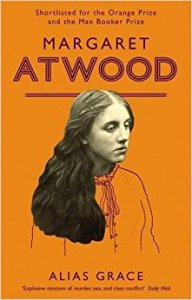 ‘Alias Grace’ by Margaret Atwood is based on the true story of Grace Marks, a servant convicted of the notorious double murder of her employer Thomas Kinnear and his housekeeper and mistress Nancy Montgomery alongside stable hand James McDermott in Toronto in 1843 when she was just sixteen years old. After they were caught attempting to escape from Canada to the United States, McDermott was hanged for the crime while Grace was sentenced to life imprisonment at Kingston Penitentiary in Ontario after her death sentence was commuted at the last minute. Despite confessing to the crime at the time, Grace still claims to have no memory of the murders fifteen years later. Her sanity is being investigated by American psychiatrist Dr. Simon Jordan at the invitation of a liberal minister who believes she is innocent.
Continue reading
Filed under Books
Sapiens: A Brief History of Humankind by Yuval Noah Harari
 I was half way through reading ‘Sapiens: A Brief History of Humankind’ by Yuval Noah Harari on the tube the other week when a fellow commuter asked me what the book is about. Even though I have been writing reviews regularly for over five years, I still don’t enjoy being put on the spot about books I am still reading and mulling over, particularly at 8:15am on a crowded train. My initial response was to say that it’s about, well, pretty much everything. Even though that statement is fairly accurate, the expression on his face suggested that it was also quite unhelpful, so I added that it’s about how and why the human race has developed in the way that it has. This appeared to be a more satisfactory answer, which is just as well because I still can’t think of a better way to summarise its content.
Filed under Books
The Disappearance of Adèle Bedeau by Graeme Macrae Burnet
 I really enjoyed reading His Bloody Project by Graeme Macrae Burnet after discovering it through the Man Booker Prize shortlist last year. His 2014 debut novel ‘The Disappearance of Adèle Bedeau’ which was also published by Contraband tells the story of Manfred Baumann, a loner who lives in the nondescript French town of Saint-Louis in Alsace and frequently dines at a bistro where waitress Adèle Bedeau works. When Adèle suddenly disappears one evening after finishing her shift, Manfred quickly comes under suspicion. However, after giving a false statement to Inspector Georges Gorski in which he fails to admit that he was the last person to see her alive, his life begins to spiral out of control. Continue reading
Filed under Books
Man Booker International Prize Reviews: Part 5 (and the shadow panel shortlist)
 The Man Booker International Prize shadow panel’s scores are in and we can now announce our own shortlist of six books. They are:
- Compass by Mathias Énard (translated from the French by Charlotte Mandell)
- The Unseen by Roy Jacobsen (translated from the Norwegian by Don Bartlett and Don Shaw)
- Bricks and Mortar by Clemens Meyer (translated from the German by Katy Derbyshire)
- Judas by Amos Oz (translated from the Hebrew by Nicholas de Lange)
- Fever Dream by Samanta Schweblin (translated from the Spanish by Megan McDowell)
- Fish Have No Feet by Jón Kalman Stefánsson (translated from the Icelandic by Philip Roughton)
There is a fair amount of overlap between our shortlist and the official shortlist with just ‘Bricks and Mortar’ and ‘Fish Have No Feet’ being favoured over ‘Mirror, Shoulder, Signal’ and ‘A Horse Walks Into A Bar’. My personal preferences lean towards the books by Jacobsen, Stefánsson and Schweblin while other shadow panel members have made strong cases in favour of the more avant-garde titles. We will be deliberating our choices this month and announcing our winner in June.
Continue reading
Filed under Books
Lincoln in the Bardo by George Saunders
 Told through a chorus of over 160 different voices, ‘Lincoln in the Bardo’ by George Saunders follows the aftermath of the death of Abraham Lincoln’s eleven-year-old son Willie in 1862 from typhoid fever during the American Civil War. Willie finds himself trapped between death and rebirth with other spirits in the cemetery who believe he should proceed to the next stage of the afterlife. However, Willie is resistant as he wants to spend more time with his distraught father who regularly visits the crypt to mourn his loss. Continue reading
Filed under Books
Man Booker International Reviews: Part 4 (and the official shortlist)
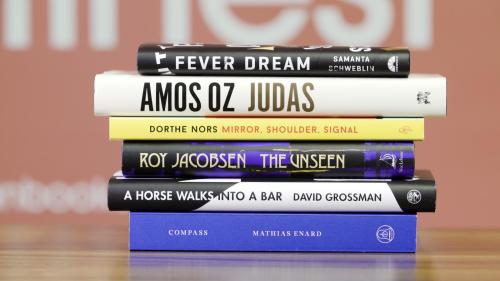
The official Man Booker International Prize shortlist of six books was announced on Thursday:
- Compass by Mathias Enard (translated from the French by Charlotte Mandell)
- A Horse Walks Into a Bar by David Grossman (translated from the Hebrew by Jessica Cohen)
- The Unseen by Roy Jacobsen (translated from the Norwegian by Don Bartlett and Don Shaw)
- Mirror, Shoulder, Signal by Dorthe Nors (translated from the Danish by Misha Hoekstra)
- Judas by Amos Oz (translated from the Hebrew by Nicholas de Lange)
- Fever Dream by Samanta Schweblin (translated from the Spanish by Megan McDowell)
I think this is an interesting selection with some very strong contrasts in genre and style. The shadow panel shortlist will be revealed at a later date as we have decided to allow ourselves a bit more time to finish reading the longlist and deliberate our views. You will have to wait until 9am UK time on Thursday 4th May to find out how many of our collective choices match those of the official judges… Continue reading
Filed under Books
How to Survive a Plague by David France
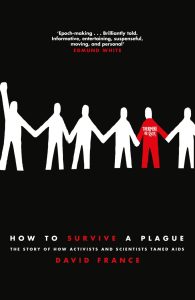 I am very pleased to be taking part in the official Wellcome Book Prize blog tour this week to champion ‘How to Survive a Plague’ by David France which is one of six titles shortlisted for this year’s prize awarded to a book on the subject of healthcare or medicine. It follows France’s 2012 Oscar-nominated documentary film of the same name and is a remarkable account of the activists and scientists who campaigned for awareness and funding towards fighting the AIDS epidemic in the United States.
Continue reading
Filed under Books
Spaceman of Bohemia by Jaroslav Kalfar
 Out of all of the debut novels which have been published recently, ‘Spaceman of Bohemia’ by Jaroslav Kalfar has one of the most intriguing and original premises. Set in 2018, it tells the story of Jakub Procházka, a Czech astrophysicist turned astronaut on a solo mission to investigate a dust cloud between Earth and Venus and collect samples for analysis. However, his marriage to Lenka is under further strain as she is left behind on Earth and Jakub has plenty of time on his own to reflect on his family’s past. The appearance of a giant Nutella-loving alien spider called Hanuš who may or may not be a figment of Jakub’s imagination only complicates things further.
Filed under Books
The Man Booker International Prize Longlist 2017
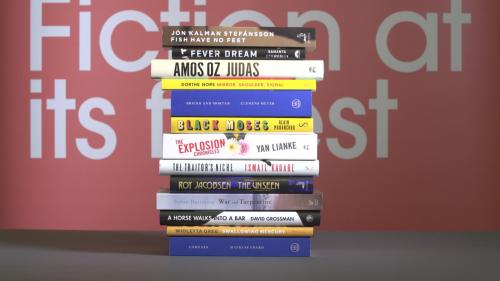
The longlist for the Man Booker International Prize 2017 was announced today. The 13 books are:
- Compass by Mathias Énard (translated from the French by Charlotte Mandell)
- Swallowing Mercury by Wioletta Greg (translated from the Polish by Eliza Marciniak)
- A Horse Walks Into a Bar by David Grossman (translated from the Hebrew by Jessica Cohen)
- War and Turpentine by Stefan Hertmans (translated from the Dutch by David McKay)
- The Unseen by Roy Jacobsen (translated from the Norwegian by Don Bartlett and Don Shaw)
- The Traitor’s Niche by Ismail Kadare (translated from the Albanian by John Hodgson)
- Fish Have No Feet by Jón Kalman Stefánsson (translated from the Icelandic by Philip Roughton)
- The Explosion Chronicles by Yan Lianke (translated from the Chinese by Carlos Rojas)
- Black Moses by Alain Mabanckou (translated from the French by Helen Stevenson)
- Bricks and Mortar by Clemens Meyer (translated from the German by Katy Derbyshire)
- Mirror, Shoulder, Signal by Dorthe Nors (translated from the Danish by Misha Hoekstra)
- Judas by Amos Oz (translated from the Hebrew by Nicholas de Lange)
- Fever Dream by Samanta Schweblin (translated from the Spanish by Megan McDowell)
Filed under Books
Fever Dream by Samanta Schweblin
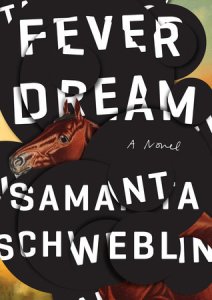 Translated from the Spanish by Megan McDowell, ‘Fever Dream’ by Samanta Schweblin tells the story of Amanda, a woman who is critically ill in a rural Argentinian hospital, where David is trying to get her to remember the events which led her there. She recalls encounters with her daughter Nina and David’s mother Carla who once told her how David’s soul was split in two in order to save him after he was poisoned. However, David is not quite the same afterwards, and neither are Amanda and Nina. Continue reading
Filed under Books




 A Little Blog of Books
You must be logged in to post a comment.