 The Man Booker Prize longlist will be announced on Tuesday 24th July and the annual guessing game of “posh bingo” commences once again. When considering which books could make the cut, I have been thinking about predictions in terms of likely possibilities and my personal preferences – some I have already read, and some I haven’t. I doubt I will better my predictions last year in which I correctly guessed six out of the 13 “Man Booker dozen” longlisted titles including the eventual winner Lincoln in the Bardo by George Saunders. As ever, I have no knowledge of which books have actually been submitted for consideration so my predictions could just as easily be entirely wrong this time.
I would be surprised if the longlist was as dominated by established authors as it was last year. However, Winter by Ali Smith remains a stand-out preference for me, even if the judges decide to plump for something different following Autumn being shortlisted just last year. Another possibility is The Sparsholt Affair by Alan Hollinghurst about a sex scandal involving students at Oxford University during the Blitz and the consequences this has for their families years down the line. Continue reading
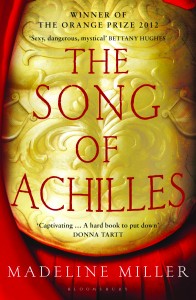 ‘The Song of Achilles’ by Madeline Miller is a modern retelling of ‘The Iliad’ and won the Women’s Prize (then Orange Prize) for Fiction in 2012. Whereas Homer’s epic was told from the perspective of demi-god Achilles as the warrior hero of ancient Greece, it is the exiled prince Patroclus who takes centre stage here, having been a minor character in the original. In Miller’s interpretation of events, Achilles and Patroclus are inseparable childhood friends who later become lovers, and when the time comes for Achilles to fulfil his destiny, Patroclus follows him to war with the Trojans.
 The Man Booker Prize is celebrating its 50th anniversary this year with a “best of the best”
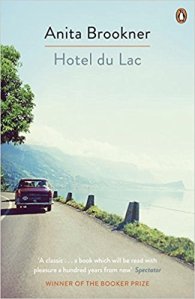 I haven’t read many of the early winners of the Booker Prize but ‘Hotel du Lac’ by Anita Brookner is one I have been meaning to read ahead of the
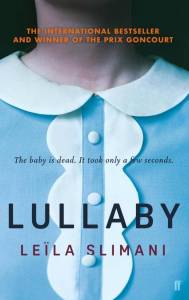 Winner of the prestigious Prix Goncourt and recently translated from the French by Sam Taylor, ‘Lullaby’ by Leïla Slimani has been one of the most talked-about novels so far this year, partly inspired by a real-life case of a nanny who killed two children in New York in 2012. Paul and Myriam live in a fashionable area of north-west Paris with their two young children, Mila and Adam. Paul works in the music business and Myriam is a criminal lawyer of North African descent who hires a nanny, Louise, to look after the children when she decides to resume her career. Initially, Louise appears to be perfect and indispensable to the family, but her behaviour becomes increasingly concerning.
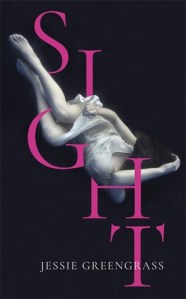 I haven’t yet finished shadowing this year’s Wellcome Book Prize shortlist but I have already come across a novel which has very strong potential to be on next year’s longlist of books which engage in some aspect of health, illness or medicine. I enjoyed reading Jessie Greengrass’s collection of short stories
 ‘Asymmetry’ by Lisa Halliday consists of two seemingly unrelated stories which are eventually revealed to have surprising connections. The first part, ‘Folly’, concerns Alice, an editorial assistant in her twenties living in post 9/11 New York City who begins a relationship with a much older man, a Jewish author named Ezra Blazer who has repeatedly been overlooked for a Nobel Prize for Literature. In the second part, ‘Madness’, an Iraqi-American economist, Amar Jaafari, is on his way to Kurdistan to visit his brother but is detained by immigration officials at Heathrow Airport.
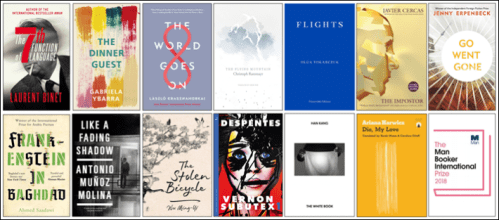
 Although I’m not participating in the shadow panel this year, I have been thinking about possible contenders for this year’s Man Booker International Prize longlist which is due to be announced tomorrow. My
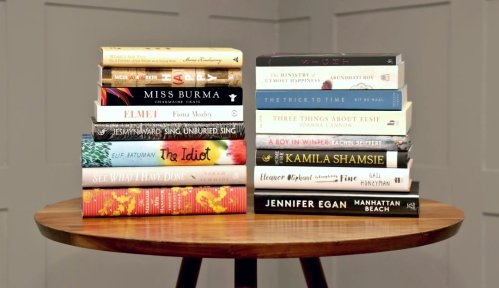
 The Women’s Prize for Fiction longlist is due to be announced on Thursday 8th March and I have been thinking about which books could make the cut. My
 2018 marks the 50th anniversary of the Man Booker Prize and the organisers have launched a one-off prize to celebrate the best of the winning novels to date.

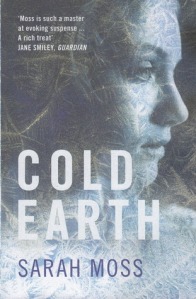 I have really enjoyed all of the books by Sarah Moss I have read to date and I recently read her 2009 debut novel ‘Cold Earth’. It follows a team of six archaeologists and academics who travel to western Greenland for a three week dig excavating the remains of a Viking settlement. They leave behind their homes in the United States and Europe just as a deadly flu-like virus has started to spread rapidly across the world. Archaeologists Catriona, Ben, Jim and Ruth are joined by team leader Yianni and his friend Nina, the only non-archaeologist in the group whose academic research is vaguely linked to Norse literature. However, Nina experiences night terrors and becomes convinced that the supernatural events are the result of ghosts disturbed by the group’s dig at their resting place.
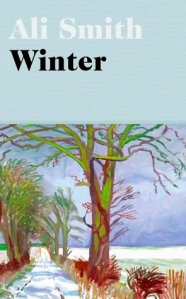 ‘Winter’ is the second volume in the seasons cycle of novels by Ali Smith. It is loosely set at a family gathering in which twenty-something Art (Arthur) visits his mother Sophia Cleves in Cornwall over Christmas. Art has recently been dumped by Charlotte and hires a Croatian-Canadian immigrant, Lux, to pretend to be his girlfriend. Meanwhile, Sophia has a frosty relationship with her subversive sister Iris who has a long history of political activism.
 Among non-fiction titles, 21 Lessons for the 21st Century by Yuval Noah Harari will be out in August as the historian turns his attention to issues in the present day following the success of
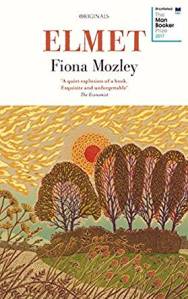 Last year’s Man Booker Prize longlist was largely dominated by established authors apart from the surprise inclusion of PhD student Fiona Mozley with her debut novel ‘Elmet’ which made the shortlist but lost out to
 Among new fiction titles,



 A Little Blog of Books

You must be logged in to post a comment.