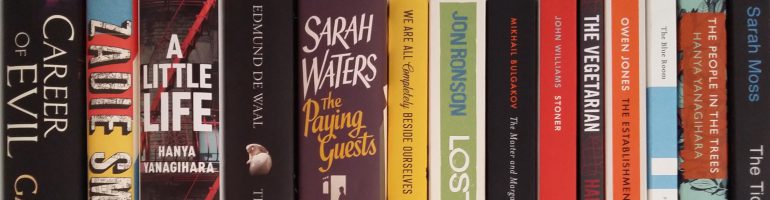
1. I read more books than I used to. This must be something that pretty much every book blogger can identify with. Even though blogging itself takes up a lot of time, it’s pretty hard not to start reading more when following other blogs leads to so many new sources of book recommendations. However, I also know my limits and reading during my commute to work and sticking consistently to one or two blog posts a week feels achievable and has helped me avoid both reading and blogging burnout.
2. I read more new books than I used to. This is partly a consequence of receiving review copies from publishers but following other bloggers with similar reading tastes and literary award longlists means I often seek out copies of newly published books from other sources too.
3. My reading tastes have diversified a lot in terms of genre. As well as newer books, I have been reading more non-fiction and translated fiction and I don’t think I would have made so many new discoveries if I didn’t run a blog.

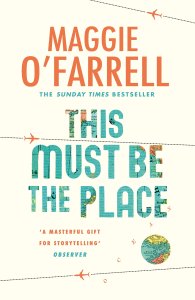 ‘This Must Be The Place’ by Maggie O’Farrell tells the story of Daniel Sullivan, an American linguistics professor living in a remote farmhouse in Donegal with his reclusive ex-film star wife Claudette, their two children and Claudette’s son from a previous relationship. When Daniel learns that an ex-girlfriend died shortly after they split up in the 1980s, he sets out to discover what happened to her all those years ago, even if it risks destroying his struggling marriage.
  My next Women in Translation Month read is ‘The Nakano Thrift Shop’ by Hiromi Kawakami, translated from the Japanese by Allison Markin Powell. I really enjoyed reading
 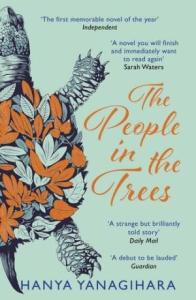 ‘The People in the Trees’ by Hanya Yanagihara tells the story of Norton Perina, a graduate of Harvard Medical School who accompanies Paul Tallent on an anthropological expedition to Ivu’ivu, a remote Micronesian island. During their travels in the 1950s, they come across a native tribe known as the Dreamers, a group of islanders who are well over a hundred years old after consuming the meat of a sacred turtle. The discovery and subsequent experiments win Norton a Nobel Prize but they also have serious consequences for the island and its inhabitants.
 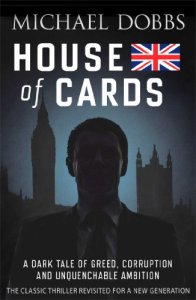 It’s easy to see how politics can provide ripe subject material for novelists. From Whitehall to the White House, the settings of these stories are inevitably concerned with power, money, intrigue and risk-taking, all excellent topics for dark humour and high drama. Given that recent political developments in the United Kingdom have become stranger than fiction, it seemed like an appropriate time to read ‘House of Cards’ by Michael Dobbs. Originally published in 1989, the story follows chief whip Francis Urquhart who will stop at nothing to become Prime Minister, getting rid of his potential opponents in any way possible, mostly by orchestrating various scandals for them to fall into. However, tenacious journalist Mattie Storin is getting closer than she realises to uncovering his web of lies and deceit.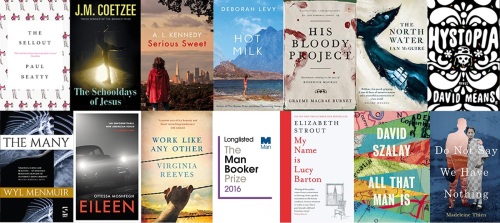
 Although I have been following several major literary awards for the past few years, I have never written a blog post specifically outlining my predictions for the Man Booker Prize… until now. Famously dubbed “posh bingo” by 2011 winner Julian Barnes, predicting which 12 or 13 titles will be on the longlist has always been notoriously difficult. Until 2014, the Prize was previously only open to authors from Commonwealth countries but the eligibility criteria have since been extended to allow any work of fiction written in English and published in the United Kingdom to be entered for the Prize. This only makes the annual guessing game even more challenging.
 Winner of the Booker Prize in 1997, ‘The God of Small Things’ by Arundhati Roy tells the story of twins Esthappen and Rahel and their extended family living in Ayemenem House in Kerala, southern India including their mother Ammu, their uncle Chacko, grandmother Mammachi, great aunt Baby Kochamma and Chacko’s daughter Sophie Mol. The plot focuses on multiple family tragedies, the most significant of which are the mystery surrounding the death of Sophie Mol and the family’s disapproval of Ammu’s lover Velutha because he is an Untouchable.
  ‘The Muse’ by Jessie Burton tells the story of a young Trinidadian woman Odelle Bastien who lands a job as a typist at the prestigious Skelton art gallery in London in 1967, five years after she moved to the city. Odelle’s new boyfriend Lawrie has recently inherited a painting rumoured to be the work of Isaac Robles, a talented young Spanish artist who mysteriously disappeared during the Civil War in the 1930s. The painting causes quite a stir at the Skelton and Odelle’s enigmatic boss, Marjorie Quick, appears to have a personal interest in the painting as well as a professional one. Odelle sets out to uncover the true origins of the lost masterpiece whose secrets lie with the wealthy Anglo-Austrian Schloss family who employed Isaac’s sister Teresa as their housekeeper in Malaga at the beginning of the war.
 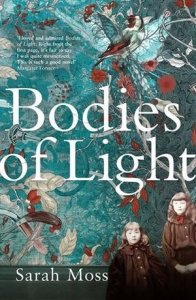 I really enjoyed reading
 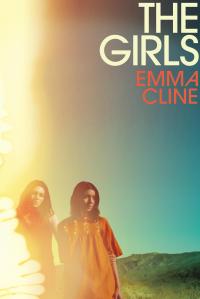 ‘The Girls’ by Emma Cline has been one of the most eagerly anticipated debut novels of the year. Set in California in 1969, it is a semi-fictionalised account of a group of young women including fourteen-year-old Evie Boyd who fall under the spell of Russell Hadrick, a failed musician and Charles Manson-like cult leader. However, it is Evie’s awe towards Suzanne, one of Russell’s followers, which becomes the main focus of the story rather than her encounters with Russell himself.
 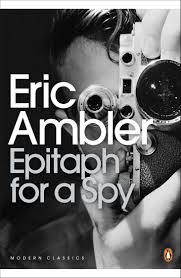 Last year, I went to an event in London to celebrate the work of classic crime fiction novelists
 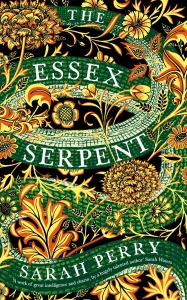 ‘The Essex Serpent’ by Sarah Perry tells the story of Cora Seaborne, a keen amateur naturalist and recent widow who moves to Colchester in the 1890s with her servant-companion Martha and son Francis and meets the local vicar Reverend William Ransome. There are rumours that the mythical Essex Serpent which once stalked the Blackwater estuary has been spotted again near the coastal village of Aldwinter, and some mysterious deaths have sent the local residents into panic. Cora and Will are both sceptical of the rumours surrounding the return of the beast but for very different reasons with Cora believing the creature could be an undiscovered species whereas Will’s concerns lie in his parishioners’ apparent lack of faith. Yet despite these differences, they start to form a close and intense bond.
 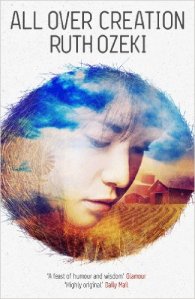 I really enjoyed Ruth Ozeki’s third novel
  Set in near-future America, ‘The Mandibles: A Family, 2029-2047’ by Lionel Shriver follows four generations of an American family who had been waiting to inherit the fortune of 97-year-old patriarch Douglas Mandible. However, a total fiscal meltdown in the form of a cyber attack has wiped out the economy along with the Mandible’s wealth and all communications including the Internet. After the “Great Renunciation” when the President of the United States defaults on the country’s massive debt obligations, the Mandibles are all forced to live together under one roof in order to survive.
 A Whole Life by Robert Seethaler translated from the German by Charlotte Collins has been shortlisted for the Prize and deservedly so. Even though it didn’t make it on to the shadow panel list, this book is one of my personal favourites and I would be very happy if it won the overall prize. It tells the story of Andreas Egger, a solitary man who lives in a remote mountain village in Austria during the twentieth century. The tone is very similar to that of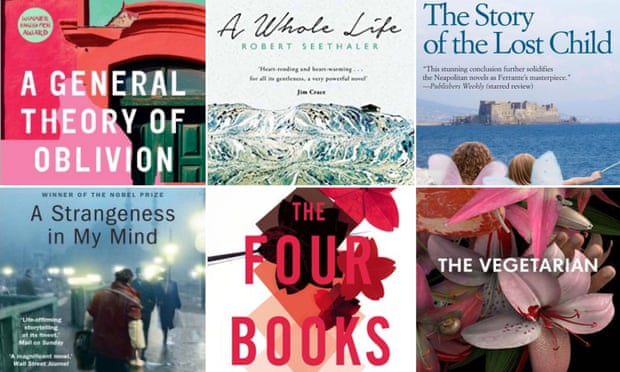
 Translated from the Japanese by Deborah Boliver Boehm, ‘Death by Water’ by Kenzaburo Oe tells the story of Kogito Choko, an author aged in his 70s reflecting on his long career. For many years, he has struggled to write the “drowning” novel based on his father’s death shortly after the Second World War. Kogito returns to his rural home town to look at his father’s red leather trunk which his mother had instructed him not to open until ten years had passed after her death. However, it soon transpires that the contents of the trunk do not provide him with many answers, leaving Kogito limited time to unlock the secrets he needs to finish his book.
 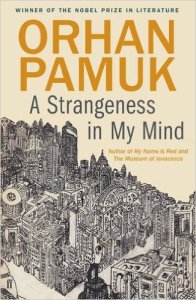 Translated from the Turkish by Ekin Oklap, ‘A Strangeness in My Mind’ by Orhan Pamuk tells the story of Mevlut Karata, a yoghurt and boza seller who lives in Istanbul. Melvut arrives in the city at the age of twelve in the late 1960s with his father from a poor village in Anatolia. He later elopes and marries Rayiha despite a case of mistaken identity in which he believed his love letters were being delivered to her sister. Over the course of four decades, he observes the political upheavals in the city and also experiences many personal challenges.
 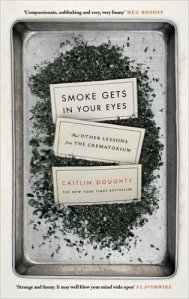 Smoke Gets in Your Eyes and Other Lessons from the Crematorium by Caitlin Doughty is an informative and thought-provoking memoir about the death industry written by a mortician seeking to demystify a taboo topic feared by almost everyone. Stories of burial practices, death rituals and cultural attitudes from around the world and throughout history are interwoven with Doughty’s personal experiences including the circumstances which led her to start working at Westwind Crematorium in San Francisco nearly a decade ago at the age of 23. Doughty’s sense of humour is appropriately dark without being disrespectful as she recounts some of her more memorable experiences at the crematorium and challenges readers to confront their own mortality. As much about life as it is about death, ‘Smoke Gets in Your Eyes’ is a fascinating look at a widely misunderstood career choice, although not a book I would recommend to the very squeamish or recently bereaved.





You must be logged in to post a comment.