Tag Archives: Novels
January 7, 2018 · 2:15 pm
Happy new year! Without further ado, here is a selection of 20 upcoming titles I will be looking out for in 2018 (publication dates where known apply to the UK):
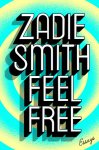 Among non-fiction titles, 21 Lessons for the 21st Century by Yuval Noah Harari will be out in August as the historian turns his attention to issues in the present day following the success of Sapiens and Homo Deus. I have a particular interest in non-fiction concerning healthcare and medicine and two books I will be looking out for are Shapeshifters: On Medicine and Human Change by Gavin Francis and Brainstorm: Detective Stories from the World of Neurology by Suzanne O’Sullivan. Elsewhere, Feel Free by Zadie Smith is a collection of the celebrated author’s essays on a variety of subjects due in February. Continue reading →
Filed under Books
Tagged as 2018, Book, Debut Fiction, Fiction, Literary Fiction, Literature, New Books, News, Non fiction, Novels, Reading, Short Stories
January 4, 2018 · 4:00 pm
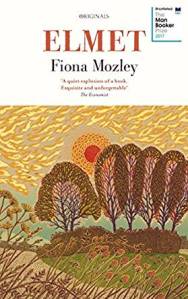 Last year’s Man Booker Prize longlist was largely dominated by established authors apart from the surprise inclusion of PhD student Fiona Mozley with her debut novel ‘Elmet’ which made the shortlist but lost out to Lincoln in the Bardo by George Saunders for the overall prize. Set in Yorkshire, it tells the story of teenage siblings Daniel and Cathy and their father Daddy (also known as John) who relocate from their red-brick house in town to secluded woodland where they have built their own home by hand and living according to ethical principles. However, they soon come into conflict with the rich landowners, putting their way of life in danger. Continue reading →
Filed under Books
Tagged as Book, Book Review, Book Reviews, Elmet, Fiction, Fiona Mozley, Literary Fiction, Literature, Man Booker Prize, Man Booker Prize 2017, Novels, Reading, Reviews, Yorkshire
December 31, 2017 · 2:00 pm
I have read a lot of great books this year, some new and some not quite so new. Here are some of my favourites:
 Among new fiction titles, The Nix by Nathan Hill and Little Fires Everywhere by Celeste Ng were both memorable stand-outs. I also reread His Dark Materials by Philip Pullman ahead of the publication of La Belle Sauvage, the first part of the Book of Dust trilogy – a thrilling and imaginative story which did not disappoint. Solar Bones by Mike McCormack was an unexpected delight from this year’s Man Booker Prize longlist – beautifully written, gripping, funny and inventive. Continue reading →
Filed under Books
Tagged as 2017, Book, Books of the Year, Fiction, Literary Fiction, Literature, Memoir, New Books, Non fiction, Novels, Reading, Reviews, Translated Fiction
December 29, 2017 · 4:02 pm
 My first review of the year was of Kate Atkinson’s debut novel Behind the Scenes at the Museum which prompted me to make more of an effort to read the back catalogues of my favourite authors. It therefore seems fitting to end the year with a review of Atkinson’s third novel ‘Emotionally Weird’ which was first published in 2000 and tells the story of Euphemia (Effie) Stuart-Murray and her mother Nora who live on a remote Scottish island. Effie is telling Nora about her life as a student in Dundee living with her Star Trek-obsessed boyfriend Bob. However, Effie also has questions about her family history and what she really wants is for Nora to disclose who her real father is. Continue reading →
Filed under Books
Tagged as Book, Book Review, Book Reviews, Dundee, Emotionally Weird, Fiction, Humour, Kate Atkinson, Literature, Novels, Reading, Reviews, Scotland
December 17, 2017 · 1:00 pm
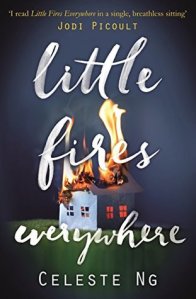 In the opening chapter of ‘Little Fires Everywhere’ by Celeste Ng, the Richardson family home in the affluent suburb of Shaker Heights near Cleveland, Ohio, is burning to the ground in a fire believed to have been started deliberately by their rebellious daughter, Izzy. The story looks back at the events which led to this catastrophe, ultimately beginning when the Richardsons’ tenant, Mia Warren, becomes a part-time housekeeper for the family and Mia’s fifteen-year-old daughter Pearl, befriends the Richardson teenage siblings Lexie, Trip, Moody and Izzy. Continue reading →
Filed under Books
Tagged as Book, Book Review, Book Reviews, Celeste Ng, Fiction, Literary Fiction, Literature, Little Fires Everywhere, Novels, Ohio, Reading
December 10, 2017 · 5:33 pm
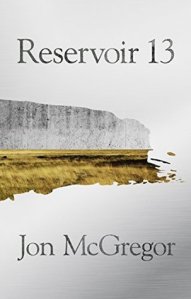 ‘Reservoir 13’ by Jon McGregor begins with the disappearance of Rebecca Shaw, a thirteen-year-old girl who goes missing while on holiday with her family in the Peak District in the early 2000s. In the years that pass following her disappearance, the various residents of the small rural village get on with their lives, but the mystery of what happened to Rebecca continues to have an impact on the tight-knit community. Continue reading →
Filed under Books
Tagged as Book, Book Review, Book Reviews, Fiction, Jon McGregor, Literary Fiction, Literature, Novels, Reading, Reservoir 13, Reviews
December 3, 2017 · 6:42 pm
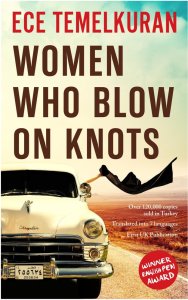 Translated from the Turkish by Alexander Dawe, ‘Women Who Blow on Knots’ by Ece Temelkuran won the Edinburgh First Book Award earlier this year and I bought my copy during my visit to the city last summer. It tells the story of four women embarking on a road trip across North Africa from Tunisia to Lebanon during the Arab Spring. They are Tunisian activist and dancer Amira, Egyptian academic Maryam who is obsessed with Dido, Queen of Carthage, an unnamed Turkish journalist who narrates the story and the mysterious elderly Madam Lilla who has connections with the Russian mafia and intelligence agencies. It is Madam Lilla who invites the three women to accompany her on the trip although her real intentions for travelling to Lebanon only become clear much later. Continue reading →
Filed under Books
Tagged as Africa, Arab Spring, Book, Book Review, Book Reviews, Ece Temelkuran, Fiction, Literature, Novels, Reading, Reviews, Translated Fiction, Translation, Women Who Blow On Knots
November 29, 2017 · 8:00 am
And the shadow panel winner is…
The Lucky Ones by Julianne Pachico!
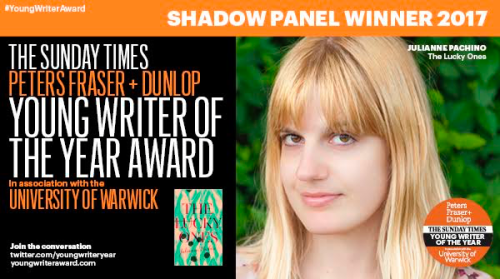
The overall shortlist was very strong indeed and I enjoyed reading all of the books by five very talented writers. However, we were particularly impressed with the exceptional skill and creativity Pachico demonstrated in her ambitious debut collection of interlinked short stories. The Lucky Ones is a worthy shadow panel winner but we’ll have to wait until Thursday 7th December to see who will win the overall prize. Continue reading →
Filed under Books
Tagged as Book, Fiction, Julianne Pachico, Literature, Novels, Reading, Reviews, Shadow Panel, The Lucky Ones, Young Writer Award, Young Writer of the Year 2017
November 22, 2017 · 8:40 pm
 The Sunday Times Young Writer of the Year Award isn’t just about literary debuts – occasionally, young writers can be prolific and I am pleased that there has been some recognition on this year’s shortlist for Claire North, a pseudonym for Catherine Webb. Webb/North has somehow found the time to publish several science fiction and fantasy novels under her own name and two pseudonyms, writing her first book when she was just 14 and is best known for ‘The First Fifteen Lives of Harry August’. Her latest novel ‘The End of the Day’ begins with an intriguing premise in which Charlie is the Harbinger of Death, living in Dulwich and answering to his boss, Death, at head office in Milton Keynes, travelling around the world usually to meet people before their lives end: “sometimes he is sent as a courtesy, sometimes as a warning”. However, the demands of the job begin to take their toll on Charlie and put a strain on his relationship with his girlfriend Emmi. Continue reading →
Filed under Books
Tagged as Book, Book Review, Book Reviews, Claire North, Death, Fantasy, Fiction, Novels, Reading, Reviews, Science Fiction, The End of the Day, Young Writer Award, Young Writer of the Year 2017
November 19, 2017 · 6:27 pm
 Following her debut ‘The Shore’ which was shortlisted for the Sunday Times Young Writer of the Year Award in 2015, Sara Taylor has been nominated again for the same prize with her second novel ‘The Lauras’. I read it several months ago before the shortlist was announced but didn’t have enough time to review it, so I have revisited it this week ahead of our shadow panel meeting on Friday when we will choose our winner. ‘The Lauras’ is a road trip novel in which Ma and thirteen-year-old Alex leave their home and Alex’s father behind in Virginia and travel across North America visiting five places which all hold some significance in Ma’s past. Ma attempts to track down a friend from each of these places, all of whom are called Laura and were an important part of Ma’s life at the time. Continue reading →
Filed under Books
Tagged as Book, Book Review, Book Reviews, Fiction, Literary Fiction, Literature, Novels, Reading, Reviews, Road Trip, Sara Taylor, The Lauras, Young Writer Award, Young Writer of the Year 2017
November 12, 2017 · 6:30 pm
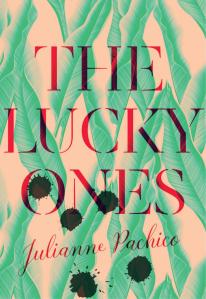 ‘The Lucky Ones’ by Julianne Pachico is described as a novel by its US publishers whereas it has been billed as a collection of interlinked short stories in the UK where it has recently been shortlisted for this year’s Sunday Times Young Writer of the Year Award. I approached ‘The Lucky Ones’ as a collection of short stories when reading it for the shadow panel discussions earlier this month but I think it can be read and enjoyed equally as a novel too, albeit a relatively fragmented one. Continue reading →
Filed under Books
Tagged as Book, Book Review, Book Reviews, Colombia, Fiction, Julianne Pachico, Novels, Reading, Reviews, Shadow Panel, Short Stories, The Lucky Ones, Young Writer Award, Young Writer of the Year 2017
November 5, 2017 · 5:37 pm
 I reread the His Dark Materials trilogy in July in anticipation of the release last month of the first volume of the new Book of Dust trilogy by Philip Pullman which he describes as an “equel” to stand alongside ‘His Dark Materials’ as neither a prequel or a sequel. This particular volume is set before the events in ‘His Dark Materials’ in Lyra’s universe when she is a baby and features 11-year-old Malcolm Polstead, son of a local pub landlord, who ends up supplying information to a resistance group attempting to subvert the Magisterium, a powerful church authority. With the help of Alice, an older girl who works at the pub with him, and his trusty canoe named La Belle Sauvage, they seek to protect baby Lyra from the church, and specifically from the clutches of Gerard Bonneville and Lyra’s mother, Mrs Coulter. Continue reading →
Filed under Books
Tagged as Book, Book Review, Book Reviews, Children's Books, Fantasy, Fiction, His Dark Materials, La Belle Sauvage, Novels, Oxford, Philip Pullman, Reading, Reviews, The Book of Dust
November 4, 2017 · 4:08 pm
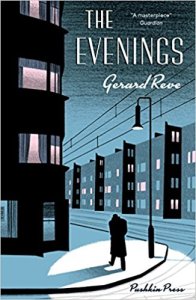 ‘The Evenings’ by Gerard Reve has been hailed as a “postwar masterpiece” and “the best Dutch novel of all time” but has only recently been translated by Sam Garrett and published in the UK for the first time by Pushkin Press late last year, nearly seven decades after it was first printed in the Netherlands. It tells the story of Frits van Egters, a 23-year-old clerk living with his parents in Amsterdam who struggles to fill his non-working hours with anything meaningful, spending his evenings walking past the canals, seeking out conversation with his small group of friends including his brother Joop.
Continue reading →
Filed under Books
Tagged as Amsterdam, Book, Book Review, Book Reviews, Dutch, Fiction, Gerard Reve, Literature, Novels, Reading, Reviews, The Evenings, Translated Fiction, Translation
October 22, 2017 · 4:35 pm
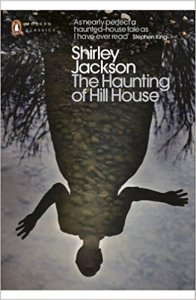 ‘The Haunting of Hill House’ by Shirley Jackson is widely regarded as one of the best horror stories of the 20th century and makes for timely reading ahead of Halloween at the end of the month. It tells the story of Dr. John Montague, an eminent anthropologist and occult scholar seeking evidence that Hill House is haunted. He rents the property over the summer and invites people with experience of the supernatural to stay there with him – his outgoing assistant Theodora, shy and retiring Eleanor Vance, and the heir to the house Luke Sanderson – so they can investigate the puzzling mysteries which await inside together. Continue reading →
Filed under Books
Tagged as Book, Book Review, Book Reviews, Fiction, Gothic, Halloween, Horror, Literature, Novels, Reading, Reviews, Shirley Jackson, The Haunting of Hill House
October 8, 2017 · 5:17 pm
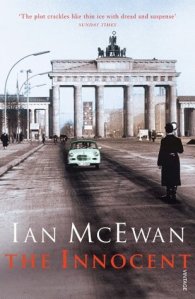 As part of my continuing efforts to read more books from the back catalogues of my favourite authors, I have recently read ‘The Innocent’ by Ian McEwan which tells the story of Leonard Marnham, a twenty-five-year-old British Post Office engineer who has been recruited to work in Berlin in the mid-1950s as part of Operation Gold, a joint Anglo-American top secret project which involved building a tunnel under the Russian sector of Berlin in order to tap communication lines. When Leonard falls in love with an older German divorcee, Maria Eckdorf, their relationship soon becomes entangled with the operation with far-reaching consequences. Continue reading →
Filed under Books
Tagged as Berlin, Book, Book Review, Book Reviews, Cold War, Fiction, Ian McEwan, Literary Fiction, Literature, Novels, Reading, Reviews, Spies, The Innocent
September 17, 2017 · 3:03 pm
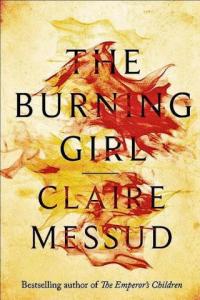 ‘The Burning Girl’ by Claire Messud tells the story of Julia Robinson and her friendship with Cassie Burnes during their childhood growing up in the small Massachusetts town of Royston. After meeting at nursery, they are inseparable throughout school but looking back years later, Julia remembers the circumstances which led to them drifting apart. Continue reading →
Filed under Books
Tagged as Book, Book Review, Book Reviews, Claire Messud, Fiction, Literature, New Books, Novels, Reading, Reviews, The Burning Girl
September 10, 2017 · 4:27 pm
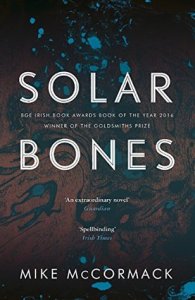 ‘Solar Bones’ by Mike McCormack won the Goldsmiths Prize last year and has been longlisted for the Man Booker Prize this year after it was picked up by the UK-based publisher Canongate. It tells the story of Marcus Conway, a middle-aged civil engineer living in a small town on the west coast of Ireland who is sitting at his kitchen table on All Souls Day reflecting on his life with his wife Mairead and their children Agnes and Darragh. Continue reading →
Filed under Books
Tagged as Book, Book Review, Book Reviews, Fiction, Ireland, Literature, Man Booker Prize, Man Booker Prize 2017, Mike McCormack, Novels, Reading, Reviews, Solar Bones
August 20, 2017 · 11:40 am
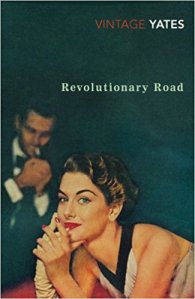 ‘Revolutionary Road’ by Richard Yates tells the story of Frank and April Wheeler, a married couple in their late twenties living in Connecticut on the Revolutionary Hill Estates with their two young children in 1955. Frank commutes to New York City but finds his job at Knox Business Machines very dull with few long-term prospects while April had dreamed of becoming an actress before marriage and motherhood led her to be a housewife. They long to escape their life in suburbia which they see as stifling and unfulfilling but their circumstances change when April discovers that she is pregnant again. Continue reading →
Filed under Books
Tagged as 1950s, American Literature, Book, Book Review, Book Reviews, Fiction, Literature, Novels, Reading, Reviews, Revolutionary Road, Richard Yates
August 6, 2017 · 5:30 pm
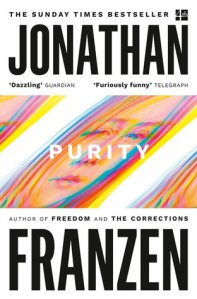 ‘Purity’ by Jonathan Franzen tells the story of Pip, a college graduate in her 20s living in Oakland, California and deeply in debt who is offered the chance to take an internship with the Sunlight Project in Bolivia led by East German peace activist Andreas Wolf. Pip hopes that working for the Sunlight Project – a Wikileaks-style organisation which traffics secrets – will lead her to some answers about her origins including the identity of her father. Her work eventually takes her to Denver where she meets investigative journalist Tom Aberant who has connections with Andreas and knows his darkest secret. Continue reading →
Filed under Books
Tagged as Book, Book Review, Book Reviews, Fiction, Jonathan Franzen, Literary Fiction, Literature, Novels, Purity, Reading, Reviews, Satire
July 30, 2017 · 6:20 pm
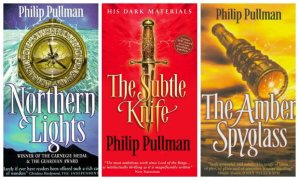 This month, I’ve broken the habit of a (five-year blogging) lifetime and reread the ‘His Dark Materials’ trilogy by Philip Pullman ahead of the publication of ‘La Belle Sauvage’, the first volume of the Book of Dust trilogy later this year. The first book in the series ‘Northern Lights’ is set in a parallel universe similar to ours but different in many ways and introduces twelve-year-old Lyra Belacqua and her dæmon companion Pantalaimon who travel to the North Pole to rescue her friend Roger from the Gobblers who are carrying out experiments on children. In ‘The Subtle Knife’ and ‘The Amber Spyglass’, Lyra meets Will Parry and they travel between different universes including our own in pursuit of the meaning of Dust. Continue reading →
Filed under Books
Tagged as Book, Book Review, Book Reviews, Fantasy, Fiction, His Dark Materials, Northern Lights, Novels, Philip Pullman, Reading, Reviews, The Amber Spyglass, The Subtle Knife



 A Little Blog of Books
You must be logged in to post a comment.