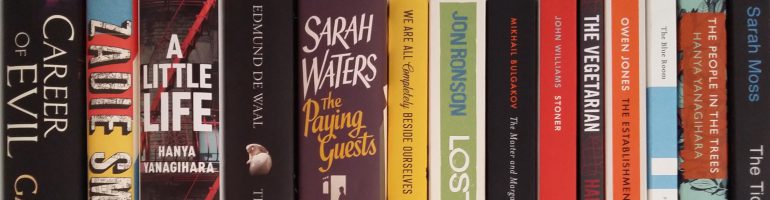
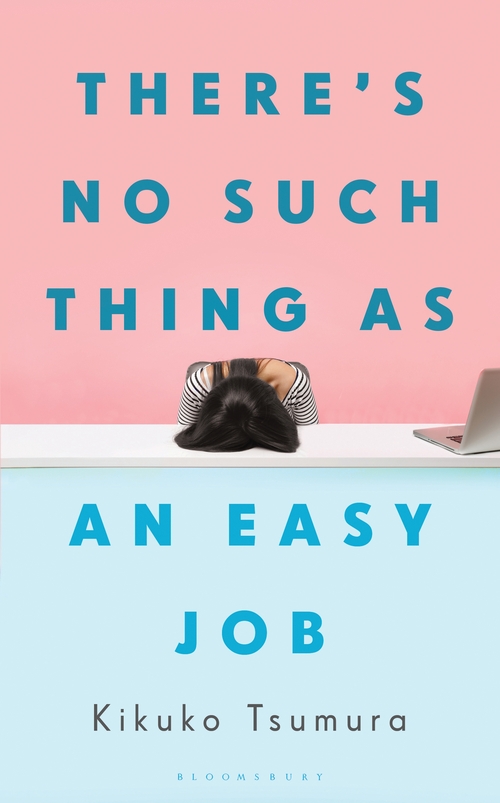
After a long period of neglect, I have been reading more books in translation recently, including some recently published titles. There’s No Such Thing as an Easy Job by Kikuko Tsumura has been translated from the Japanese by Polly Barton and sees an unnamed woman in her mid-30s walk into an employment agency looking for a job that has the following traits: it is close to her home, requires no reading or writing and preferably very little thinking. The book follows her attempts at five different roles: surveillance, recording voice ads for buses, writing fun facts to be printed on cracker wrappers, putting up posters and park maintenance. Tsumura wrote her debut novel after her own experience of job burnout and it captures a sense of listlessness in a way that will have you counting down the days until you are entitled to claim your own pension. With deadpan humour and a bit of magical realism, it ends up being a bit of an aimless novel overall, yet also quite thought-provoking about the meaning of job satisfaction, particularly in the context of workplace culture in Japan which is known for extreme presenteeism.
Tag Archives: Literature
Three Books in Translation
Comments Off on Three Books in Translation
Filed under Books
The Handmaid’s Tale and The Testaments by Margaret Atwood
I first read The Handmaid’s Tale by Margaret Atwood about 10 years ago and recently reread it followed by the long-awaited sequel The Testaments. Atwood’s dystopian classic first published in 1985 depicts the Republic of Gilead, a totalitarian and patriarchal state created after the downfall of the United States some time in the 21st century. It is narrated by Offred, a handmaid who is forced to produce children for Commander Waterford and his wife Serena Joy.
As a reread, ‘The Handmaid’s Tale’ was fresher in my mind than it would have been thanks to the recent television series which is a very faithful adaptation of the novel. I particularly admire Atwood’s skill at detailed world-building in relatively spare prose. Even though there isn’t a huge amount of description of what Offred’s surroundings look like or even much explanation about the creation of Gilead initially, Atwood paints a vivid and shocking portrait of this dystopian world, gradually building towards a dramatic conclusion. Continue reading
Filed under Books
My Most Anticipated Books of 2021
There are a lot of new books coming in 2021. Here are the titles I am looking forward to reading the most, although I probably won’t get round to all of them this year. All publication dates where known apply to the United Kingdom only.
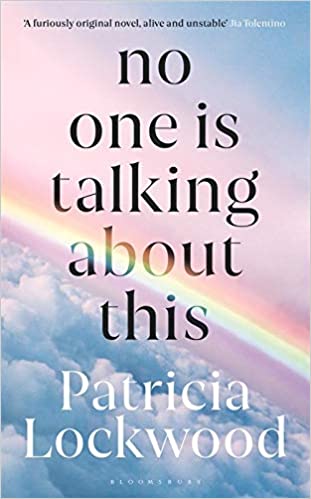
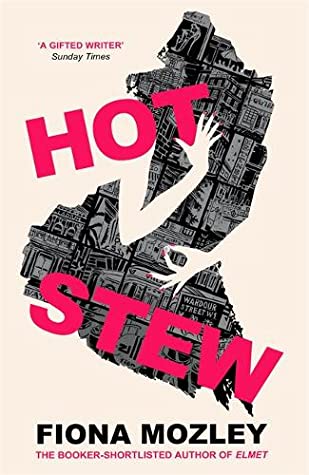
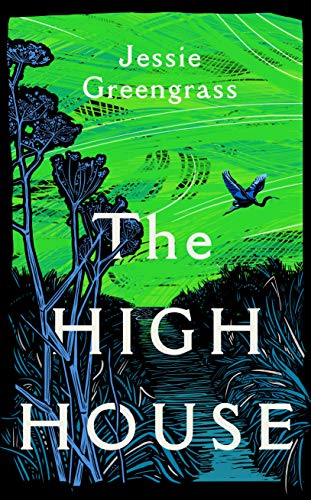
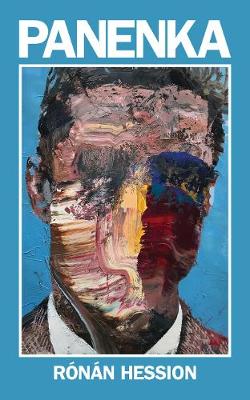
High-profile debut novels out in early 2021 include Luster by Raven Leilani and No One Is Talking About This by Patricia Lockwood whose memoir Priestdaddy I reviewed last month. Several of the books I will be looking out for are second novels by authors who have written impressive debuts. Hot Stew by Fiona Mozley is set in modern-day Soho in London and sounds like a real departure from the Booker Prize-shortlisted Elmet. The High House by Jessie Greengrass is the second novel by the author of Sight. It addresses climate change and is out in April. Panenka by Ronan Hessian sees the author of the word-of-mouth success Leonard and Hungry Paul return with his new novel in May about a man who is living with mistakes he made in the past. Out in February, Light Perpetual by Francis Spufford tells the possible stories of five children if they hadn’t been killed by a V2 bomb in London in 1944 – a very different concept and setting from the 18th century New York depicted in his debut Golden Hill.
Filed under Books
Hamnet by Maggie O’Farrell and Summerwater by Sarah Moss
I have read two books recently which were top of my wish list for this year’s Booker Prize longlist but sadly didn’t make the cut. The omission of Hamnet by Maggie O’Farrell has surprised a lot of people although it has been shortlisted for the Women’s Prize for Fiction this year. O’Farrell’s eighth novel and her first foray into historical fiction is a reimagining of the short life of William Shakespeare’s son Hamnet in Warwickshire in the late sixteenth century. The playwright himself only has a background part in this story which is told from the point of view of his wife Agnes (more commonly known as Anne Hathaway, O’Farrell uses the name given in her father’s will) who is the mother of their daughter Susanna followed by twins Hamnet and Judith. The novel focuses on events before and after Hamnet’s early death at the age of 11 in 1596, the true cause of which is unknown but is presented as bubonic plague here. Continue reading
Filed under Books
The Booker Prize 2020 Longlist
The Booker Prize 2020 longlist was announced on Tuesday. The 13 titles are:
The New Wilderness by Diane Cook
This Mournable Body by Tsitsi Dangarembga
Burnt Sugar by Avni Doshi
Who They Was by Gabriel Krauze
The Mirror & The Light by Hilary Mantel
Apeirogon by Colum McCann
The Shadow King by Maaza Mengiste
Such a Fun Age Kiley Reid
Shuggie Bain by Douglas Stuart
Real Life by Brandon Taylor
Redhead by The Side of The Road by Anne Tyler
Love and Other Thought Experiments by Sophie Ward
How Much of These Hills is Gold by C Pam Zhang Continue reading
Filed under Books
The Booker Prize 2020: Predictions, Possibilities and Preferences
Booker Prize longlist predictions are rarely dominated by one book, but the question of whether or not The Mirror and the Light by Hilary Mantel will make the cut will shape a lot of the debate this year. It would open up the potential for Mantel to be the first author to win the Booker Prize three times following the first two books in the trilogy about the life of Thomas Cromwell, Wolf Hall in 2009 and Bring Up the Bodies in 2013.
If the judges do select ‘The Mirror and the Light’, they will still need to nominate another 12 books to sit alongside it on the “Booker dozen” longlist. I haven’t read many eligible books this year due to library closures during lockdown which is my main source of new books. However, I was lucky enough read a review copy of Summerwater by Sarah Moss which is due to be published next month and I would very much like to see Moss receive a long overdue nomination for this brilliantly unnerving novel set in a Scottish holiday park. I also enjoyed Scabby Queen by Kirstin Innes which is about the life of a Scottish pop star and political activist who takes her own life. Continue reading
Filed under Books
Books In The Time Of Coronavirus
Until recently, the closure of all libraries and bookshops until further notice in the UK and many other countries across the world was a scenario which would only be considered in the context of a dystopian novel, but this is now the new reality we live in as social distancing measures come into force to prevent the spread of coronavirus. I currently have one physical library book checked out (‘The Body’ by Bill Bryson – from what I’ve read so far, I can tell you that pages 33-36 on viruses have acquired a new significance since the book was first published just six months ago) and I have no idea when I’ll be able to return it. Fortunately, the library service I use has a very good ebook selection so I’ll be using that a lot over the next few months. Continue reading
Filed under Books
More Books I Read in January
I am planning to reduce my blog post frequency to fortnightly or monthly posts, so I can use my time to write shorter reviews of more books, rather than focusing on the ones I can write longer reviews for each week which has been my main pattern for nearly 8 years (!) of blogging.
I am also planning to reread a few books this year, mostly ones I first read when I was a teenager. ‘Nineteen Eighty-Four’ by George Orwell is not quite the blueprint of the modern dystopian novel, but it is probably the one which has had the most cultural significance since it was first published in 1949 and the concepts of Big Brother, Room 101 and the Thought Police remain commonly used terms. Even if you haven’t read ‘Nineteen Eighty-Four’, you may well be aware of the basic plot in which low-ranking member of The Party, Winston Smith, secretly denounces the government and begins a forbidden relationship with Julia. Needless to say their rebellion is risky and complicated and it is remarkable just how prescient and perceptive Orwell was about the sinister consequences of certain technological developments in the 20th century and the ways in which totalitarian states seek to gain control through surveillance. As a reread, the thing that struck me most was how powerful and fitting the ending is and it’s easy to see why ‘Nineteen Eighty-Four’ has become such an enduring classic. Continue reading
Filed under Books
My Most Anticipated Books of 2020
I have an ever-growing list of anticipated books due to be published in 2020. Here are the titles I am looking forward to reading the most. All publication dates where known are for the United Kingdom only.
In non-fiction, Notes from an Apocalypse by Mark O’Connell is the Wellcome Book Prize-winning author’s second book after To Be a Machine. Due in April, it will explore how we get to grips with the future and the possible end of the world in an age of anxiety.
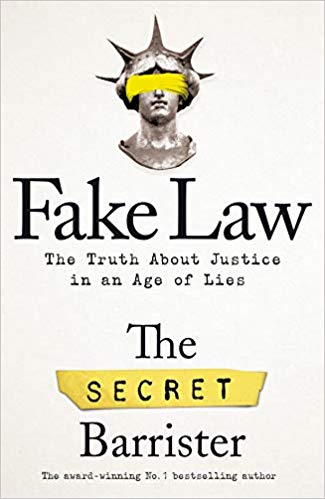
Also due in April, Fake Law: The Truth About Justice in an Age of Lies by The Secret Barrister promises to be an equally eye-opening account as his/her bestselling debut book of how the legal system really works, this time focusing on themes of ignorance, corruption and fake news. Continue reading
Filed under Books
My Books of the Year 2019
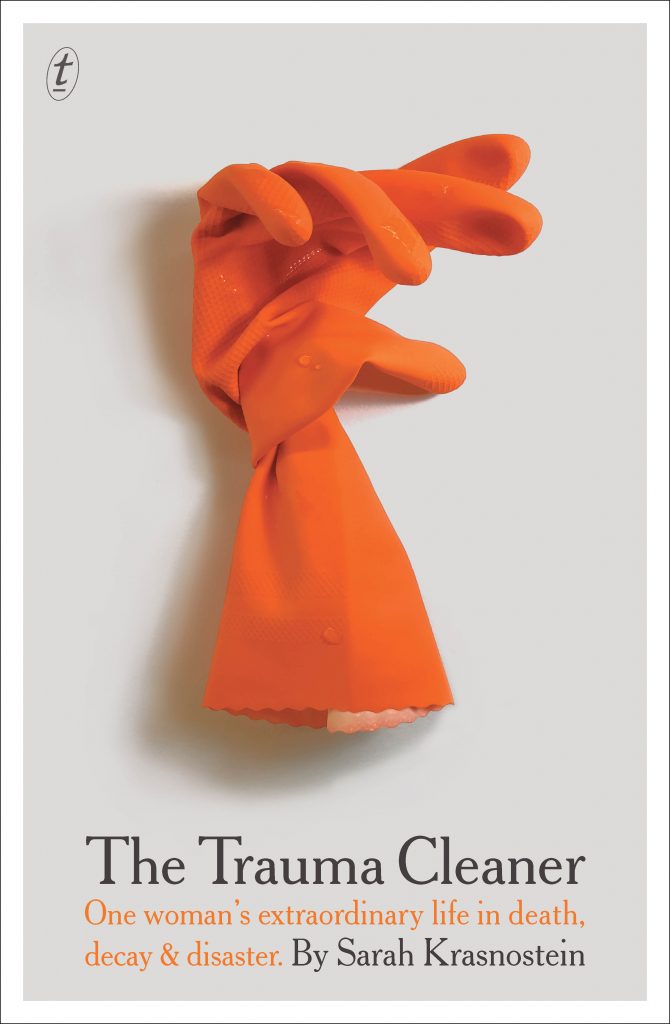
2019 is the first year non-fiction has more or less overtaken fiction in my reading. This is partly due to shadowing the Wellcome Book Prize at the beginning of the year. My favourite titles from this year’s longlist include the excellent This Really Isn’t About You by Jean Hannah Edelstein and The Trauma Cleaner by Sarah Krasnostein – the latter was our shadow panel winner.
Unfortunately, the Wellcome Book Prize has been paused for 2020. Mother Ship by Francesca Segal and The World I Fell Out Of by Melanie Reid would definitely have been on my longlist wishlist – two outstanding memoirs about the premature birth of twins and spinal injury respectively. This year’s Baillie Gifford Prize winner The Five by Hallie Rubenhold about the lives of Jack the Ripper’s victims is another stand-out title as is last year’s winner Chernobyl by Serhii Plokhy. Continue reading
Filed under Books
Novels That Shaped Our World
I was invited to celebrate the launch of the BBC’s ‘Novels That Shaped Our World’ campaign at New Broadcasting House on Tuesday night with other book bloggers and vloggers. It begins a year-long celebration of literature at the BBC and also marks the 300th anniversary of ‘Robinson Crusoe’ by Daniel Defoe which is widely considered to be the first modern English novel.
Six writers and critics – Stig Abell, Syima Aslam, Juno Dawson, Kit de Waal, Mariella Frostrup and Alexander McCall Smith – have come up with a list of 100 novels that shaped our world. The list itself is not going to please everyone. It consists of English language titles only and it also includes several series such as the Earthsea trilogy and Discworld, so to call it a list of “100 novels” isn’t strictly true. However, I think those bemoaning the fact that it is not a collection of “greatest” novels featuring lots of worthy tomes are slightly missing the point, as it is very much a list of books which have had personal impact on the panellists. That’s not to say that books traditionally thought of as great literature are not here because they are (‘Pride and Prejudice’, ‘Middlemarch’, ‘Nineteen Eighty-Four’ and ‘To Kill A Mockingbird’ are among those which made the cut). But it seems to have upset some people that they appear alongside more modern books considered to be guilty pleasures (‘The Twilight Saga’ and ‘Riders’ being two which are typically excluded from these kind of lists). Organised thematically, it’s a bit like an updated version of The Big Read series from the early 2000s but without a public vote, thereby preventing the overrepresentation of Jeffrey Archer and Jacqueline Wilson this time. Continue reading
Filed under Books
Spring by Ali Smith and Supper Club by Lara Williams
I haven’t read any of this year’s Booker Prize longlist yet, but I have read two of the novels shortlisted for the Guardian’s Not the Booker prize which recognises an alternative selection of eligible books chosen by the public, judges and book champions. ‘Spring’ by Ali Smith wouldn’t look out of place on this year’s official Booker Prize longlist which mostly consists of novels by established authors, although I have read that her novels are no longer submitted to literary awards for consideration. It is the third book in Smith’s quartet of seasonally themed novels following Autumn (which was shortlisted for the Man Booker Prize in 2016) and Winter. Continue reading
Filed under Books
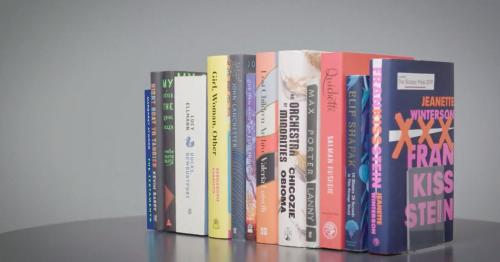
The Booker Prize 2019 Longlist
The Booker Prize 2019 longlist was announced on Wednesday. The 13 titles are:
The Testaments by Margaret Atwood
Night Boat to Tangier by Kevin Barry
My Sister, The Serial Killer by Oyinkan Braithwaite
Ducks, Newburyport by Lucy Ellmann
Girl, Woman, Other by Bernardine Evaristo
The Wall by John Lanchester
The Man Who Saw Everything by Deborah Levy
Lost Children Archive by Valeria Luiselli
An Orchestra of Minorities by Chigozie Obioma
Lanny by Max Porter
Quichotte by Salman Rushdie
10 Minutes 38 Seconds In This Strange World by Elif Shafak
Frankissstein by Jeanette Winterson
I posted a list of predictions last Sunday – part personal wish list and part those I thought might be successful based on trends from past longlists. In the end, I got four right: ‘Lost Children Archive’ by Valeria Luiselli which was also on the Women’s Prize for Fiction longlist, ‘Ducks, Newburyport’ by Lucy Ellmann which looks set to be the indie publishing hit of the year, ‘The Wall’ by John Lanchester and ‘The Testaments’ by Margaret Atwood. Overall, there are fewer surprises than usual in a longlist dominated by established names and previous prizewinners. My prediction about historical fiction hasn’t really transpired in the actual longlist which appears to be more focused on contemporary settings and issues, but I will still be looking out for the books I listed last week. Continue reading
Filed under Books
The Booker Prize 2019: Predictions, Possibilities and Preferences
The Booker Prize longlist (no longer sponsored by the Man Group) for 2019 is due to be announced on Wednesday 24th July which means it’s time for another game of what Julian Barnes once termed “posh bingo”. I’ve come up with a list of predictions in terms of what I think could be some strong possibilities alongside my own personal preferences, based on a few eligible books I have read in recent months as well as ones I haven’t. As ever, I have no idea which novels have actually been submitted for consideration.
Of the eligible books I have read, one of the most striking titles is Throw Me To The Wolves by Patrick McGuinness which is a literary crime novel loosely based on what happened to Christopher Jefferies when he was wrongly accused of murder and follows the 2011 shortlisting for McGuinness’s debut novel The Last Hundred Days. I would also like to see Little by Edward Carey on the longlist which is a fictionalised account of the early life of Madame Tussaud. Continue reading
Filed under Books
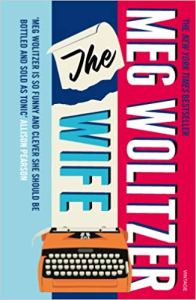
The Wife by Meg Wolitzer
I watched the excellent film adaptation of ‘The Wife’ by Meg Wolitzer recently (currently available to stream on Netflix in the UK) and still had Glenn Close’s performance in mind when I read the book which was first published in 2003, so this week’s blog post is more of a joint review of both. Joan has been married to celebrated novelist Joe Castleman for forty years after meeting in the late 1950s. She was his student in a creative writing class at Smith College and they began an affair which ended his first marriage. In the present day, they are travelling to Scandinavia where Joe is due to receive a literary award – the Nobel Prize for Literature in the film, the fictional Helsinki Prize in the book, which is said to be slightly less important than the Nobel Prize for Literature but prestigious nonetheless. However, during the flight, Joan decides that enough is enough and plans to end their marriage after years of putting up with Joe’s philandering. Continue reading
Filed under Books
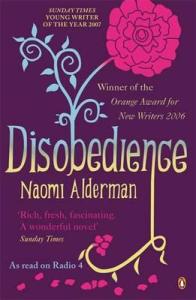
Disobedience by Naomi Alderman
I enjoyed Naomi Alderman’s Baileys Women’s Prize for Fiction-winning feminist dystopian novel The Power and I have recently read her 2006 debut ‘Disobedience’ which won the Sunday Times Young Writer of the Year Award and Orange Award for New Writers. It tells the story of Ronit Krushka who grew up in a strict Orthodox Jewish community in Hendon in north London and now lives in New York working as a financial analyst having turned her back on her faith and family. She is due to attend a memorial service for her estranged father who was a respected rabbi and it appears that Ronit’s cousin, Dovid, is likely to be his successor. However, when she returns to London, she discovers that Dovid has married Esti, her childhood best friend and former lover. Continue reading
Filed under Books
The Women’s Prize for Fiction Longlist 2019

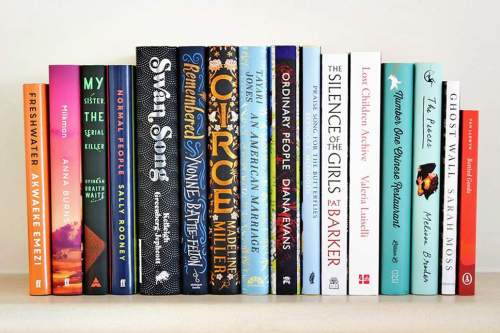
The Women’s Prize for Fiction 2019 longlist was announced earlier this week. The 16 nominated books are:
The Silence of the Girls by Pat Barker
Remembered by Yvonne Battle-Felton
My Sister, the Serial Killer by Oyinkan Braithwaite
The Pisces by Melissa Broder
Milkman by Anna Burns
Freshwater by Akwaeke Emezi
Ordinary People by Diana Evans
Swan Song by Kelleigh Greenberg-Jephcott
An American Marriage by Tayari Jones
Number One Chinese Restaurant by Lilian Li
Bottled Goods by Sophie van Llewyn
Lost Children Archive by Valeria Luiselli
Praise Songs for the Butterflies by Bernice L McFadden
Circe by Madeline Miller
Ghost Wall by Sarah Moss
Normal People by Sally Rooney Continue reading
Filed under Books
The Wellcome Book Prize 2019: Predictions
Celebrating its tenth anniversary this year, the longlist for the 2019 Wellcome Book Prize will be announced on Tuesday. The £30,000 prize is awarded to a work of fiction or non-fiction which engages with some aspect of healthcare or medicine published in the UK last year. It has become my favourite book award in the last couple of years and once again, I will be shadowing the shortlist of six books to be announced in March with Rebecca, Paul, Laura and Annabel and between us, we will also be covering the longlist of twelve books too.
I imagine that the majority of the books submitted for consideration are non-fiction titles (they usually dominate the shortlists at any rate) but there are a fair number of novels which could also be in the running, even though the thematic criteria is more subjective. An obvious contender among fiction titles is Sight by Jessie Greengrass about a woman who is pregnant with her second child and undertakes research into the history of psychoanalysis and X-rays. I have also read Little by Edward Carey which is a fictionalised account of the early life of Madame Tussaud who made wax models of body parts in Paris in the late 18th century before living in London. Continue reading
Filed under Books


You must be logged in to post a comment.