
I did this survey last year so here it is again….
1. Best Book You Read In 2013? (You can break it down by genre if you want) This is hard… in terms of fiction, highlights definitely include ‘A Tale for the Time Being‘ by Ruth Ozeki, ‘Life After Life‘ by Kate Atkinson and ‘Red Joan‘ by Jennie Rooney. The best non-fiction book was probably ‘Quiet‘ by Susan Cain. I don’t give books star ratings in my reviews so it is difficult to judge and compare a whole year’s worth of reading.
2. Book You Were Excited About & Thought You Were Going To Love More But Didn’t? I was not so much disappointed but just rather perplexed by ‘The Orphan Master’s Son‘ by Adam Johnson. I was intrigued by the story’s setting in North Korea but it didn’t really grab me as much as I thought it would. Continue reading
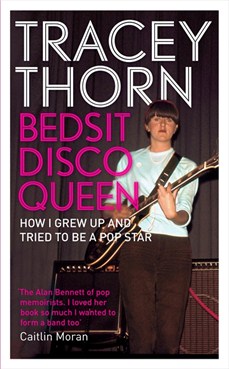


 ‘Giving Up the Ghost’ is Hilary Mantel’s memoir first published in 2003, six years before she won the Booker Prize in 2009
 If Don Draper from Mad Men was (a) a real person and (b) still alive in the 21st century having somehow avoided smoking or drinking himself to death, I am sure that he would have a lot to say about ‘No Logo’ by Naomi Klein.
 ‘Levels of Life’ by Julian Barnes is (I think) the only book I have reviewed on this blog which I have tagged as both fiction and non-fiction. Part essay, part fiction and part memoir, the book certainly defies simple categorisation despite being less than 120 pages long.

 ‘On Writing: A Memoir of the Craft’ by Stephen King is part-autobiography, part advice manual for aspiring authors. The first part of ‘On Writing’ is a personal and often very witty memoir as King recalls his journey towards becoming a published author. The second part explores what King calls the ‘writer’s toolbox’, including tips on vocabulary, grammar, elements of style and editing. The final part is where King describes the car accident in 1999 which nearly killed him halfway through writing this very book and the long recovery process afterwards. There is also a very interesting reading list at the end (along with a second one if you read the 10th anniversary edition as I did). It sounds like a slightly haphazard structure but it works because the subject of writing is always at the heart of it.

 ‘Freakonomics: A Rogue Economist Explores the Hidden Side of Everything’ by Steven D. Levitt and Stephen J. Dubner explores some of the everyday mysteries of life through the prism of economics, understood in the broadest sense as the study of incentives. Economics as a subject generally doesn’t inspire much enthusiasm but here is where you might be surprised.






You must be logged in to post a comment.