As always, I have been keeping an eye on new books coming soon in 2026, despite already having so many other books on my TBR list…
In fiction, Departure(s) by Julian Barnes is said to be the Booker Prize-winning author’s final novel about memory and illness and will be published this month. A much talked-about debut novel due in February is Lost Lambs by Madeline Cash about a dysfunctional family. Hooked by Asako Yuzuki and translated from the Japanese by Polly Barton follows the phenomenal success of Butter with similar themes of food and loneliness in contemporary Japan and is due in March.




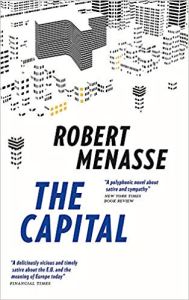 I am sure there are many books of various genres currently being written about Britain leaving the European Union right now, but maybe not so many which satirise the complex bureaucracy of the EU itself. However, Robert Menasse’s novel addresses the latter topic, won the German Book Prize in 2017 and has now been translated into English by Jamie Bulloch. Set in Brussels where the headquarters of the main EU institutions are located, the Directorate-General for Culture has been tasked with organising a celebration to mark the 50th anniversary of the European Commission. Martin Susman, the Austrian PA to ambitious Greek Cypriot Fenia Xenopoulou suggests putting Auschwitz survivors at the centre of the jubilee event. Meanwhile, the complexities of European agricultural policy, trade deals and the cost of pork exports to China cause headaches and petty power games galore and Inspector Brunfaut is investigating the death of an unnamed man in the Hotel Atlas.
 Translated from the Japanese by Ginny Tapley Takemori, ‘Convenience Store Woman’ by Sayaka Murata tells the story of Keiko Furukura, a socially awkward woman in her mid-thirties who has been working at the Hiiromachi Station Smile Mart shop for the past eighteen years. She feels under pressure from others, particularly her family, to appear “normal” and meet society’s expectations, by which she must find a career with more prospects or get married and have children.
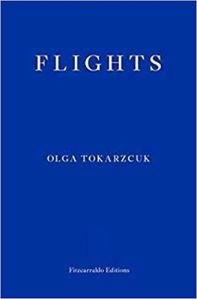 I have recently read this year’s winner of the Man Booker International Prize ‘Flights’ by Olga Tokarczuk which was first published in Poland back in 2007 and has been translated by Jennifer Croft. I didn’t have time to shadow the MBIP last spring but as August is Women in Translation Month, this seemed like a good time to find out what to make of it. ‘Flights’ is about an unnamed woman and her reflections on travelling – and that’s about it as far as plot goes in this very fragmented book which can only be described as a “novel” in the loosest sense possible as it is more of a collection of thematically linked observations and vignettes.
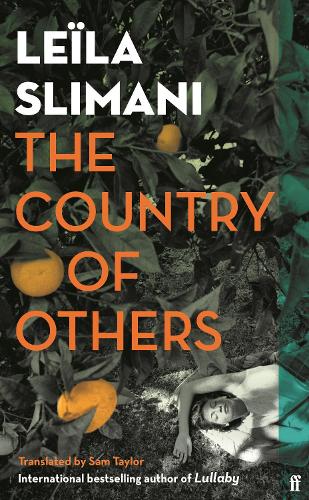
 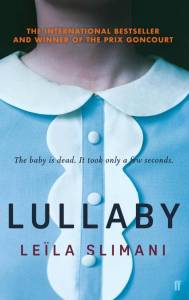 Winner of the prestigious Prix Goncourt and recently translated from the French by Sam Taylor, ‘Lullaby’ by Leïla Slimani has been one of the most talked-about novels so far this year, partly inspired by a real-life case of a nanny who killed two children in New York in 2012. Paul and Myriam live in a fashionable area of north-west Paris with their two young children, Mila and Adam. Paul works in the music business and Myriam is a criminal lawyer of North African descent who hires a nanny, Louise, to look after the children when she decides to resume her career. Initially, Louise appears to be perfect and indispensable to the family, but her behaviour becomes increasingly concerning.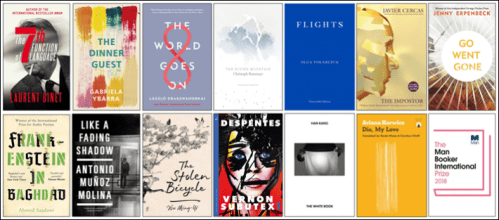
 Although I’m not participating in the shadow panel this year, I have been thinking about possible contenders for this year’s Man Booker International Prize longlist which is due to be announced tomorrow. My
 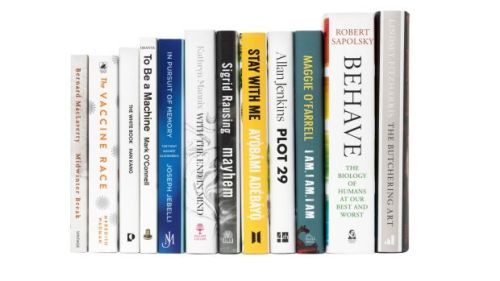 This year’s Wellcome Book Prize longlist has been announced today. The twelve books are:
 Among new fiction titles,
 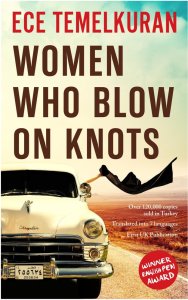 Translated from the Turkish by Alexander Dawe, ‘Women Who Blow on Knots’ by Ece Temelkuran won the Edinburgh First Book Award earlier this year and I bought my copy during my visit to the city last summer. It tells the story of four women embarking on a road trip across North Africa from Tunisia to Lebanon during the Arab Spring. They are Tunisian activist and dancer Amira, Egyptian academic Maryam who is obsessed with Dido, Queen of Carthage, an unnamed Turkish journalist who narrates the story and the mysterious elderly Madam Lilla who has connections with the Russian mafia and intelligence agencies. It is Madam Lilla who invites the three women to accompany her on the trip although her real intentions for travelling to Lebanon only become clear much later.



 A Little Blog of Books

You must be logged in to post a comment.