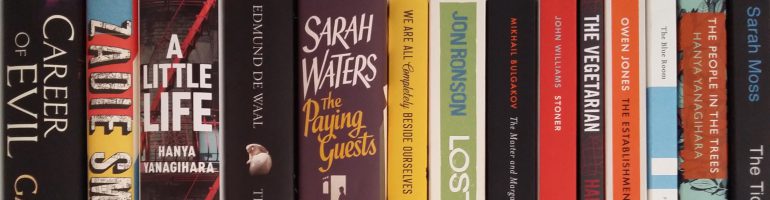
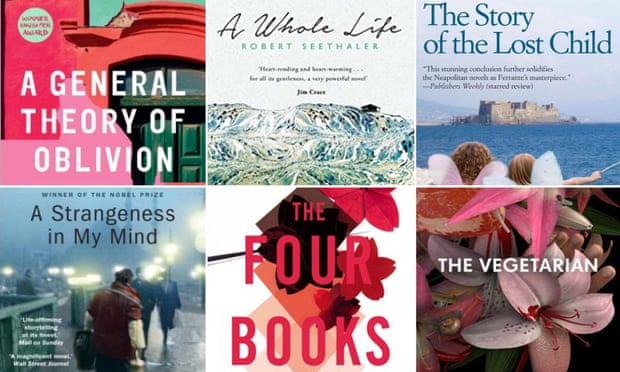
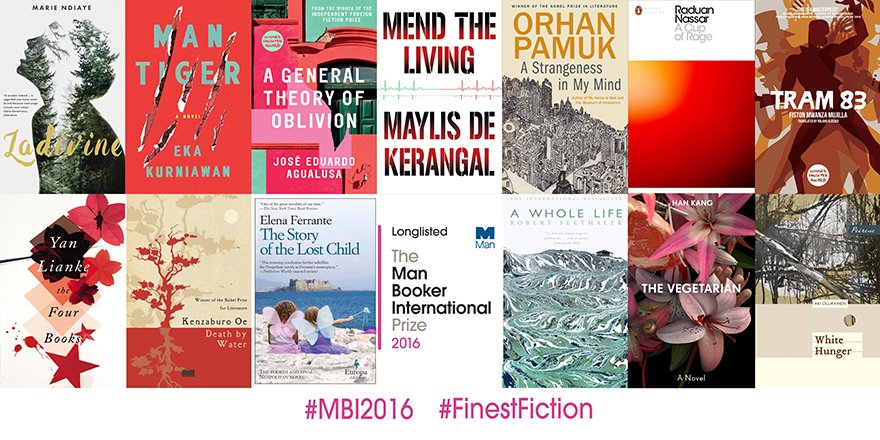
 It has just been announced that the first winner of this year’s reconfigured Man Booker International Prize is The Vegetarian by Han Kang translated from the Korean by Deborah Smith. A very well deserved win for one of the most startlingly original and surreal works of translated fiction I’ve read this year. Many congratulations to them both!
Myself and my fellow shadow panel members also voted for our winner last week from our own shortlist consisting of Ferrante, Lianke, NDiaye, Oe, Kang and de Kerangal. It was a close run thing between ‘The Vegetarian’ and Death by Water by Kenzaburo Oe in the run-off vote but ‘The Vegetarian’ also came out top in the end, meaning that we are in agreement with the real judging panel for the second year in a row (last year, we selected The End of Days by Jenny Erpenbeck as our winner for the now-defunct Independent Foreign Fiction Prize). While ‘Death by Water’ had its devoted fans amongst our group, ‘The Vegetarian’ had wider support in both the longlist and shortlist stages and also featured in many of our early prediction lists before the longlist was even announced. Continue reading
 Set in near-future America, ‘The Mandibles: A Family, 2029-2047’ by Lionel Shriver follows four generations of an American family who had been waiting to inherit the fortune of 97-year-old patriarch Douglas Mandible. However, a total fiscal meltdown in the form of a cyber attack has wiped out the economy along with the Mandible’s wealth and all communications including the Internet. After the “Great Renunciation” when the President of the United States defaults on the country’s massive debt obligations, the Mandibles are all forced to live together under one roof in order to survive.
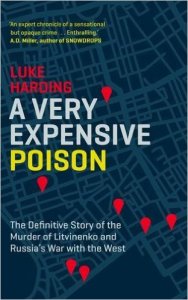 ‘A Very Expensive Poison: The Definitive Story of the Murder of Litvinenko and Russia’s War with the West’ by Luke Harding outlines the chilling murder of a Russian dissident which resulted in the rapid deterioration of Moscow’s relationship with the West. Former FSB agent Alexander Litvinenko fled to London in 2000 with his wife and son after publicly criticising the Kremlin and later worked as a journalist and consultant for MI6. He was poisoned with polonium at the Millennium Hotel in Mayfair in November 2006 and the subsequent investigation into his murder has had a significant impact on Anglo-Russian relations over the past decade.
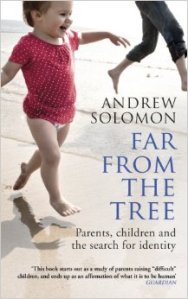 Winner of the Wellcome Book Prize in 2014, ‘Far From the Tree: Parents, children and the search for identity’ is Andrew Solomon’s account of “ordinary people making courageous choices”. It is a densely written and detailed study which examines the links between identity and disability and the challenges faced by those perceived to be “different”. Divided into ten main topics, the first six (deaf, dwarfs, Down’s Syndrome, autism, schizophrenia, disability) focus on “horizontal” categories typically classified as illnesses, while the other four (prodigies, rape, crime, transgender) are “vertical” identities which are assumed to be socially constructed.
 A Whole Life by Robert Seethaler translated from the German by Charlotte Collins has been shortlisted for the Prize and deservedly so. Even though it didn’t make it on to the shadow panel list, this book is one of my personal favourites and I would be very happy if it won the overall prize. It tells the story of Andreas Egger, a solitary man who lives in a remote mountain village in Austria during the twentieth century. The tone is very similar to that of

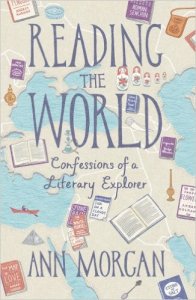 ‘Reading the World: Confessions of a Literary Explorer’ (also published under the title ‘The World Between Two Covers’ in the United States) is Ann Morgan’s account of how she read a book from every country in the world after realising that her literary diet mostly consisted of British and American authors. Rather than cobbling together Morgan’s reviews of the 197 books she read in 2012 which are already available for free on her excellent blog
 Translated from the Japanese by Deborah Boliver Boehm, ‘Death by Water’ by Kenzaburo Oe tells the story of Kogito Choko, an author aged in his 70s reflecting on his long career. For many years, he has struggled to write the “drowning” novel based on his father’s death shortly after the Second World War. Kogito returns to his rural home town to look at his father’s red leather trunk which his mother had instructed him not to open until ten years had passed after her death. However, it soon transpires that the contents of the trunk do not provide him with many answers, leaving Kogito limited time to unlock the secrets he needs to finish his book.
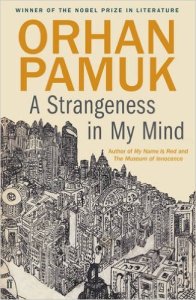 Translated from the Turkish by Ekin Oklap, ‘A Strangeness in My Mind’ by Orhan Pamuk tells the story of Mevlut Karata, a yoghurt and boza seller who lives in Istanbul. Melvut arrives in the city at the age of twelve in the late 1960s with his father from a poor village in Anatolia. He later elopes and marries Rayiha despite a case of mistaken identity in which he believed his love letters were being delivered to her sister. Over the course of four decades, he observes the political upheavals in the city and also experiences many personal challenges.
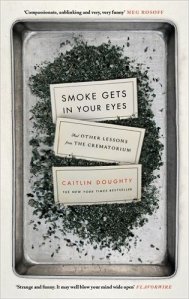 Smoke Gets in Your Eyes and Other Lessons from the Crematorium by Caitlin Doughty is an informative and thought-provoking memoir about the death industry written by a mortician seeking to demystify a taboo topic feared by almost everyone. Stories of burial practices, death rituals and cultural attitudes from around the world and throughout history are interwoven with Doughty’s personal experiences including the circumstances which led her to start working at Westwind Crematorium in San Francisco nearly a decade ago at the age of 23. Doughty’s sense of humour is appropriately dark without being disrespectful as she recounts some of her more memorable experiences at the crematorium and challenges readers to confront their own mortality. As much about life as it is about death, ‘Smoke Gets in Your Eyes’ is a fascinating look at a widely misunderstood career choice, although not a book I would recommend to the very squeamish or recently bereaved.
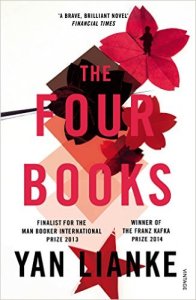 Translated from the Chinese by Carlos Rojas, ‘The Four Books’ by Yan Lianke is set in a labour camp in the ninety-ninth district near the Yellow River in north China where the Theologian, the Scholar, the Musician, the Author and other disgraced intellectuals are tasked with growing crops and smelting steel as part of their political “re-education”. The camp is led by a juvenile commander known as the Child who is also seeking approval from the “higher ups” in the party. However, as the economy fails and famine sets in, the inmates are left to survive on their own in appalling conditions.
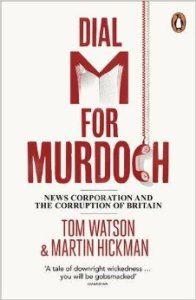 ‘Dial M for Murdoch: News Corporation and the Corruption of Britain’ by Tom Watson and Martin Hickman explores the background of the phone hacking scandal which engulfed Rupert Murdoch’s media empire News International. It was revealed in 2011 that messages on a mobile phone belonging to murdered teenager Milly Dowler had been hacked by journalists working for the News of the World, a former tabloid newspaper. The organisation initially used a “rogue reporter” defence but further evidence exposed how the practice had been carried out extensively for several years under the watch of several senior editors. This subsequently led to a complex investigation and public inquiry which implicated politicians and the police as much as the press.
 Following some early discussions this week, here is the shadow panel’s official response to the
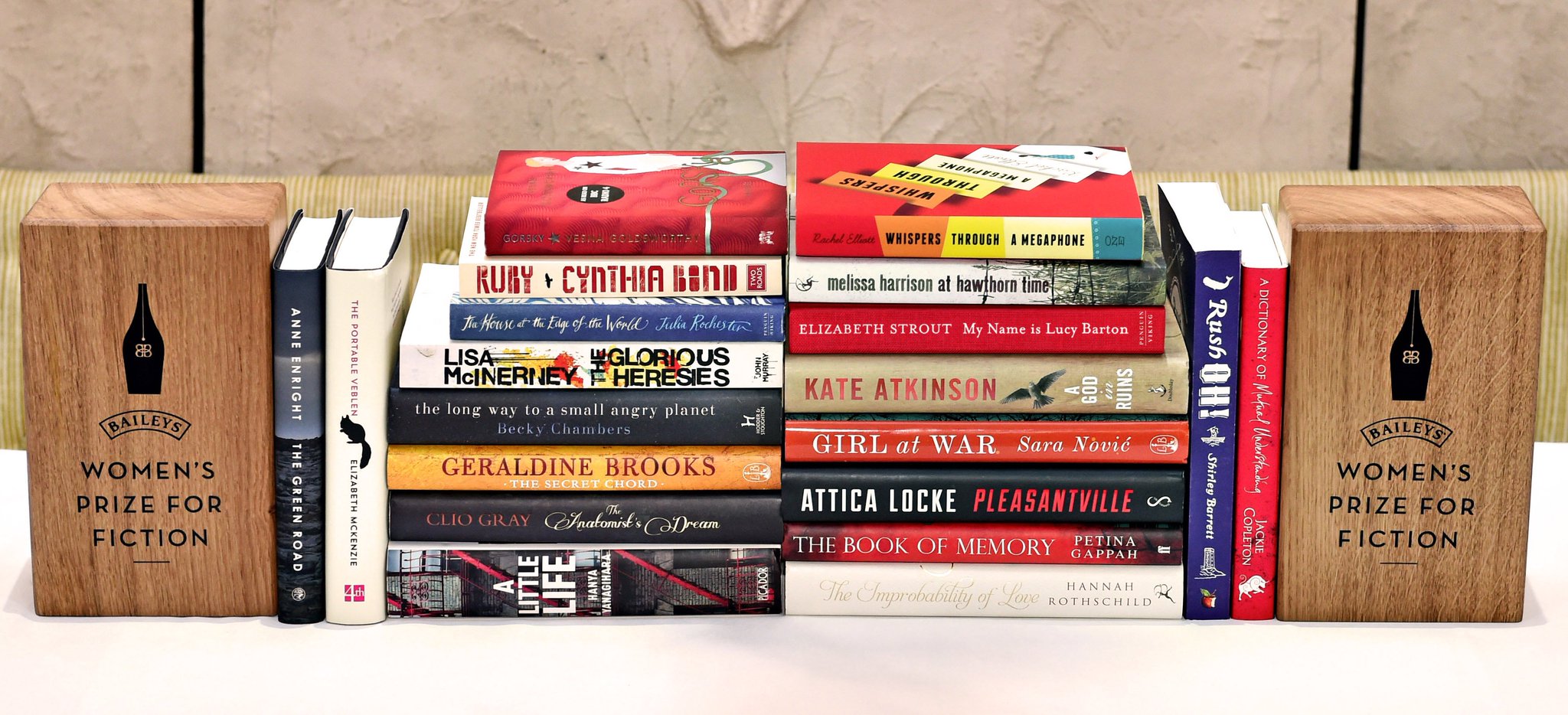
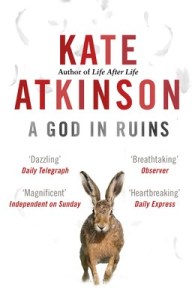 Kate Atkinson’s previous novel
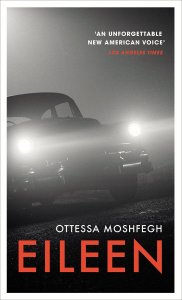 In 1964, the eponymous narrator of ‘Eileen’ by Ottessa Moshfegh is twenty-four years old, living with her alcoholic father and working as a secretary at a correctional facility for teenage boys. During the week leading up to Christmas, Eileen Dunlop is planning to disappear from her coastal Massachusetts home town which she names only as X-ville and start a new life in New York City. However, when she meets Rebecca Saint John, a new colleague at the correctional facility, events begin to take an unexpected turn.
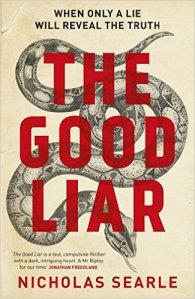 ‘The Good Liar’ by Nicholas Searle tells the story of Roy Courtnay, a conman aged in his eighties living in the leafy suburbs of England who is attempting to swindle wealthy widow Betty McLeish out of her life savings after meeting her on a dating website. However, although Betty appears to be a very easy target for Roy, she also appears to be suspiciously willing to become his latest victim.




You must be logged in to post a comment.