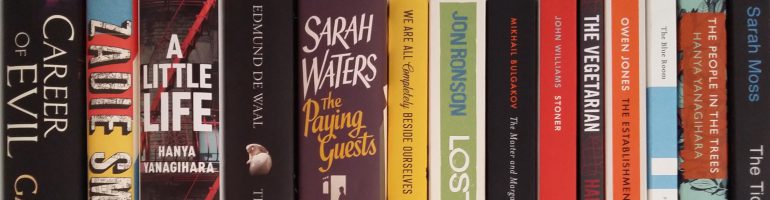
 It has just been announced that the first winner of this year’s reconfigured Man Booker International Prize is The Vegetarian by Han Kang translated from the Korean by Deborah Smith. A very well deserved win for one of the most startlingly original and surreal works of translated fiction I’ve read this year. Many congratulations to them both!
Myself and my fellow shadow panel members also voted for our winner last week from our own shortlist consisting of Ferrante, Lianke, NDiaye, Oe, Kang and de Kerangal. It was a close run thing between ‘The Vegetarian’ and Death by Water by Kenzaburo Oe in the run-off vote but ‘The Vegetarian’ also came out top in the end, meaning that we are in agreement with the real judging panel for the second year in a row (last year, we selected The End of Days by Jenny Erpenbeck as our winner for the now-defunct Independent Foreign Fiction Prize). While ‘Death by Water’ had its devoted fans amongst our group, ‘The Vegetarian’ had wider support in both the longlist and shortlist stages and also featured in many of our early prediction lists before the longlist was even announced. Continue reading
 Set in near-future America, ‘The Mandibles: A Family, 2029-2047’ by Lionel Shriver follows four generations of an American family who had been waiting to inherit the fortune of 97-year-old patriarch Douglas Mandible. However, a total fiscal meltdown in the form of a cyber attack has wiped out the economy along with the Mandible’s wealth and all communications including the Internet. After the “Great Renunciation” when the President of the United States defaults on the country’s massive debt obligations, the Mandibles are all forced to live together under one roof in order to survive.
 A Whole Life by Robert Seethaler translated from the German by Charlotte Collins has been shortlisted for the Prize and deservedly so. Even though it didn’t make it on to the shadow panel list, this book is one of my personal favourites and I would be very happy if it won the overall prize. It tells the story of Andreas Egger, a solitary man who lives in a remote mountain village in Austria during the twentieth century. The tone is very similar to that of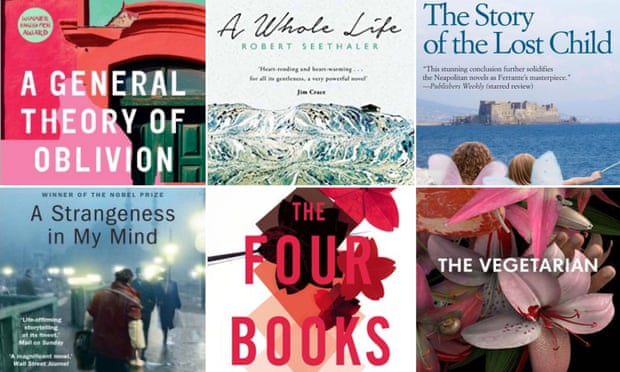
 Translated from the Japanese by Deborah Boliver Boehm, ‘Death by Water’ by Kenzaburo Oe tells the story of Kogito Choko, an author aged in his 70s reflecting on his long career. For many years, he has struggled to write the “drowning” novel based on his father’s death shortly after the Second World War. Kogito returns to his rural home town to look at his father’s red leather trunk which his mother had instructed him not to open until ten years had passed after her death. However, it soon transpires that the contents of the trunk do not provide him with many answers, leaving Kogito limited time to unlock the secrets he needs to finish his book.
 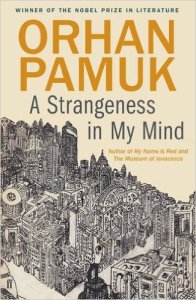 Translated from the Turkish by Ekin Oklap, ‘A Strangeness in My Mind’ by Orhan Pamuk tells the story of Mevlut Karata, a yoghurt and boza seller who lives in Istanbul. Melvut arrives in the city at the age of twelve in the late 1960s with his father from a poor village in Anatolia. He later elopes and marries Rayiha despite a case of mistaken identity in which he believed his love letters were being delivered to her sister. Over the course of four decades, he observes the political upheavals in the city and also experiences many personal challenges.
 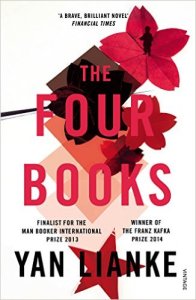 Translated from the Chinese by Carlos Rojas, ‘The Four Books’ by Yan Lianke is set in a labour camp in the ninety-ninth district near the Yellow River in north China where the Theologian, the Scholar, the Musician, the Author and other disgraced intellectuals are tasked with growing crops and smelting steel as part of their political “re-education”. The camp is led by a juvenile commander known as the Child who is also seeking approval from the “higher ups” in the party. However, as the economy fails and famine sets in, the inmates are left to survive on their own in appalling conditions.
  Following some early discussions this week, here is the shadow panel’s official response to the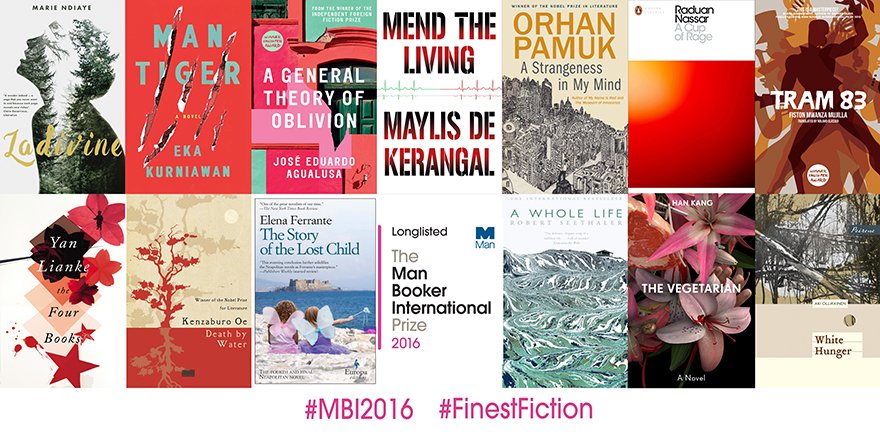

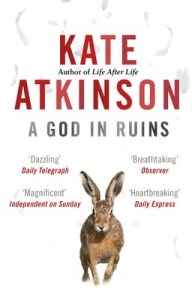 Kate Atkinson’s previous novel
  ‘The Noise of Time’ by Julian Barnes is a fictional account of the life of Dmitri Shostakovich, one of the most famous Russian composers of the twentieth century. The novel focuses on three key points in his life at twelve-year intervals. In the first part, Shostakovich is waiting by a lift shaft expecting the secret police to take him away and interrogate him at The Big House during the height of the purges in 1936. In the second part, he travels to the United States to deliver a speech on behalf of the Soviet Union in 1948. In the final part set in 1960, he is asked to become a party member under Khrushchev.
 ‘m looking forward to reading The Noise of Time by Julian Barnes, an author who can always be relied upon to write about something completely different every time he publishes a new book. His latest novel, his first since
  This Must Be The Place by Maggie O’Farrell will be published in May. I’ve enjoyed all of her novels, particularly
  ‘The Story of the Lost Child’ is the fourth and final novel by Elena Ferrante in her series of Neapolitan novels translated from the Italian by Ann Goldstein. While the third volume
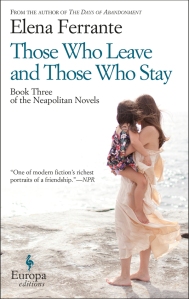 Translated from the Italian by Ann Goldstein, ‘Those Who Leave and Those Who Stay’ is the third volume of Elena Ferrante’s series of Neapolitan Novels following
 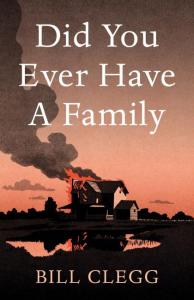 Longlisted for this year’s Man Booker Prize, ‘Did You Ever Have a Family’ by Bill Clegg opens with an explosion caused by a gas leak at June Reid’s house on the morning of her daughter’s wedding. The resulting fire destroys the whole house and kills June’s boyfriend Luke, ex-husband Adam, daughter Lolly, and Lolly’s fiancé William. June is the sole survivor and in the wake of the tragedy, she drives across the country to Washington. During her journey, details about the lives of the characters involved and the cause of the fire begin to emerge.




 A Little Blog of Books
You must be logged in to post a comment.