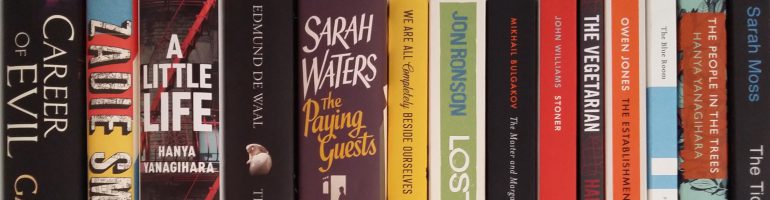
‘Capital’ by John Lanchester is a state-of-the-nation novel which follows the lives of the residents of Pepys Road in London in 2007-2008 just as the financial crisis is beginning to wreak havoc on the world. The characters come from all walks of life: they include a City banker, a Senegalese footballer, an elderly lady who has been diagnosed with a brain tumour, a Pakistani family who own the nearby corner shop and several other characters. They all begin to receive anonymous postcards with the message ‘We Want What You Have’ written on them. Why? Continue reading
Tag Archives: Fiction
A Thousand Acres by Jane Smiley
 Winner of the Pulitzer Prize for Fiction in 1992, ‘A Thousand Acres’ by Jane Smiley is essentially the plot of the Shakespeare play ‘King Lear’ set on a farm in Iowa in the 1980s. Approaching old age, Larry Cook decides to hand over ownership of his 1000 acre farm in Zebulon County to his three daughters, Ginny, Rose and Caroline. Caroline, the youngest, objects and is cut out of the will and before long, many other family secrets are revealed. Given the ‘King Lear’ link, I don’t think I will be giving away a great deal by saying that ‘A Thousand Acres’ ends in tragedy. Continue reading
Filed under Books
French Bookshops

French Books
Here’s one way of preventing Amazon’s hegemony over book sales: in France, book prices are fixed by law so they cost the same amount whether you buy them online, in a chain shop like Fnac or in a small independent bookshop. When I was living in Paris during my year abroad, the stingy student side of me was a bit miffed that it was impossible to get new books at a discount. On the other hand, it means that there are still a lot of independent bookshops which are managing to stay open (about 400 in Paris) and that can only be a good thing. Continue reading
Filed under Books
Are Book Awards A Waste Of Time?
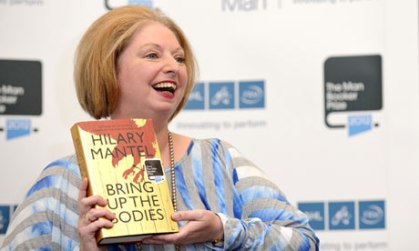
Source: The Guardian
Whether it’s the Bad Sex award given to the author of the most cringe-worthy sex scene in literature each year or coveted literary prizes such as the Booker and the Pulitzer, book awards attract a lot of attention. They also attract a considerable amount of debate particularly concerning the worthiness of winners. So do we actually need them and what do they really achieve?
Regular followers of this blog will know that I read quite a lot of books which are nominated for the Booker Prize and other similar literary awards. I don’t read these books purely because they are on the shortlist and I certainly wouldn’t rush out and buy the whole lot straight after the announcement. Like most people, I still choose books almost entirely according to personal recommendations and general browsing rather than the number of prestigious awards they have won. However, I am always intrigued by what it is about them that got them recognised and nominated in the first place so I do try and hunt down the ones I think I might enjoy and have heard generally good things about. Continue reading
Filed under Books
The Last Hundred Days by Patrick McGuinness
Longlisted for the Man Booker Prize last year, ‘The Last Hundred Days’ by Patrick McGuinness tells the story of a young British expat living in Romania at the time of the fall of Ceaucescu in 1989. Offered a job at a university, the unnamed narrator soon becomes embroiled in a web of corruption and betrayal. Loosely based on McGuinness’ own experiences, it is a shocking, sometimes brutal account of life under the shadow of a dictator and his rapid downfall. It is a story told with bleak authenticity. Continue reading
Filed under Books
First Love, Last Rites by Ian McEwan
Having access to new university libraries means that I occasionally visit the fiction section and borrow books to read on the train while I commute (and when I say occasionally, I really mean pretty much every time I go to the library). I have read a lot of Ian McEwan’s more recent work but I haven’t been able to get hold of his earlier works until now. This collection of short stories definitely shows how far McEwan has come since his debut in the mid-1970s with ‘First Love, Last Rites’. Continue reading
Filed under Books
The Sealed Letter by Emma Donoghue
Having read some pretty strange books recently (The Unconsoled and The Unbearable Lightness of Being spring to mind), I really wanted to read something that was based upon some good old-fashioned story-telling and a linear plot. On one hand, I wanted a book that wasn’t too taxing on the brain. On the other hand, I wanted a book that I wouldn’t be embarrassed to read in public on a train. ‘The Sealed Letter’ by Emma Donoghue was just what I needed. Continue reading
Filed under Books
The Sense of an Ending by Julian Barnes
I have read quite a few of Julian Barnes’ other novels over the last few months and I am a real fan of his work. I think I am now even more in awe of the power of his prose, having finally got hold of a copy of ‘The Sense of an Ending’ and devoured it in a little over two hours. Continue reading
Filed under Books
The Chemistry of Tears by Peter Carey
‘The Chemistry of Tears’ by Peter Carey tells the story of Catherine Gehrig, an horologist living in London who had an affair with her boss, Matthew Tindall, for thirteen years until his recent sudden death. In the midst of her grief, she is given the task of rebuilding a mechanical duck and discovers the journals of Henry Brandling, whose story set in the mid nineteenth century is also interwoven alongside Catherine’s journey through grief. Continue reading
Filed under Books
The Awakening by Kate Chopin
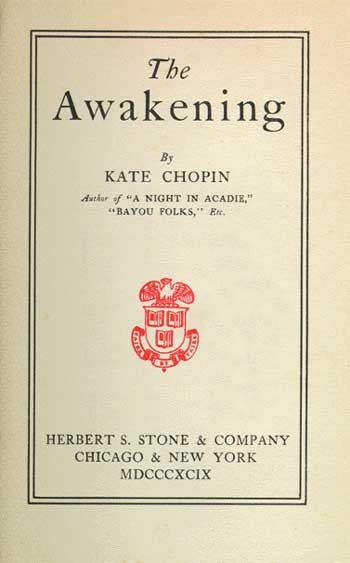 My postgraduate course is taking over pretty much my whole life at the moment. I am still finding the time to read non-academic books when I commute but I am getting very behind with writing up my reviews (also in the wrong order as I read this before ‘The Unconsoled’). I actually read ‘The Awakening’ by Kate Chopin during Banned Books Week at the beginning of October but have only just got round to writing this blog post. Hopefully, I will catch up by Christmas…!
‘The Awakening’ tells the story of Edna Pontellier, a young Creole woman trapped in an unhappy marriage who is capable of (shock horror) independent thought and marital infidelity. Her modern views on motherhood and femininity even cause her husband, Leonce, to seek medical advice. During a holiday, she meets Robert and falls for him. Inevitably, there are tragic consequences. Continue reading
Filed under Books
The Unconsoled by Kazuo Ishiguro
Why did I do a Masters degree? WHY?! Yes, work is getting to me a bit already and it’s still only October. I would be blogging every day if I reviewed all the course books I am reading at the moment but I don’t want to turn this blog into A Little Blog of Political Economy and European Foreign Policy Books and Absolutely Nothing Else. That would be depressing and very very boring.
I think the last time it took me this long to finish a book was when I read ‘The Corrections’ by Jonathan Franzen. However, that was because I found it a slog to get through not because I was particularly busy at the time. During the holidays, I might have been able to read ‘The Unconsoled’ in about three days. Instead, during term time, it has taken more like two and a half weeks. For me, that’s an epically long time to spend on one book. But with ‘The Unconsoled’, I think it was worth reading slowly. Continue reading
Filed under Books
The Man Booker Prize 2012
So Hilary Mantel has done it again. ‘Bring Up The Bodies’ has been crowned the Winner of the Man Booker Prize 2012. Mantel won the Booker Prize for ‘Wolf Hall’ in 2009, the first part of her trilogy on the life of Thomas Cromwell, so this makes her the first woman and the first British person to win it twice. I’m sure I’m not alone in passing on many congratulations to Mantel for this huge and much deserved achievement. Continue reading
Filed under Books
Snowdrops by A. D. Miller
I’m a little bit slow when it comes to reading the Man Booker Prize winners and nominees. I haven’t read any of the books on this year’s shortlist yet and ‘Snowdrops’ by A. D. Miller is only the second book on last year’s shortlist that I have read so far. It tells the story of Nick Platt, a British lawyer in his thirties living in Moscow. After meeting Masha who soon becomes his girlfriend, Nick gets involved in a property deal. This being Russia, let’s just say it doesn’t go quite as planned…
Filed under Books
The Reader by Bernhard Schlink
‘The Reader’ by Bernhard Schlink tells the story of fifteen year old Michael Berg who has an intense affair with a much older woman, Hanna Schmitz. Years later, Michael discovers that Hanna, who was an SS guard at Auschwitz, is being prosecuted for war crimes after World War II. Michael, now a law student, watches her trial and tries to come to terms with the collective guilt surrounding Germany’s past. Continue reading
Filed under Books
Books That Disappointed Me
I wrote a post a while ago about the books I never finished but I have also read quite a few books I may as well not have finished. Amongst these, there were some that I had particularly high hopes for yet they turned out to be not what I was expecting at all – and not in a good way. Here is my list of my biggest literary disappointments:
One Hundred Years of Solitude by Gabriel Garcia Marquez
I read Love in the Time of Cholera and really enjoyed it so I was looking forward to reading One Hundred Years of Solitude. But why oh why oh WHY did all the characters have to have almost the exact same names across the generations?! Not knowing who was who really hindered my enjoyment of the book which was otherwise beautifully written. I might be willing to try it again someday but only when I have developed supreme powers of concentration and the ability to decipher a Colombian family tree. Continue reading
Filed under Books
The Virgin Suicides by Jeffrey Eugenides
‘The Virgin Suicides’ by Jeffrey Eugenides tells the story of the five adolescent Lisbon sisters who all commit suicide. The youngest sister, thirteen year old Cecilia kills herself first and her death impacts the whole community, especially her other four sisters: fourteen year old Lux, fifteen year old Bonnie, sixteen year old Mary and seventeen year old Therese. The local neighbourhood develops an obsessive fascination with the mysterious Lisbon sisters with tragic consequences for all involved. Continue reading
Filed under Books
The Unbearable Lightness of Being by Milan Kundera
 The downside of starting my postgraduate degree next week is that I will have a lot less time to read fiction and also a lot less time for blogging than I’ve had over the summer. The upside is that I now have access to different libraries and a 10% student discount at my favourite bookshop in the world, Foyles, so when I do have time to read for pleasure, I will be pretty spoilt for choice.
Last week, I visited the main university library for the first time and got hopelessly lost. Due to the absence of signs and being completely unfamiliar with the Library of Congress classification system, it took me nearly an hour to even find the sections relevant to my course. During my search, I happened to stumble across the Czech literature section and picked up a copy of ‘The Unbearable Lightness of Being’ by Milan Kundera as it was on my TBR list and isn’t available at my local library. I figured that even if I never found the books I had actually gone to look for, it wouldn’t have been a totally wasted trip. Continue reading
Filed under Books
The Hours by Michael Cunningham
‘The Hours’ by Michael Cunningham interweaves the parallel stories of three women from different generations across one day in their lives through their connection with the novel ‘Mrs Dalloway’. The writer Virginia Woolf is in the process of writing ‘Mrs Dalloway’ in the early 1920s as she battles mental illness. Claustrophobic post-war housewife Laura Brown bakes a cake to celebrate her husband’s birthday but all she really wants to do is escape and read ‘Mrs Dalloway’. Clarissa Vaughan, nicknamed Mrs Dalloway, is a modern-day New Yorker planning a party for her friend and former lover, Richard. As well as the obvious connection with Woolf’s novel, the women are all connected in other ways. Notably they are affected by the same themes including madness and sexuality.
Filed under Books
The Redbreast by Jo Nesbo
Earlier this year, I watched the first season of the TV series ‘Borgen’, a political drama set in Denmark, and got completely hooked to the point where I began to convince myself that I could speak Danish. However, with the exception of reading the Millennium Trilogy a couple of years ago, I am definitely lagging behind the rest of the world when it comes to jumping on the Scandinavian crime fiction bandwagon and this week, I tried to rectify that by reading ‘The Redbreast’ by Jo Nesbo. Continue reading
Filed under Books
Cold Comfort Farm by Stella Gibbons
‘Cold Comfort Farm’ by Stella Gibbons tells the story of nineteen year old Flora Poste who decides to track down her long lost cousins out in the Sussex countryside on Cold Comfort Farm after the sudden death of her parents. As soon as she is confronted by her strange relatives, Flora immediately sets about trying to change things on the farm with each character having their own particular problem that needs resolving. However, her modern middle-class outlook frequently clashes with the rural way of life as she helps them to adapt to the twentieth century.
Filed under Books




You must be logged in to post a comment.